
Ninon Isimbi
Ninon Isimbi (she/her) earned her Bachelor of Arts in Interdisciplinary Studies from Capilano University in the spring of 2026. During her time at Capilano University, she supported herself working as a health care assistant and a community support worker, experiences that strengthened her commitment to care, equity, and community well-being. She was recognized on the Dean’s List twice for her academic achievement and published an article, “The ‘New Normal’ After COVID-19: A Deeper Look Beyond Dominant Narratives,” featured in Spheres of Influence as part of the Global Perspectives: Critical Policy Insights series, reflecting her interest in critical social and policy issues. Her interdisciplinary studies have allowed her to explore complex global and societal challenges from multiple perspectives. Ninon plans to pursue a master’s degree in public policy, where she aims to contribute to more inclusive, informed, and impactful governance.
I. Introduction
I was born six years after the 1994 genocide against the Tutsi, when Rwanda was slowly rising from the ashes, restoring hope, rebuilding homes, and carrying memories too heavy to forget yet too painful to fully speak of. I remember sitting in a crowded room during the commemoration period, Kwibuka (meaning “remember”), listening to painful testimonies that felt both close and distant at the same time. Close, because they belonged to my country, my people. Distant, because I had not lived them. I did not witness the 1994 genocide against the Tutsi, yet I have grown up in its aftermath, shaped by its memory and the mark it left on Rwanda.
As I got older, I began to question not only what we remember, but how deeply we understand it. At the same time, I have encountered moments, both online and in conversation, where misinformation, denial emerges, sometimes met with silence rather than response. These observations led me to ask, ” how well does Rwanda’s post-genocide generation know the history that we are now responsible for protecting? Living abroad over the past six years made this question more urgent. When I say I am from Rwanda, conversations quickly shift to the genocide, often accompanied by inaccurate or incomplete understandings. Just like many other Rwandans in diaspora, I have been asked whether I am “Hutu” or “Tutsi,” to which I reply, “I am Rwandan,” and in many of those moments, I chose silence rather than correcting their misinformation. Looking back, I now question that silence and what it allowed to go unchallenged. Rwanda being widely famous for its 1994 genocide against the Tutsi might be hard for our ears, but it is our history after all that we can never ignore happened. This question is not only theoretical but also grounded in lived experience. In an interview with Sinzi Tharcisse, a genocide survivor, author of Combattre, and contributor to the preservation of Rwanda’s history, he emphasized that “it is not only about remembering the past but anchoring vital lessons for the present and the future… transmission is essential today to fight denial”.
As I began exploring this question, I realized that my generation occupies a unique position in Rwanda’s history. This paper examines how the depth of historical literacy and intergenerational dialogue among Rwanda’s post-genocide generations shapes the country’s long-term unity and its resistance to denial, distortion, and historical erasure. Drawing on interviews with Rwandans from diverse age groups, I argue that when historical understanding remains superficial and dialogue is limited, memory becomes fragmented and vulnerable. In contrast, when young people engage through concrete practices such as participating in intergenerational conversations, reading survivor testimonies, visiting memorial sites, and actively challenging misinformation in both everyday interactions and digital spaces; memory becomes more resilient and collectively sustained. However, these forms of engagement are not straightforward; they are often constrained by trauma, silence, emotional fatigue, and discomfort with confronting past atrocities.
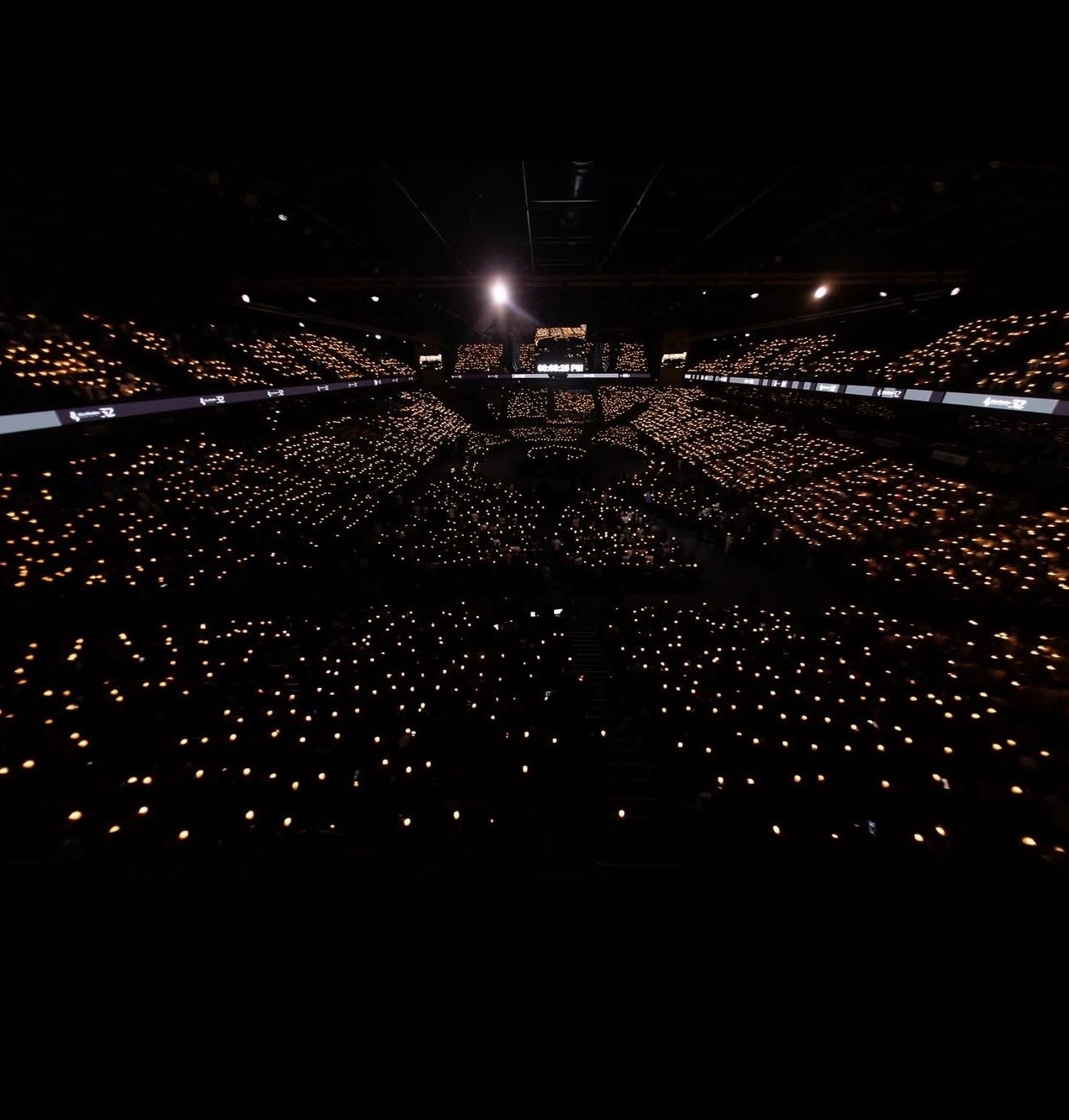
Participants lighting candles during Kwibuka (meaning remember) 32, Rwanda’s annual genocide commemoration.
II. Context
The 1994 Genocide against the Tutsi in Rwanda was one of the major factors in the contemporary identity of the future of modern Rwanda. In 100 days only, more than one million people were massacred through a process of violence promoted through propaganda, manipulation of institutions, and long-standing social divisions created by the colonialists, which divided Rwandans into three groups: Tutsi, Hutu, Twa. Ethnic ID cards were later introduced by the Belgian colonial government, and later Tutsi were forced into exile in bordering countries, others were added to lists to be massacred (Sinema 65-85). The genocide officially started on the 7th of April after the plane of the late president of Rwanda, Juvenal Habyarimana, crashed; they made it the immediate reason to start the killings (97-99). After the genocide, Rwanda had an almost impossible task of rebuilding a nation destroyed by systematic violence, mass killings, and enduring trauma.
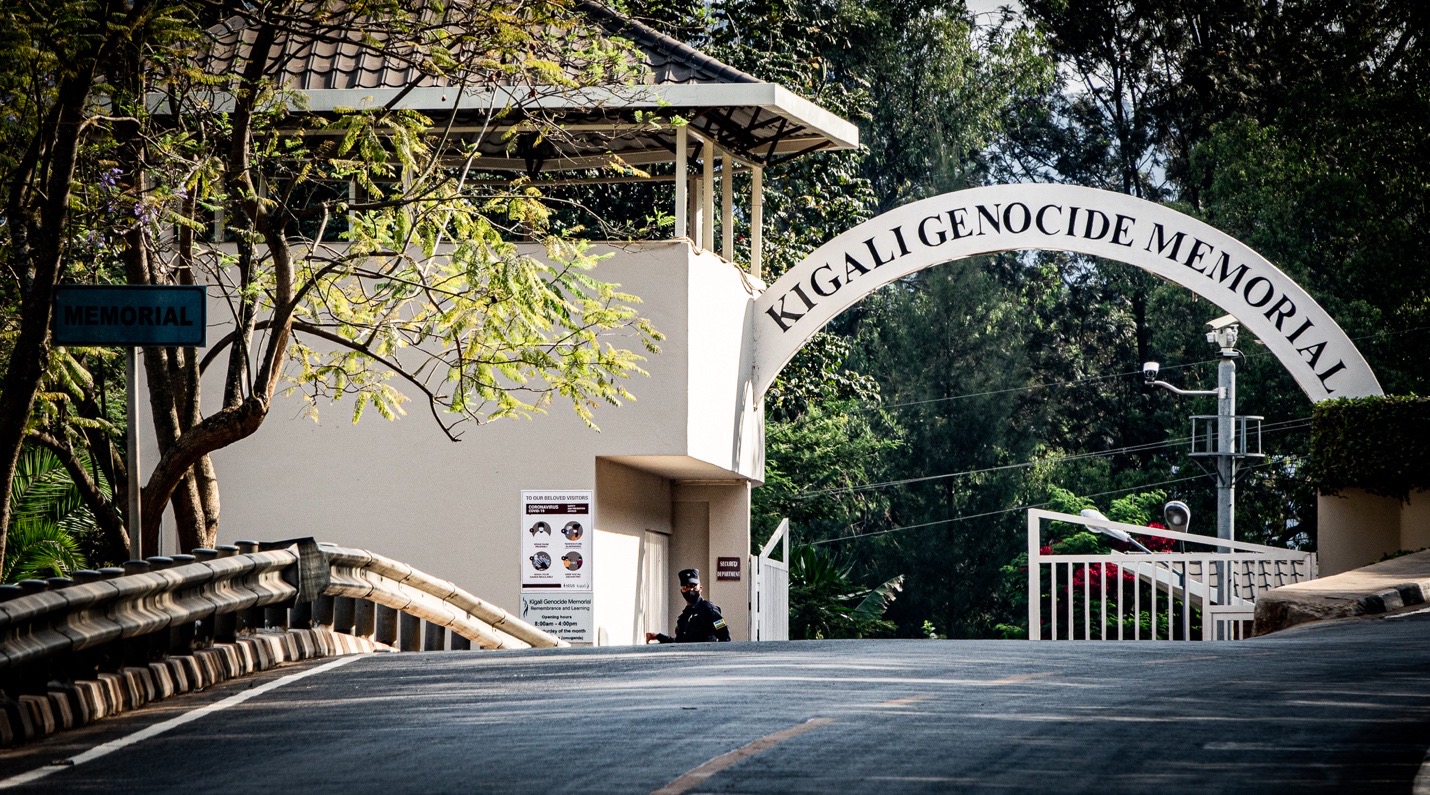
Kigali Genocide Memorial, one of Rwanda’s central sites of remembrance and historical education located in Kigali, Rwanda.
In the years immediately following the genocide, silence often functioned as a necessary condition for coexistence. As Susanne Buckley-Zistel explains, communities sometimes engaged in what she describes as “chosen amnesia,” not because they could not remember, but because remembering felt too dangerous in a society trying to rebuild. In this context, silence helped stabilize relationships and allowed communities to move forward. However, she argues that “although now perhaps essential for local coexistence, it bears the danger of not challenging the social cleavages that rendered the genocide possible in the first place and so obstructing their transformation in the future” (131). When such silence extends across generations, it can limit deeper engagement with history, leaving younger people with partial understandings of the past.
At the same time, Rwanda has developed strong institutional frameworks for remembrance, including memorial sites in different parts of the country, for example the Kigali Genocide Memorial where 250,000 victims rest, acts as museums where all the history is kept. Secondly, a national and international period of mourning held annually where all victims are remembered, through walks to remember, through history and testimonies being shared which helps survivors heal, by talking about their stories. It helps youth who didn’t witness the genocide and the rest of the world to learn more from this opportunity. However, this is not always easy on survivors as it might retraumatize them again, but they do it because it is necessary for them to remember their loved ones, to preserve the truth and to prevent history from repeating itself. Thirdly, educational programs in schools have been introduced to help teach history to young Rwandans. In my interview with Professor Tombola, working in Corporate Governance with 24 years in university leadership, emphasized that “Rwanda’s current education system provides sufficient depth for students to understand the mechanisms that led to genocide.” Lastly, different Institutions such as MINIBUMWE, AEGIS were established to promote unity and Reconciliation among Rwandans, civic education, and prevention of genocide ideology. Organizations like IBUKA is also in charge of supporting survivors through advocacy, and provision of different needs including housing. These institutions have helped Rwandans in rebuilding, uniting, developing and not be just defined by its dark past.
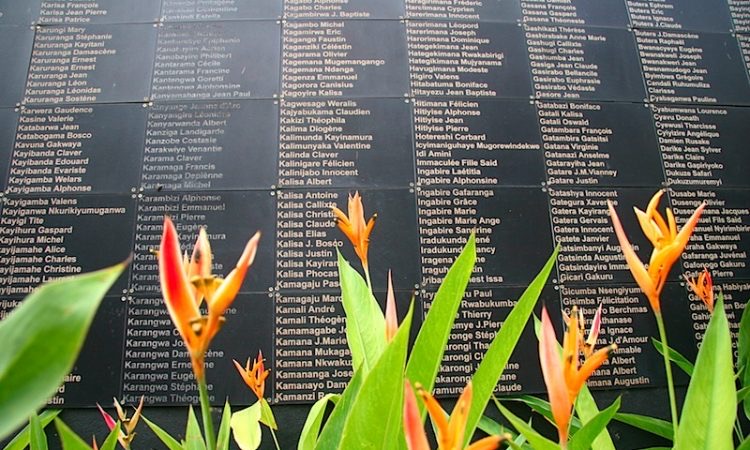
Names of victims of the 1994 genocide against Tutsi engraved at the Kigali Genocide Memorial, reminding visitors of the human cost of the genocide.
III. Generational Transition
Memory is no longer primarily lived but increasingly inherited. More than three decades after the 1994 genocide against the Tutsi, a large proportion of the population was born after the events themselves. According to the National Institute of Statistics Rwanda (NISR) those under 30 years of age make up approximately 70% of the total population. For younger generations, the genocide is understood through education, commemorations, and narratives shared by others, rather than direct experience. This demographic shift shows how much the future of Rwanda relies on its youth to understand its history, it’s cause and to continue building a united and peaceful country.
As Rwanda continues to grow and evolve, the responsibility of memory cannot remain confined to institutions or to those who directly experienced the genocide. It must also be carried by those who inherit it. Rwandan minister of National unity and Civic Education in charge of promoting Unity and reconciliation, Dr Bizimana, while launching new program “Youth, know your history” stressed this importance, in his speech he said it is essential for elders, survivors and those who witnessed the genocide to discuss the journey our country went through to be where it is today. He argued that this journey is the foundation, especially the youth, to build a stronger nation and sustain our progress (MINUBUMWE). In this program various activities that educates the youth are planned like debates in high schools, Universities, visiting places that holds history in their districts, in which more than 8000 young people have attended its various editions (National youth council). It is within this space that the role of the post-genocide generation becomes most significant.
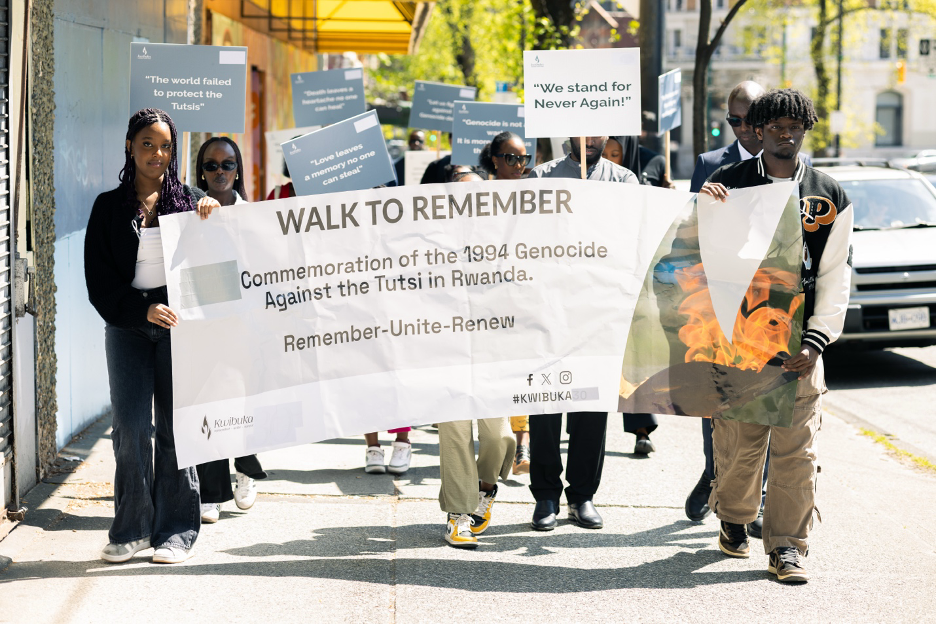
Rwandan community in Vancouver, BC, during a walk to remember in commemoration of the 1994 genocide against the Tutsi.
IV. Lived Experiences: How Youth Learn, Understand, and Engage
For Rwanda’s post-genocide generation, learning about the genocide against the Tutsi does not follow a single path. Instead, it is shaped by a combination of formal education, national commemorations, family conversations sometimes told, sometimes withheld, and personal encounters. These pathways are uneven, resulting in different levels of understanding, engagement, and confidence among young people.
The interviews I conducted with the youths reflect this unevenness. One of my interviewees, aged twenty-seven, revealed how his understanding of the genocide came gradually at twelve years old, through what he was told by his family, who survived the genocide against the Tutsi, “I feel deeply connected about it because I have immediate family that really faced the consequences of genocide, and that’s the main reason I can say that I’m really connected with our past”. Another interviewee, Kalimbano who is Twenty-four shared “At school we had many programs, especially during holidays and commemorations, where we talked about the history. During the commemoration of the genocide against the Tutsi in 2017, I remember being deeply moved by the testimony of a genocide survivor. That moment touched me personally, and it encouraged me to go and search for more information by myself so I could better understand my history”. Similarly, Byusa who is Thirty-two now shared “I didn’t feel anything because I wasn’t aware. I was only five months old. Everything I know about that time is what I was later told by others. I don’t know much apart from what people told me”.
Silence also played a significant role in shaping these experiences. Conversations about the genocide are often limited within families, sometimes due to the emotional weight of the subject or the desire to protect their young children. “Some mothers told us that they preferred not to talk about the past events… ‘It is in the past,’ ‘Bygones are bygones,’ and ‘It is history.’” (Berckmoes et al. 10). As a result, many young people encounter the topic primarily elsewhere rather than through ongoing dialogue in families. This can create gaps in knowledge and leave important questions unasked.
These gaps become more visible when young people encounter misinformation. Umutoni, a nineteen-year-old living in Canada I interviewed, expressed a similar challenge, describing moments where she encountered misinformation but felt uncertain about how to correct it, “we were talking, and he was like you guys exaggerate your genocide; it’s not that deep. Even other worlds do have war. I’m like, there is a difference between a war and a genocide, and to me, I felt attacked, I tried to explain it, because that’s when I say I the lack knowledge; he would hit me with questions, and I’m like, let me just not answer this, because I don’t know much.” This lack of confidence is not a reflection of indifference but of insufficient depth in historical understanding. Over time, this dynamic can lead to a form of passive engagement where youth attend commemorations and learn history in school but lack space for questioning, and deep discussions. These lived experiences show implications for how memory is carried forward.
V. Intergenerational Dialogue: Transmission and Gaps
Intergenerational dialogue plays a central role in how historical memory is transmitted, yet it is also where some of the most significant gaps emerge. “Mothers expressed hesitance to share the stories about the genocide and its aftermath with their children… and felt that it served no purpose to recount these past stories” (Eichelsheim et al. 34). Within families, conversations about the genocide are shaped by trauma, emotion, and the difficulty of revisiting painful experiences. As a result, communication is often partial, delayed, or avoided altogether. Research on family transmission of memory highlights that when parents do not openly discuss the genocide, young people may grow up with incomplete or unclear understandings and fragments of their history. Rather than eliminating memory, silence reshapes it; creating confusion, unanswered questions, and sometimes distance from the past (Ingabire et al. 354).
While the genocide remains central to Rwanda’s history, the absence of direct experience can make it more difficult for younger generations to fully grasp its depth and complexity. Eichelsheim argues that the legacies of the genocide are transmitted across generations through both direct pathways (communication or silence about the past) and indirect pathways like living conditions such as poverty, trauma, and disrupted family structures (34-35). This shows that even when youth did not experience the genocide directly, they were still deeply shaped by it.
Bridging this gap between connection and understanding demands intergenerational dialogue. Survivors, parents and elders in general carry memories that textbooks cannot convey, stories of loss, survival, and rebuilding and therefore should sit down with their children and share their history with them. In my research, I spoke with Mukwiye, a genocide survivor and a leader in his community. He told me, “Remembering cannot be left to institutions. If we do not talk to our children, it will be hard to eliminate its negative effects and overcome denial and its ideology.”
Hence, intergenerational dialogue becomes more than a method of communication in familial realms; it becomes a responsibility. It requires willingness and strength from older generations to share their dark experiences while fostering unity, not hatred and division, with younger generations. However, it is pivotal that through dialogue, sharing stories with children, parents and families should keep in mind that what they share promotes national values and that the new generations are the future leaders who should build a united and peaceful nation.
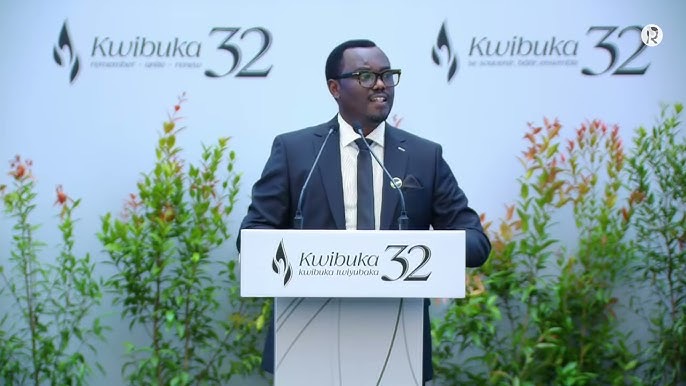
A genocide survivor sharing testimony with younger generations during Kwibuka week in Kigali, Rwanda.
VI. The Risk: Denial, Distortion, and Historical Erasure
The preservation of memory in Rwanda is not only a question of remembrance, but of how that memory is understood and engaged with over time. In his model of the “Ten Stages of Genocide,” Gregory Stanton identifies 10 stages including Denial as the last and ongoing stage of a genocide and argues that “they deny that they committed any crimes, and often blame what happened on the victims… they question whether intent to destroy a group can be proven, ignoring thousands of murders. They overlook deliberate imposition of conditions that destroy part of a group” (Genocide Watch). Stanton demonstrates that genocide does not end with violence but continues in how events are remembered, interpreted, and sometimes misrepresented. In Rwanda, denial is currently ongoing, for example, the 1994 genocide against the Tutsi is sometimes referred to as a war or the real number of Tutsi victims who died are critiqued, claiming Rwanda exaggerates while, even today new bodies continue to be discovered. In 2024, Nkurunziza reported that, “Huye District will accord a decent burial to 2,073 bodies of 1994 Genocide against the Tutsi victims that were discovered under a house and a field”. Denial does not just inflict profound psychological, social, and emotional harm on survivors; it acts as a form of secondary victimization, invalidates their lived trauma, and hinders the healing process.
In an increasingly digital world, where information spreads rapidly, this becomes even more critical. Social media play a significant role in shaping narrative, amplifying both accurate and inaccurate information. For instance, a post shared on X (formerly Twitter) by the son of former Rwandan President Juvénal Habyarimana claimed that “only one memory is recognized…only one story is taught,” illustrating how narratives online can minimize, reinterpret, or challenge established historical accounts of the genocide against the Tutsi. This reflects how denial is not always explicit but can appear through claims of selective memory or incomplete history. In addition, the use of social media has also created new challenges with technologies like AI, chat bots emerging where it is substantially hard to differentiate what is true or not. Rwandan young generation faces risks of not recognizing or to respond effectively to these forms of denial, without a strong foundation in historical knowledge. As Sinzi Tharcisse, emphasized, “young people must be digital protectors of memory…to counter misinformation…and denounce the discourse of denial” His perspective underscores how the fight against denial has shifted into digital spaces, which requires active engagement from younger generations to protect historical truth.
Historical erasure is also an imminent risk. Historical erasure does not mean that events are completely forgotten; rather, it occurs through a gradual weakening of knowledge, confidence, and clarity across generations. When individuals are unable to explain historical processes, when misinformation goes unchallenged, or wrong narratives are accepted without critical engagement. Without a sustained intergenerational dialogue and passing down history to young people, memory and truth become increasingly fragile.

Young people using digital platforms to challenge misinformation and share historical knowledge online.
VII. CONCLUSION
The question at the center of this study is not only how the post-genocide generation learns about the genocide against the Tutsi but also what is at stake if that understanding becomes shallow. This issue matters because memory in Rwanda is being transferred. As that transfer takes place, the strength of Rwanda’s long-term unity, its resistance to denial, distortion, and historical erasure increasingly depends on how deeply younger generations understand and engage with the history they have inherited. This research has shown that exposure to history is not the same as understanding it.
Making dialogue possible is essential, it requires intentional effort, structure, and care, with the creation of safe, low-pressure spaces where individuals feel respected and not forced to speak. In community groups, or youth-led circles, establishing simple ground rules such as active listening, empathy can create an environment where people are more willing to engage, and in homes, parents should be encouraged to talk more with their children and share their history. Dialogue can be supported through guided questions, allowing participants to reflect on what they know, what they have been told, and what they wish to understand better. Creating opportunities for youth to engage with elders and survivor testimonies besides just during the commemoration period can help bridge gaps in understanding while ensuring that conversations are grounded in lived experiences.
Young people should also engage actively by reading books that were written by survivors which offer detailed, lived accounts narratives, watch films and testimonies, participate during Kwibuka events, and stand in solidarity with survivors. At the same time, education must move beyond memorization to critical historical literacy. This includes integrating survivor testimonies into curricula, encouraging reflective learning by inviting guest speakers in schools, organizing field trips to memorial sites, and creating opportunities for sustained engagement rather than one-time exposure. In digital spaces, where misinformation spreads quickly, youth have a responsibility to question, verify, and challenge false narratives rather than remain silent.
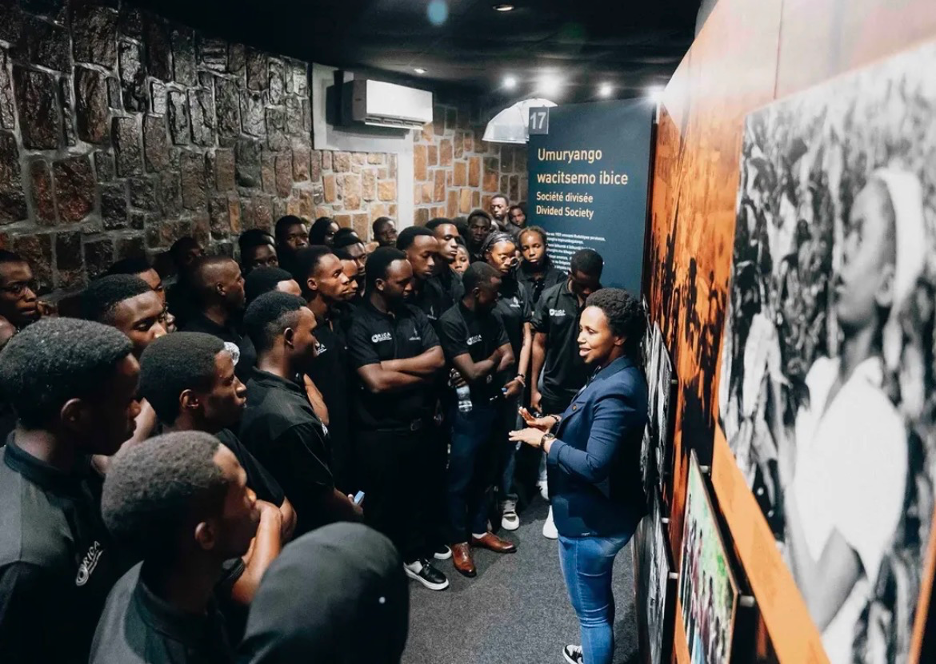
Students visiting a genocide memorial as part of historical education.
This is not just important; it is pivotal that all Rwandan generations play their respective role in safeguarding and defending their history when necessary because the alternative cannot be risked. We live with its legacy and, one thing remains a fact, whether we witnessed it or not, whether it has been three decades since it happened or more, we have a responsibility to learn what happened, understand its causes, honor the lives it forever changed, remember its realities, and fight every day to ensure it never happens again and is never forgotten.
Works cited
Aegis Trust. “Bridging Generations: Conversations for Healing Rwanda’s Future.” Aegis Trust, 2024, https://aegistrust.online/bridging-generations-conversations-for-healing-rwandas-future/.
Berckmoes, Lidewyde H., et al. “How Legacies of Genocide Are Transmitted in the Family Environment: A Qualitative Study of Two Generations in Rwanda.” Societies, vol. 7, no. 3, 2017, article 24, https://doi.org/10.3390/soc7030024.
Buckley-Zistel, Susanne. “Remembering to Forget: Chosen Amnesia as a Strategy for Local Coexistence in Post-Genocide Rwanda.” Africa, vol. 76, no. 2, 2006, pp. 131–150.
Byusa, J. Serge. Personal interview. 5 Mar. 2026.
Eichelsheim, Veroni, et al. “Before My Time? Addressing the Intergenerational Legacies of the Genocide against the Tutsi in Rwanda.” Journal of Genocide Research, vol. 19, no. 3, 2017, pp. 345–361.
Habyarimana, Jean-Luc. “April 6, 1994 – 32 years of memorial apartheid… 32 years already.” X, 6 Apr. 2026, https://x.com/jlhaby/status/2041223194040815685.
Ibreck, Rachel. “The Politics of Mourning: Survivor Organizations in Rwanda.” Journal of Intervention and Statebuilding, vol. 13, no. 4, 2019, pp. 401–420.
Ingabire, Chantal Marie, et al. “‘They Tell Us Little and We End Up Being Confused’: Parent–Child Communication on Familial Experiences of Genocide and Its Aftermath in Rwanda.” Journal of Family Studies, 2021.
Kalimbano, Roxanne. Personal interview. 19 Feb. 2026.
Mafeza, F. “The Role of Education in Combating Genocide Ideology in Post-Genocide Rwanda.” International Journal of Education and Research, vol. 1, no. 10, 2013, pp. 1–10.
Mpore, Victor. “A Thematic Analysis Exploring the Narratives of Growing up as a Second-Generation Survivor of the 1994 Genocide against the Tutsi in Rwanda and the Presence of Generative Commitment.” DigitalCommons@University of Nebraska–Lincoln, 2023, https://digitalcommons.unl.edu/aglecdiss/125/.
Mukwiye, Romouald. Personal interview. 15 Feb. 2026.
National Institute of Statistics of Rwanda. Labour Force Survey 2017. 2017, https://www.statistics.gov.rw/statistical-publications/subject/youth.
Ndayishimiye, Elysee. Personal interview. 27 Feb. 2026.
Nkurunziza, Michel. “Over 2,000 Genocide Victims’ Bodies Discovered in Huye to Get Decent Burial.” The New Times, 15 Apr. 2024, https://www.newtimes.co.rw/article/15997/news/kwibuka/over-2000-genocide-victims-bodies-discovered-in-huye-to-get-decent-burial.
Sinema, Kyrsten. Who Must Die in Rwanda’s Genocide?: The State of Exception Realized. Bloomsbury Publishing USA, 2019. ProQuest Ebook Central, https://ebookcentral.proquest.com/lib/capilano-ebooks/detail.action?docID=4086518
Sinzi, Tharcisse. Personal interview. 15 Mar. 2026.
Stanton, Gregory H. “The Ten Stages of Genocide.” Genocide Watch, 2013, https://www.genocidewatch.com/tenstages.
Tombola, M. Gustave. Personal interview. 10 Mar. 2026.
Umutoni, Shadia. Personal interview. 26 Feb. 2026.