


Jessica Caravatta (she/her)
Jessica is a student at Capilano University, which she studies on the traditional, unceded territories of the Squamish, Tsleil-Waututh and Musqueam First Nations. Jessica is currently completing her Bachelor of Arts with a Major in Psychology. During her time at Capilano University, Jessica was recognized on the Dean’s List for the Fall 2025 semester. After completing her degree, she plans to pursue a master’s in counselling and hopes to build a career supporting individuals through mental health and counselling services.
In 2022, more than 1.6 million Canadians, aged 15 years and older reportedly had a learning disability (Statistics Canada, 2022). Today, many of these individuals are now enrolled in Canadian post-secondary institutions. The growing awareness and presence of learning disabilities and the mandate from both the provincial and federal governments has led institutions to develop strategies and tools to support students in their academic journey. Accessibility services, accommodations and assistive technologies are intended to improve a students’ learning experience. An important question is, are students with learning disabilities being given the opportunities and support they need to academically succeed in higher education?

Surrounded by towering structures and natural landscapes, accessible campus design ensures that every student can navigate and engage with their environment equally.
Accessibility services in higher education play a critical role in supporting students with learning disabilities, however, many students lack access to the required psychoeducational assessment which identifies their individualized learning needs and the effective support strategies they need. As a result, there is significant room for improvement at the primary, secondary and university levels, particularly in access to testing and educating administrators, departments and teachers/faculty. First, many students in primary and secondary education do not receive the required testing due to financial and budget constraints. Schools and families often lack the resources to properly access all students who require an evaluation, which leaves many without a diagnosis and therefore, the support they need to succeed academically. Second, post secondary institutions need to place a greater emphasis on accessibility education. Administrators, department heads and professors require more education and comprehensive training to better understand and support diverse learning needs. By addressing these gaps, institutions can expand opportunities for students, improve academic outcomes and ultimately contribute to a more inclusive workforce.
As a student with a learning disability, my education experiences have been shaped by challenges, resilience and success. Personally, traditional teaching methods, such as exams and heavy text-based assignments, did not fit with my learning style and they often led to gaps in learning and understanding. Throughout primary and secondary school years, I struggled to find an environment where I felt academically supported and where my teachers fully understood my learning needs and were able to accommodate learning styles that worked for me. I spend years struggling to keep up in the classroom and to understand the course material which ultimately led to issues with self-confidence, doubt and anxiety. Despite working hard and putting in a tremendous amount of effort, I often felt frustration and angry that I did not understanding the material as well as my peers and because it took me longer to complete assignments and tests.
It was not until I received my learning disability diagnosis that the classroom challenges (I’d been facing), began to make more sense. With the diagnosis I receive accommodation such as additional time for tests and having access to assistive learning technologies and that’s when I began to see improvements and have more success. I developed more effective strategies for studying, note taking and processing information, which significantly improved my understanding of the material and the time it took to complete tasks, assignments, and tests but I still had to work harder and for longer than most of my peers. The challenge was not a lack of understanding, but rather the need for additional time and the use of assistive technology to process and complete the work effectively and even with these supports, I still had to work harder and longer than most. This highlights a common misconception about accessibility, such as it provides an unfair advantage, when in reality, accommodations reduce barriers and allow students to demonstrate their true abilities.
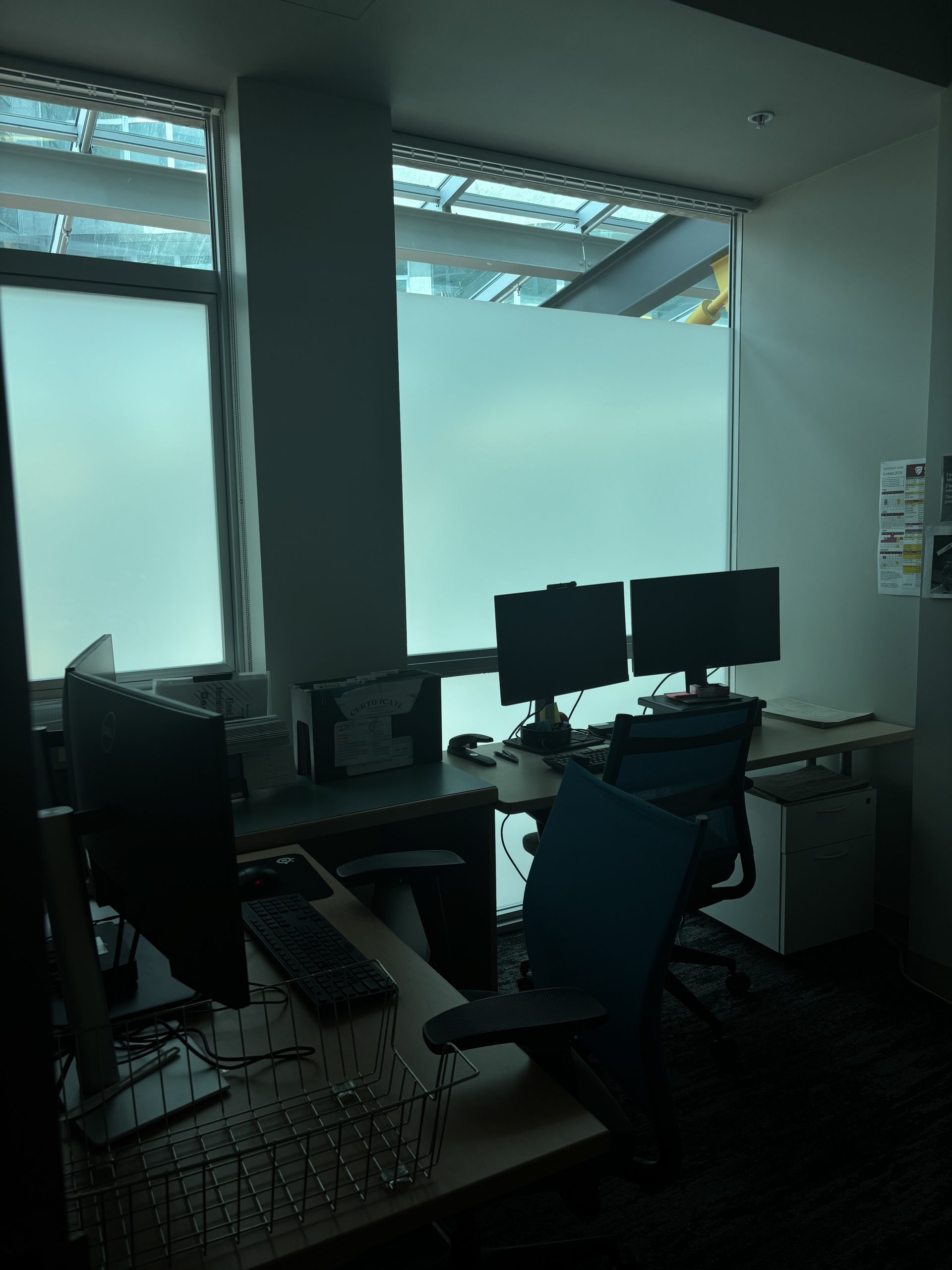
Technology that levels the playing field, assistive tools that help students demonstrate their knowledge during exams.
Limited access to psychoeducational assessment remains a barrier for many students with a learning disability and many families do not have the financially means to pay for a private assessment outside the public school system. Long wait times for assessment testing in the public system often lead to years (and some never get tested) for students to get a diagnosis and therefore, the support they need. Tara Karasewich, the Accommodations and Learning Management Systems Assistant at Queen’s University (2022) explains, “Formal assessments for some types of disability can have a high cost (e.g., learning disabilities), and students from lower socioeconomic backgrounds are likely to have trouble navigating this cost and the bureaucratic process of obtaining accommodations” (Waterfield & Whelan, 2017). This demonstrates that the access to a diagnosis is often determined more by socioeconomic status than the actual need, leaving many students without the support during critical stages of their education. By expanding publicly funded assessments and hiring more qualified professionals, schools can reduce wait times and provide early identification of learning needs, ensuring that all students, regardless of finical resources, have equitable access to support.
I interviewed Nathan Anderson, the Co-coordinator of Accessibility services at Capilano University, who has over 20 years of experience working in accessibility through both primary, secondary and post-secondary education. Mr. Anderson explained to me that accessibility services at Capilano University are designed to support students for a wide range of disabilities, which include learning disabilities, autism, attention deficit hyperactivity disorder, sensory impairments and mental health conditions. He emphasized that the accommodations at Capilano University focus on reducing barriers (but not giving students an advantage), such as providing extra time on exams and access to assistive technologies such as screen readers for students with dyslexia (Anderson, Nathan, personal communication, February 2026). Mr. Anderson also noted that the awareness of learning disabilities among students, administration and instructors has significantly improved over the years. He explained that “As a university, it’s our legal mandate to meet the accommodation needs for a student, noting the institutional responsibility to ensure rightful access to education” (Anderson, Nathan, personal communication, February 2026). In particular, Mr. Anderson explained that one of the more significant improvements in the recent years at Capilano University is that there has been a shift to greater flexibility in supporting students (Anderson, Nathan, personal communication, February 2026). In pervious years, accessibility services required strict and up-to-date documentation before the accommodations could be provided, which often left students without the support they need (Anderson, Nathan, personal communication, February 2026). However, the current Capilano University process is to allow for temporary accommodations (a stopgap) to support students even if they don’t have the formal testing documentation in-place yet (Anderson, Nathan, personal communication, February 2026). This approach recognises the students that may be struggling with mental health, personal issues or undiagnosed learning disabilities. This reflects a significant shift from past practices. Twenty years ago, most post secondary institutions require strict, up-to-date medical or psychoeducational documentation before any accommodations could be granted, often leaving students without support. Fifty years ago, accessibility services were even more limited or nonexistent, as disability was largely misunderstood and formal accommodation systems were not yet established.
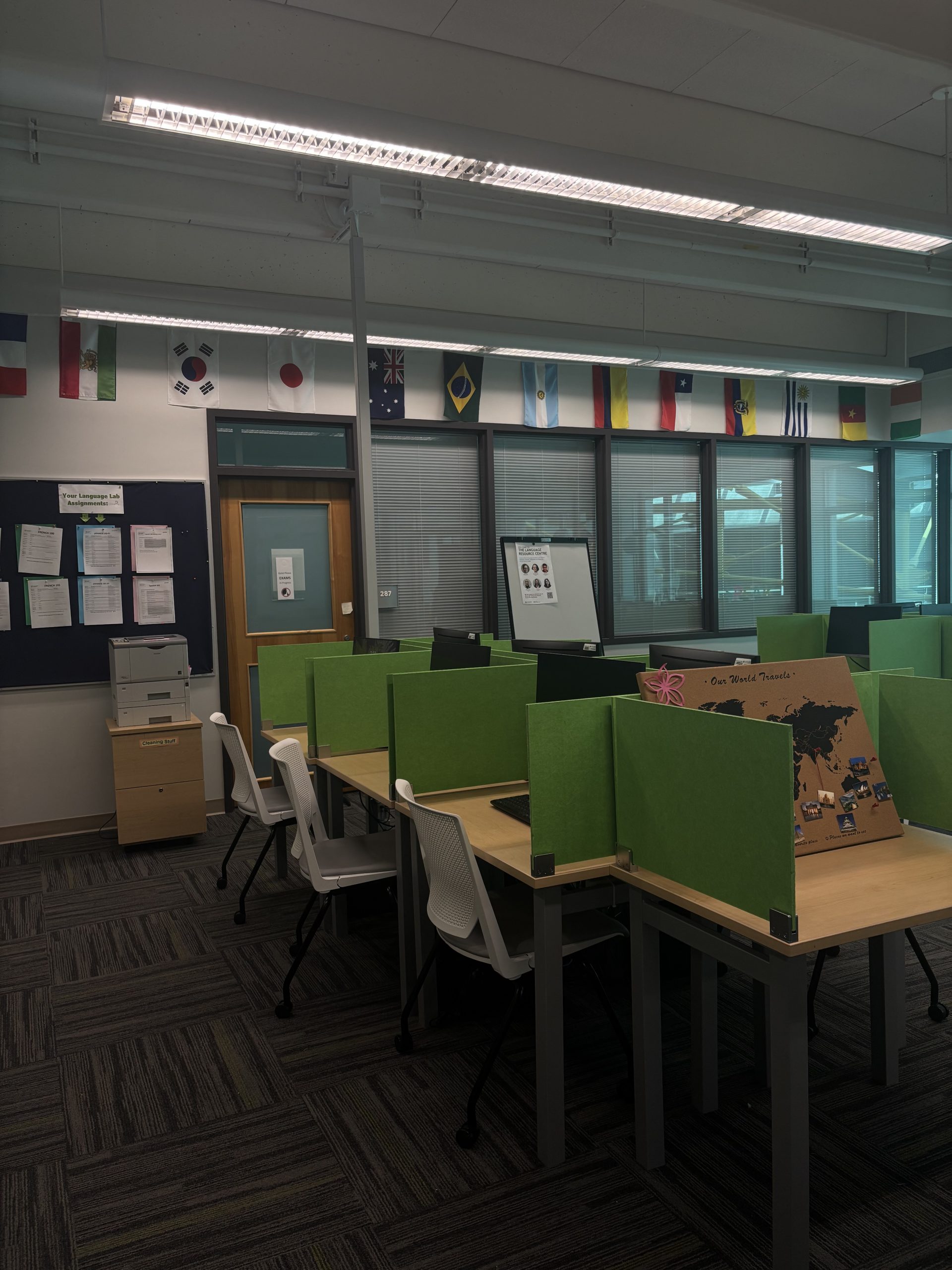
Dedicated testing environments provide students with access to assistive devices and reduced distractions settings during exams.
Culturally, there has been a significant shift in how society understands and responds to people with learning disabilities. Prior to the 1980s, there was limited awareness and learning disabilities were often misunderstood, leading to stigmas, misconceptions and a lack of support across all levels of education. Today, increased awareness and understanding of learning disabilities has fostered a deeper understanding to the barriers an individual with learning disabilities face, as well as the importance of providing appropriate support to ensure academic success.
In Canada, accessibility is shaped by federal and provincial legislation that requires institutions to provide accommodations. The Accessibility Act is a key piece of legislation which aim is to create a barrier free Canada by 2040. This Act requires organization (which including public school and post-secondary institutions) to identify, remove and prevent barriers to accessibility (Government of Canada, 2019). Public educational institutes in Canada are legally required to provide accommodations for students with disabilities under the laws such as the Canadian Charter of Rights and Freedom, the Canadian Human Rights Act and the British Columbia Human Rights Code (Government of Canada, 2019). This is one of the reason why we’ve seen a growth in the awareness and understanding of learning disabilities. In Canada, legislation such as the Accessible Canada Act (2019) and the Accessible British Columbia Act (2021) provides a clear direction for how institutions must support accessibility.
These laws require universities to identify, remove and prevent barriers within their environment, shifting the responsibility from the student to the institution (Government of Canada, 2019). They also mandate the development of formal accessibility plans and policies, which ensures that schools have structured approaches for providing accommodations rather than relying on inconsistent practices (Government of Canada, 2019). In addition, the emphasis on education and accountability, requiring institutions to involve people with disabilities in decision making and to provide training for facility and staff (Government of Canada, 2019). Together, these legal frameworks have contributed to increase awareness and a more proactive, system approach to supporting students with learning disabilities in Canadian education.
Accessibility challenges in higher education extends beyond the student. In 2013, “only 43.75% of universities in Canada had a written disability accommodation policy for faculty members and only 42% of universities in Canada had a written policy” (Stone, Crooks & Owen, 2013). If faculty members do not have a policy or steps to follow, students with learning disabilities are less likely to receive the support they need. Without a strong and detailed framework, post-secondary institutions risk leaving both students and educators without the tools they need to support and ultimately, thrive. While these statistics are from 2013, they illustrate a longstanding gap in institutional support for faculty, which suggests that many universities have been slow to fully address these flaws or gaps. Embedding a culture of inclusivity across all levels of the institution ensures that accessibility is not treated as an afterthought but as a core component of academics and for the administration, staff and faculty. Universities have the opportunity to foster an environment in which all members of the academic community (students, administration and faculty), are supported and allow for an environment where all students can flourish and succeed personally and academically.
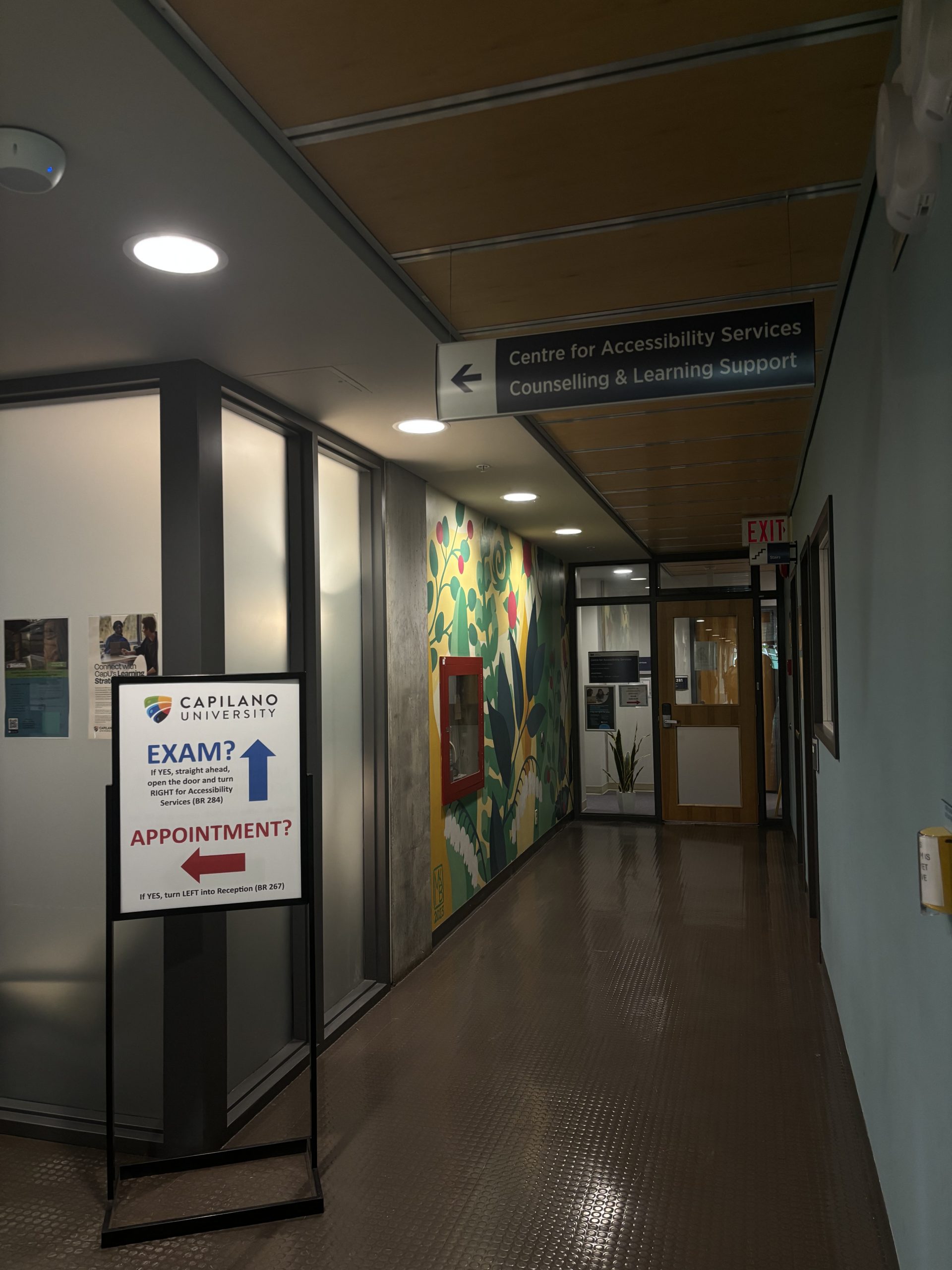
Every sign points towards inclusion, helping students access the support they need to succeed at Capilano University.
Inclusive teaching methodologies can significantly enhance the learning experience for students with learning disabilities. Research shows how a professor can positively impact engagement and ultimately accessibly and success for all students by how course material is delivered. Valle-Florez et al. (2021) conducted a study examining 201 university professors who teach training programs in Spain, focusing on faculty perceptions on inclusion of university students with learning disabilities. The results highlighted that many of the professors recognize the importance of incorporating different learning styles, and to make content more accessible for
students with diverse learning needs. They made the content accessible by using a variety of teacher strategies, such as combining lectures with visual aids, videos and hands on activities to support different ways of learning. Professors also increased flexibility in assessments by offering alternatives to traditional exams, including projects, presentations and collaborative work. The study also touches on the professors attitudes and the preparation needed for inclusion strategies to succeed. Arguing that incorporating inclusive teaching methods such as active learning, collaboration learning, project based learning and structured support, can ensure that more students will have meaningful academic opportunities and success. To effectively implement these approaches, post secondary institutions should require mandatory training for all faculty to inform, educate and support staff on accessibility services and how they can better support all students. This training would provide the policy, steps and strategies for inclusive teaching, such as increasing awareness of diverse learning styles and providing the necessary tools to create more supportive learning environment.
When I was diagnosed, I gained a better understanding of myself, how I learn best, and which strategies work best for me (in order to optimize academic success). I’ve developed more effective and efficient study habits and techniques, such as note-taking and time management that align with my learning needs. More importantly, I’ve gained confidence and built my self-esteem, and this has helped me to feel comfortable advocating and seeking the resources I need in order to be academically successful. When I’ve felt academically supported by professors and had the adequate accessibility services, I was able to thrive academically. In Grade 9, I struggled emotionally and academically but by the end of Grade 12, I graduated high school with “Honours with Distinction” and in my last semester at Capilano University (Fall 2025), I made the Dean’s List. These achievements are a reflection of not only my hard work and resilience but the critical role my learning disability diagnosis has positively impacted my success. My personal experience demonstrates that when a student with a learning disability is given a chance and provided with the tools and support, they need, they are capable of achieving a high level of success. This further reinforces the importance of improving access to psychoeducational assessments and educating administration, staff and faculty on inclusive teaching practices, accessibility services and the strategies to support diverse learning needs, so all students have an opportunity to reach their full potential.
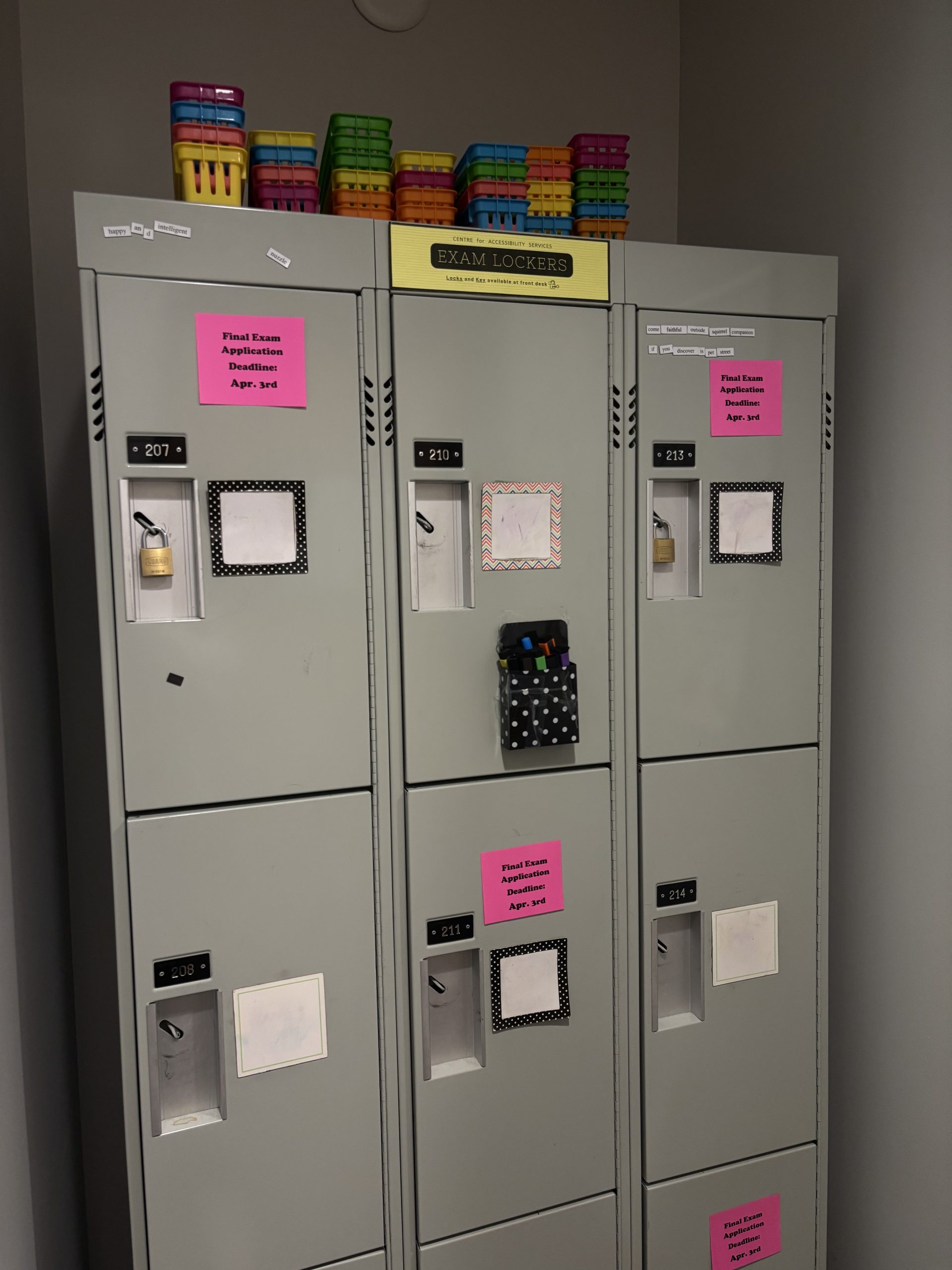
Designated exam lockers allow students to securely store backpacks, phones, and personal items, supporting accommodated and standardized testing environments.
In today’s economy, where the cost of living and inflation continue to rise, it’s become increasingly important for people to seek and obtain a good education and training (in an academic setting or in a trade) in order to secure a good paying job with benefits. Access to a higher education is essential for not only for career advancements but also meeting basic human needs such as housing, transportation and food, which are critical to maintaining a stable and comfortable life. By providing the necessary support, post secondary institutions can open doors to meaningful career opportunities, reduce long-term socioeconomic disparities and positively impact the livelihood and success of many students. Accessibility services are not just a support mechanism but serve as a critical investment in the future potential of students and the broader economy.
References
Government of Canada. (2019). Accessible Canada Act (S.C. 2019, c. 10). https://laws-lois.justice.gc.ca/eng/acts/A-0.6/ Karasewich, Tara. (2022). Accessibility In Higher Education.
Saltes, N. (2013). Disability Barriers in Academia: An Analysis of Disability Accommodation Policies for Faculty at Canadian Universities.
Valle-Flórez, R., De Caso Fuertes, A. M., Baelo, R., & García-Martín, S. (2021). Faculty of education professors’ perception about the inclusion of university students with disabilities. Int J Environ Res Public Health. 2021 Nov 6;18(21):11667. doi: 10.3390/ijerph182111667