


Grace Bunting
Grace Bunting is completing a Bachelor of Science at Capilano University, majoring in biomedical science, where she will be graduating in December 2025. Grace has been recognized for academic excellence, being placed on the Dean’s List three times throughout her degree. She has worked at an animal clinic as a technician assistant and is currently working at a farm as an animal care attendant. Grace will be pursuing a career in veterinary medicine starting in September 2026, where she plans to work as a large animal veterinarian, continuing to advocate for animal health and welfare.
Content Warning: The following article contains information about domestic violence and animal abuse which may be disturbing to some audiences.
Imagine spending nine and a half years in an abusive relationship, constantly fearing for you and your pets’ safety (Tiplady et al. 2018). Now imagine euthanizing your three dogs after those nine and a half years because you feel there is no other way to keep them from being abused. This was Maddie’s experience (Tiplady et al. 2018). Unfortunately, this is the reality that many people in domestic violence relationships face. In recent years, a strong link (The Link) between domestic violence and animal abuse has been identified and investigated by researchers in various studies. Abuse against companion animals, most commonly dogs and cats (Monsalve et al. 2017), is often used as a method of control or punishment in domestic violence situations. This is not only incredibly harmful to the animal and the abused partner, but it can also be severely damaging to any children present in this environment, normalizing the perpetration of violence against others. This normalization can cause children to commit animal abuse themselves and may evolve into violent crimes in adulthood. Due to their proximity to possible animal abuse cases, veterinarians can be used as frontline workers in the identification of domestic violence, if properly trained. More education about the link between animal abuse and domestic violence must be added as a required curriculum in veterinary schools in order to better prepare veterinarians for this role, and to better support people, and their pets, involved in domestic violence situations.

Dogs are one of the most commonly targeted companion animals in domestic violence situations.
Domestic violence includes any type of physical, sexual, emotional, or psychological abuse within an intimate, or formerly intimate, relationship where one aims to control their partner through fear (Tiplady et al. 2018). One of the ways in which perpetrators of domestic violence control their partners is through the abuse of their pets. In domestic violence environments, animals experience many forms of abuse including deliberate neglect, verbal abuse and threats, constituting psychological and mental abuse, which can lead to more severe physical or sexual abuse (Tiplady et al. 2018). Many studies are currently being done to investigate the link between domestic violence and animal abuse, with knowledge about this link having “grown over the last two decades” (Tiplady et al. 2018). Investigations into this link emerged in 1963 when animal cruelty was determined to be an indicator of criminal behaviour in adulthood (Monsalve et al. 2017), though widespread knowledge about the topic is still lacking.
The link between domestic violence and animal abuse highlights the cycle of violence that occurs when someone chooses to prey on another’s vulnerability. Living in an environment where one is experiencing any form of domestic violence is extremely harmful and can have long lasting physical and psychological effects, such as fear, anxiety and depression (Barbosa-Torres et al., 2024). When violence occurs in the home, it greatly affects not only the humans living in that environment, but their four-legged companions as well. Even if the pets are not specifically targeted by the abuser, living in an abusive home can cause fear and anxiety in these animals, leading to significant behavioural shifts. There are five freedoms that measure the wellbeing of an animal, one of which being the freedom from fear and distress. Witnessing domestic violence goes against this freedom, and once that line is crossed, there exists not only domestic violence but animal abuse too. This is evidenced by Maddie’s experience, as well as eleven other women in the study, who reported a change in their pets’ behaviour as a result of witnessing violence in the home (Tiplady et al. 2018). The behavioural changes included protectiveness toward the victim, avoidance and/or aggression towards the abuser and other men, fearful and nervous behaviour and decreased appetite (Tiplady et al. 2018). Unfortunately, animals also experience domestic violence as targets of the aggression, in order to harm them or the people who love them. While there are many reasons abusers harm animals, the primary reason is to “cause fear, intimidation, vengeance and control over the female partner and children” (Mota-Rojas et al., 2022).
People form close emotional bonds with their companion animals, with this source of comfort being especially important for those experiencing domestic violence. This close bond is often taken advantage of by abusive partners. Many women who have reported experiencing domestic violence also stated that they either delayed leaving their abusive partner (Barbosa-Torres et al., 2024) or returned to the violent home (Monsalve et al. 2017) out of fear for their animal’s safety. The delay in leaving these unsafe situations is most commonly due to the lack of facilities available for the pets of domestic violence victims. In a local context, “less than half of the shelters in BC are pet-friendly” (About Warm Hearts, n.d.), causing 56% of survivors to delay leaving violent environments (About Warm Hearts, n.d.). While it varies on a case-by-case basis, the most frequent reports of animal abuse by a violent partner include “threats, physical abuse and prohibiting the supply of basic resources, mainly food, water and/or veterinary care” (Monsalve et al. 2017). The use of violence against companion animals as a method of psychological control perpetuates a cycle of violence in the home that can lead to serious developmental issues in children that witness this, encouraging further violent behaviour as they reach adulthood.
Veterinary care has been reported as one of the fundamental resources being denied to animals in households experiencing domestic violence.
Recent literature has also identified a link between domestic violence and animal abuse in relation to a child’s development, leading to significant long-term effects on their behaviour. It has been shown that “abuse of animals is more commonly reported in children who have been exposed to domestic violence” (Mota-Rojas et al., 2022). This is due to a lack of empathy developing (Monsalve et al. 2017), as well as a normalization of violence against others. It was reported that 32% of women who owned pets and had entered shelters after experiencing domestic violence also witnessed their child hurting or killing animals (About Warm Hearts, n.d.). In extreme cases, children experiencing constant violence in the home “may even kill a pet to save it from suffering torture in the future” (Mota-Rojas et al., 2022), showing that domestic violence can lead to animal abuse when children feel there is no other option to protect their pets. Children who witness violence in the home may also commit acts of animal abuse in order to replicate their parent’s actions. Unfortunately, Cara, a participant in the Australian study, experienced this firsthand, explaining that her partner’s “child copied his father by throwing [their] small dog into the swimming pool” (Tiplady et al. 2018). The Link, with regards to child development, goes both ways though, with animal cruelty in childhood also showing an association with violent crimes in adulthood (Monsalve et al. 2017). Research shows that there exists an increased risk of domestic violence in people that commit animal abuse as children (Mota-Rojas et al., 2022), further proving that The Link perpetuates a cycle of violence that causes intergenerational pain and trauma. With some studies showing that 20% of animal abuse cases have been perpetrated by children (Mota-Rojas et al., 2022), identification and understanding about The Link is crucial.
Many studies about the link between domestic violence and animal abuse have been performed by researchers in recent years, making the role of veterinarians as frontline workers clearer, though education is not a reflection of this. Veterinarians are either unaware of The Link, or they are aware of it but lack the resources and information to report it and provide proper support to survivors and their companion animals. An interview with Dr. Azy Behnam highlighted that knowledge about The Link is dependent upon the veterinarian’s experience in their undergraduate degree as well as which elective courses they took in veterinary school, with not every student learning about the topic (Behnam, Azy, personal communication, November 4, 2025). Education about the matter seems to depend upon individual instructors in veterinary school as well, with Dr. Behnam stating, “it depends on whether you’ve had a course with a [veterinary] social worker … because they have a lot of experience in this respect” (Behnam, Azy, personal communication, November 4, 2025).
After obtaining their doctorate in veterinary medicine, veterinarians are also reporting a lack of education in their workplaces. A 2019 survey conducted in Sweden explored the understanding veterinarians had about The Link and discovered that 72% of respondents had no information of the link between domestic violence and animal abuse at their workplace, and an additional 18% did not know if there was information available (Oellig et al., 2024). This confirms that veterinarians are not only lacking education within schools in this area of study but also lack access to further educational opportunities once they begin practicing veterinary medicine.
Lack of education appears to be the largest barrier to reporting animal abuse and subsequently identifying possible domestic violence cases.
With this being said, some veterinarians have reported that they do suspect a link between domestic violence and animal abuse, as “people who abuse animals are also more likely to abuse their partners or children (Tiplady et al. 2018) but have never had proper training on the matter. This was confirmed by Dr. Behnam when she explained that she was aware of The Link more so culturally rather than being educated about it because of the idea that people who prey on smaller, more vulnerable beings, like animals, have a tendency to commit violence against people as well (Behnam, Azy, personal communication, November 4, 2025). While lack of knowledge about The Link is a large barrier to proper identification of these cases, lack of education and guidelines about how to report a suspected case of animal abuse is also experienced by many veterinarians. In an interview with CBC News, Dr. Shane Bateman explained that “around 90 per cent of veterinarians will likely have seen what they perceive to be a case of animal cruelty or neglect [within] their practice lifetimes” (Mahler, 2025), both of which fall under the scope of animal abuse. If this is true, why are so many vets uneducated about the reporting process in such cases?

Due to the high percentage of veterinarians that will come in contact with animal abuse in their practices, education and training is key in protecting these vulnerable beings.
Before one can understand the reporting process for a suspected animal abuse case, they must identify that there is in fact abuse occurring. This remains challenging to determine due to the fact that a traumatic accidental injury can look very similar to a non-accidental injury. For example, a broken bone can occur as a result of an accident or can be caused by a physical altercation between an animal and their abuser. Additionally, non-accidental injuries can go unnoticed in a clinical setting because they are often hidden from veterinarians by the pet’s owner (Oellig et al., 2024). It has been reported that “the lack of training to identify animal abuse cases is the most common reason reported by veterinarians not to file a complaint” (Monsalve et al. 2017).
Once a case of animal abuse has been identified, reporting it to the proper authorities would be the next step. Unfortunately, many veterinarians “lack … information regarding legal rights and responsibilities toward the victims of abuse” (Monsalve et al. 2017). Another study confirmed these results when stating that 54% of their participants, who were practicing veterinarians, reported that their employer did not have procedures in place for handling cases of suspected animal abuse, and 29% were unsure if such procedures existed (Oellig et al., 2024). The results from these studies indicate a serious need for more education in the veterinary field about when and how to report animal abuse cases. Lastly, a large barrier to proper reporting of cases where it is suspected that an animal is being abused is “fear of reprisals from the abuser” (Monsalve et al. 2017). As veterinarians, advocating for the health and wellbeing of patients can become dangerous when cruelty and abuse are involved because evidence of such situations comes in the form of diagnostic testing. In these cases, veterinarians who report animal abuse “may be called upon to testify in court” (Responsibility of Veterinary, 2024), therefore identifying themselves as the reporter and risking their safety when facing the abuser. While this poses a significant problem for veterinarians wishing to report, the primary barrier appears to be a lack of education. If veterinarians are expected to be frontline workers in the identification of The Link, the first step to achieving this is helping them understand the clinical signs and legal responsibilities involved in suspected animal abuse cases.
To better prepare veterinarians, education must be added to the required curriculum in veterinary schools, beginning with the clinical signs that would point to abuse in their patients. Accidental and non-accidental injuries can present similarly, but signs that abuse may have occurred include: “unexplained or repetitive injuries to an animal …, stab wounds …, gunshot wounds …, obvious severe neglect …, [and] the animal [displaying] fear of its owner” (Arkow, 2015). Changes with regard to education are starting to occur, with the Ontario Veterinary College creating a new fourth year elective in forensic science this past August (Mahler, 2025). This program will teach veterinary students how to use their prior knowledge about animal health and diagnostics to identify abuse and neglect in their patients (Mahler, 2025). While this is a great first step, it is not a part of the required curriculum and students may choose not to enroll, therefore maintaining a gap in knowledge about The Link.
The next step in education is to provide veterinarians with protocols on how to report animal abuse. When discussing this with Dr. Behnam, she explained that while it may be mentioned in early years, the focus in veterinary school is less about ethical responsibility with regards to abuse cases and more about the science aspect of veterinary medicine (Behnam, Azy, personal communication, November 4, 2025). She also explained that education about the legal framework as well as which authorities to report to would be beneficial as it is not always clear (Behnam, Azy, personal communication, November 4, 2025).
“Providing an opportunity to discuss issues of animal abuse and domestic violence may be the only way for women to obtain information and support (Tiplady et al. 2018), and for this reason, it is crucial that veterinarians are made aware of their role in these situations. The results of a study that interviewed women who experienced domestic violence and animal abuse reported that “training veterinarians to be more proactive in opening a conversation about [The Link] … would help clients feel safe to disclose the abuse” (Tiplady et al. 2018).
Another measure that could be taken to better support victims of domestic violence is providing veterinary clinics with informational pamphlets with lists of shelters or help lines they could call for support. These pamphlets could also include information about how owners can prepare their pets for leaving the abusive situation. Community Veterinary Outreach, a charity that helps vulnerable communities through veterinary care, released a safety planning list in 2018 for pet owners wishing to leave their abusive relationships. This list included obtaining proof of pet ownership, ensuring your pet has proper identification, like a microchip, writing down your pet’s information for possible shelters or fosters to care for them, and obtaining pet supplies like food, bedding, toys and carriers (Community Veterinary Outreach, n.d.). Providing victims with access to this information at veterinary clinics not only helps them if they are not comfortable sharing their abuse with the veterinarian, but it also maintains the veterinarian’s safety, as they would not have to confront the abuser. Additionally, if the animal abuse was hidden from the veterinarian and goes unnoticed, it still provides the victim with resources so they can seek help and remove themselves and their pet from an abusive household.
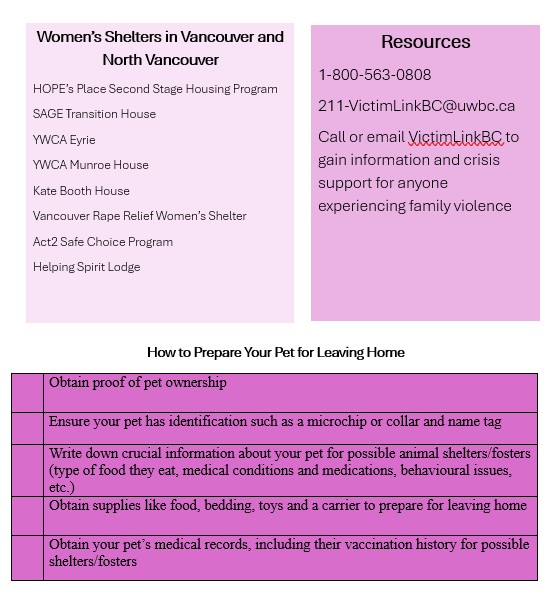
A sample pamphlet, based on the one created by Community Veterinary Outreach, that could be provided to veterinary clinics for victims of domestic violence to seek help and get the support they and their pets need.
Veterinarians could become a first line of defense in identifying domestic violence through their patients; however, they are currently ill-informed about the link between domestic violence and animal abuse. Creating a curriculum in veterinary schools, from current research being done about The Link, can be a great first step in equipping veterinarians with the information needed to better support victims and their beloved pets. Had this curriculum been implemented when The Link was first identified, Maddie may not have been stuck in a violent relationship for nine and a half years, and her three beloved dogs would still be with her today. Further research could identify the ways in which veterinarians can be better protected when reporting animal abuse to avoid backlash from abusers. This could result in veterinarians feeling more comfortable reporting abuse which would lead to more advocacy for victims of abuse and possibly more identification of domestic violence through animal abuse investigations.
Bibliography
About Warm Hearts Pet Safe Havens. (n.d.). Warm Hearts Pet Safe Havens. https://warmheartspetsafehavens.org/about/
Arkow, P. (2015). Recognizing and responding to cases of suspected animal cruelty, abuse, and neglect: what the veterinarian needs to know. Veterinary Medicine: Research and Reports, 349-359. https://doi.org/10.2147/VMRR.S87198
Barbosa-Torres, C., Bueno-Galán, M., Bueso-Izquierdo, N., Cantillo-Cordero, P., & Moreno-Manso, J. M. (2024). Intimate partner violence and domestic violence linked to animal abuse: a review of the literature. Current Psychology: A Journal for Diverse Perspectives on Diverse Psychological Issues, 43(41), 32200-32209. https://doi.org/10.1007/s12144-024-06731-w
Community Veterinary Outreach: Download your Safety Planning Card for Free. (n.d.). Community Veterinary Outreach. https://mailchi.mp/vetoutreach/safetyplanningcard
Mahler, C. (2025, August 16). Animals can’t speak for themselves, but these vets will do it for them. CBC News. https://www.cbc.ca/news/canada/kitchener-waterloo/forensic-veterinary-science-ontario-veterinary-college-1.7608896
Monsalve, S., Ferreira, F., & Garcia, R. (2017) The connection between animal abuse and interpersonal violence: A review from the veterinary perspective. Research in Veterinary Science, 114, 18-26. https://dx.doi.org/10.1016/j.rvsc.2017.02.025
Mota-Rojas, D., Monsalve, S., Lezama-García, K., Mora-Medina, P., Domínguez-Oliva, A., Ramírez-Necoechea, R., & Garcia, R. (2022). Animal Abuse as an Indicator of Domestic Violence: One Health, One Welfare Approach. Animals, 12(8), 1-22. https://doi.org/10.3390/ani12080977
Oellig, L., Lindsjö, J., & Röcklinsberg, H. (2024). Exploring Swedish veterinarians’ awareness of non-accidental-injuries, animal abuse and the Link to domestic violence, and their role in addressing this societal issue. Frontiers in Veterinary Science, 11. https://doi.org/10.3389/fvets.2024.1439106
Responsibility of Veterinary Professionals in Addressing Animal Abuse and Neglect. (2024, August 19). Canadian Veterinary Medical Association. https://www.canadianveterinarians.net/policy-and-outreach/position-statements/statements/responsibility-of-veterinary-professionals-in-addressing-animal-abuse-and-neglect/
Tiplady, C.M., Walsh, D.B., & Phillips, C.J.C. (2018). “The animals are all I have”: Domestic Violence, Companion Animals, and Veterinarians. Society & Animals, 26(5), 490-514. https://doi.org/10.1163/15685306-12341464