


Mona Salehi
Mona Salehi is completing her Bachelor of Arts with a Major in Psychology at Capilano University, where she has demonstrated academic excellence, earning a spot on the Dean’s List. Her undergraduate experience has been centered on early intervention, family support, and improving access to services for children and youth. During her undergraduate years, she worked with children and youth in community settings, including roles as a behavior interventionist and youth mentor, where her passion for supporting vulnerable populations and creating inclusive, supportive environments began to grow. Once her undergraduate degree is complete, she plans to pursue graduate studies in occupational therapy.
The Moment Everything Changes
At fifteen months old, he stopped making eye contact.
Before that, he had been developing normally. He babbled, responded to his name, pointed to things he wanted, and laughed when his mother entered the room. There were no signs that anything was wrong. Then slowly, something changed. He stopped responding when people called his name. The few words he had learned disappeared. When new people came into the house, he cried and hid. He no longer pointed at things he wanted. Instead, he pulled his mother’s hand and placed it on objects, as if using her as a tool.
His mother told me that at first, she thought maybe he was just going through a phase. Maybe he was shy. Maybe he would grow out of it. However deep down, she knew something was different.
“It was the family members who noticed first,” she said. “They told me something is not right. That’s when we went to the doctor.”
This moment the moment a parent realizes their child’s development is different is often described as the beginning of the autism journey. Yet what comes after that moment is not simply a diagnosis. It is not just therapy appointments and school meetings. It is a complete restructuring of daily life. It changes how a family spends their time, how they spend their money, how they plan their days, and sometimes even whether a parent can continue working. Research shows that “parents and caregivers of children with autism often face tremendous emotional strains, changes in lifestyle, and economic hardship associated with caring for their children” (Zand et al., 2013). As one parent shared “Since having a child with special needs, we’ve become quite isolated socially. We can’t engage freely like other parents, as we need to constantly supervise our child in public settings to ensure safety and appropriate behavior”
Autism is often discussed in terms of children their behavior, their language, their schooling, their therapy. Although what is often overlooked in public discussions is what happens to the family. Parenting a child with autism involves invisible labor, systemic barriers in education and funding, and social isolation. However, when early intervention and collaboration between parents and professionals are available, outcomes can change not only for the child, but for the entire family. Studies about who benefits from early intervention in autism conducted by Itzchak and Zachor show that early intervention can significantly improve communication and reduce autism symptom severity, after one year of intervention, children showed significant improvement in verbal ability and a reduction in autism severity (2011).
This paper argues that autism should be understood not only as a medical diagnosis affecting a child, but as a social and structural issue that affects the entire family system. This means that early intervention, family support, and systemic policy support are essential for improving outcomes for children and families.
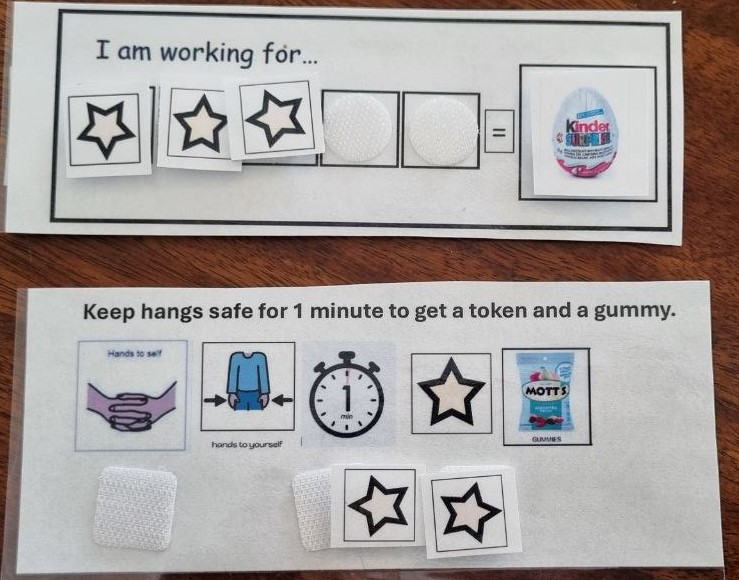
Visual created for decreasing problematic behavior
Learning a New Way to Parent
Parenting a child with autism often means learning about behavior, communication systems, sensory regulation, visual support, and therapy techniques. Parents must learn how to respond to meltdowns, how to teach communication, how to structure routines, and how to advocate in school meetings. One parent explained that before her child was diagnosed, she imagined parenting would involve helping with homework, taking her child to sports practice, and reading bedtime stories. After the diagnosis, parenting looked very different. Her evenings were spent practicing communication programs, preparing visual schedules for the next day, and attending online parent training sessions. In many intervention programs, parents are not just caregivers, they are part of the therapy team. In fact, research shows that many autism treatments “include parents in the therapeutic process, making them essential to the continuity, maintenance, generalization, and outcomes of treatment” (Zand et al., 2013). This means therapy does not happen only in clinics; it happens every day at home with parents. One professional explained that parents often become the coordinators of an entire therapy team. “On top of all the regular parenting responsibilities, there is so much more you are responsible for: therapy schedules, finding professionals, getting on waitlists, hiring a therapy team, hosting team meetings, picking up therapy materials, IEP meetings, coordinating across professionals, making extra accommodations at home, preparing in advance for things like doctor appointments, dentist, restaurants, birthday parties or going on an airplane” (Tanner, Amy, personal communication,18 February 2026).
This description shows that parenting a child with autism is not only emotional labor; it is organizational labor, educational labor, and advocacy labor. Parents must manage a system that includes therapists, teachers, doctors, and funding agencies. In many ways, parents become project managers for their child’s development.
Much of the work parents do happen inside the home, where no one sees it. Parents print and laminate visual schedules. Token boards are prepared. AAC devices are programmed. Therapy materials are organized in bins. Parents practice communication exercises, social skills, and daily living skills with their child every day. To an outsider, it may look like the child is simply playing at home. In reality, these activities are carefully planned for teaching sessions. A game with flashcards might be teaching emotional recognition. A matching activity might be teaching early reading skills. A trip to the grocery store might be practicing communication and waiting skills.
A professional working with a family quickly recognizes the extent of parents’ involvement beyond therapy sessions. Parents attend training sessions, implement therapy programs daily, and coordinate multiple services while also caring for their other children and managing the household. Studies also demonstrate this fact that “many of the empirically supported treatments for children with autism include parents in the therapeutic process,” (Zand et al., 2013).
This level of involvement demands substantial time, energy, and emotional resilience Studies about exploring challenges and support structure for mothers describe that parents of children with autism experience high levels of stress due to the constant demands of caregiving, therapy coordination, and advocacy (Lamba et al., 2022). Another study about challenges encountered while raising a child with autism found that many parents describe becoming full-time advocates for their children, often feeling that they must constantly fight for services and support (Altiere & von Kluge,2009).

Using board games to teach different emotions and how clients can cope with them
The Financial Cost of Autism
In addition to invisible labor, families often experience financial strain. Therapy services which primarily provided by professionals such as Board-Certified Behavior Analysts (BCBAs), behavior interventionists, speech-language pathologists, and occupational therapists can be expensive, and even when funding is available, it may not cover all services for example session with a BCBA can range from $100 to $200 per hour. Similarly, speech therapy and occupational therapy services often cost between $100 and $190 per session. Because many children require intensive intervention sometimes 10 to 30 hours per week, the total monthly cost can reach several thousand dollars. Many families pay privately for speech therapy, occupational therapy, or specialized programs because public services have long waitlists.
At the same time, many parents reduce their work hours or leave their jobs entirely to care for their child and attend therapy appointments.
According to Amy Tanner, Ph.D., BCBA-D, an instructor in the Applied Behavior Analysis–Autism Department at Capilano University “Mothers of children with autism earn about 30% less than moms of neurotypical kids because they often have to reduce their work hours, go to part-time, forgo promotions and projects that take them away from the home, or leave the workplace all together. This can lead to more financial and emotional stress on the family” (Tanner, Amy, personal communication,18 February 2026).
Therapy costs, transportation to appointments, specialized childcare, and intervention materials place a significant financial burden on families of children with autism. As Zand et al. (2013) explains, parents of children with autism often face “economic hardship associated with caring for their children” (p. 1769), and current treatment practices are often “lengthy” and “time consuming” (p. 1769). This financial strain is not only economic but also psychological. Altiere and von Kluge (2009) note that autism “affects the family system in dramatic ways” (p. 142), and that parents of children with autism report “higher levels of stress than parents of children without autism” (p. 142). They also describe the experience as “physically, psychologically, and emotionally draining” for some parents (Altiere & von Kluge, 2009, p. 146). Similarly, Lamba et al. (2022) state that parents of children with ASD face “psychological, social, physical, and financial challenges” (p. 2), showing how the burden of care extends across multiple areas of family life.
These financial pressures also contribute to inequities in access to care. Lamba et al. (2022) found that mothers often struggled with “finding appropriate therapeutic services” (p. 2) and later note that “schools and therapeutic services posed an extreme financial burden on families with children with ASD” (p. 8). Together, these findings suggest that while some families are able to secure timely and stable interventions, others face financial and systemic barriers that limit the level and timing of support their children receive.
Social Isolation and Changing Relationships
Another major theme that emerged from interviews was social isolation. Parenting a child with autism often changes relationships with friends and extended family. Some friends may not understand why the child behaves differently. Some family members may offer advice that is not helpful or may not understand the child’s needs. One mother explained that she and her family often cannot attend social gatherings unless someone can watch their child. Public places can be overwhelming, and they must constantly supervise their child to ensure safety. “We can’t engage freely like other parents. We need to constantly supervise our child in public settings. We often miss family or friends’ gatherings unless someone can watch our child. It can feel like a lonely journey,” she said.
Research confirms that many parents of children with autism experience social isolation due to stigma, lack of understanding from others, and the difficulty of participating in typical social activities (Altiere & von Kluge, 2009). Some parents also described feeling judged by strangers when their child has a meltdown in public. People may assume the child is misbehaving, and the parent is not disciplining them properly, without understanding sensory overload or communication difficulties. For example, a child might start crying and covering their ears in a busy grocery store because of the overwhelming noise and bright lights. People may interpret this as a tantrum and assume the parent is not setting limits, when in reality the child is experiencing sensory overload and struggling to communicate their distress.
This isolation is not only caused by the child’s needs, but also by a lack of public understanding and inclusive environments. When communities are not designed to support neurodiversity, families often become isolated, which shows that social isolation is not just a personal issue but also a community and societal issue.
Over time, many families begin to build new social networks with other parents who have children with special needs. Adaptive sports programs, therapy centers, and parent support groups have become important spaces where families can meet others who understand their experiences. These communities provide emotional support and reduce feelings of isolation. Lamba et al explains that “mothers with social support experience less stress, more optimism and are better able to address the needs of their children” (Lamba et al. ,2022, p.2).
The Strengths That Are Often Overlooked
Despite the challenges, parents and professionals also described many strengths in children with autism that are often overlooked. “I worked with a child that could barely use an AAC app to meet basic requests, had no verbal language, but could do two- and three-digit multiplication. I have also worked with an 18-month-old that could read. And a two-year-old that knew the entire periodic table of elements” (Tanner, Amy, personal communication,18 February 2026).
These examples show that autism is not simply a deficit. Many children with autism have strong memory, pattern recognition, attention to detail, and the ability to focus intensely on topics they are interested in. Another parent described her child’s emotional sensitivity. She said her daughter often notices when someone is sad and tries to comfort them. This challenges the stereotype that autistic children do not have empathy. In reality, many autistic individuals experience emotions very deeply but may express them differently.
Yehonatan-Schori et al explains that many parents experience personal growth as a result of raising a child with autism. Families often describe increased patience, empathy, resilience, and advocacy skills (2019). Parents often say that their child changed how they see the world and taught them to celebrate small achievements that other people might overlook. These stories show that autism involves both challenges and strengths. When children receive the right support and education, their strengths can be developed and used to help them succeed.
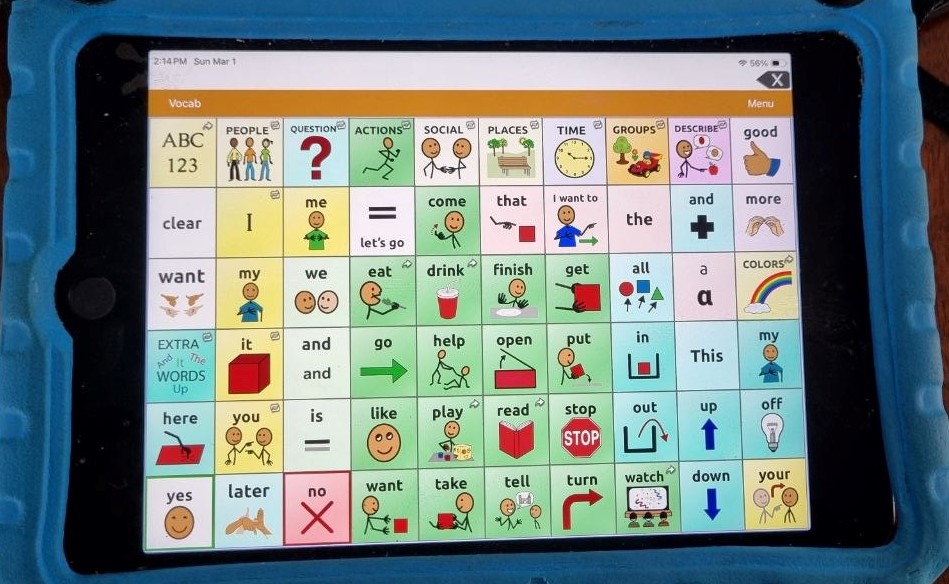
AAC device (Touch chat)
Barriers in Schools and Services
While families show resilience, many parents described significant barriers when trying to access support. Long waitlists for specialists, limited school resources, and funding delays were common themes in interviews. One parent explained that her child’s school had only one speech-language pathologist for the entire school. This meant her child could not receive enough support at school, so the family had to pay privately for therapy. Another parent described how difficult school breaks were because there were not enough structured programs or inclusive summer camps for children with special needs. During these times, parents often have to reduce work hours or stay home to care for their child. Schools, healthcare systems, and funding programs all affect the outcomes of children with autism. When services are difficult to access, families must take on more responsibility and more financial burden.
In British Columbia, upcoming changes to autism and disability funding are creating additional uncertainty for families. The provincial government has announced changes to how disability funding will be distributed starting next year, moving toward a new needs-based system rather than the current autism-specific funding model. While the government states that the new system is intended to be more inclusive and fairer, many parents and advocacy groups are worried that children with autism may lose access to important services, especially early intervention therapies. This uncertainty makes it difficult for families to plan long-term therapy, employment, and financial decisions, because they do not know what level of support they will receive in the future.
Therapies such as speech therapy, occupational therapy, behavioral therapy, and communication training are most effective when provided early and consistently, but these therapies are expensive, and many families rely on government funding to access them. In British Columbia, autism funding provides $22,000 annually for children under age six and $6,000 per year for children and youth aged 6 to 18 to support specialized therapies, interventionists, and necessary equipment. If funding is reduced, delayed, or harder to access under the new system, families may not be able to afford the therapy their child needs. Without consistent therapy, children may lose important developmental opportunities during critical learning periods, which can affect communication, independence, and school readiness later in life.
Many parents are concerned that the new funding model may place children with autism into a broader disability category, which could reduce the amount of funding each child receives. Autism therapy often requires many hours per week and active parent involvement, so funding cuts do not just reduce services; they increase the burden on families. This can lead to parents reducing work hours, experiencing burnout, and facing long-term financial strain. For example, a parent may reduce their work hours or leave their job to attend therapy sessions, implement intervention strategies at home, or care for their child when services are unavailable, resulting in lost income and increased stress.

School hallway
Why Early Intervention Matters
“From birth to two years of age is the most transformative time in brain development… Therapy is maximized when introduced while these connections are forming rather than after they have already been established. By training the parents, they are able to work on these skills across multiple environments which leads to quicker acquisition and better generalization” (Tanner, Amy, personal communication,18 February 2026). Also, Itzchak & Zachor in their study about Who benefits from early intervention in autism explain that “the younger the child at the start of early intervention, the better the response in the cognitive domain” (2011)
Early intervention often focuses on communication, emotional regulation, daily living skills, and reducing harmful behaviors. One BCBA who wanted to remain unanimous described working with a child who had very limited communication and engaged in frequent self-injurious behavior. The therapy team focused on teaching functional communication and emotional regulation, and the parents were trained to use the same strategies at home. Over time, the child developed communication skills and self-injurious behavior stopped.
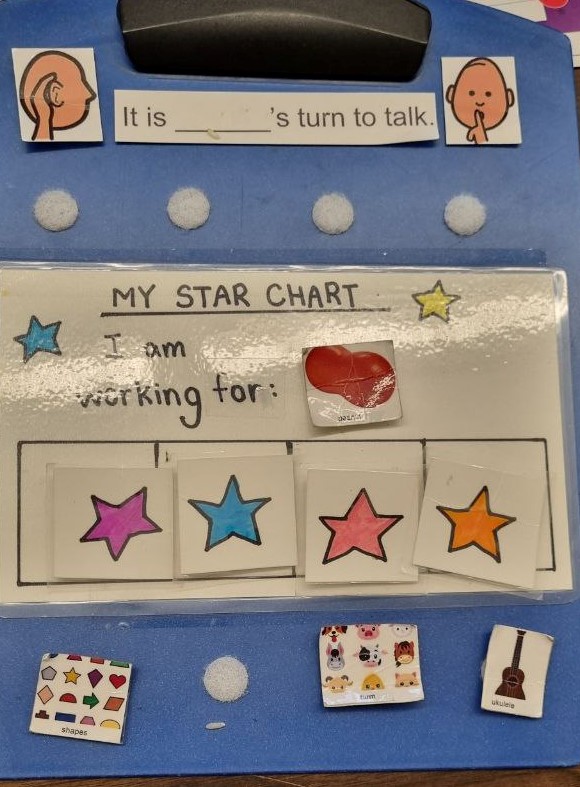
Visual created for teaching acceptable behavior
Collaboration: The Most Important Factor
One of the most important themes that emerged from interviews was collaboration. Children make the most progress when parents and professionals work together and use the same strategies across home, school, and therapy environments.
Because parents are the ones implementing strategies every day, collaboration between parents and professionals is essential for successful intervention.
When collaboration works:
- Children learn faster
- Skills generalize across environments
- Parents feel more confident
- Stress decreases
- Family life becomes more stable
Autism intervention works best when it is not only child-focused, but family-focused. Supporting parents is one of the most effective ways to support children.

Educational materials for identifying the days of the week
Why This Matters to Society
While public discussions often focus on diagnosis and therapy for the child, much less attention is given to the long-term impact on families, including financial strain, employment changes, mental health challenges, and social isolation.
This is why supporting autism must also mean supporting families. Many therapies require parents to practice strategies every day, which places a significant responsibility on families. If families are overwhelmed, exhausted, or financially stressed, it becomes much harder to maintain therapy and support the child’s development. Supporting autism, therefore, is not only about funding therapy hours but about creating inclusive schools, accessible services, stable funding systems, and workplace flexibility for parents. When families are supported, children have better outcomes; parents can remain in the workforce, and communities become more inclusive. In this way, supporting autism is not only an act of care, but an investment in children’s futures, families’ wellbeing, and a more inclusive society.

Sessions can be held at the client’s home or in public places
Conclusion: Listening to Families
The story of autism is often told by doctors, researchers, and educators. However, the people who live with autism every day are parents and families. Their experiences show that autism is not just a diagnosis, it is a daily experience that affects every part of life.
However, their stories also show something else: resilience, adaptation, advocacy, and hope. With early intervention, collaboration, and proper support systems, children with autism can learn, communicate, and develop skills that improve their independence and quality of life.
If we want better outcomes for children with autism, we must support the families by raising them. Because behind every child with autism is a family doing invisible labor every single day coordinating, teaching, advocating, and caring often without recognition.
References
- Altiere, M. J., & von Kluge, S. (2009). Searching for acceptance: Challenges encountered while raising a child with autism. Journal of Intellectual & Developmental Disability, 34(2), 142–152. https://doi.org/10.1080/13668250902845202
- Itzchak, E. B., & Zachor, D. A. (2011). Who benefits from early intervention in autism spectrum disorders? Research in Autism Spectrum Disorders, 5(1), 345–350. https://doi.org/10.1016/j.rasd.2010.04.018
- Lamba, N., Van Tonder, A., Shrivastava, A., & Raghavan, A. (2022). Exploring challenges and support structures of mothers with children with Autism Spectrum Disorder in the United Arab Emirates. Research in Developmental Disabilities, 120, 104138. https://doi.org/10.1016/j.ridd.2021.104138
- Yehonatan-Schori, M., Golan, O., & Waizbard-Bartov, E. (2019). Personal growth experiences of parents to children with Autism Spectrum Disorder. Journal of Autism and Developmental Disorders, 49(4), 1330–1341. https://doi.org/10.1007/s10803-018-3784-6
- Zand, D. H., Braddock, B., Baig, W., Deasy, J., & Maxim, R. (2013). Role of pediatricians in fostering resilience in parents of children with autism spectrum disorders. The Journal of Pediatrics, 163(6), 1769–1771. https://doi.org/10.1016/j.jpeds.2013.06.074