


Jade Kazemi
Jade Kazemi (she/her) is wrapping up her Bachelor of Arts in Psychology. Throughout her undergraduate degree, she has been honoured several times with placements on the Dean’s List. Jade is currently employed at a counselling psychology practice and has experience volunteering in the emergency department of a local hospital and with a provincial crisis line. Throughout her academic and practical experiences, Jade has developed a strong interest in counselling and abnormal psychology, with a particular focus on trauma-informed, evidence-based, and collaborative care. Upon graduation, she plans to pursue a Master of Social Work, with the goal of becoming a clinical social worker and actively contributing to accessible, compassionate and client-centered care in her community.
Introduction
When you think of the safest place to be when you’re experiencing a health problem, what place do you imagine? If you thought of a hospital, you’re not alone. Many feel that a hospital is the safest place to be when experiencing medical distress, and why wouldn’t they? Surrounded by an array of highly trained medical staff, crash carts, medicine and diagnostic machines, the perception of safety and the idea that you will be cared for at a hospital makes sense. However, research suggests that this perception does not hold true for all patients, particularly those with mental health conditions. As accounts gathered by Knaak et al. (2017) demonstrate, patients with mental health conditions report being spoken to condescendingly, dismissed, and excluded from decisions about their own care. Imagine visiting the emergency room of your local hospital in medical distress, only to have your physical symptoms diminished and be told you’re dealing with anxiety, or having your symptoms taken seriously at first, until your chart is reviewed and your mental health background is revealed. This is reality, and far more common than many of us realize. In this article, I take up this pressing question: what happens when your medical chart speaks before you do? I explore this question through an analysis of existing scholarship on clinical bias against patients with mental illness in healthcare, integrated with an interview with Patient A and a R, a registered clinical counsellor, and conclude by proposing potential solutions to address these disparities in care.
When a Diagnosis Speaks Before You Do
For patients with documented mental health conditions, emergency rooms are not always the safe spaces we imagine, and disclosure of mental health diagnoses can quietly shape how physicians interpret everything that follows, making what begins as a medical visit quickly become an experience of dismissal, and in some cases, even danger. In Crapanzano et al. (2023)’s review of 18 studies examining clinical decision-making among physicians, medical students, and nurses towards cancer, diabetes, and cardiovascular disease patients with serious mental illnesses, approximately 80% of clinical decisions were neutral or negatively biased, while only 21% were favourable toward patients with mental health conditions; and all studies reported behaviours likely to disadvantage this population, demonstrating a clear imbalance in care (p. 236). These patterns indicated that the presence of a mental health diagnosis alone influenced decision-making.
In one study, internal medicine residents assessed a patient presenting with chest pain. When the patient’s history included depression, residents collected less detailed histories and demonstrated reduced clinical engagement compared to identical cases without a psychiatric label. Another study in the same review (Crapanzano et al., 2023) found that nurses reviewing patient charts were less likely to correctly identify myocardial infarction when antipsychotic medication was listed, indicating that diagnostic accuracy shifted based on psychiatric information rather than symptoms. This imbalance is important, as these were not just studies of attitudes; they were examinations of what physicians, nurses, and trainees said they would do, what they noticed, what they chose not to investigate, and how those decisions changed once mental illness entered the case.
In another one of Crapanzano et al. (2023)’s vignette studies, they found that family physicians were less likely to suspect serious illness or order further testing for severe headache and abdominal pain when the patient had a history of depression. These are not minor differences in bedside manner; they are changes in diagnostic reasoning effected by the recognition of a co-existing mental illness diagnosis.
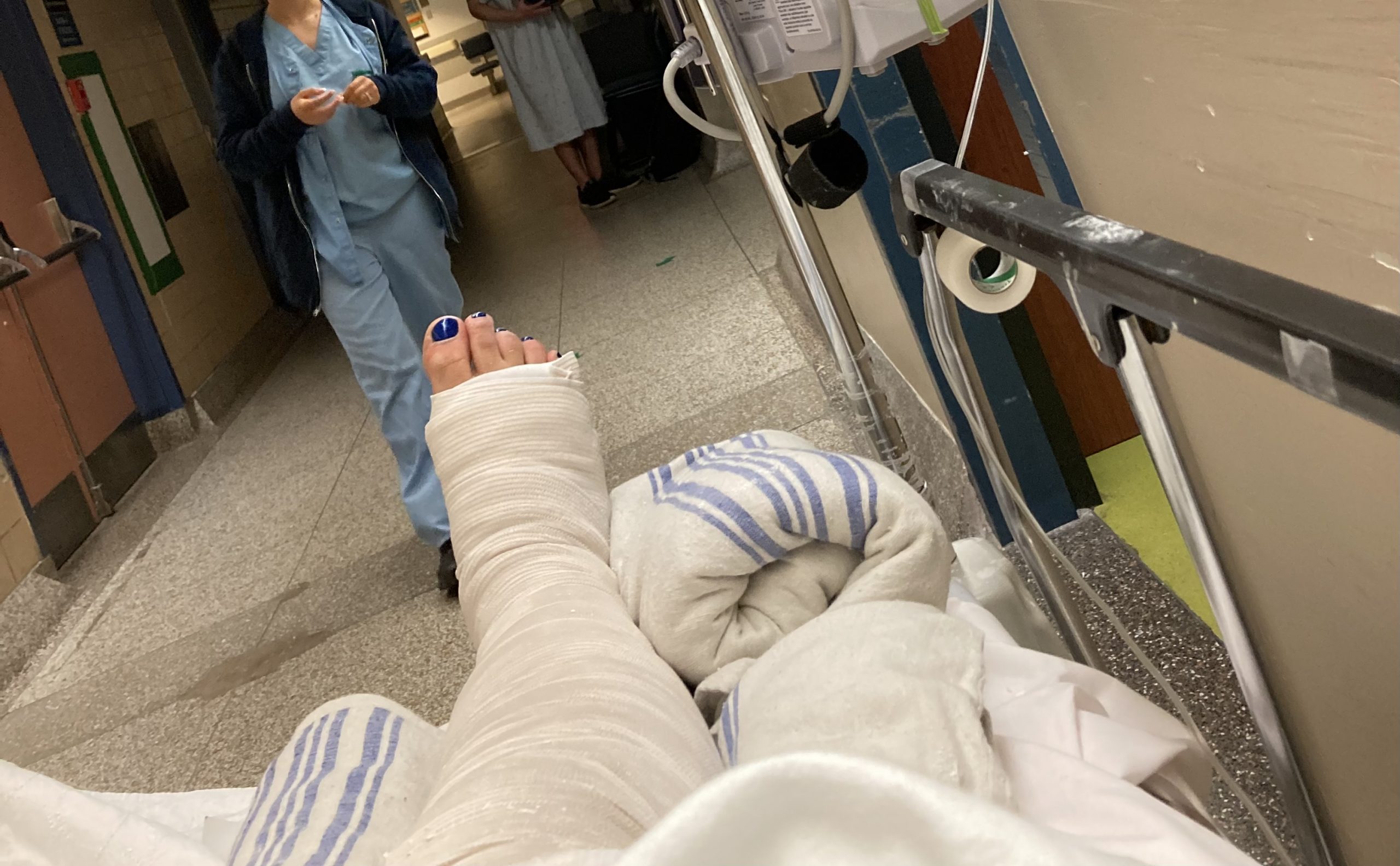
The idea that physical symptoms can be dismissed due to mental health history is not hypothetical; it is widely reported in qualitative research, and Patient A’s experience reflects these patterns with painful clarity. Patient A, who shared her experience via interview and chose to remain anonymous, described being taken to the emergency room of a local hospital in Montreal, Canada, after a bicycle accident left her with a severe tibia and fibula fracture that required Open Reduction and Internal Fixation (ORIF) surgery. In our interview, she described experiencing multiple instances of physician bias during her treatment for her fracture, which were related to her diagnosis of borderline personality disorder (BPD) (Patient A, personal communication, February 26, 2026). Her story highlights how bias can move beyond dismissal into direct harm.
Captio1n
Interview I: Patient A’s Case of Dismissal
After undergoing surgery, Patient A described the feeling of being written off by medical staff due to her previously charted BPD diagnosis (Patient A, personal communication, February 26, 2026). Post waking up from surgery, and several times thereafter, she requested access to Zoloft, a medication she had been previously prescribed for her BPD diagnosis and was actively taking on a daily basis. Due to hospitalization and surgery, she had gone without her medication for over 36 hours. “On top of the immense physical pain, shock, and trauma of seeing and feeling my leg like that, I was also going through withdrawals,” she explained. “I asked for my medication, and instead of helping me, they treated me like I was overreacting” (Patient A, personal communication, February 26, 2026). Zoloft, a commonly prescribed antidepressant, is not a medication that should be stopped abruptly as sudden discontinuation can lead to withdrawal symptoms, including increased anxiety, agitation, and emotional distress (Harvard Health Publishing, 2022).

Captio2n
Patient A described experiencing what she referred to as a “mental breakdown” (Patient A, personal communication, February 26, 2026) after waking up from surgery without access to her medication. Instead of receiving support, she felt judged and dismissed, citing that her physicians got upset with her during her breakdown and repeatedly asked her, “Why are you freaking out?” in what Patient A described as a condescending and unempathetic tone (Patient A, personal communication, February 26, 2026). That response was not just insensitive; it reflected the larger clinical pattern as Knaak et al. (2017) document similar experiences where patients reported that healthcare providers “saw the illness ahead of the person,” and reported being treated in dismissive ways, often receiving insufficient information and being excluded from decisions about their own care. We see this in Patient A, as her withdrawal symptoms were interpreted as psychological instability rather than a medically relevant response to withdrawal symptoms. A patient suffering became a patient who was “freaking out.”
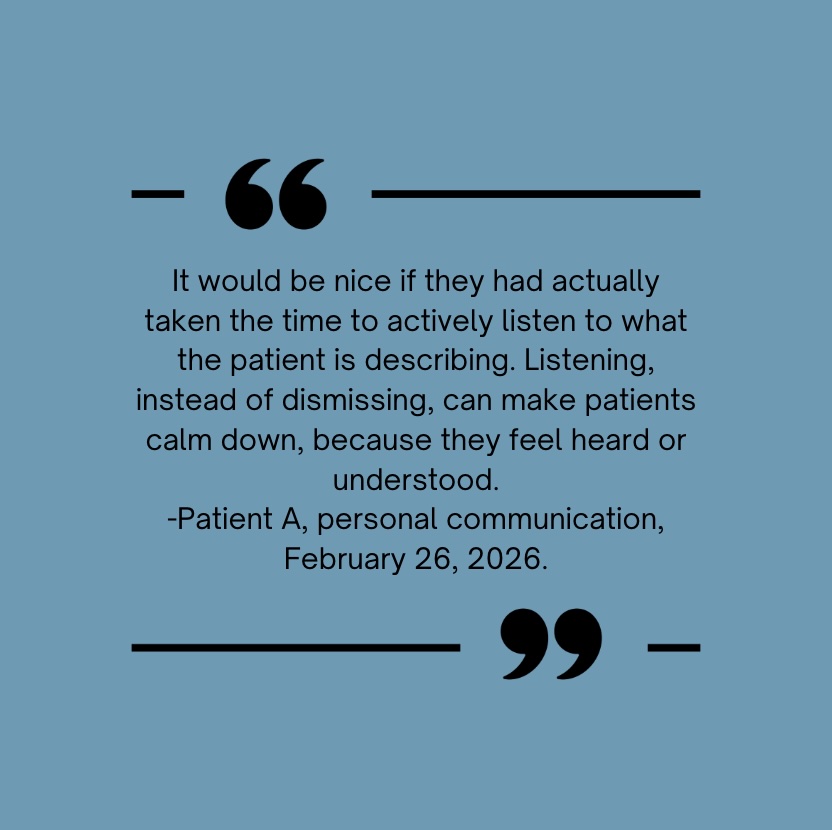
When I asked what Patient A felt her physicians could have done differently, she recommended, “It would be nice if they had actually taken the time to actively listen to what the patient is describing. They just care about calming you down and getting you to shut up. But they don’t understand that listening, instead of dismissing, can also make patients calm down, because they feel heard or understood” (Patient A, personal communication, February 26, 2026). This reflects a critical failure in care where physician bias becomes dangerous, and unfortunately, it is not the only negative experience Patient A has had with physician bias. She also described another instance when, thinking she could have a concussion after a head injury, she called the 811 nurse line. After speaking to a nurse about her physical symptoms, she was told she had to promptly visit the emergency room for testing, and an ambulance was called for her. However, when she saw the physician at the emergency room of a local Vancouver hospital, she was asked if she had any mental health history. When she answered yes, noting that she had BPD, she felt the mood switch up completely, and the sense of urgency was lost. The physician told her she had anxiety and could go home. No examination or testing was done of her head or brain (Patient A, personal communication, February 26, 2026), aligning with findings from Crapanzano et al. (2023), where physicians were less likely to pursue diagnostic testing for patients presenting with physical symptoms such as pain or neurological complaints when a psychiatric diagnosis was present (p. 245-246).
In these study reviews, identical symptoms were treated differently based solely on patient history, and explanations for these patterns were provided in Crapanzano et al. (2023)’s writing as they reported that healthcare providers described patients with mental illness as less adherent, more difficult, or less motivated, influencing decisions such as limiting referrals or reducing treatment intensity (p. 237). In some cases, providers adopted what was described as a “minimalist” approach, choosing not to pursue further investigation or intervention, with one emergency department study summarized in Crapanzano et al. (2023)’s review finding that 68% of staff reported one or more incidents in which psychiatric disorder led to misdiagnosis or delayed examination or treatment, with consequences ranging from patient discomfort to long-term irreversible harm. Two reported cases involved patient deaths after physical symptoms were not adequately assessed, and eleven additional “near misses” were described in which emergency department staff medically cleared a patient and referred them to psychiatric care, only for psychiatric staff to insist on further physical examination that revealed an organic problem. Bias also affects care before an acute crisis occurs, and Jones et al. (2008)’s research highlights studies showing that patients with mental illness and ischemic heart disease were found less likely to receive revascularization procedures, citing evidence that people with co-occurring mental illness and diabetes presenting to emergency departments were less likely to be admitted for diabetic complications than neurotypical patients. To summarize, this is not limited to one diagnosis or one healthcare setting; this appears across physical illnesses and across the continuum of care.
Captio3n
Interview II: R, RCC, A Clinician’s Perspective
To better understand the issue at hand, I interviewed R, a Registered Clinical Counsellor with over two decades of experience, who chose to remain anonymous. When asked how common it is for patients with mental health conditions to also experience physical health issues, R explained that in their professional opinion, this experience is actually quite frequent, and roughly half of their clients experience physical health issues along with mental health issues. (R, personal communication, March 2, 2026). They also spoke about the kinds of biases that can show up in medical settings. R shared that sometimes doctors may dismiss certain symptoms and expressed concerns as unrelated to a patient’s diagnosis, even though “every patient is very different” (R, personal communication, March 2, 2026). What stood out the most was R’s observation that many patients simply feel unheard, and that has severe emotional consequences. “They feel alone, they feel as though something is physically wrong with them, that can create a lot of anxiety” (R, personal communication, March 2, 2026). This observation is consistent with Knaak et al. (2017), who connected stigma in healthcare to delays in help-seeking, early termination of treatment, compromised therapeutic relationships, and poorer physical and mental care.
R added that for patients, there is often confusion and a lack of clarity about what’s actually happening in their body, which only adds to their distress, and that these experiences can affect more than just physical health; they directly impact mental health as well. When patients don’t feel heard or listened to, it can create a sense that their experiences are not valid and over time, this can worsen anxiety, depression, and feelings of isolation and helplessness (R, personal communication, March 2, 2026). R also cited larger systemic issues in healthcare, such as the fact that many patients end up seeing physicians for mental health-related concerns or in emergency mental health situations, because waitlists for mental health professionals are so lengthy, and R’s belief that not all physicians have the training needed to understand or manage mental health conditions (R, personal communication, March 2, 2026). When asked their opinion on whether medical training adequately prepares physicians to deal with the stigma around mental health, R’s answer was honest: “I don’t know if some physicians are trained enough.” (R, personal communication, March 2, 2026).
A quote from R, R.C.C., on their perspective of what patients should experience.
Proposed Solutions and Steps
So, what can be done? According to R, more education around psychological health is necessary, including training that addresses bias within healthcare (R, personal communication, March 2, 2026). One of the most important solutions is anti-stigma training within healthcare, as Knaak et al. (2017) identified a lack of training and therapeutic pessimism in interviews with healthcare providers who often described feeling uncertain and unprepared when working with patients with mental illness, which lead to avoidance behaviours and reduced engagement. These responses were not framed as intentional discrimination, but as the result of discomfort and lack of confidence. Crapanzano et al. (2023) similarly found providers to report beliefs that people with serious mental illness are violent, manipulative, poorly motivated to change, or unlikely to adhere to treatment. Jones et al. (2008) situate these behaviours within broader clinical systems, suggesting that diagnostic overshadowing emerges from communication challenges, uncertainty, and patterns of interaction within healthcare settings. In fast-paced environments such as emergency departments, these factors are amplified, increasing reliance on assumptions rather than comprehensive assessment. Without explicit instruction on recognizing and interrupting these biases, clinicians may rely on cognitive shortcuts, particularly in high-pressure environments such as emergency rooms. While efficient, these shortcuts can reinforce stereotypes and influence how symptoms are interpreted (Crapanzano et al., 2023).
These challenges are rooted, in part, in the structure and priorities of medical education. In many programs, mental health is taught as a separate specialty rather than integrated across all areas of medicine, which can unintentionally reinforce the idea that psychological and physical symptoms are unrelated, and implicit bias training in medical education has historically focused more on race and gender, with less attention to mental health stigma (Crapanzano et al., 2023). Furthermore, physicians are trained within systems prioritizing efficiency and rapid triage over comprehensive assessment. While this is necessary in acute care settings, it can lead to the unintentional dismissal of complex cases, especially those involving mental and physical health concerns (Crapanzano et al., 2023). There is limited focus on how bias can influence diagnostic decision-making, and mental health is often taught as a separate specialty rather than integrated across all areas of medicine (Crapanzano et al., 2023). Physicians may not be explicitly taught to recognize how a patient’s psychiatric history can shape their assumptions (Jones et al., 2008). However, there are ways that strong, integrated mental health and clinical training can serve as a key site of intervention, capable of mitigating and accounting for these structural and environmental pressures. If physician bias is a systemic issue, then solutions must also be systemic. Medical schools must expand their curriculum to include deeper discussions of mental health, not only as a diagnosis but as a factor influencing patient experience. Training should emphasize the importance of separating mental health history from current physical symptoms unless there is clear evidence linking the two (Jones et al., 2008).
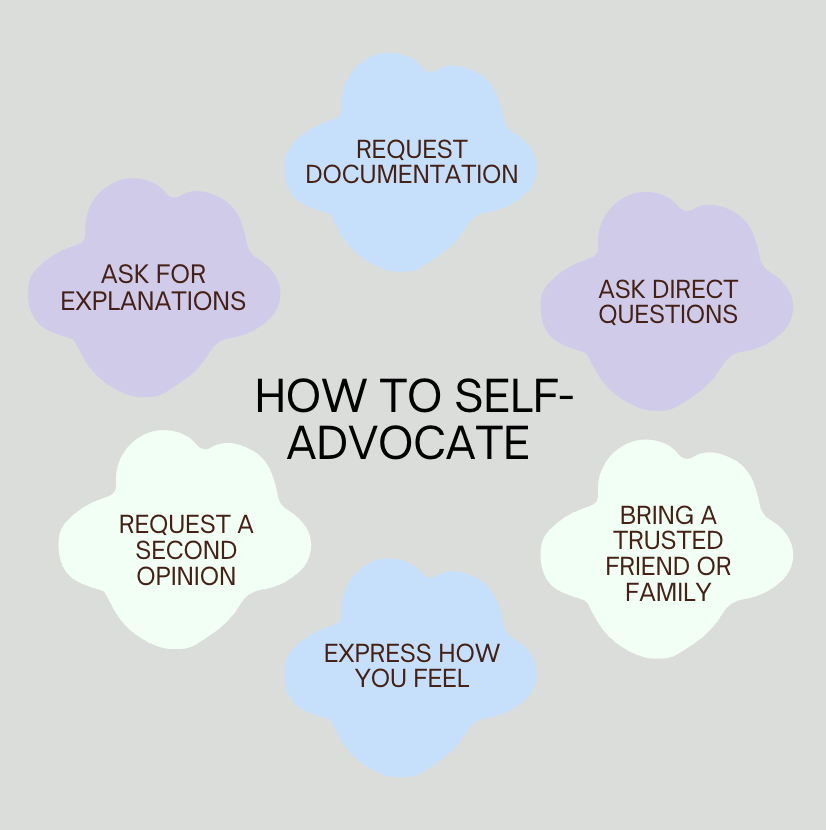
Another solution would be increasing awareness of diagnostic overshadowing, as simply naming the phenomenon can help healthcare providers recognize when it may be occurring (Jones et al., 2008). Structural solutions are also necessary, including improving interdisciplinary collaboration between medical and mental health professionals, implementing clearer assessment protocols, and reducing reliance on assumptions in high-pressure environments (Crapanzano et al., 2023; Stuart & Knaak, 2020). Patients also play a role in this process, and encouraging patients to self-advocate, ask questions, and seek second opinions can help mitigate the effects of bias, although it is important to acknowledge that the responsibility should not fall solely on patients, especially those already in vulnerable positions (Karp, 2020).
One of the most important steps toward addressing physician bias is the implementation of targeted anti-stigma training within healthcare settings, as identified by Knaak et al. (2017), anti-stigma interventions are more effective than informational sessions, and programs that include direct social contact with people who have lived experience of mental illness appear especially promising because they challenge stereotypes and improve understanding of recovery. In these models, people with lived experience are not positioned as passive patients, but as educators. Knaak et al. (2017) describe skill-based training programs that improved provider confidence, reduced social distance, and led to better patient outcomes. Knaak et al. (2017) also emphasize the importance of culture change, leadership support, mandatory or incentivized participation, and integrating stigma reduction metrics into the accreditation process. Additionally, patient-centered care, which emphasizes listening and empathy, has also been shown to improve both patient satisfaction and health outcomes (Epstein & Street, 2011). Epstein & Street (2011) frame patient-centered care as an approach that emphasizes empathy, attentiveness, and responsiveness to patient concerns, arguing that effective care requires understanding patients within their broader context and involving them in decision-making.
How to self-advocate for patients when seeking medical assistance.
Listening to Restore Trust
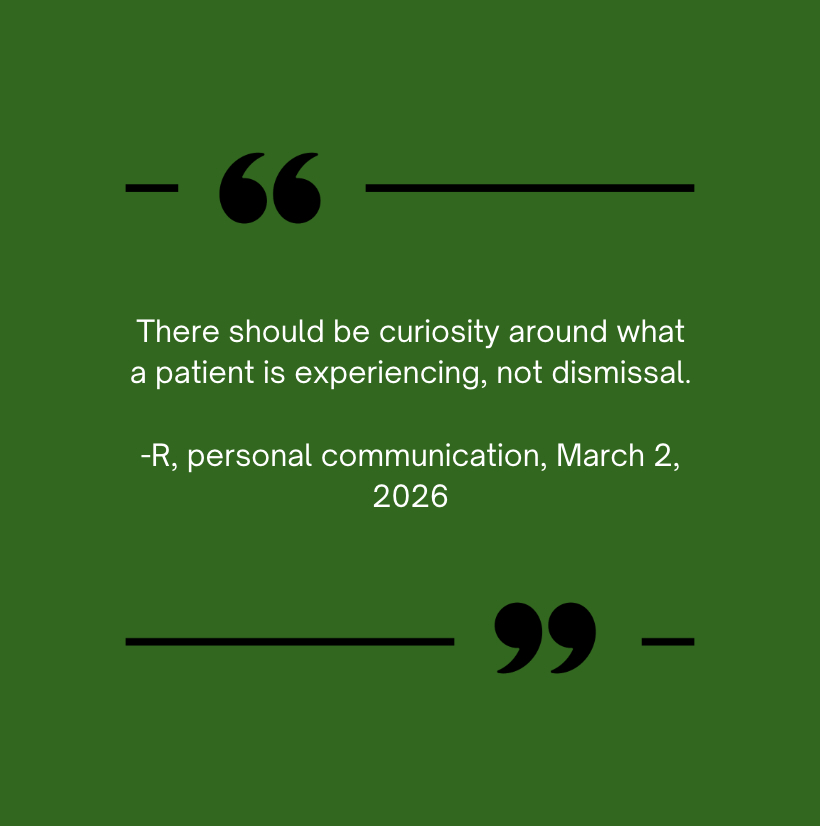
Beyond training, or perhaps included in it, something even more important was highlighted by R, which was also noted by Patient A: the importance of listening. “I think they should really listen to the patient’s concerns. Take the time and be patient with them, look at the patient more holistically” (R, personal communication, March 2, 2026). R also emphasized that not every patient presents the same way, and even if symptoms don’t fit the standard patterns, that doesn’t mean they aren’t real. “There should be curiosity around what a patient is experiencing, not dismissal” (R, personal communication, March 2, 2026). It turns out listening is more important than we think. Not just listening to gather information, but to make someone feel seen, safe, and understood, which can change the entire outcome of the patient’s experience. R also issued an important reminder to patients: “I think it’s important that if the patient doesn’t feel heard, to make that known to the physician. I think a lot of patients walk away feeling invalidated, and they feel alone. I think it’s important to express how they feel and how their interaction with the medical professional made them feel” (R, personal communication, March 2, 2026). R also suggested that at the same time, healthcare providers should improve their own communication and provide better closure to patients, so they don’t leave feeling confused and isolated (R, personal communication, March 2, 2026). To move forward, healthcare practitioners and systems should prioritize education and structural change, but they also need to return to something simple, something human that should’ve been there all along: active listening. Patients are experts in their own bodies; they live in them every day, so when we take the time to truly listen, we do more than just improve care; we also restore trust.
Conclusion
Having considered this evidence, it becomes clear that physician bias against patients with mental health conditions represents a critical failure in our healthcare system. When a patient’s mental health history is allowed to shape or limit the treatment of their physical symptoms, it results in the dismissal of both physical suffering and psychological experience. Addressing this issue, therefore, requires calling for and considering systemic change. Across the studies summarized by Crapanzano et al. (2023), the analysis by Jones et al. (2008), the Canadian stigma research reviewed by Knaak et al. (2017), and the patient-centered care framework outlined by Epstein & Street (2011), the same point has been relayed from different directions: when mental illness changes whether physical symptoms are believed, patients receive different care, and those differences have serious consequences. Patients deserve to be heard, believed, and treated equally, as the Hippocratic Oath calls for, but also as our sense of humanity calls for. Reducing this bias is essential not only for improving medical outcomes, but also for restoring the trust that has been eroded between patients and providers, and for returning to a foundational clinical skill that should have been present all along: listening.
References
Crapanzano, K.A., Deweese, S., Pham, D., Le, T., & Hammarlund, R. (2023). The role of bias in clinical decision-making of people with serious mental illness and medical co-morbidities: A scoping review. The Journal of Behavioral Health Services & Research, 50(2), 236–262. https://dx-doi-org.ezproxy.capilanou.ca/10.1007/s11414-022-09829-w
Epstein, R. M., & Street, R. L. (2011). The values and value of patient-centered care. Annals of Family Medicine, 9(2), 100–103. https://doi-org.ezproxy.capilanou.ca/10.1370/afm.1239
Glicksman, E. (2019). Your diagnosis was wrong. Could doctor bias have been a factor? The Washington Post. https://www.washingtonpost.com/health/your-diagnosis-was-wrong-could-doctor-bias-have-been-a-factor/2019/11/15/d929e1a8-fbef-11e9-8906-ab6b60de9124_story.html
Going off antidepressants (2022). Harvard Health Publishing. https://www.health.harvard.edu/diseases-and-conditions/going-off-antidepressants.
Jones, S., Howard, L., & Thornicroft, G. (2008). Diagnostic overshadowing: Worse physical health care for people with mental illness. Acta Psychiatrica Scandinavica, 118(3), 169–171. https://doi-org.ezproxy.capilanou.ca/10.1111/j.1600-0447.2008.01211.x
Karp, V. (2020). Too often doctors stigmatize people living with mental illness. Columbia University Mailman School of Public Health. https://www.publichealth.columbia.edu/news/too-often-doctors-stigmatize-people-living-mental-illness
Knaak, S., Mantler, E., & Szeto, A. (2017). Mental illness-related stigma in healthcare: Barriers to access and care and evidence-based solutions. Healthcare Management Forum, 30(2), 111-116. https://doi.org/10.1177/0840470416679413
Stuart, H., & Knaak, S. (2020). Mental illness and structural stigma in Canadian health-care settings: Results of a focus group study. Mental Health Commission of Canada. https://mentalhealthcommission.ca/wp-content/uploads/2023/05/Mental-Illness-and-Structural-Stigma-in-Canadian-Health-Care-Settings_Results-of-a-Focus-Group-Study-EN.pdf