


Tanya Pham
Tanya Pham (She/Her) has graduated with her Bachelor of Arts in Psychology from Capilano University in the Spring of 2026. She was born and raised in Vancouver after her parents immigrated from Vietnam. Growing up, her mother took her to a variety of extracurricular community programs, including music, sports, and Vietnamese language school. These experiences shaped her understanding of how meaningful accessibility and opportunity can be. After university, she plans to dedicate more time to community-based work while exploring career paths that feel meaningful and aligned with her goal of supporting others.
In my third year in the psychology of arts degree program at Capilano University, I began thinking about how my education would translate into workplace readiness and how my learning would be represented on a resume. While my program had provided me with theoretical background knowledge on human behaviour and the scientific and systematic interpretation of information, I questioned whether my education had fully prepared me for the realities of employment.
As I approached graduation and began my job search, I became more concerned. While my academic background in psychology certainly positioned me to do well in people-focused roles, many jobs required formal training and experience in organizational and administrative skills. It was a frustrating matter as I knew I did not lack the ability to complete courses in these domains, access to these courses was structurally limited. By my final semester, I was only able to register for a single entry-level class.This experience reflects a broader issue within post-secondary education: disciplinary gatekeeping. This paper investigates how disciplinary gatekeeping operates within post-secondary institutions, particularly through course restrictions and program structures that shape business education. Capilano University serves as a case study to illustrate how institutional structures shape a student’s academic experience and preparedness for life after graduation.
The average student enters university largely unaware of the decisions made behind closed doors that ultimately shape their educational opportunities. Access to information about these decisions is often limited, and explanations can be vague, making it difficult for students to fully understand the history, traditions, and structures that influence their academic paths. This analysis reflects gaps in access, particularly for students without formal positions within the institution. The perspectives included are informed by interviews with faculty members and industry professionals, offering insight into how decisions are made. Building on these perspectives, the discussion shifts to enrollment practices within the business department, and how expansion of access is necessary to better align with the realities that individuals face beyond the school.

Towering industrial silos on the North Shore symbolize the separation of academic disciplines in higher education.
The Need for Interdisciplinary Access
Regardless of what program a student chooses, the ability to work within organizations and corporate structures is a universally important skill. According to Tobin et al. (n.d.), post-secondary education has evolved from a privilege for only the elite, to an “essential career resource” institutions are now increasingly expected to adapt their programs in response to changing times in order to prepare students for employment.
Institutions are beginning to adapt their programs to give students more opportunities to explore interdisciplinarity and develop more versatile skill sets. As Misiewicz explains, interdisciplinary learning involves integrating multiple perspectives and theories to engage with complex, real-life scenarios. While interdisciplinary studies is gaining more acceptance in academia, a lack of access remains in certain departments.
Despite growing in popularity, the implementation of cross-disciplinary coursework occurs at uneven rates. This imbalance is reflected in the current program structures at Capilano University. To confirm program requirements, I consulted an academic advisor within the Registrar’s Office. Within the Bachelor of Arts in Psychology program, students may take up to 66 of the required 120 credits outside of psychology, allowing them to expand their knowledge in disciplines such as political science, anthropology, and philosophy. In contrast, in the Bachelor of Business Administration (BBA) program offers significantly less flexibility. While 24 credits are designated as non-business coursework, 15 of those credits are already embedded within the required courses, leaving only 9 flexible credits for elective study outside of the program (A. Zhang, personal communication, April 21, 2026). As the evidence shows, students in the BBA program have considerably fewer opportunities to explore beyond their field of study, limiting the breadth of their academic experience.
While interdisciplinary studies are certainly taking place within post-secondary institutions, it is not advancing fast enough, in comparison to the rapidly evolving landscape of modern workplaces. Rahim Somani (2024), former Vice President of Finance and Administration at the University of Northern British Columbia, approaches this issue from an institutional leadership perspective. He describes this as a world experiencing “intersecting revolutions” that is, social, technological, and geopolitical shifts that require students to be prepared beyond traditional education, to address complex and unprecedented challenges. He further emphasizes “Top skills are no longer just technical; they also include the ability to think critically, manage relationships and exhibit emotional intelligence.” Somani lists skills that reflect a well-rounded student, one whose curriculum contains a sufficient balance of technical and interpersonal skills.
Beyond workplace readiness, attention must be turned to how enrolment opportunities are structured and how course restrictions function. According to Dr. Adam Vincent, an Associate Dean within the faculty of business and professional studies, the restrictions are intended to prioritize declared business students and their ability to complete credential requirements. While the associate dean states that the remaining seats may later be released to students of other programs, these remaining seats may be “few and far between” with no system to alert interested students if this opportunity arises (A. Vincent, personal communication, April 2026). For non-business students like myself, this is a system designed in a way that creates uncertainty where solutions are readily available with the technology we have today. Gaining access to these courses requires repeated attempts at communication with the department assistant, engaging in strategic rapport building with instructors, and regular checking for the lifting of restrictions at no specific date or time. Students are left navigating a registration process that lacks consistency or clarity.
The BBA program at Capilano University is also highly structured, with one of the highest number of required courses. Political science instructor David Matijasevich suggests streamlining education by combining overlapping courses, which would create additional space for interdisciplinary learning (Personal communication, March 2026). By redesigning course requirements to better suit the needs of modern students, the business department may be able to reallocate its resources and potentially increase the number of course sections offered. This, in turn, would grant the department with increased capacity and Capilano University students accessibility into the realm of professional studies.
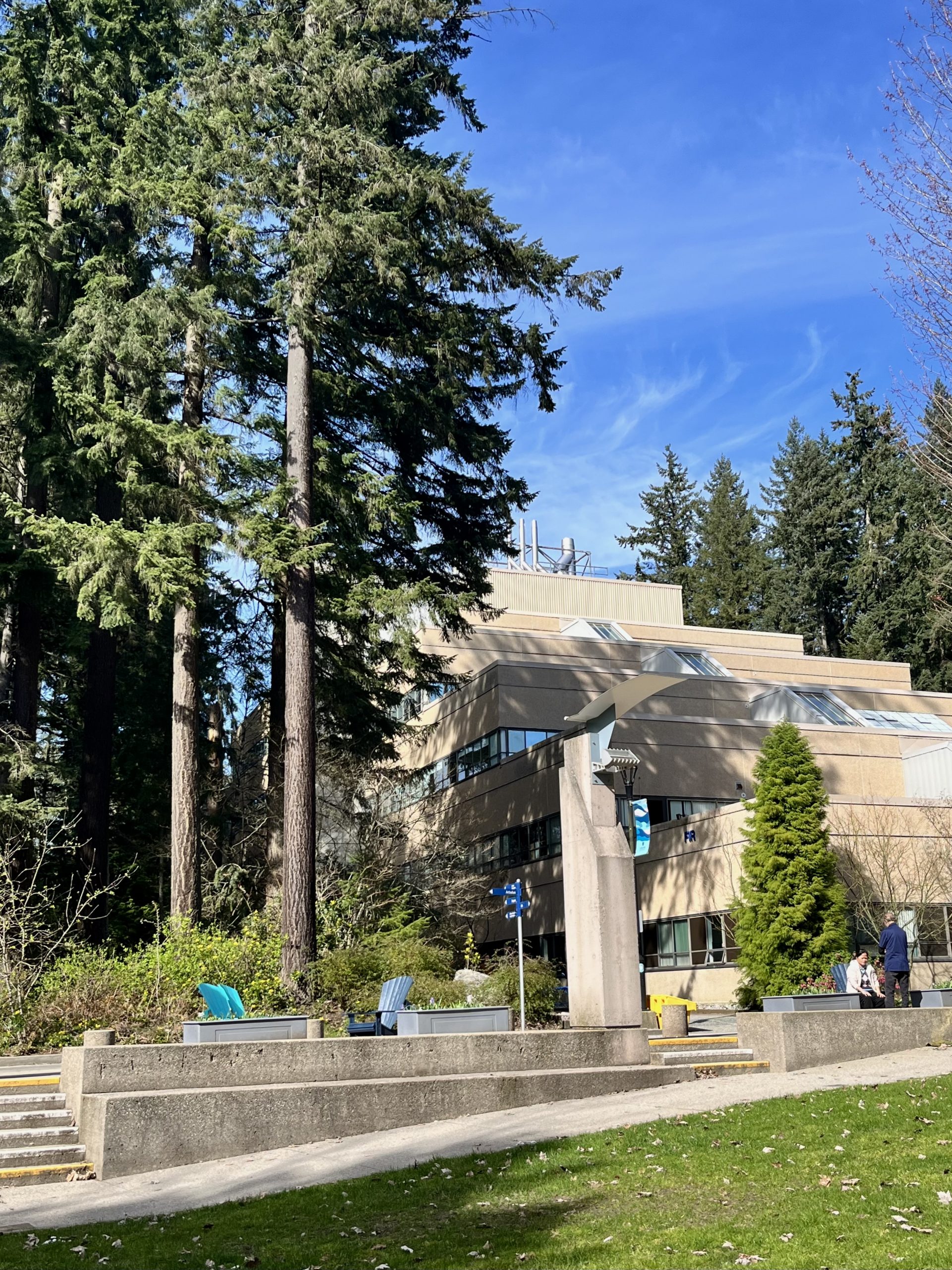
Fir Building at Capilano University, site of faculty offices of Social Sciences and Humanities.
Interdisciplinarity and Learning
Dr. David Matijasevich, a political science instructor at Capilano University and recipient of the university’s Teaching Excellence Award (March 2020) is currently transitioning into a leadership role in interdisciplinary studies. Drawing from my experience as a returning student in Matijasevich’s courses, I have observed his ability to engage students from diverse academic backgrounds and facilitate collaborative learning experiences that draw on the strengths of individual students. This kind of classroom creates a safe and supportive space for discussion, critical thinking, and the exchange of perspectives.
This approach reflects the core of what interdisciplinarity is, where multiple majors engage in conversations with their diverse approaches to approach complex, real-world issues (Misiewicz, n.d.). Students in classes like this learn beyond specialization, emphasizing the integration of multiple ways of thinking.
Research on post-secondary specialization in relation to personality types suggests that students tend to select majors that align with their personality types, which results in groups of students largely sharing similar perspectives and approaches to problem-solving (Coșa & Cernat, 2024). Having only students within the same program in a class, then poses as restrictive learning conditions. Matijasevich explains, a classroom composed entirely of students from a single discipline can be unrepresentative of real-world environments, where individuals from diverse backgrounds and roles must collaborate and challenge one another’s assumptions. In a political science course, a homogenous class may not push the scope of conversations to reach new and layered insights (D. Matijasevich, personal communication, March 2026. In a multi-disciplinary classroom, students must be able to adapt to other viewpoints and reflect on any biases they may have. In addition to this, they must develop skills to articulate their own ideas in ways that those from outside their discipline would be able to access.
Mullen (2025) makes a strong statement in relation to this, writing from McMaster University’s DeGroote School of Business, “When it comes to understanding the complexities of modern workplaces, no single academic discipline has all the answers”. From Mullen’s perspective, the “modern workplace” increasingly calls for multi-faceted solutions that cannot be produced by the expertise of a single discipline.As a result, traditional siloed approaches to education are becoming less aligned with contemporary professional realities, contributing to a growing emphasis on interdisciplinary learning (Mullen, 2025).
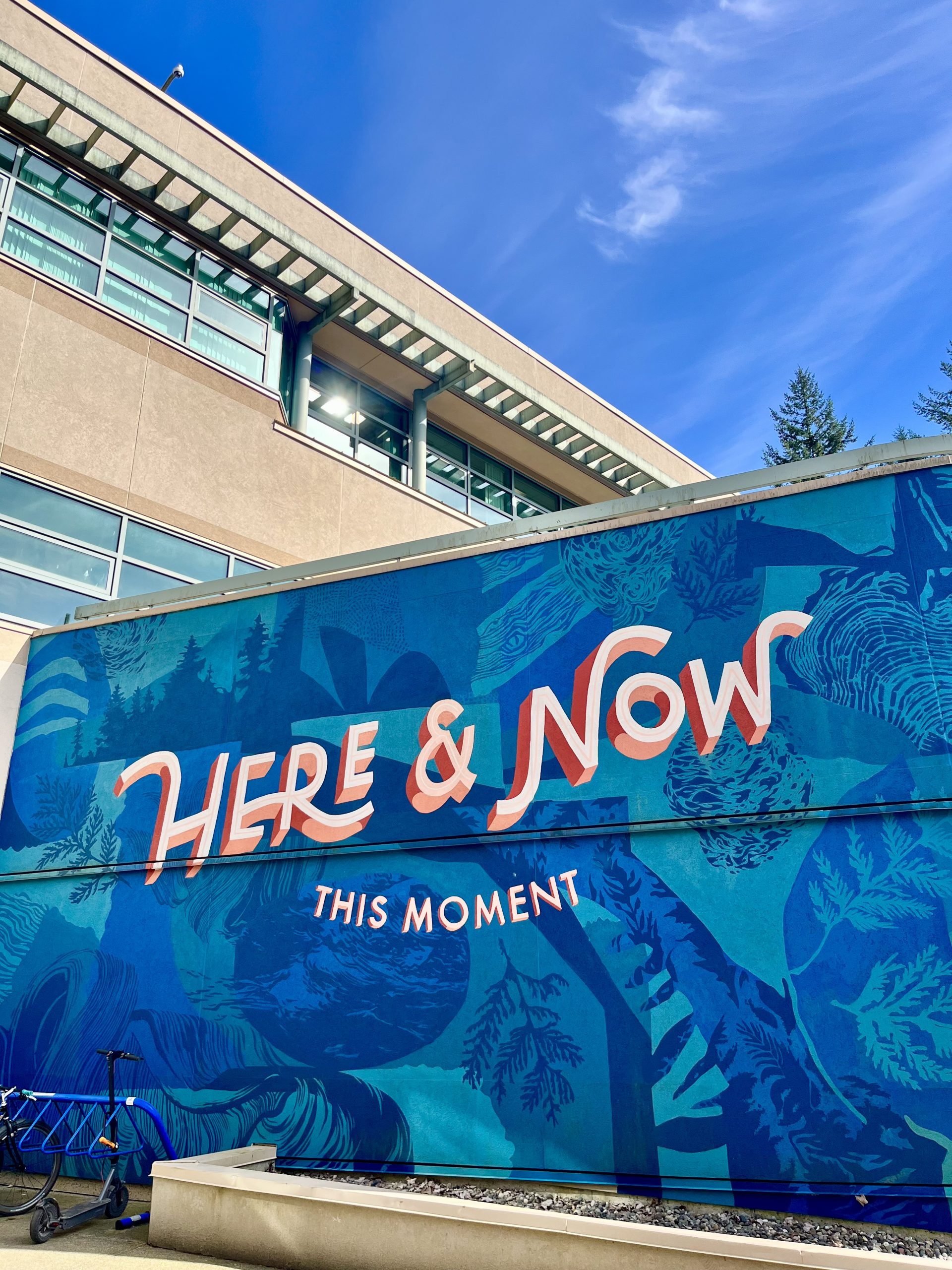
A mural at Capilano University reads “Here and Now: This Moment,” reflecting the immediacy of the student experience and highlighting the importance of making meaningful education opportunities accessible in the present.
The Limitations of the Current Structure
The reasons behind the business department’s course restrictions extend beyond the interests of students alone and are also influenced by institutional priorities. The course restrictions are often embedded within a traditional and fixed structure of academic programs.
In our interview, Matijasevich explains that many required courses are embedded within the structure of academic programs, making change a complex and significant undertaking. He states that these programs are designed to “shepherd students through… a very carefully curated degree” to ensure that students follow a specific path to complete required credentials (D. Matijasevich, personal communication, March 2026). At the same time, it seems that these requirements serve an additional structural function. By categorizing a large number of courses as required, these programs are able to maintain continuity and consistent enrollment in their courses.
The issue with closed-enrolment is particularly relevant and intensified now in the context of declining international student enrollment. Jack (2026) reports that the number of international study permits issued in 2025 declined to roughly 11% of the levels seen in 2023, a steep drop that has produced “unintended consequences” across Canadian institutions.
These consequences are further illustrated by immigration lawyer Colin R. Singer (2025), who describes how the impact of international student decline affects all levels of the university system, from the institution to the experiences of individual students. He brings up the point that the loss of international students at any post-secondary institute is also a loss of students who pay substantially higher tuition to attend the school.
For example, at Capilano University, the estimated tuition for a two-year Associate of Arts degree is approximately $12,636 for domestic students compared to $45,044 for international students, which is more than three times the amount (Capilano University, n.d.). As a result of the financial strain, Singer (2025) states that universities and colleges in Canada are now forced to reduce their course offerings, leaving more students in limbo. Singer uses a student’s perspective from Capilano University as an example, writing “Capilano University student Vansh Kalra reports a drop in course availability, forcing some students to enrol in multiple institutions or delay graduation.”As the student population changes drastically in Canada, it raises questions about how these restricting structures are sustained, especially when access to business education has remained unchanged for students outside of the program who may otherwise counteract enrolment declines.
From a student’s perspective, these restrictions also influence decision-making when it comes to registration. Students who are interested in business-related courses may choose to enroll in alternative classes in other disciplines rather than risk waiting for limited seats to become available, particularly when there is no set time for restrictions to drop and there is no formal system to track interest or notify students. These structural limitations have practical implications for both students and the institution, contributing to a string of missed opportunities. I have personally spent multiple semesters taking alternative electives outside of my personal goals and interests for this reason.
Why Business Education Matters for All Students
Reflecting the broader themes explored thus far, business instructor Rosemarie Perkin, who teaches leadership and people management, believes that interdisciplinary learning is not only valuable, but necessary. She emphasizes the importance of expanding access to business education, noting that diverse classrooms enrich student learning and better reflect real-world environments (R. Perkin, personal communication, March 2026).
I had the opportunity to take her Organizational Behaviour course (BADM 106) in the previous semester, which was one of the few business courses that I found with open-enrolment during the official registration period. Similar to Matijasevich’s class environment, Perkin facilitated learning and discussions among students from diverse academic backgrounds. She did not find the diversity to be a barrier or a teaching challenge; rather, she found that it added depth and complexity to the learning experience. Students from different disciplines are taught to approach information and problems differently. As highlighted in an article from the University of Pennsylvania, “siloed students or professionals fail to notice areas of opportunity, simply because they are too attached to the status quo.” whereas “open-minded and detail oriented individuals take the time to question long-held assumptions, in turn uncovering and acknowledging fresh possibilities” (University of Pennsylvania, 2025).
Perkin further states that students from outside the business program are often completely capable of engaging with business learning material, especially with lower-level courses that focus on foundational concepts and transferable skills (R. Perkin, personal communication, March 2026). In addition to that, the small-classes format of Capilano allowed her to readily give extra support during office hours.
These learning values were reflected in my own experience within the course. In a group project, I worked alongside business students to conduct interviews with managers from two different industries to compare their management styles. When drafting interview questions, my contributions focused on understanding interpersonal dynamics and individual differences, reflecting a psychology-informed approach. In contrast, my group members focused on questions that emphasized measurable outcomes, performance, and productivity. Through this opportunity to collaborate, we were able to identify overlapping ideas and develop a final set of interview questions that integrated both perspectives. This process resulted in a more comprehensive and well-rounded list than what we would have produced independently or with a singular educational background. This form of collaborative learning reflects a future of more holistic problem-solving skills. In an article published in Times Higher Education, Catherine Amelink advocates for curriculum that brings students and instructors together from multiple fields to work on projects and case studies. Amelink argues that within diverse groups, students are exposed to technical, ethical, economic, and social dimensions simultaneously, as each participant contributes their own disciplinary perspective to the collective effort (Amelink, 2025). Expanding access to business education, therefore, is not simply about increasing elective options, but about simulating collaborative environments where individuals must professionally communicate thoughts and opinions to complete group projects.

Capilano University sign promoting student exploration and individualized academic pathways.
CapU as a Place for Possibility
While the limitations surrounding enrollment into business courses are evident, I recognize that Capilano University is not unique in its enrollment policies. Associate Dean, Dr. Vincent notes that every institution he has worked for has similar restrictions implemented, prioritizing declared students and maintaining strictly organized program requirements (A. Vincent, personal communication, April 2026).
At the same time, Capilano University possesses structural and historical characteristics that make it uniquely positioned to implement change. In my interview with Dr. Douglas Alards-Tomalin, a psychology professor and coordinator at Capilano University, described the university as operating within what he called a “collegial” model (D. Alards-Tomalin, personal communication, March 2026). According to Corporate Social Responsibility and Sustainability (CSR) (n.d.), the term “collegial” originates from collegium, a Latin word for a collaborative group where power and influence is distributed during decision-making processes. Within this model, departments may communicate and work together in ways that may not be as achievable in larger, more hierarchical institutions. Alards-Tomalin (2026) further explained that this model has already had an impact on some interdisciplinary opportunities, describing instances where he has reached out directly to faculty members in other departments to create opportunities for students across programs, effectively working around restrictions. While this example shows interdisciplinary studies being possible at Capilano University, it is occurring on a relatively small scale. He notes, “those conversations need to happen”, emphasizing that without continuous communication and coordination, these opportunities remain limited and inconsistent (D. Alards-Tomalin, personal communication, March 2026). In this sense, the limitations surrounding access to business courses are not necessarily the result of an inability to change, but rather a reflection of how institutional decisions are currently being prioritized.
Discussions with non-business peers on this topic revealed a strategy often suggested when expressing an inability to register for certain courses; the idea that students should reach out to professors directly and build rapport with hopes that the professor will grant them access personally. I understood that this was a common and somewhat proven method, but again, it is a small-scale solution that does not extend benefits to other students.
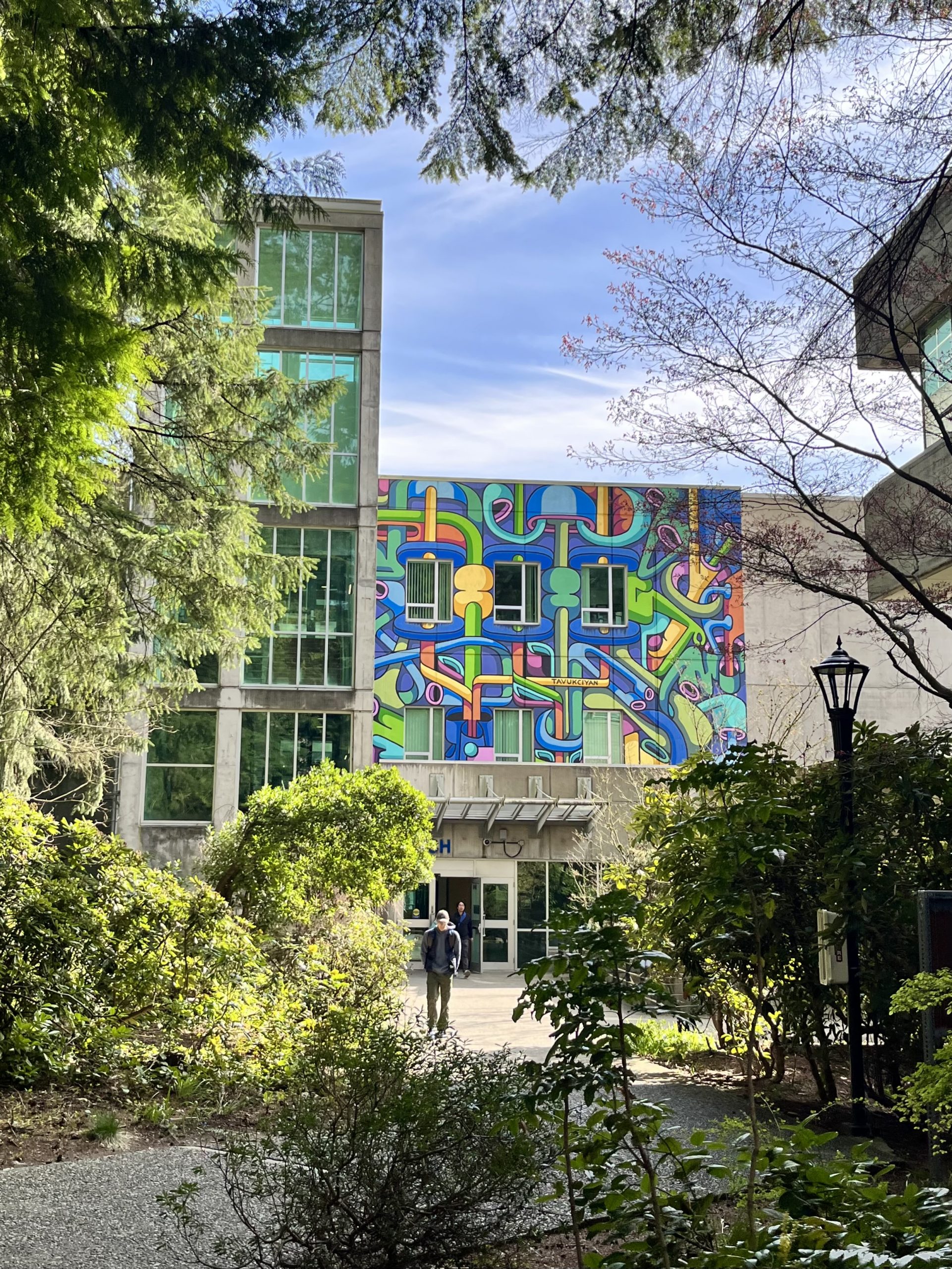
Scenic view of Capilano University campus.
Reimagining Access
While the current structure of the business department at Capilano University serves its purpose, the voices and experiences of educators and professionals suggest that flexibility can lead to a more meaningful and enriched academic environment for both students and faculty. In particular, periods of transitional instability, though often avoided, are necessary in order to create meaningful opportunities and a learning environment aligned with a rapidly evolving professional landscape.
Rather than systemic redesign, Matijasevich suggests that change is possible through minor adjustments over time by doing a review of course content and consolidating overlapping requirements, creating both space for interdisciplinary learning, while maintaining core requirements (D. Matijasevich, personal communication, March 2026). Changes like these would allow for increased flexibility for students within and outside of programs like business. At the institutional level, Alards-Tomalin suggests that conditions for increased accessibility already exist within Capilano University’s collegial model, a history of cross-departmental collaboration and communication. The goal, then, is making interdisciplinary studies a prioritized project, one that would require long-term, coordinated efforts (D. Alards-Tomalin, personal communication, March 2026).
A recent report issued by the Business + Higher Education Roundtable (BHER) titled Different by Design: Building Smart Post-Secondary Systems for Canada argues that Canadian post-secondary institutions are all being pressured into a “one-size-fits-all” approach which encourages all schools to fulfill all areas, such as teaching, research, and workforce training. The report, instead, advocates for “differentiation” a model where Capilano University would prioritize the advancement of already established areas of expertise (Business + Higher Education Roundtable [BHER], 2026). This institution proudly positions itself as a teaching-centered university. The university’s branding emphasizes so, with small class sizes, accessible professors, and a student-focused learning environment. Expanding access in programs that have historically been restricted, particularly in business courses would not contradict this identity. Instead, increased accessibility would allow the university to move forward in a way that is consistent with its values and the needs of its students.
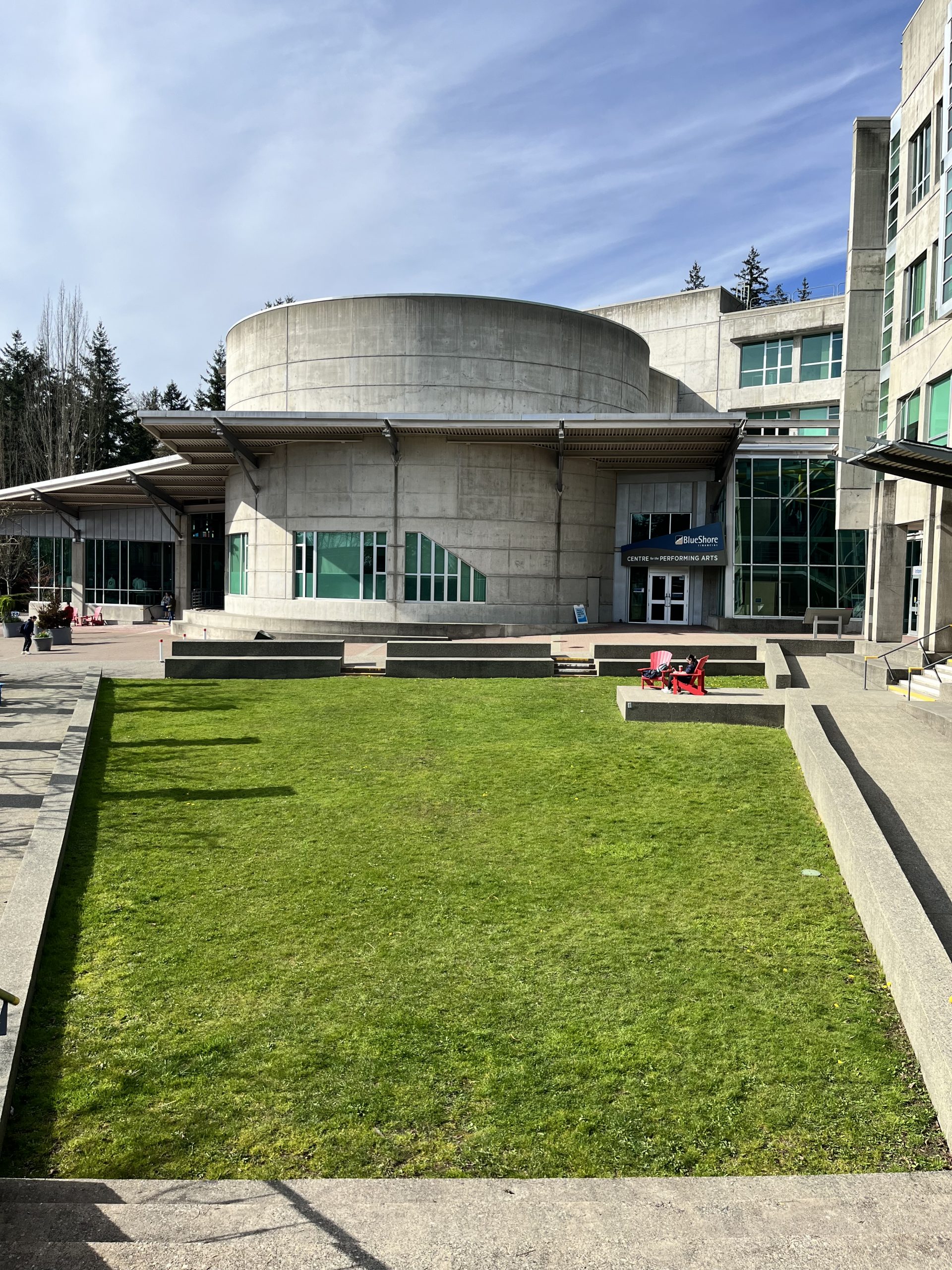
The Capilano University lawn: the future site of convocation.
From a student’s perspective, the need for accessible business education is evident, and in high demand. Informally interviewed students across a range of programs, including interdisciplinary studies itself, have expressed their frustrations with the limited access to courses that would develop workplace-relevant skills. In the absence of accessible business courses, students are often left to select electives that do not align with their academic interests or career aspirations, limiting the relevance of their education.
Despite these challenges, there are indications that change may already be underway. Associate Dean Vincent notes that the business department is “actively moving away from some past restrictions” (A. Vincent, personal communication, April 2026). While the statement remains broad, it suggests a growing recognition that existing structures may be outdated and that some form of revision may occur in the years ahead. Reimaging access here at Capilano University is then not about the dismantling of valued programs; it is about utilizing the advantages that the school already has. As a result, the university can move forward with progress and prove itself to be a desirable place to learn, making decisions with its students in mind.
The potential that Capilano University possesses is well-captured in a statement made by Yasuko Otsuka, Assistant to the Registrar, where she says “CapU is big enough to make meaningful change, yet small enough to move forward on good ideas” (Capilano University, 2026). As a student preparing to transition into the workforce, I believe these institutional changes are non-negotiable to ensure that students graduate with both specialized theoretical knowledge and interdisciplinary perspectives needed to navigate complex, real-world environments. Expanding the accessibility of business education, as well as other restricted disciplines is one way Capilano University can support students in their hopes of becoming well-prepared, adaptable, and multi-dimensional alumni.
References
Amelink, C. (2025, February 10). What a transdisciplinary lens brings to university teaching. Times Higher Education. https://www.timeshighereducation.com/campus/what-transdisciplinary-lens-brings-university-teaching
Business + Higher Education Roundtable. (2026). Different by design: Building smarter post-secondary systems for Canada. https://www.bher.ca
Capilano University. (n.d.). Associate of arts degree: Tuition. https://www.capilanou.ca/programs–courses/program-profiles/associate-of-arts-degree/
Capilano University. (2026). Workday is launching at CapU next week… [LinkedIn post]. LinkedIn. https://www.linkedin.com/posts/workday-is-launching-at-capu-next-weekand-share-7445182709729165313-MAem
Corporate Social Responsibility and Sustainability. (n.d.). Collegial model: Teamwork, responsibility, actualisation. https://csr.education/organisational-behaviour/collegial-model-teamwork-responsibility-actualisation/
Coșa, L. E., & Cernat, V. (2024). Personality and specialization choice. Current Psychology, 43, 15602–15610. https://doi.org/10.1007/s12144-023-05511-2
Jack, P. (2026, April 10). Canada to stick with “flawed” international student caps. Inside Higher Ed. https://www.insidehighered.com/news/global/2026/04/10/canada-stick-flawed-international-student-caps
Misiewicz, J. (n.d.). The benefits and challenges of interdisciplinarity. In Interdisciplinary studies: A connected learning approach. Pressbooks. https://uw.pressbooks.pub/tias305/chapter/the-benefits-and-challenges-of-interdisciplinarity/
Mullen, G. (2025, July 4). Breaking down academic silos. McMaster University. https://news.mcmaster.ca/breaking-down-academic-silos/
Somani, R. (2024, December 3). Reimagining the role of higher education in a world of intersecting revolutions. Times Higher Education. https://www.timeshighereducation.com/campus/reimagining-role-higher-education-world-intersecting-revolutions
Tobin, V., Martin, T., Damon, M. B., Crate, N., Godinez, A., & Bennett, K. (n.d.). The history of the academy and the disciplines. In C. McElreavy (Ed.), Interdisciplinary studies: A connected learning approach. Pressbooks. https://uw.pressbooks.pub/tias305/chapter/the-history-of-the-academy-and-the-disciplines/
University of Pennsylvania. (2025, October 21). Interdisciplinary learning: The future of higher education. Penn LPS Online. https://lpsonline.sas.upenn.edu/features/interdisciplinary-learning-future-higher-education