
Christien Harris
Christien Harris is a proud Squamish Nation member from X̱wemelch’stn Village (Capilano Indian Reserve No. 5) and an Indigenous frontline support worker providing trauma-informed, culturally grounded care. Harris is completing his Bachelor of Arts with a Major in Psychology at Capilano University and works for Hiy̓ám̓ Housing at Estítkw Place, where he supports Squamish Nation members living with complex mental health challenges, substance addictions, and disabilities.
Harris’s research and community work focus on intergenerational healing, culturally grounded approaches to wellness, and the role of community connection in healing. His academic projects include applied research on transitional housing barriers and community-based initiatives supporting Indigenous women’s cultural needs. Passionate about relational / strength-based healing, Harris integrates cultural teachings, harm-reduction values, and ancestral knowledge into his practice.
Introduction
There is not a one sized fits all approach to healing from the traumas of the residential school legacy, but rather a combination of factors centered around Indigenous communities and the various traditional approaches to wellness. Traditional healing methods and the role of community support / involvement serve as both the oldest forms of medicine to Indigenous peoples, and as acts of resistance to colonial processes. There’s an intergenerational aspect to breaking the cycle.
Narrative
My topic is important because although all residential school institutions have been closed since the late 1990’s, the effects are still felt by thousands of people across various Indigenous communities in Canada today. When people look into our communities, the lasting effects of the residential school legacies are often perceived as community dysfunction, but rather it reflects the harsh treatments of our first peoples. Historical context has led to cumulative compounding trauma – First Nations people were all subject to over a century and a half of institutionalization, removed from traditional lands and placed onto reserves, and left without adequate resources.
Such colonial processes disconnected Indigenous people from traditional teachings and ways of life resulting in many people being spiritually unbalanced. The farther away a person in our community is from our traditional teachings, the greater the spiritual imbalance. This concept is known within Indigenous literature as “soul wound”. There is not a one size fits all approach to healing and wellness, but rather a combination of community involvement, personal autonomy, and meaningful steps towards reconciliation and a lifetime of resilience. If such approaches to healing are followed, life within Indigenous communities may drastically improve and communities can truly work together to break the cycle for good. Our future generations deserve an equal chance to succeed, just like their non indigenous adjacent communities. When our communities heal, they are able to achieve things such as education, societal involvement, and people can form healthy coping skills. Traditionally, this is how our communities have maintained balance. But using western knowledge to explain this, there’s an element of post traumatic growth here.
When people heal from deep trauma, they may experience a significant positive psychological shift and form new perspectives towards life (Baumgardner et al 2009). When a person is truly healed, they can connect with one another, leading to increased community support, rather than projecting lateral violence and negativity. When people heal, they can find their true purpose / role within the community. Post traumatic growth is also associated with improved emotional regulation because you’ve built the skills along your healing journey to maintain balance. It is also associated with increased empathy and compassion (Baumgardner et al. 2009). The burden is lighter if shared with each other, meaning when survivors have someone to go to for support, they are valued, understood, and not alone.
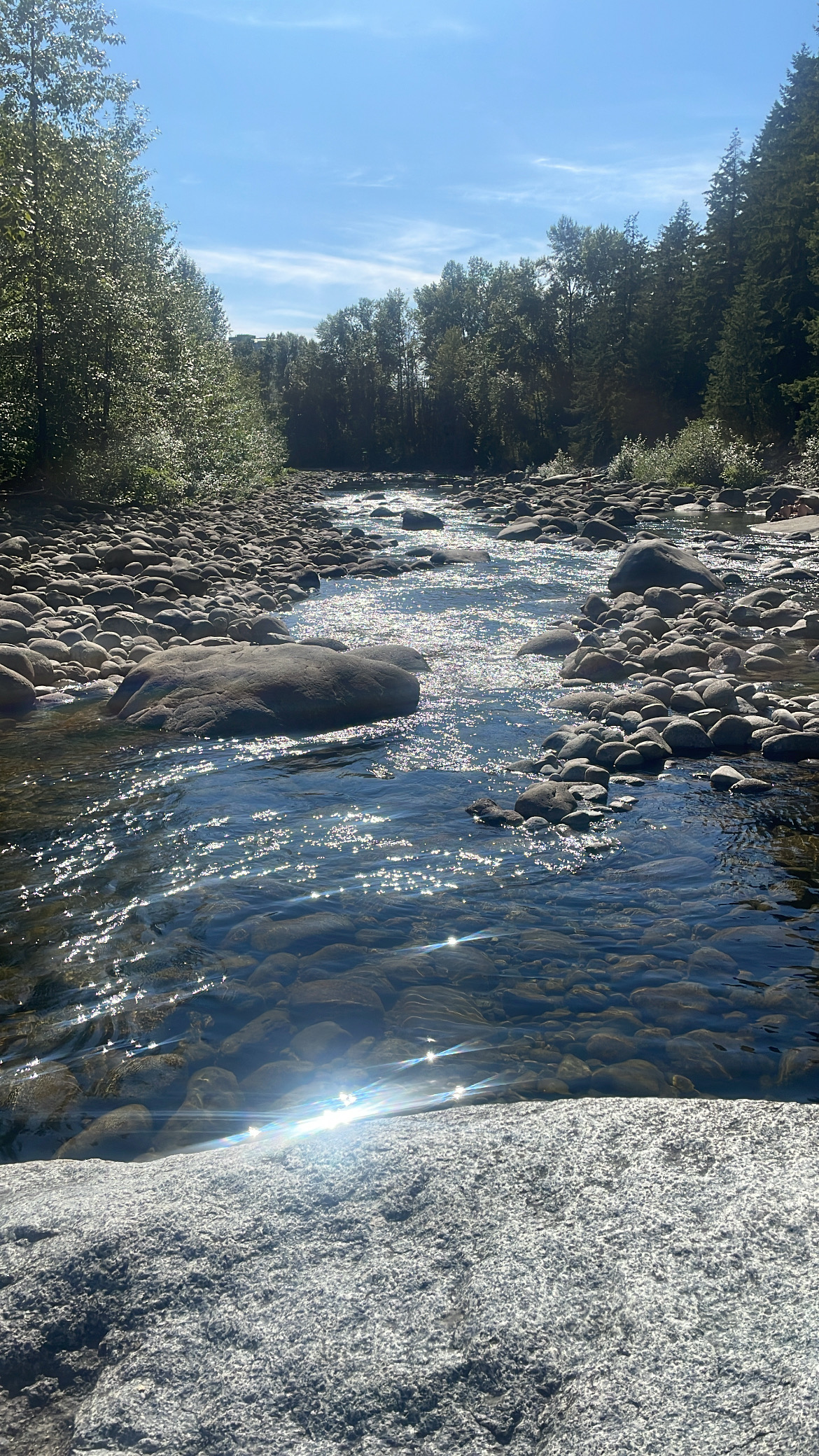
The Capilano River in X̱wemelch’stn Village.
Personal Connection
I have a strong personal connection to my topic. I am a proud Squamish Nation member, from X̱wemelch’stn village (Capilano Indian Reserve No. 5). In my community, I work as an Esh7il (care giver) but the English term for my role would be support worker. In my role, I support Squamish nation members with substance addictions, disabilities, and mental health challenges. I work first hand with residential school survivors, and those directly impacted by historical colonial processes. I’m very thankful to have such a meaningful role within my own community. My journey has been deeply inspired by my late grandma Rena. My grandmother was a residential school survivor who attended St. Pauls Indian Residential School in North Vancouver and Kamloops Indian Residential School. After surviving such institutions, she went on to attend Capilano College (presently known as Capilano University), where she graduated with a diploma in Child Welfare. Following graduation she went on to run a program where she mentored young parents with Indigenous life skills. In addition, she worked with the Squamish Nation Elders Program, and also supported men with AIDS at First Nations Health Services. At the young age of 55 years old, my grandmother returned to school, where she attended The University of British Columbia and graduated with a Bachelor of Social Work. Some of the people I now support in my role as an esh7il were directly supported by my grandmother throughout her incredible journey.
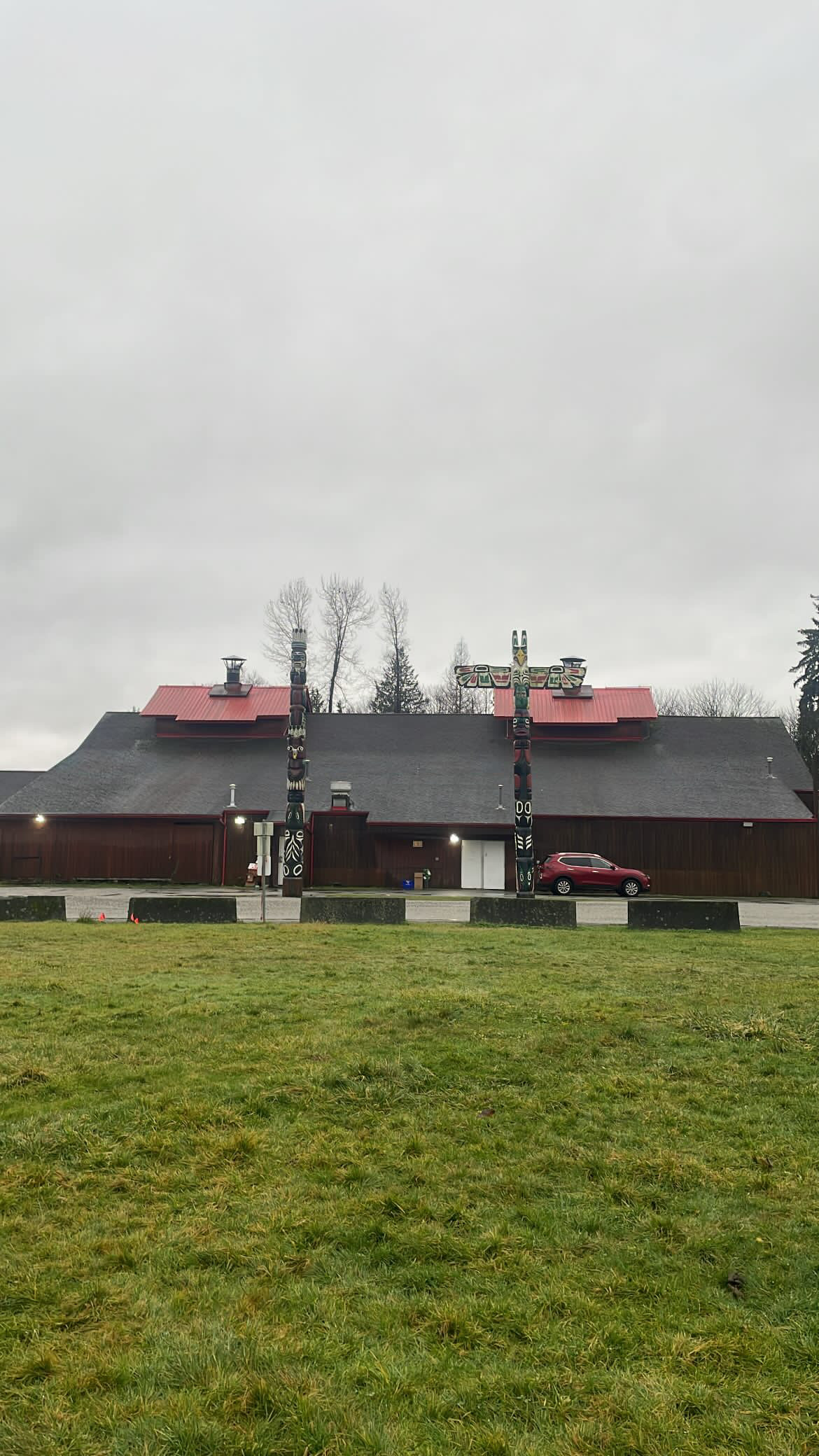
Squamish Nation Longhouse in X̱wemelch’stn Village.
Interview
For my interview, I sat down with my aunty Vicky who is a residential school survivor. Aunty Vicky walked me through her experiences first hand, from the moment she was forcibly removed in handcuffs from her home by the RCMP at the age of seven years old, to her last day at St. Augustine’s Indian Residential School. During our interview, Aunt Vicky provided me with a clear understanding of her day to day life at school, her strength, healing journey, community support, and difficulties she faced throughout her life as a result of her experiences. Key takeaways from our interview included that healing is not something that happens overnight, but rather a life long journey of wellness, growth, learning, and resilience. Following residential school, she moved to New Mexico (has native american heritage). In New Mexico, she got a taste of what life is supposed to feel like. Freedom, autonomy, and time with family were very important to her during this time of her life. I asked my Aunt Vicky towards the end how the next generation can honour survivors such as herself, and she suggested to me that one day she would like to have a book published about survivor experiences. She also noted that the next generation should take similar approaches to what I did with my aunty; which is sit down with our elders, honor their strength, wisdom, teachings, and use it to inform our community members so that we can contribute to a lasting change within our communities.
Healing Methodologies
Traditional Squamish Nation approaches to healing are centered around land-based practices where we view the land itself as a healer and a relative, rather than just a resource. Such approaches include cedar brushing for cleansing, sweat lodge ceremonies, spirit baths in the rivers, family healing circles, singing and drumming, and burning sage, tobacco, and sweet grass. Other traditional practices include connecting with elders, longhouse ceremonies, harvesting, fishing, hunting, and art such as beading, cedar weaving, or carving.
Five residential school survivors shared their healing journeys with an Indigenous researcher for her Masters of Counselling Psychology thesis at UBC (Palma 2013). The survivors noted many forms of cultural connections as healing mechanisms including; remembering / retrieving their Indigenous identity, programs with circle teachings, self-care, connecting to the creator, the balance wheel (emotional, spiritual, mental, physical, and the will), elder teachings, traditional dancing and singing, attending pow wows, positive elements of culture, bannock day, respecting the land, re-connecting to traditional languages, and passing on knowledge to children within the community. Van Uchelen (1997) noted that key turning points when coming out of hardships caused by residential school experiences include moving away from illness, moving towards wellness, meaningful contact with elders, and spirituality.
Reid (2019) a Dakota researcher noted that an important aspect of community healing is recognizing and elevating the gifts of others, especially for youth and children as the future generations. When a person is born into this world, they are born with many gifts, but oftentimes as a person grows, these gifts do not get supported. Wolastoqey teachings explain this concept – “a spirit brings its own gifts and purposes to its earth walk”. Uplifting and recognizing the inherent gifts that children are born with is a part of communal healing that mitigates the oppressive shackles of colonialism (Reid 2019). Such teachings can help strengthen community bonds and promote a place for every Indigenous person within their community. Past generations were subject to assimilation, but with future generations, we can honor their strengths and gifts right from the get go.
Although cultural and communal support are key aspects of healing and wellness, both survivors and intergenerational survivors from the Cedar Brush project identified the crucial role of support at the individual level. Connecting with support services for necessities such as housing, food, counseling, and health / social services helped participants not only survive, but make positive changes and gain the strength to heal (Pooyak et al. 2023). Positive self-beliefs were linked with accessing support services among survivors, describing themselves as “Proud”, “resourceful”, and “survivors” who can “Figure out every possible option”. Survivors reported that having the appropriate resources along with community support allowed them to manage stress that they had previously been unable to manage (Pooyak et al. 2023).
“(HIV services) were very inviting and they’re like, ‘If you need anything we can help you. We’ll direct you to where you need to go.’ I took advantage of that, so. Yeah, just the community services. I wouldn’t be able to make it without them. (laughs) if I notice, I’m out of something, I have no money? I go to my supports like Sheway, Crabtree, food bank. I get out there. I don’t stay at home and whimper about it…I find it. If I need a loaf of bread, I know where to go. (laughs)…Yeah. I know where to get everything. Like, I could probably live off my supports for, like, if I wanted to, but I don’t. So, I try and buy food first. But they’re good if I need, like, granola, like, you know, a little snack for (my son). If I run out of that kind of stuff. You know? I’m resourceful”.
—Sarah. A quote from a survivor who shared her story with Cedar Brush.
Traditional Squamish approaches to healing include land-based practices and community connections. Modern approaches to healing and wellness within our Squamish communities include; Ayás Mén̓men (Child & Family Services), Chesha7 iy̓ síiy̓us (Mental Health & Wellness), and Yúustway health and wellness (Squamish Nation 2023). Such services include a combination of traditional holistic practices and western healing methodologies, shaped by Squamish Nation values and teachings. These services include harm reduction practices, Cognitive Behavioral Therapy, individual counselling, personal wellness planning, Dialectical Behavioral Therapy, group work, and a mobile outreach van that comes directly to Squamish Nation members in need of assistance.
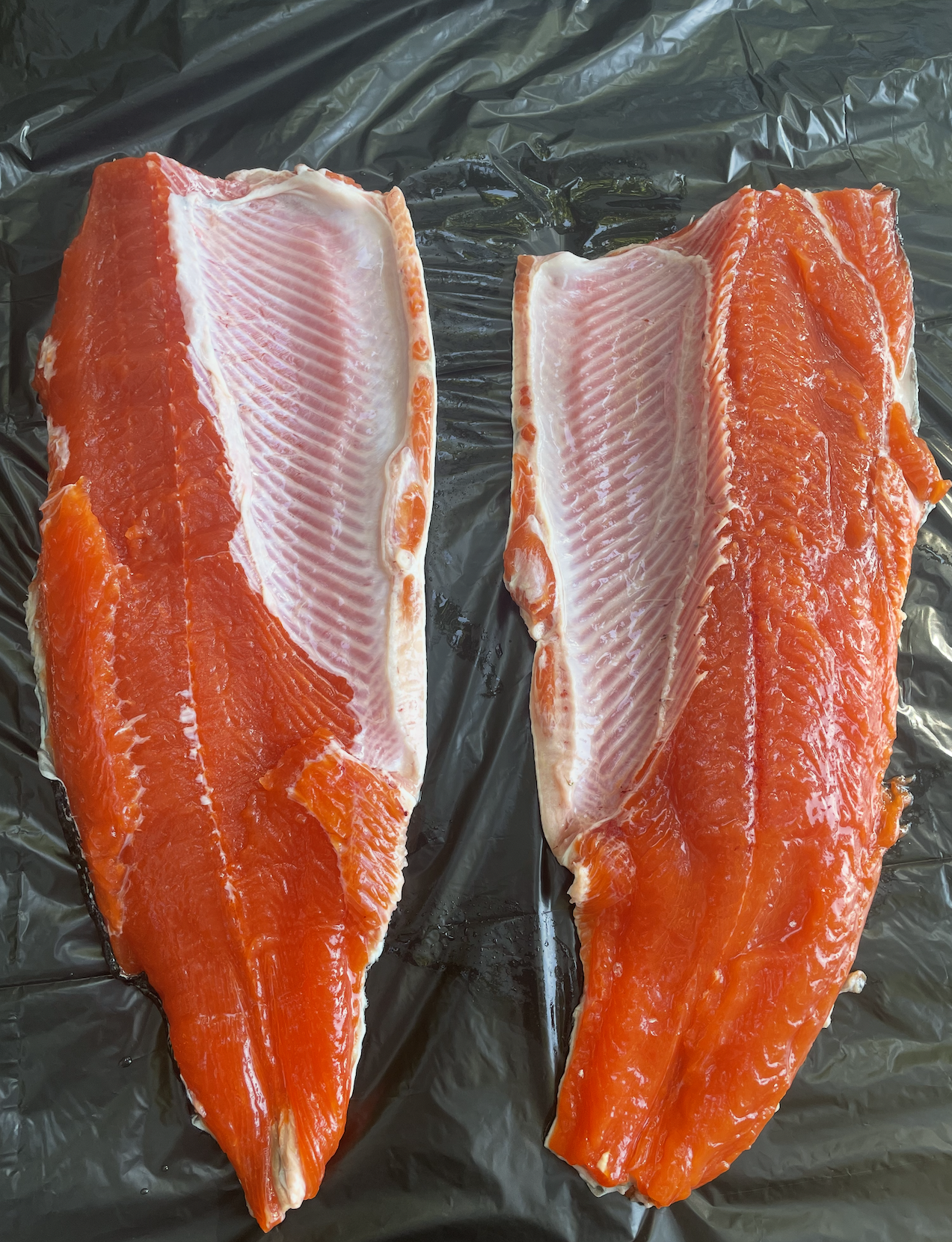
Freshly Caught Coho Salmon Filet.
Discussion
Resilience is strengthened through access to Indigenous culture, knowledge, and spirituality. Indigenous based resilience is innate and relational to one’s environment and the land. Resilience occurs at the individual, family, and community level, and is closely linked to collective self-determination and personal agency (Pooyak et al. 2023). Contributing to safe choices and positive change reflects resilience and resistance to systems that inflicted systemic barriers on health and healing. Resilience is associated with comebacks and recovery following a challenging period or crisis (Baumgardner et al 2009) . Indigenous peoples may use resilience to reconnect with ancestral teaching, practices, and identities.
Post traumatic growth is associated with a psychological shift that leads to a greater purpose and overall functioning following traumatic experiences (Baumgardner et al 2009). Resilience is required for recovery, whereas post-traumatic growth marks a complex change where a person can blossom into their true purpose in life. When a person experiences post traumatic growth, they develop beyond a previous state and form new world views, including a greater appreciation for life (Baumgardner et al 2009). Following post traumatic growth, Indigenous peoples can connect to new roles within the community, and foster support for future generations.
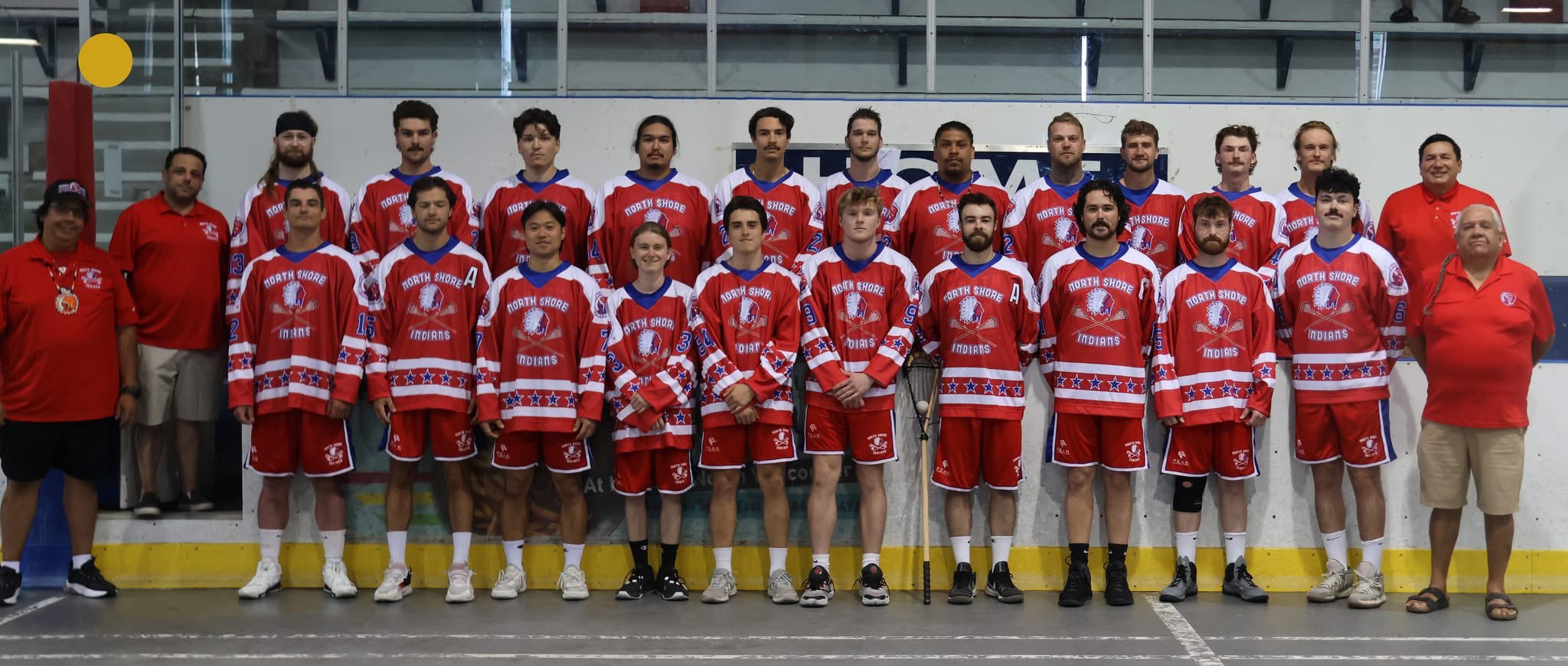
North Shore Senior B Indians Lacrosse Team 2024.
Conclusions
Healing soul wounds caused by the traumas of the residential school legacy will not happen overnight, nor over the course of a couple years, but rather across multiple generations of intergenerational survivors. Colonial processes, both historical and ongoing, have interfered with ancestral teachings and ways of life, resulting in spiritual imbalances, and Indigenous communities lacking sacred roles. Every survivor has a different path towards healing, it’s strength based, and it varies. Through collective healing, I hope to one day see all Squamish Nation members thriving and contributing to our community in a positive way. In Indigenous communities, culture serves as both protection and a healing pathway.
References
Baumgardner, S. R., & Crothers, M. K. (2009). Positive psychology (1st ed.). Pearson.
Indigenous Peoples Atlas of Canada. (n.d.). Redress and Healing. Retrieved November 7, 2025, from https://indigenouspeoplesatlasofcanada.ca/article/redress-and-healing/
Palma, A. H. (2013). Indian residential school experience : B.C. first nations share critical incidents along their personal healing journeys (T). University of British Columbia. Retrieved from https://open.library.ubc.ca/collections/ubctheses/24/items/1.0165709
Pooyak, S. D., Thomas, V., & Earl, W. (2023). Overcoming the soul wound: Reflecting on experiences and resilience of intergenerational residential school survivors. Case Studies in Behavior Analysis, 13(2), 40-52. https://doi.org/10.1016/j.apnr.2023.152008
Reid, A. E. (2019). Wolamsotuwakonol of the Indian Residential School [Master’s thesis, University of New Brunswick]. UNB Scholar Research Repository. https://unbscholar.lib.unb.ca/bitstreams/540741b8-f1c3-498a-abc3-ec3372880306/download
Squamish Nation. (2023). Yúusnew̓as wellness guide: Wa chexw yuusténam̓ut / Take care of yourself. https://www.squamish.net/wp-content/uploads/2023/11/Wellness-Guide.pdf
van Uchelen, C. P. (1997). What makes us strong: urban Aboriginal perspectives on wellness and strength. Canadian Journal of Community Mental Health, 16(2), 37-50.