
Kim Startup
Kim Startup (she/her) is a psychology student at Capilano University completing her bachelor’s degree with a concentration in applied psychology. Kim grew up in North Vancouver and has spent most of her life skiing on the unceded territory of the Coast Salish peoples, including the territories of the xʷməθkwəy̓əm, skwxwú7mesh, səl̓ílwətaɬ, and Líl̓wat7úl Nations. Kim has developed a keen interest in the intersection of human performance and mental well-being. She has gained practical experience through coaching, music production, and mentorship programs, which have informed her understanding of high-performance environments. Motivated by her studies and experience working with diverse individuals, Kim plans to pursue a master’s degree and a career in performance and counselling psychology.
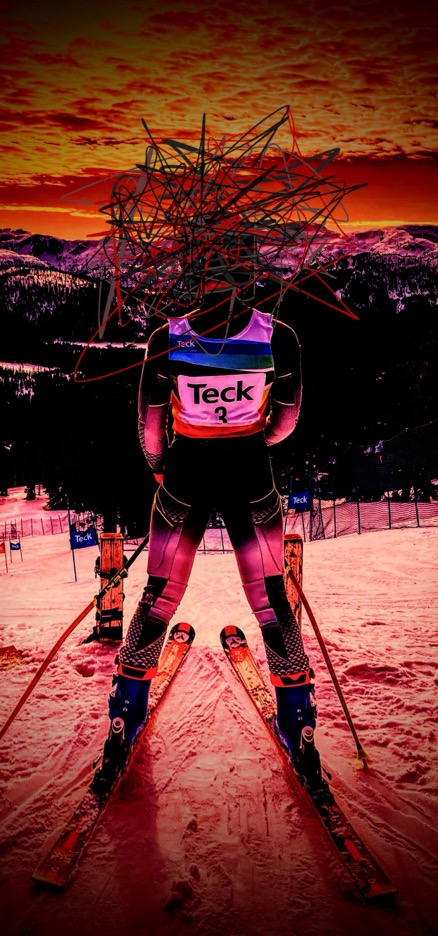
Thoughts become loud and chaotic as an alpine ski racer stands in the start gate preparing for a giant slalom race by finding the balance between positive stress and overwhelming pressure.
I’m 16 years old. It’s -12˚c. I’m alone at the top of the mountain. I shake violently as I slide toward the start gate. I shiver not just because I am freezing in my thin speed suit, but also from race-day nerves and fear of the steep, icy hill ahead. Waiting on the brink is the hardest part. My thoughts become chaotic and loud: My skis aren’t sharp enough. What if I crash? My coach will be disappointed when I mess up. I hope no one is watching. I don’t want them to see how much I suck. I can’t remember anything about the course. … The racer in front of me disappears onto the race course.
It’s my turn next. I close my eyes, take a deep breath, and slowly exhale. I open my eyes and remember what my coach taught me all those years ago. You’ve got this. As I slide into the start gate, I can see the race course below me between the tips of my skis.
The starting official turns to me and says, “Ten seconds.” With another deep breath, I look down the hill, and there is no more waiting. It is time to race.
“Five.” I crush my negative self-talk into the snow with each stomp of my skis.
“Four.” I remind myself of how hard I’ve been training for this.
“Three.” I look toward the first gate and think about my race line.
“Two.” I remind myself of my cues: Outside ski. Look ahead.
“One.” I’ve got this!
“Go.”
I was an alpine ski racer from ages 6 to 17, and I’ve been a ski coach ever since. Sports have taught me many valuable life skills, including time management, healthy habits, focus, and motivation. I also learned social skills, self-esteem, goal setting, respect, and most notably, how to manage stress and anxiety. Organized sports are the best venue for adolescents to learn how to understand and develop lasting coping skills for anxiety. Some might argue that sports are too competitive and create unnecessary anxiety in young athletes, causing them to burn out and drop out of sports at too young an age. However, with supportive coaching, a positive social environment, and a training structure that is developmentally appropriate, adolescents can experience anxiety in a healthy way that allows them to develop helpful coping strategies. Sports help them learn coping skills they can take into other contexts and into adulthood.
Adolescence is a period of a person’s development during which many complex neurological processes and emotional control systems develop (Xie et al., 2021). A combination of hormones, developing neural networks, and exposure to new social situations, roles, and responsibilities puts adolescents at high risk for developing anxiety disorders (Murphy et al, 2021). Importantly, anxiety is not the same as an anxiety disorder. Anxiety is a normal reaction to a future stressful event, manifesting psychologically as worry and nervousness and physically with things like increased heart rate and muscle tension (Craske et al., 2011). When the worry becomes extreme, with severe emotional distress, and unhealthy coping strategies like avoidance are used, anxiety can become a disorder, damaging social functioning and negatively affecting quality of life (Xie et al., 2021).
Sports naturally incite anxiety through direct competition, rules, and clear winners or losers (Lombardo, 2012). Athletes often feel anxious before competition. Historically, this pressure prepared adolescents for roles they would assume in adulthood, such as hunting or fighting (Lombardo, 2012). In societies where hunting was essential, playing sports that built strength, endurance, and strategy was valuable preparation. Today, while we no longer hunt for survival, we must build social connections, anticipate outcomes, solve problems, and handle stress. Skills learned in sports, such as teamwork, emotional regulation, and coping strategies, translate to real life. Coaches set expectations, foster positive environments, and address behaviour. Ski racing can teach an athlete how to recognize anxiety as a signal and use it as a cue to reframe potential stressful events into achievable challenges.
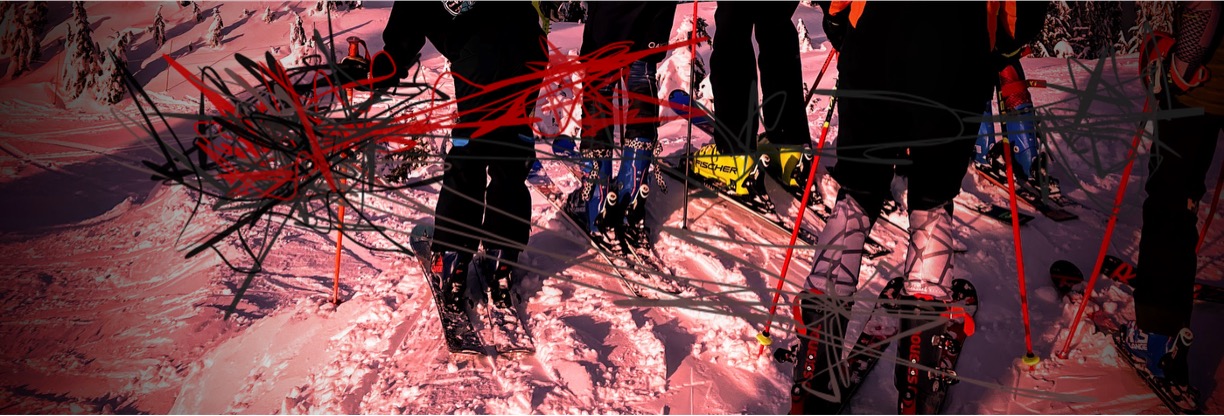
Anxiety is a prevalent and normal experience in adolescence. Social acceptance, peer comparison, new experiences, roles, and responsibilities are common stressors for adolescents. Young athletes may also experience anxiety towards races, competitions, and other challenges in the sport. Stressors can combine to increase anxiety.
Self-confident is not how I would describe a 13-year-old me. I was painfully shy and was usually found hovering on the periphery of the group. “Adolescents are developmentally wired to be comparing themselves to others, and so they can experience a lot of anxiety in social situations. They’re wired to be constantly self-checking and worried about how people are observing them and watching them.” Dr Rachel Baitz, an applied developmental psychologist at Capilano University, sums up in three sentences a concept that made my teenage years absolutely miserable (personal communication, Oct 9, 2025). Ski racing was my happy place, and I so desperately wanted to fit in and be part of the team. On top of all that, the normal social stress of saying the right thing and wearing the cool outfit, there was the intense stress of race-day competitions. Steph, an ex-ski racer and now professional coach, describes what it felt like before a race: “I [felt a] tightness in my chest, …like I couldn’t get the right amount of oxygen into my lungs, no matter how many deep breaths that I took….I hated race day so much because I hated being in the gate. I hated the attention. I hated that I only had one chance to perform.” (Personal communication, Oct 16, 2025).
Anxiety is a normal part of being human, and it isn’t always negative. “A certain amount of stress and anxiety can actually enhance your performance if you’re really good at something,” says Dr. MacGillivray, a developmental psychologist at SFU (Personal communication, Oct 17, 2025). When we face a challenge, like a ski race, we worry about our performance and how we compare to others. This stress response helps us focus, increases our heart rate, and prepares us to perform (Tossici et al., 2024). Without it, we’d approach a race with the same energy as folding laundry.
Sports are the perfect place to learn how to handle anxiety because challenges encountered are both internal and external. Everyone is different, and everyone has a different level for optimal performance. Hayden, an ex-ski racer and coach of fifteen years with a Master’s in Kinesiology, highlights the anxiety management skills he was able to develop during his time as a ski racer: “Throughout my ski racing career, [I] would oftentimes feel very anxious coming into races. Through following what [coaches] were telling me and a lot of visualization, [I was] really able to manage those feelings of anxiety.” Hayden brings up another good point that having a supportive coach teaching effective coping strategies helps young athletes learn what to do with the anxiety they are experiencing. Some athletes need to hype themselves up before a competition, but most need to calm their anxiety to find the optimal level of arousal to perform at their best (Tossici et al., 2024).
“We’re not against anxiety. In fact, if you’re not anxious in certain situations, you’re not fired up enough.” Dr Cohen, a psychotherapist with over fifty years of counselling experience, agrees that a level of anxiety is necessary to perform (Personal communication, Oct 23, 2025). “Of course, if it’s like that all the time, your body’s going to incinerate.” Dr Cohen warns.
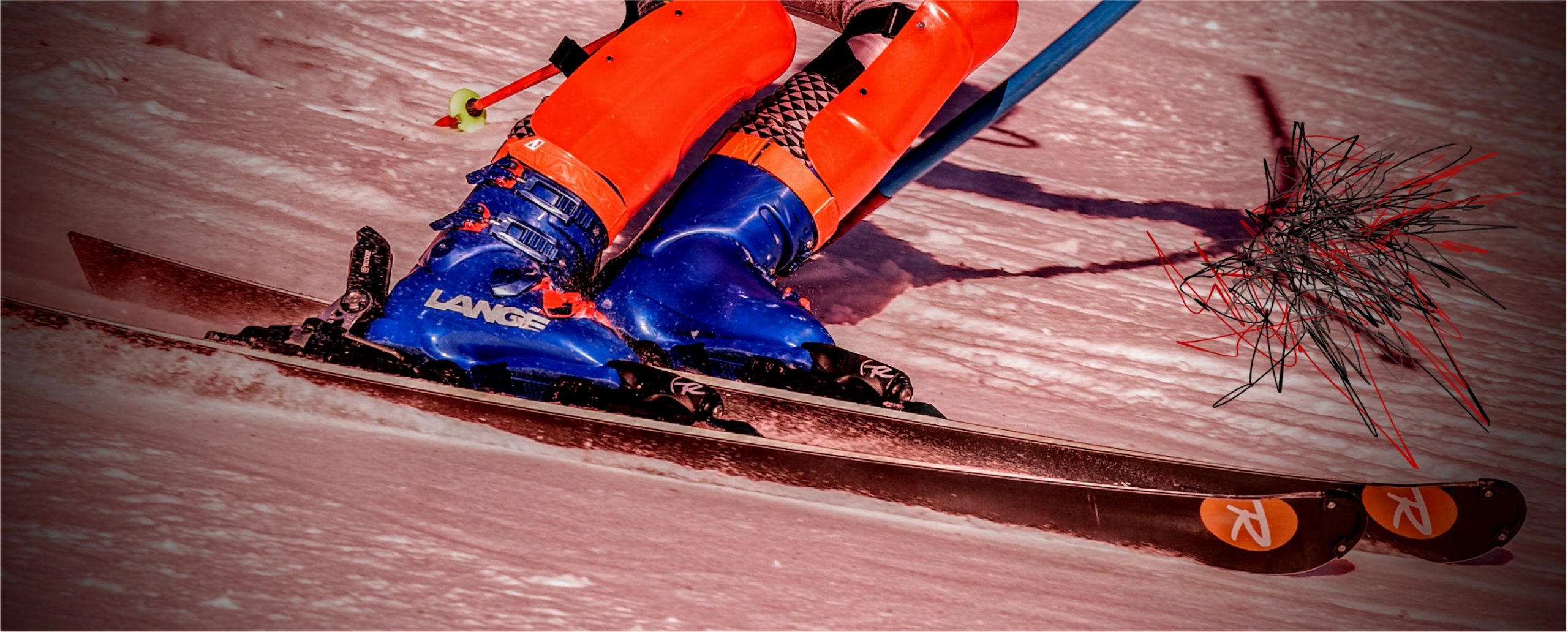
When the pressure to perform exceeds the athlete’s ability to cope, sports become too stressful, and the love of the game is lost.
At 15, I moved from the club-level Nancy Greene Ski League to the highly competitive FIS level of alpine ski racing. It is at this level where hills get steeper, courses become more challenging and ski racers are fighting for spots on provincial and national teams. It seemed like it was only a few short years ago that I was racing for cookie medals and participation ribbons, and now here I was, getting absolutely decimated by some of the best racers in the country. No one around me seemed to be racing just for the fun of it, and they certainly would not be content with winning just a cookie.
I was one of the few who made it to FIS. Most of my friends from other ski clubs had dropped out. Many started for the love of skiing and friendship, but as the sport became more competitive, the fun faded. Training left little time for friends, and the satisfaction of achievement fell further and further away as I fell further and further behind the race leaders. I only lasted two years in FIS. I still had a lot of potential and many years before I hit my peak performance, but finishing near the back, losing friends, and being ignored by my coach who only focused on the “good” athletes left me disheartened and unmotivated.
Looking back now, this breaks my heart. I loved racing. The thrill of going as fast as you can, riding the line and racing through each gate… There is nothing like it. I loved the challenge of always having a skill to work on, something to improve, an endless list of little goals to work hard at and achieve. When I was younger, I had a coach who taught me that skiing is not about winning; the joy is in the challenge. That lesson stuck with me. When I got to the point where winning became the only objective, that’s when I knew it was time to leave.
Dr Cohen also notices the shift in focus in youth sports: “We have athletes now that can do things that no human being should be able to do. They’re looking for [gymnasts] already when they’re four years old. But by ten or twelve, they’re burned out.” (Personal communication, Oct 23, 2025). Dr MacGillivray also notes that “It seems like they’re pushing it earlier and earlier. Kids lose the joy to just be focused on competing and winning.” (Personal communication, Oct 17, 2025). It is easy to see that sports are beneficial for adolescents for numerous reasons. However, when sports put too much pressure on athletes, they lose the joy of the game.
Steph’s experience highlights this well: “I think performing in the sport was where the anxiety came from. The training and stuff like that, where it was a less high-pressure environment. I didn’t feel like that at all. And I actually really enjoyed it.” (Personal communication, Oct 16, 2025). Where should the balance be? To learn how to cope with anxiety, we need to experience stressful events to understand anxiety and build coping strategies. However, these same experiences can cause anxiety and can even exacerbate it (Bjørnarå et al., 2021). It comes down to the right environment for the right individual at the right time. Sport team environments are not always the best at this. Pressures from parents, coaches, sport organizations and the athlete’s teammates can put unnecessary or inappropriate amounts of pressure on an athlete that they are not mentally strong enough to handle (Bean et al., 2021). Just like learning any skill, learning how to cope with anxiety takes practice and experience on a smaller scale before you build your way up to bigger challenges.
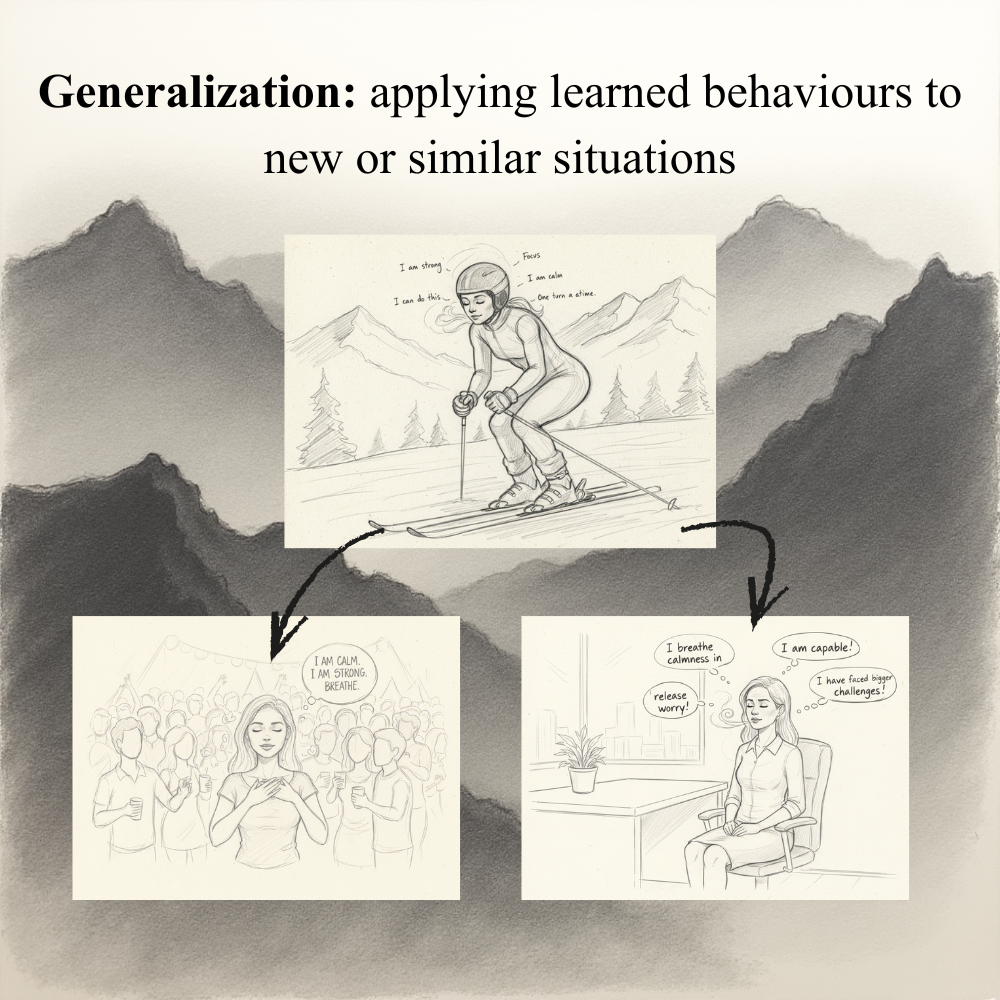
Ivan Pavlov describes the concept of learning generalization in his theory of classical conditioning (Lashley & Wade, 1946), and it is further refined by Roger Shepard’s universal law of generalization (Shepard, 1987). For adolescent athletes, skills learned to cope with race day anxiety can be generalized to other anxiety-inducing scenarios.
I’m 21 years old. It’s a cool 18˚C in the lobby, but I am still sweating. I have the same excited, slightly nauseated feeling in my gut that I had when I got the call back about an interview. It was slightly less than, but now that I am here and ready to be called in at any moment, the feeling of anxiety intensifies. The familiar chorus of negative thoughts comes swirling into my mind: What are they going to ask me? What if I say the wrong thing? What if I don’t know what to say? How do I look? Should I have dressed up more? Are they going to think that I am trying too hard? I take a deep breath, close my eyes and push those unhelpful thoughts out of my head as I slowly exhale. Feelings of anxiety still bubble up, but I know this feeling well. I felt this way every time before a race. It was important to me to do well in a ski race, and it is important to me to do well in this interview. Sitting and waiting for this interview felt just like sitting at the top of a mountain waiting for my race run. Instead of letting the anxiety get out of control, I try doing what I do at a ski race. I take ten slow, deep breaths to control my breathing and lower my heart rate. Then I think about the practical details of what’s ahead and visualize, not the terrain and race line, but the interview questions and what my response will be. I recognize the negative thoughts that reframe them into positive self-talk. The door opens, and I hear my name being called. I’ve got this.
No one ever taught me to apply the skills I learned in ski racing to other situations. Dr MacGillvary explains this phenomenon: “It’s called generalizable knowledge. … to be able to learn information and transfer it to other contexts. That happens really early on. By the time kids are involved in sports, they’re able to do that.” (Personal communication, Oct 17, 2025) It is incredibly helpful that our brains can do this. Every situation we encounter is slightly different from the last and we need to be able to transfer knowledge from one context to another. Sometimes, however, it can be a challenge to generalize a complex skill, like coping with anxiety, to different situations without help, and it looks different for everyone.
“My anxiety really kicked into a higher gear after I quit ski-racing because I didn’t have that outlet and didn’t have those mentors to really focus my attention and focus my anxiety into progressing in my sport.” (Hayden, Personal communication, Oct 15, 2025) For Hayden, sports provided a healthy venue for him to build healthy coping strategies for his anxiety. Without the guidance from his coaches and a tangible application in organized sport, he struggled to cope.
Steph, who also struggles with anxiety disorders, was able to learn some valuable strategies from her time racing that she was able to bring into her everyday life. “Being able to zero in and focus on that ski course for thirty seconds, knowing that there’s an end to it, I think it has been very applicable in other areas of my life. Like, okay, this feeling sucks, and it’s overwhelming. But I know I will come out on the other side of it.” (Steph, Personal communication, Oct 16, 2025).
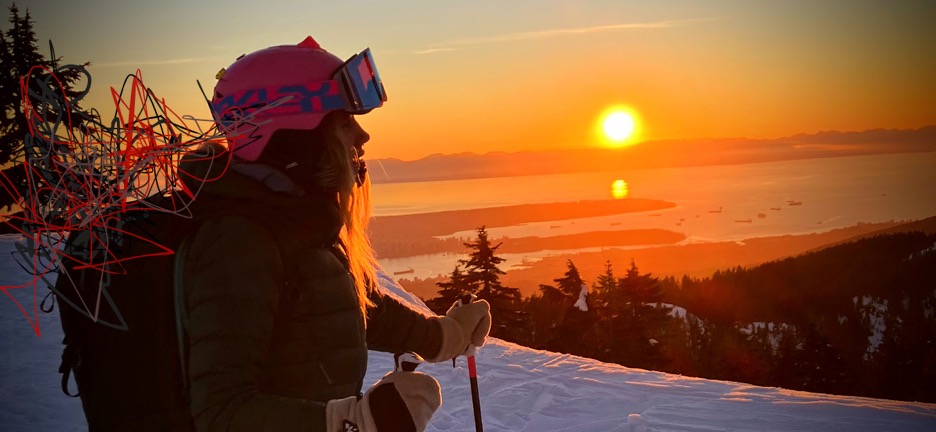
How we cope with anxiety as adults depends on the skills learned in adolescence. Where are today’s adolescents learning these skills?
CONCLUSION
In 2022, over two-thirds of Canadian youth aged 5-17 participated in organized sports (Canadian Fitness and Lifestyle Institute, 2022). This is around 3.4 million children and adolescents (Statistics Canada, 2022). Mental health is worsening for adolescents all over the world (Li et al, 2025), with Gen Z experiencing the highest rates of anxiety of any other generation, affecting approximately 1 in 4 adolescents (Liu et al, 2024). If sports can teach adolescents how to understand and cope with anxiety, then we already have the perfect developmental environments set up with millions of kids already enrolled. Parents, coaches, organizations, societies, institutes, governments and athletes already invest so much time, effort and money into sports. With a shift in purpose away from performance and towards positive mental health, we can use sports to help this anxious generation become resilient, emotionally regulated and thriving adults.
I’m 6 years old. It’s 2˚C. I feel alone at the top of the hill. It is our ski club’s fun-day race, but it feels anything but fun. It’s my first race, and I am terrified. I don’t really understand how the race gates work, and the hill looks really steep. I’m shaking from the cold and from the fear.
My coach comes over, kneels down, and says, “How are you feeling about the race?” I told him in a tiny voice that I was just a little bit scared and didn’t know which way to go around the gates.
He looked at me for a second, smiled, and then said, “Come over here where you can see the race hill.” Then he called over a bunch of other kids my age. “Who’s feeling a little bit nervous?” I looked around and saw that everyone else looked just as scared as I did. A few of us slowly raised our hands a little bit. “It’s ok to feel nervous, that’s totally normal.” I thought my coach was going to tell me to toughen up and not be scared, but surprisingly, he seemed to understand. “When I was your age, my coach taught me a secret trick for when I felt nervous. You take all the negative thoughts in your head, the things that are scaring you, and you imagine them as a snowball on the ground. Then you take your skis and stomp on those negative things as hard as you can. Every time you stomp, say to yourself: ‘I’ve got this!’ For our first race, let’s practice this. When you are in the start, take all the nervousness and scary thoughts and stomp them into the ground as hard as you can. Tell yourself that you’ve got this, then push out from the start.”
It was my turn next. Still shaking, I slid into the start gate. I was still so nervous. I looked over at my teammates. “Stomp it!” one of them yelled. “Yeah, stomp on that fear!” others chimed in. So I did. One little stomp. It felt good to move, to do something with all my nervous energy. I stomped again, a little harder. Then I looked at the course, thought about how I had no idea what I was doing, and then stomped hard on that thought. “You’ve got this!” my teammates cheered. I’ve got this, I said to myself as I smiled at my new friends and pushed out of the start.
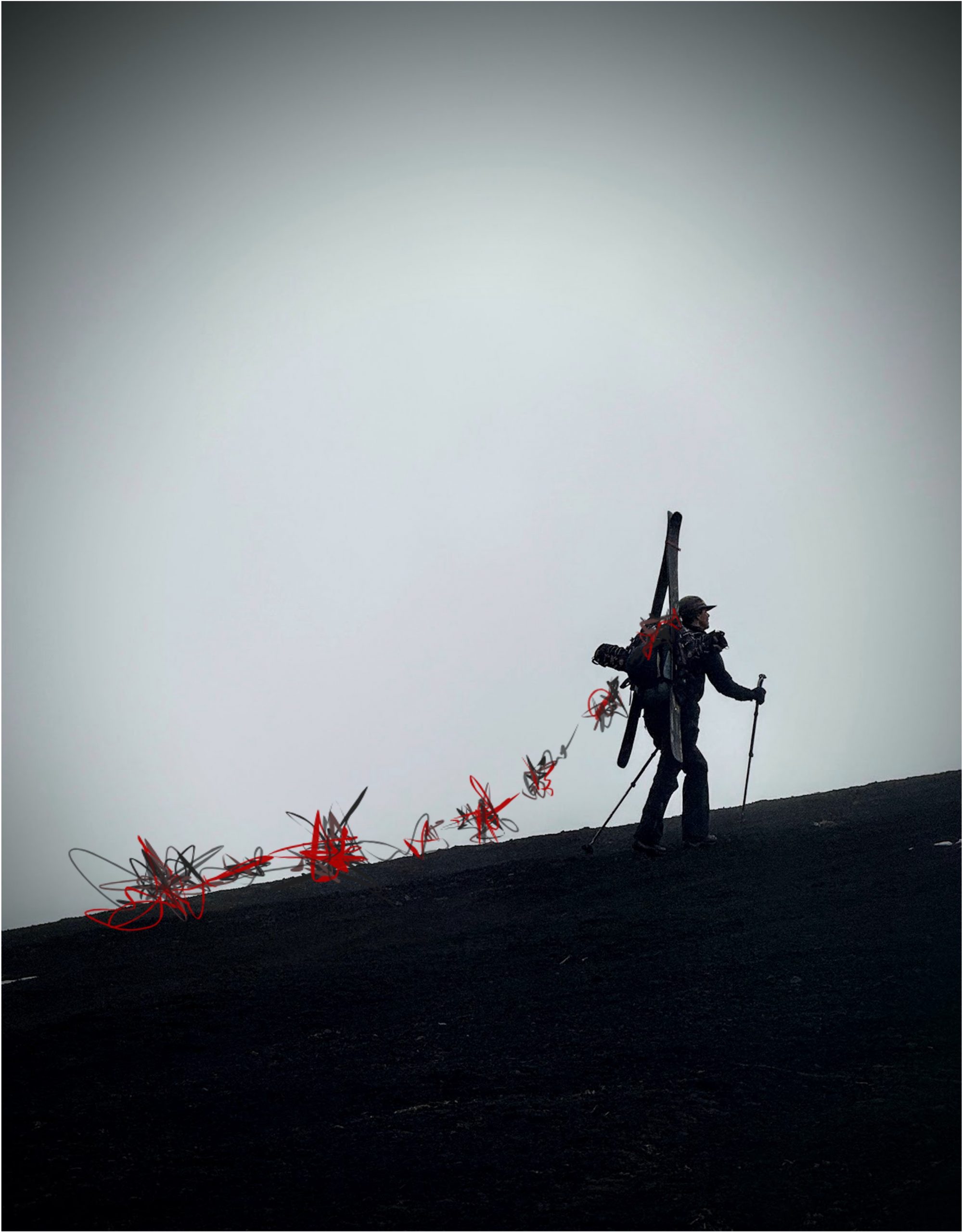
Resilience and emotional regulation are key skills learned in adolescence that help individuals thrive as adults (Anderson et al., 2024). I will forever be thankful for the lasting coping skills I developed for managing anxiety during my time in ski racing, and I hope that every athlete in sports has the chance to do the same.
REFERENCES
Anderson, T.L., Valiauga, R., Tallo, C., Hong, C.B., Manoranjithan, S., Domingo, C., Paudel, M., Untaroiu, A., Barr, S., Goldhaber, K. (2025). Contributing factors to the rise in adolescent anxiety and associated mental health disorders: A narrative review of current literature. Journal of Child and Adolescent Psychiatric Nursing, 38(1). https://doi.org/10.1111/jcap.70009.
Bean, C., McFadden, T., Fortier, M., & Forneris, T. (2021). Understanding the relationships between programme quality, psychological needs satisfaction, and mental well-being in competitive youth sport. International Journal of Sport and Exercise Psychology, 19(2), 246–264. https://doi.org/10.1080/1612197X.2019.1655774.
Bjørnarå, H. B., Westergren, T., Sejersted, E., Torstveit, M. K., Hansen, B. H., Berntsen, S., & Bere, E. (2021). Does organized sports participation in childhood and adolescence positively influence health? A review of reviews. Preventive Medicine Reports, 23, 101425. https://doi.org/10.1016/j.pmedr.2021.101425.
Canadian Fitness and Lifestyle Institute. (2022). Sport participation among children and youth. https://cflri.ca/publication/sport-participation-among-children-and-youth/
Craske, M. G., Rauch, S. L., Ursano, R., Prenoveau, J., Pine, D. S., & Zinbarg, R. E. (2011). What is an anxiety disorder?. Focus, 9(3), 369-388. https://doi.org/10.1002/da.20633.
Lashley, K. S., & Wade, M. (1946). The Pavlovian theory of generalization. Psychological Review, 53(2), 72–87. https://doi.org/10.1037/h0059999.
Li, S. H., Batterham, P. J., Whitton, A. E., Maston, K., Khan, A., Christensen, H., & Werner, S. A. (2025). Cross‐sectional and longitudinal associations of screen time with adolescent depression and anxiety. British Journal of Clinical Psychology, 64(4), 873-887. https://doi.org/10.1111/bjc.12547.
Liu, X., Yang, F., Huang, N., Zhang, S., & Guo, J. (2024). Thirty-year trends of anxiety disorders among adolescents based on the 2019 Global Burden of Disease Study. General Psychiatry, 37(2), 1–12. https://doi.org/10.1136/gpsych-2023-101288.
Lombardo, M. P. (2012). On the evolution of sport. Evolutionary Psychology, 10(1), 1-28. https://doi.org/10.1177/147470491201000101.
Murphy, J., Patte, K. A., Sullivan, P., & Leatherdale, S. T. (2021). Exploring the association between sport participation and symptoms of anxiety and depression in a sample of Canadian high school students. Journal of Clinical Sport Psychology, 15(3), 268-287. https://doi.org/10.1123/jcsp.2020-0048.
Tossici, G., Zurloni, V., & Nitri, A. (2024). Stress and sport performance: A PNEI multidisciplinary approach. Frontiers in Psychology, 15, 1358771. https://doi.org/10.3389/fpsyg.2024.1358771.
Shepard, R. (1987). Toward a universal law of generalization for psychological science. Science, 237(4820), 1317-1323. https://doi.org/10.1126/science.3629243.
Statistics Canada. (2022). Population estimates by age. https://www150.statcan.gc.ca/t1/tbl1/en/tv.action?pid=1710000501&pickMembers%5B0%5D=1.1&pickMembers%5B1%5D=2.1&cubeTimeFrame.startYear=2022&cubeTimeFrame.endYear=2022&referencePeriods=20220101%2C20220101.
Xie, S., Zhang, X., Cheng, W., & Yang, Z. (2021). Adolescent anxiety disorders and the developing brain: comparing neuroimaging findings in adolescents and adults. General Psychiatry, 34(4), e100411 https://doi.org/10.1136/gpsych-2020-100411.
Excellent article. Hopefully, Kim will continue to express her experiences and thoughts in writing to readers’ benefit.
Wonderful article, Kim! So vividly written and relateable. I think there is a huge need for the kinds of positive coaching and athletic encouragement you describe here. Wish I’d had this in my youth!
Well done Kim!
Very insightful
Great piece! As an ex-competitive athlete I can definitely relate and I’m so thankful for having worked with a mental trainer back in the day.
There’s soo many important skills that sport teaches from a young age. Mental health is just as big of a component to performance as the physical aspect.