


Michaela Salvino
Michaela Salvino earned her Bachelor of Arts in Psychology from Capilano University in the fall of 2025. Throughout her undergrad studies she has deepened her understanding of psychology, sociology, criminology while exploring new ways of learning.
During her time at Capilano, she played on the Capilano women’s soccer team in 2024 and competed at Nationals, hosted by Capilano University Squamish. Her hard work and determination paid off when she assisted the winning goal that earned her team a bronze medal.
She plans to become an inspiring educator and attend the Professional Development Program for teaching next year to pursue her goal of becoming an elementary teacher.
My personal experience formed my exploration of why strength training should focus more on physical education. During the pandemic, many young individuals began at-home workouts, including myself. The rise of women’s fitness began to grow on social media, which inspired me to start my fitness journey, as the topic of women utilizing gym spaces was not frequently talked about or even suggested. The day came when I first stepped into the gym. Bright lights, the sounds of weights clanging, and a feeling of humidity, either from my nerves or the air. I don’t know. Walking into the gym felt like walking into a new world. Spaces with treadmills, weight sections, and a sense of overwhelm. Where should I start? Seeing women on cardio machines, not in the weight section, made me unsure of where to start. Is weightlifting only for men? Am I doing something wrong? I want to be strong but I don’t know where to start. Thoughts racing. I couldn’t help but think that if I had been taught this in high school, how much easier this experience would have been. This feeling of overwhelm, uncertainty, and hesitation are the raw emotions students feel when entering the gym for the first time with no past experience. Focusing on strength training in physical education would give students the confidence and preparedness to enter gym spaces on their own.
The goal of this solution is to promote lifelong healthy habits and provide students with physical literacy of strength training. Strength training gives students a foundation for when they graduate high school to comfortably start in the gym on their own. Getting students comfortable using equipment and learning proper form makes their transition into the gym after graduation a lot smoother. Why is strength training better than games or team sports, you ask? Well, strength training is more individualized, and students can personalize their program based on their own needs. Some students may also feel pressure due to the competitive aspect of sports activities taught in physical education which can ultimately shy them away from participating in forms of exercise. Teaching strength training will allow students to focus on their own progress and build confidence in their own individualized abilities. From past personal experience, in high school strength training was offered as an elective and I was curious I took the course. The class was all boys with a male instructor. Not having any female role models or classmates made it almost feel like it was a space I was not meant to be in. Ultimately, if strength training were a required course taught in physical education 10 in the BC curriculum, gym spaces would feel more accessible and inclusive to all students. No student should ever feel like they aren’t meant to be in a gym space. If strength training were in the BC curriculum which required all schools to teach it not just as an elective, early exposure to gym spaces would be a lot more welcoming to all genders. This would also overcome the stigma that gyms are male-dominated spaces and would encourage more girls to feel empowered through strength training and not be intimidated by it.
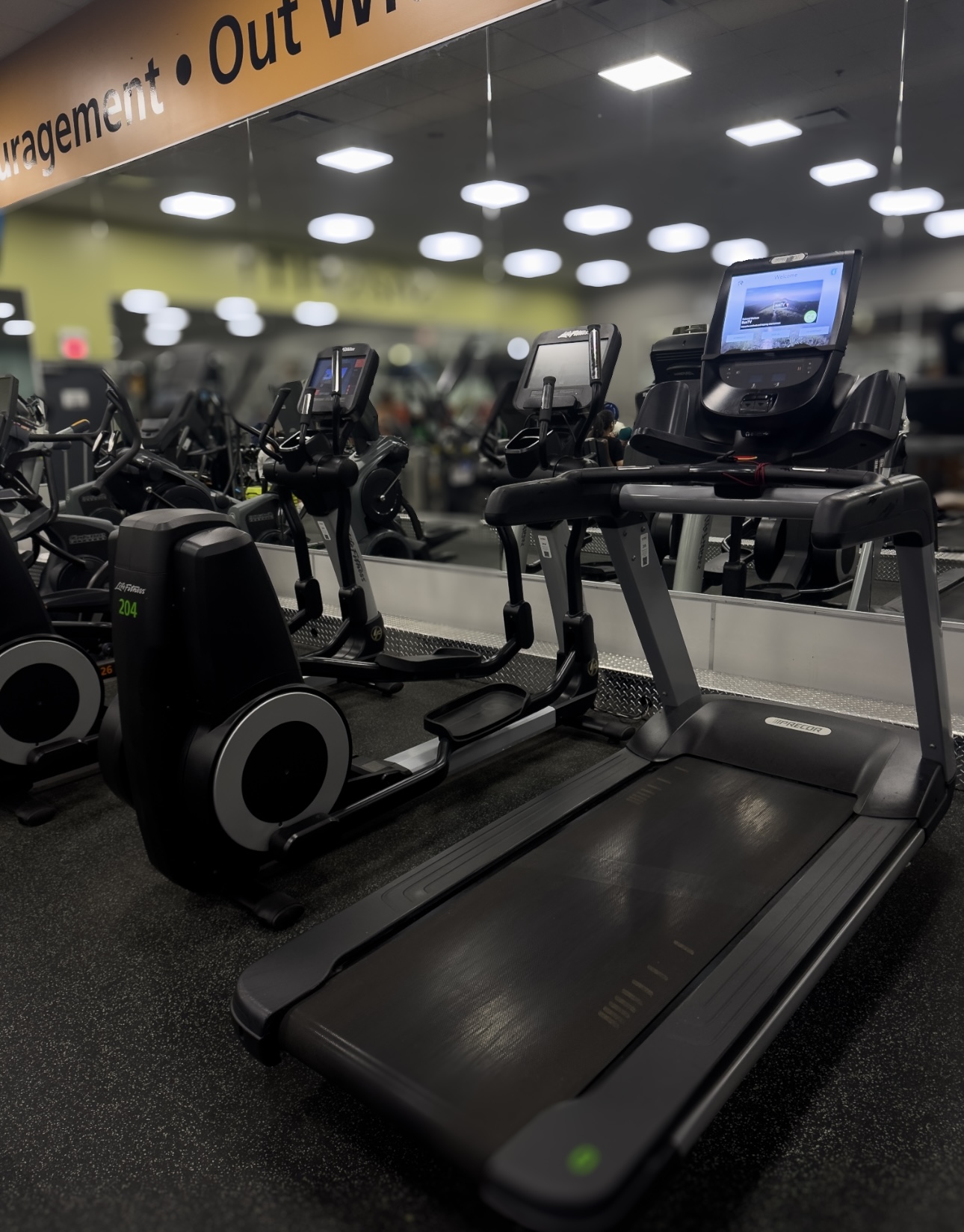
Cardio machines in a public gym.
From 2018 to 2019, 36% of youth aged 12-17 met the physical activity recommendations (Statistics Canada, 2022). From 2022 to 2024, that stat has dropped to 21% (Statistics Canada, 2022). Our youth are experiencing a significant decline in meeting the recommended levels of physical activity, and this needs meaningful intervention. Integrating strength training into PE 10 as a mandatory course in BC’s curriculum (British Columbia Ministry of Education, n.d.) not only addresses this decline but also provides students with a foundation of strength training skills, knowledge, and literacy they can use in the long term.
For many students, physical education may be the only form of activity students partake in. Early exposure to strength training with proper supervision allows students to learn safely in an inclusive space and build confidence, not confusion. Strength training should be a required topic to teach in BC’s curriculum PE 10 to address the concerning decline of Canada’s youth not meeting the recommended levels of physical activity and prioritize teaching the strength training skills. Teaching students how to utilize gym equipment and learn proper form gives them a base to strive in a gym setting going into adulthood by fostering these skills at an early age. If students are not properly equipped with strength training practices skills in high school, their transition into fostering healthy fitness habits into adulthood can be hard to start on their own. Giving students a base paves their way for fitness outside of high school, preparing them with fitness skills they can use and making strength training more accessible.
Why can’t students just get a personal trainer? This is because we are not aware of everyone’s financial situations and emphasizing the importance of strength training through education practices ensures that all students have equal access and opportunity to be a part of developing lifelong fitness skills. Strength training not only shows students a new way of physical activity, but it also aligns with the BC curriculum’s goal for Physical Education of developing the skills and knowledge students need for lifelong healthy habits and mental wellbeing (British Columbia Ministry of Education, n.d.).
Understanding these terms will help clarify the discussions throughout the paper. “Resistance training” means “a form of exercise intended to increase muscular strength and endurance” (Scott, 2006). Strength training is a form of resistance training and “is exercise designed to improve physical strength” (Clinic, 2025). These terms will be used interchangeably but will keep the same meaning. Physical literacy means “the motivation, confidence, physical competence, knowledge, and understanding to value and take responsibility for engagement in physical activities for life” (The International Physical Literacy Association, 2016).
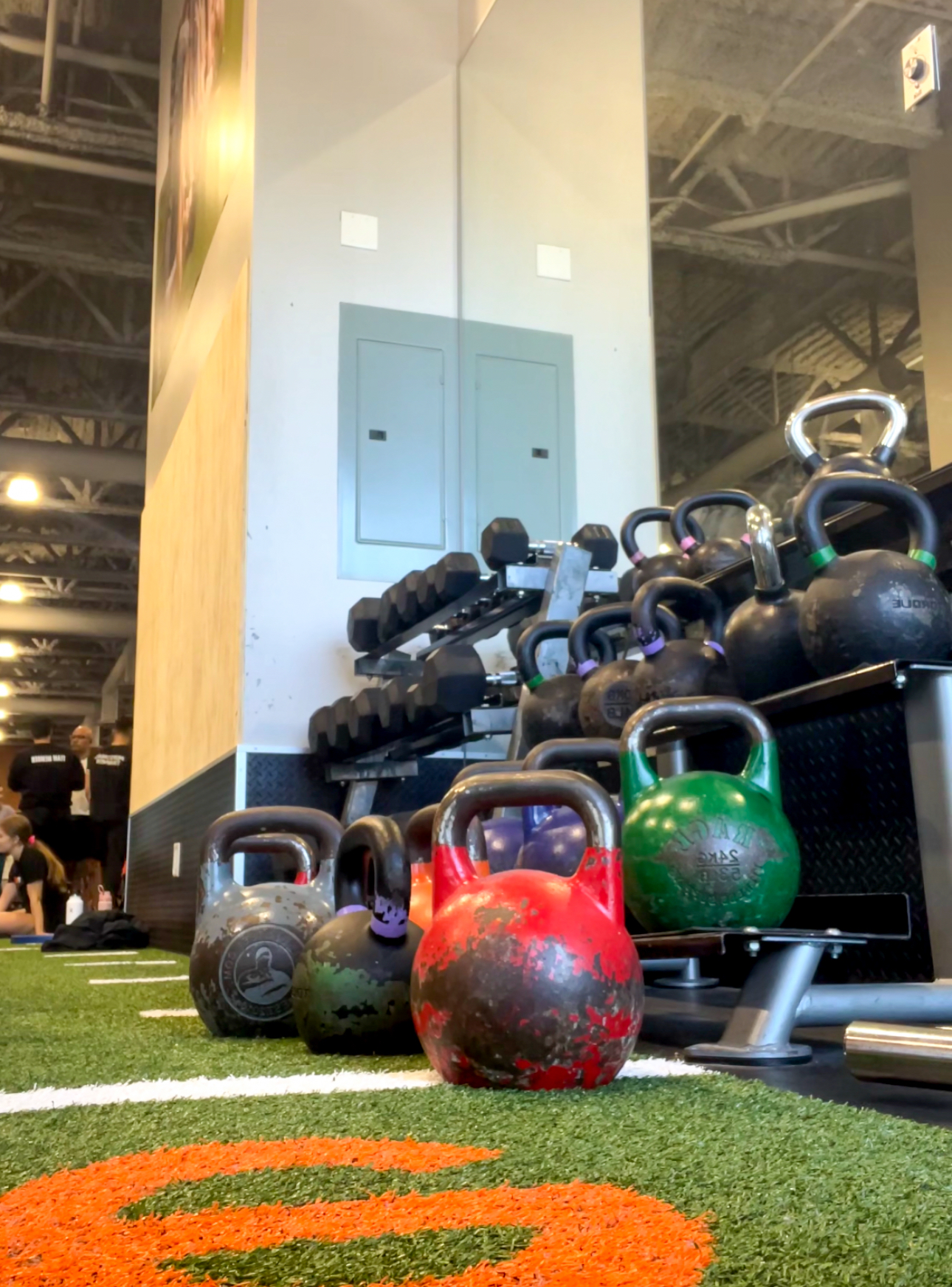
Kettlebells and dumbbells in a public gym that can be used for resistance training activities.
Historically, strength training has been used mostly by men and was used for sport. From the 1970s to the 1980s, strength training was not recommended for youth due to its “high” risk of injury (Faigenbaum et al., 2009). Specifically, in physical education team sports are mostly taught in PE, such as basketball, volleyball, badminton, etc. The outdated narrative was that women were discouraged from participating in strength training activities as their past cultural beliefs promoted aerobics so women could stay “slim”.
The outdated stigma that strength training for youth is high risk and stunts growth is now countered with much evidence that proves that stigma wrong, as “There is no evidence to suggest that resistance training will negatively impact growth and maturation during childhood and adolescence (Dahab & McCambridge, 2009). Faigenbaum et al. (2009) (National Strength Conditioning Association) state the many benefits that counter the outdated stigma that strength training is a high-risk activity for youth. Faigenbaum et al. (2009) argue that when age-specific resistance training programs are followed for youth, there are many benefits. Strength training when followed by proper age-specific guidelines, provides many benefits for youth, such as improving motor skills, resistance to injury, psychosocial benefits, cardiovascular benefits, and helping promote exercise habits in youth (Faigenbaum et al., 2009). They also argue that strength training exercises for youth carry the same injury risk as sport (Faigenbaum et al., 2009). The concern of injury risk due to sport is often ignored, while injury risk due to resistance training is often emphasized with concern. Implementing strength training programs in high school following age-specific guidelines will set up students for long term success in their fitness journeys by giving them the proper tools.
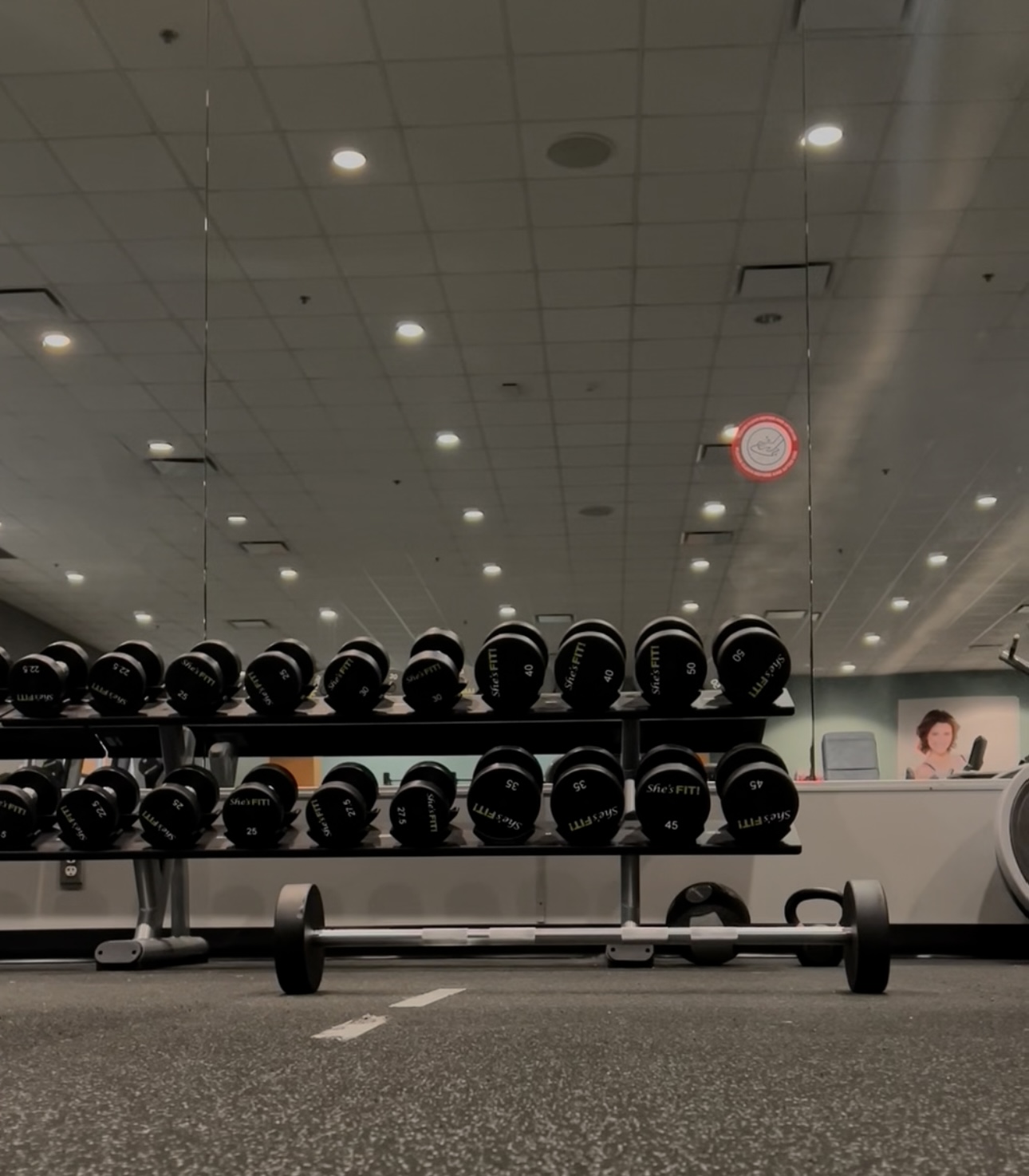
A rack of dumbbells in a public gym that can be used for plenty of resistance training activities.
The evidence that backs up the strength training in youth is a vastly growing area of research that continues to break stigmas that strength training is “bad” for youth. The first study with findings by Lloyd et al. (2015) emphasizes that to maximize physical activity participation rates, ensure long-term health and well-being and reduce injury, youth have to be provided with a strategic plan for fitness. This suggests that students who are provided with strength training plans will strive. The findings of Lloyd et al. (2015) closely align with my emphasis on why strength training should be a required topic to teach in the BC curriculum (British Columbia Ministry of Education, n.d.) because it has the intention to increase participation levels in fitness. Giving students the educational knowledge of strength training familiarizes them with physical literacy knowledge in strength training, fostering practical healthy habits.
As a past student athlete, soccer has taught me many valuable lessons such as discipline, consistency, and hard work. I now solely focus on strength training where I use those same values of staying consistent to get stronger mentally and physically in the gym. Faigenbaum et al. (2009) also found that students who participated in resistance training activities developed the same social skills and mental discipline as compared to team sports. When we look at the long-term use of physical activity practices after high school the truth is, going to the gym and participating in strength training is a lot more accessible than individuals participating in sports once they graduate, especially if PE is their only exposure to physical activity. Moreno-Torres et al. (2025) found that “Supervised strength training programmes can significantly enhance physical fitness in school-aged children and adolescents.”
Out of all provinces in Canada, Alberta, BC’s neighbouring province, is the only province whose curriculum has requirements for resistance training with weights for PE 10 (Alberta Education, n.d.). Looking at the other provinces in Canada, their curriculums incorporate resistance training as a required course. BC’s PE 10 curriculum doesn’t involve mandatory resistance training. A school in New Zealand integrated resistance training programs into their school that had specialized programs for each grade level (Pichardo et al., 2019). Nordic Countries value the importance of strength training through their educational practices and this paves the way for students to engage in training more (Annerstedt, C. (2008). With the rising trend of strength training and the rise of evidence we can see that strength training education is becoming more valued in education.
With the declining trend in youth meeting in the physical activity recommendations, it is surprising to see that there is a trend of seeing more high school kids in gym spaces. This trend may be due to the rise in fitness trends on social media and how lifting weights is being promoted for everyone on online platforms such as TikTok and Instagram. These online platforms make it more accessible for everyone to begin their journeys in the gym as fitness influencers create online videos on tutorials that people can follow on their own. Social media is both good and bad. Body dysmorphia is a common issue that youth face and social media can sometimes promote unrealistic standards of looking a certain way. Addressing physical and psychological aspects of strength training would be essential to teach to create more awareness of these issues that the youth face. Building confidence and building strength is what I inspire to teach to students in PE 10.
A poster I created to promote the goal of teaching lifelong fitness skills.
Lifting weights is also promoted on social media platforms by many individuals, from doctors to influencers, and it is key to lifting weights young to get the most benefits from it. So the earlier you start in the gym the easier it is to grow muscle. This can be the reason why we are seeing more high school kids in the gym today. From my experience, yes, I am seeing high school kids, specifically boys join in on the new gym trend, but there is a gap between seeing more girls joining the gym. Teaching strength training in high school is important as it is a rising trend in fitness today that will continue to expand, and requiring teaching it in PE 10 will not only inspire more girls to participate, but it will give all students a solid foundation to start fitness.
To further strengthen my argument, I decided to interview Professor Emma Russell here at Capilano University. Professor Russell is an experienced educator who earned her MA in Curriculum and Pedagogy from the University of British Columbia in 2010, following her B.Ed. in (2007), her BHK in (2006), and a Diploma in Recreation Facility Management from Langara College in (1996). In my interview with Emma, we explored how physical education is taught and whether resistance training should be talked about in Education. Emma has taught in the Chilliwack district as a high school teacher where she recalls teaching the use of weights in PE class. Emma’s teaching experience to my past experience as a high school student from Burnaby, I was not taught how to strength train. Both these experiences show that there are inconsistencies within what is taught in Physical Education courses. Depending on the school a student is from or what district they are in, they may or may not learn a foundation of strength training principles. There is a pattern of inconsistencies across teaching strength training or resistance training as a mandatory topic taught in PE. Finding evidence about which schools teach this as a required section in Physical Education 10 is suggested to look at in future research, as it would be hard to determine for this project.
Emma suggests that there is a need for more specialized PE teachers in Elementary education to teach a base of physical literacy skills and movement so when students transition into high school they are more confident in their abilities when participating in activities. She also suggests that early exposure to physical literacy for elementary students would increase the chances of long-term participation, as the students will feel more familiar and confident with the movements. Teaching physical literacy starts in elementary students so when students transition to high school and more mature activities like strength training activities are taught it won’t be intimidating for students. Emma says, “teachers teach the way that they were taught”.The past known narrative for strength training was that it was not used for women or even for youth. The teachers who were educated during the time when lifting weights was not really talked about or even used, they most likely won’t feel comfortable teaching a foundation of strength training skills to students. This evolves into a larger conversation of why strength training needs to be talked about more in Education so PE educators can be more familiarized with strength training programs to further teach their students, making it more normalized and accessible for all students.
Requiring strength training in high school PE comes with some potential barriers that may make it difficult to implement this solution. The first one to address is teacher training. Not all PE educators may have been taught strength training and that may make them feel uncomfortable teaching the course. Another barrier is not enough funding for Physical Education resources. Schools would need to be equipped with proper equipment and I was unable to determine if every school in BC has a weight room. Ensuring all schools have proper equipment and space for students is essential for this proposal. Fitting weight training into the current curriculum as a required topic may be hard to fit into just PE 10 and there may be challenges in taking sections out of PE 10. This challenge would lead to the suggestion of strength training becoming its own required course. The last barrier could be the system believing in the outdated stigma that strength training is “high” risk injury for youth therefore administrators may not want to implement this into the BC curriculum.
When Lily first started the gym, she “felt very scared and intimidated by all the people and machines”. She also mentioned she would not have started the gym on her own if it wasn’t for the support of her friends. Lily explains that she learned nothing about strength training in high school physical education and she feels that if she had learnt strength training in high school physical education, it would have “100%” helped when she started her journey in the gym. “Knowing what to do would have made me feel more confident,”says Lily. Learning strength training in Physical Education 10 would have made the gym environment more comfortable to adjust to.
A poster I created to address that many students feel gym intimidation. Teaching basic physical literacy and strength training in high school will help to reduce those barriers.
One of the main reasons why strength training becomes “unsafe” for students is due to the lack of physical literacy training in strength training that results in students using improper form which then results in injury (Faigenbaum et al., 2009). Lily says that going to the gym was a constant “trial and error” that resulted in injuries. I can relate to Lily’s experience as I experienced the same thing. With no past experience teaching yourself how to properly lift can be a complicated process as if you go too heavy you will injure yourself or if you don’t do proper form you will also injure yourself. Lily argues that if Physical Education prioritized teaching a base of strength training knowledge “it could have prevented a lot of unnecessary injuries”. Lily’s experiences not only show us the lack of strength training skills taught in Physical Education 10’s curriculum but also the need for teaching practical physical activity skills like strength training to foster physical activity from youth into adulthood. If students were taught proper form and movements in the gym the transition out of high school fitness into a gym setting would prevent a lot of injuries.
Prioritizing strength training as a mandatory topic in Physical Education 10 would give students the knowledge to participate in strength training on their own and step into a gym space feeling prepared, not intimidated. Lily’s experience illustrates the gap in Physical Education and implementing strength training into the BC curriculum PE 10 would close this gap by educating students with a foundation of strength training skills. There is a need for change and to create this change, we need a shift in how we see physical education as a whole and the importance of resistance training for youth, starting with physical literacy. Teaching the youth practical skills in strength training is essential for them to foster the value exercise holds. By requiring physical literacy and resistance training in PE 10 in the BC curriculum, students will have a foundation for lifelong healthy habits.
References
Alberta Education. (n.d.). Physical Education Guide to Implementation Kindergarten to Grade 12 The ABCDs of Physical Education 2000. Retrieved November 23, 2025, from https://curriculum.learnalberta.ca/cdn/assets/public/72c5fe50-2b31-577b-aa68-4f6630264467/physed-guide-to-implementation.pdf
Annerstedt, C. (2008). Physical Education in Scandinavia with a Focus on Sweden: A Comparative Perspective. Physical Education and Sport Pedagogy, 13(4), 303–318. https://doi-org.ezproxy.capilanou.ca/10.1080/17408980802353347
British Columbia Ministry of Education. (n.d.). Physical and Health Education_Introduction | Building Student Success – B.C. Curriculum. Www.curriculum.gov.bc.ca. https://www.curriculum.gov.bc.ca/content/physical-and-health-educationintroduction
Clinic, C. (2025, July 3). How To Get a Lift Out of Strength Training. Cleveland Clinic. https://health.clevelandclinic.org/strength-training
Dahab, K. S., & McCambridge, T. M. (2009). Strength training in children and adolescents: raising the bar for young athletes? Sports Health, 1(3), 223–226. https://doi-org.ezproxy.capilanou.ca/10.1177/1941738109334215
Faigenbaum, A. D., Kraemer, W. J., Blimkie, C. J., Jeffreys, I., Micheli, L. J., Nitka, M., & Rowland, T. W. (2009). Youth resistance training: updated position statement paper from the national strength and conditioning association. The Journal of Strength & Conditioning Research, 23, S60-S79.
Lloyd, R. S., Oliver, J. L., Faigenbaum, A. D., Howard, R., Croix, M. B. D. S., Williams, C. A., … & Myer, G. D. (2015). Long-term athletic development-part 1: a pathway for all youth. The Journal of Strength & Conditioning Research, 29(5), 1439-1450.
Moreno-Torres, J. M., García-Roca, J. A., Abellan-Aynes, O., & Diaz-Aroca, A. (2025). Effects of Supervised Strength Training on Physical Fitness in Children and Adolescents: A Systematic Review and Meta-Analysis. Journal of functional morphology and kinesiology, 10(2), 162. https://doi.org/10.3390/jfmk10020162
Pichardo, A. W., Oliver, J. L., Harrison, C. B., Maulder, P. S., & Lloyd, R. S. (2019). Integrating resistance training into high school curriculum. Strength & Conditioning Journal, 41(1), 39-50.
Scott, J. R. (2006, October 17). How to Start Resistance Training. Verywell Fit; Verywellfit. https://www.verywellfit.com/what-is-resistance-training-3496094
Statistics Canada. (2022). The Daily — Directly measured physical activity and sedentary time in Canada: New results from the Canadian Health Measures Survey, 2022 to 2024. Statcan.gc.ca. https://www150.statcan.gc.ca/n1/daily-quotidien/251017/dq251017b-eng.htm
The International Physical Literacy Association. (2016). Physical Literacy Definition – Physical Literacy. Physical Literacy. https://physicalliteracy.ca/physical-literacy/