


Liam T. Koty
Liam T. Koty is a student in his final year at Capilano University, pursuing a Bachelor of Science with a focus on Biomedical Sciences and a Minor in Legal Studies. His dream is to become a dentist one day and follow in his father’s footsteps. Outside of school, Liam works at a periodontal clinic in Vancouver and frequently joins in outreach programs in the Yukon that serve communities with limited access to specialists. If you ever catch Liam while he’s not studying or working, you will usually find him in his garage wrenching around on classic cars or on the slopes.
Having grown up in Germany and lived in France, England, South Africa, Mexico and now Canada, Liam has a keen eye for comparing how different countries tackle similar problems. Liam has gained a more profound respect for legal systems over the last couple of years, through a series of legal battles across different countries, and now sees it as essential to be legally literate for a successful career.
For most Germans, childhood memories of summertime beer gardens are cherished: the drinks, the food, the music, but most of all, the playgrounds. While the parents are socialising and drinking with friends, we would spend hours climbing up and down 6-meter jungle gyms, playing. Every couple of hours, our parents would come and check on us to make sure we were still alive. Apart from that, this was a time of pure independence, a time to explore without constant supervision. When telling my Canadian peers about this memory, I was met with gasps and ironic laughter. Had I said something funny or outrageous? At the heart of this disconnect lies the tension between safety and development. Through time spent in Canada, it is clear to me that across Germany’s and Canada’s legal systems, this balance has been struck differently. What began as small comparisons of drinking culture, playgrounds, health care, independence, and supervision eventually led me to wonder whether different legal systems not only shape the level of autonomy we give children but also affect children’s development.
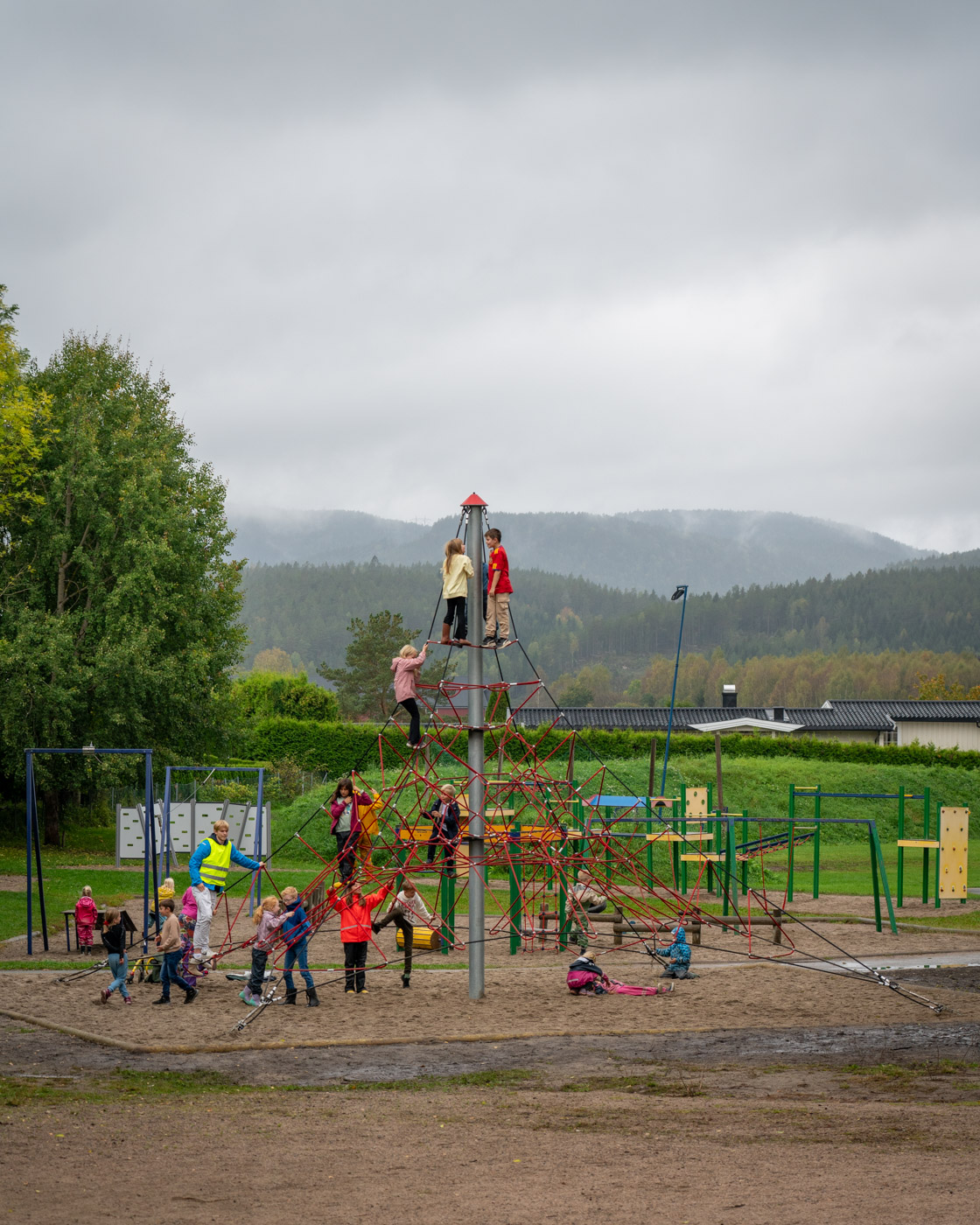
A 6.2-meter-high jungle gym, which is recommended to be used by children as young as six years of age (“Spider 6-6”). Very similar to the one I played on when I was a child.
Understanding why children’s autonomy differs between the two countries requires understanding how each system assigns responsibility and liability to children, parents, and occupiers. To start, both Common Law (Canada) and Civil Law (Germany) differ significantly in how they establish law and apply law (Holden 7). Common law is primarily governed by judge-made law and precedent, which binds judges to previous decisions of other judges. Germany’s Civil Law, on the other hand, is statute-driven, with detailed codifications that set clear, distinct rules for judges to apply (Holden 8, 9, 10).
Despite these fundamental differences, both legal systems do significantly limit children’s liability for the same reason: children do not have the same knowledge, experience or wisdom as adults to foresee danger and act accordingly, and are often overwhelmed by their environment (Osborne 45,46) (Bürgerliches Gesetzbuch [BGB], §828). While Germany, under BGB § 828 (1), sets an absolute threshold under which a child cannot be held liable for its own actions under the age of seven, regardless of the child’s subjective knowledge and experience (BGB, § 828), Canada does not have an absolute, fixed threshold; this is up to the discretion of the judge. However, according to Judge Goodman J., “children under tender years (five years) have little capacity to appreciate danger, and there is virtually no chance that children of the age will be held negligent,” thereby establishing a precedent for Judges to follow (Linden 184, 185).
In Germany, for children aged seven to eighteen, BGB § 828(3) provides that a child can be held liable only if, after an individual assessment, the child had the necessary insight to understand their responsibility and what they ought to do in the given situation. This is evaluated based on the child’s upbringing, intelligence and cognitive development (BGB, § 828). This is a purely subjective approach.
Canadian courts, on the other hand, have rejected the use of either a purely objective or a subjective approach, instead opting for a hybrid model that assesses whether the child exercised care to be expected of a child of like age, intelligence, and experience, at the discretion of the judge (Osborne 45). The main difference between these two approaches is that German courts ask themselves “what could this child have understood?”, while Canadian courts also consider “What should a child of their age have understood?”, incorporating more objective elements into their decision.
The standard of care in both Canada and Germany is similar. According to BGB § 832 (1), a supervisor of a person who requires supervision will be held liable for the damages a supervisee unlawfully causes. However, liability does not arise if the supervisor fulfilled their duty of care (BGB § 832).
In Canada, a supervisor can avoid liability if they meet the standard of care. In this case, it means proving one exercised “reasonable” supervision over their child and made reasonable efforts in good faith to discourage the child from the kind of activity that gave rise to the property loss (Osborne 47). In both systems, the courts presume the standard of care is breached, meaning the burden of proof shifts to the supervisor to prove they acted appropriately (Osborne 47) (Oldenbourg). However, the differences stem from what the individual courts deem as reasonable supervision/conduct.
A 2009 case in Bochum, Germany, illustrates this divide. A seven-year-old boy scratched seventeen cars in a parking lot adjacent to a playground. The incident occurred during a two-hour gap after the parent left, despite the child being instructed not to leave the playground (Bundesgerichtshof 2). German courts found that the parent had met their standard of care despite leaving the child unattended for two hours. The judge reasoned that children aged seven to eight are granted greater independence and do not require supervision “every step of the way” or regular checks at half-hour intervals, as is needed for children under five (Bundesgerichtshof 7). A child of this age must be allowed to play outside without supervision, even in areas where parents cannot intervene immediately. Child’s play requires discovering and conquering “new territory,” while accounting for and accepting the dangers that may result (Bundesgerichtshof 7). This decision is also reflected in German culture, where parents often leave their children unsupervised for extended periods, especially at playgrounds or on their commute to school (Schilling).
In an interview with Prof Kersop, a Canadian injury lawyer and professor at Capilano University, about whether this defence would have held up in a Canadian court, I was told:
“I think it would have been really difficult for her in Canada—very difficult, if not impossible … Leaving a seven-and-a-half-year-old without supervision for two hours—especially close to a parking lot—what if somebody reversed into that child? Two hours might be too much. A judge would probably say that’s unreasonable.”
Cross-referencing this with Canadian case law, multiple cases appear to support this view. For example, a case in BC found that leaving a child under twelve unattended, even in one’s own home, is unacceptable, by finding a mother liable for leaving her eight-year-old child alone at home after school for two hours on numerous occasions (Ruiz-Casares 4). An Alberta custody case denied a father’s request to leave his eleven-year-old child at home alone for three hours while he worked (Ruiz-Casares 3). While there are many cases with similar outcomes across Canada, it is essential to keep in mind that legislation and case law can vary from province to province. For example, only the two provinces, Manitoba and New Brunswick, have special legislation that prohibits children under the age of twelve from staying home alone (Ruiz-Casares 2).

Image in front of BC Court of Appeal and Supreme Court, where the decision was made that a mother could not leave her twelve-year-old child alone for two hours in the case 4 British Columbia (Director of Child, Family and Community Service) v. R. (B.) 2015 (BCSC 1658). November 16, 2025.
There appears to be a clear philosophical divide between the two countries regarding the extent of freedom and independence that should be granted to a child, which is further supported by BGB § 1626 (2) and the lack of a Canadian counterpart. BGB § 1626(2) sets forth the principle that parents, during the upbringing of their child, shall take into account the child’s growing abilities and needs for independence and responsible action (BGB § 1626).
This divide in legal philosophies widens when we consider the potential legal consequences for the seven-year-old boy. In Canada, if courts found that the parents had not breached the standard of care, could they have found the child liable for the damages? Likely no, due to the BC Parental Liability Act, which states that
“Subject to section 6 and Part 3, if a child intentionally takes, damages or destroys property of another person, a parent of the child is liable for the loss of or damage to the property experienced as a result by an owner and by a person legally entitled to possession of the property” (Parent Liability Act s. 3).
Provinces such as Ontario and Manitoba have similar legislation. Interestingly, the implementation of the Manitoba Parental Liability Act was due to a rise in juvenile gang activity and petty crime, with the intention of providing parents with more incentive to exercise greater control and supervision over their children (Osborne 47). Further proving that the Canadian courts try to limit children’s autonomy through liability.
With all this in mind, who was actually found liable in Germany? In my interview with a German lawyer, Mr Oldenbourg, he provided the following analysis:
“In that specific case, the court didn’t rule on liability against the child, since the plaintiff sued only the parents. The parents’ liability was denied, but that doesn’t mean the child wouldn’t have been liable. The rejection of parental liability actually confirms that the prerequisites for the child’s liability (other than culpability) were met. At seven and a half, a child should normally understand that scratching cars is wrong” (Oldenbourg).
Furthermore, finding this child liable would not have violated the provisions of BGB § 828, as the child is over the age of seven, above the previously mentioned absolute. Therefore, it could be presumed that the child would have been found liable, in this case, had they been sued. If the child is found liable, the child must pay for the damages. It is unlikely that German officials will raid a seven-year-old child’s room and liquidate his assets, so his parents would likely step in and settle the claim (Oldenbourg).
So what is the difference? In both countries, even if a child is found liable, a parent is likely to pay for the damages, and there are no lasting consequences for the child. This is not the whole picture. Firstly, people in Germany generally don’t sue children because they don’t have the financial resources to pay liability damages, meaning that if the defendant is found liable, the plaintiff has nothing to gain. Secondly, suppose the plaintiff is feeling especially vindictive and would like to pursue litigation against the child despite having no money of its own. In that case, most German parents have liability insurance that would also cover their children (Bücker). Lastly, if the parents have no insurance and do not want to pay, the damages are kept in reserve until the child earns a wage, which is then garnished, meaning there can, in very rare cases, be actual lasting legal consequences for the child (Sen).
How does this contribute to the development of a child? After speaking with Dr Ilko, a family medicine physician, he mentioned that the younger the child, the more immediate the consequence must be for the child to learn. Which means garnishing wages in ten years makes little sense when pursuing the goal of child development (Dr Ilko). The goal in German law is not to punish the child through harsh penalties to learn a lesson years later. Instead, it aims to shift liability from parents, supervisors, and operators (city-run playgrounds) to children, since someone must be at fault for the mistake or damage. This allows supervisors and operators to step back and give children the freedom to explore on their own, knowing that the child will assume greater responsibility and, therefore, greater legal risk (Oldenbourg). Alternatively, if supervisors and occupants retain this liability, they will inevitably try to mitigate it by eliminating the possibility that the danger or damage will occur in the first place. Laws shape culture, and in these countries, they have created two different cultures.
Playgrounds in the Crosshairs of Liability
This is reflected in both countries’ playgrounds. While both countries have increased their safety regulations since the 1980s, only one country seems not only philospohically but in practice to try to strike a balance between children’s safety and risky play (Danner) (Deutsche Gesetzliche Unfallversicherung 10, 35, 37) (DGUV 6) (Beaullieu). In Germany, risk is accepted as long as it is calculable and developmentally justified. This trend is seen in courts, but also in German safety regulations, such as DIN 19034, which states that it is impossible and even undesirable to protect children from all unpleasant and painful experiences (“Revised Standard IN 18043). Additionally, the Association of Statutory Accident Insurers in Germany recently declared that it is necessary for children to take risks when young to improve long-term safety (Yeung). Therefore, it is no surprise that Germany is now seen as the “Risky playground capital” of the world, with around four hundred of the one thousand so-called adventure playgrounds worldwide located there (Yeung).
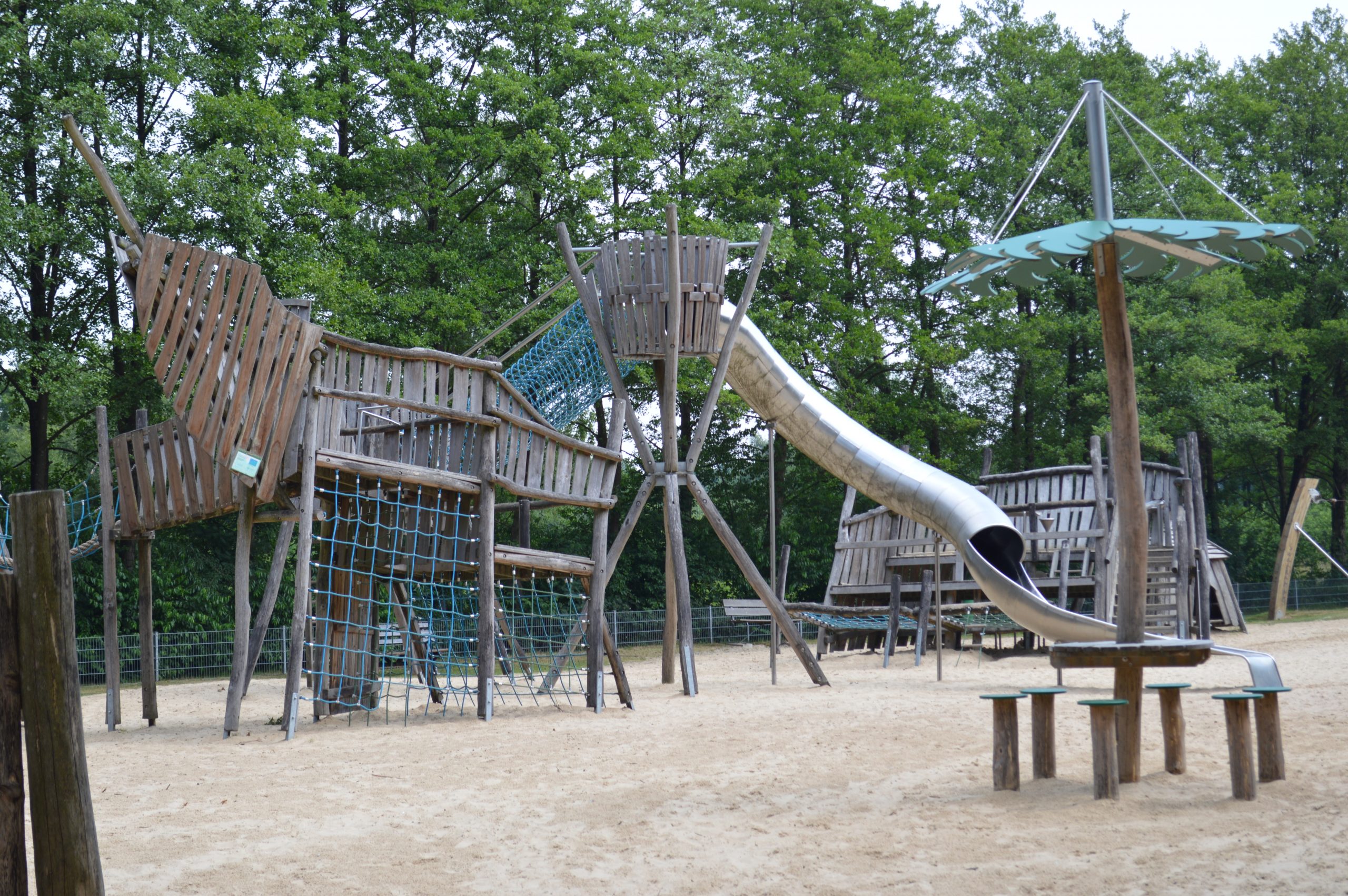
Adventure playground in Uelsen, Germany (“Abenteuerspielplatz Uelsen”).
When comparing current playground regulations between the two countries, Germany exceeds Canada in terms of allowable risk exposure. This is because Germany has been actively building more adventurous playgrounds, with higher climbs, larger drops, more diverse materials, and fewer safety measures, allowing children to take more risks, gain confidence, and foster development (Schilling) (Danner). For example, on slides, the maximum incline in Germany is 60º, with an average of 40º (“Rutschen”), whereas in Canada, the maximum at any point is 50º and the average is 30º (Sharp & Diamond et al.).
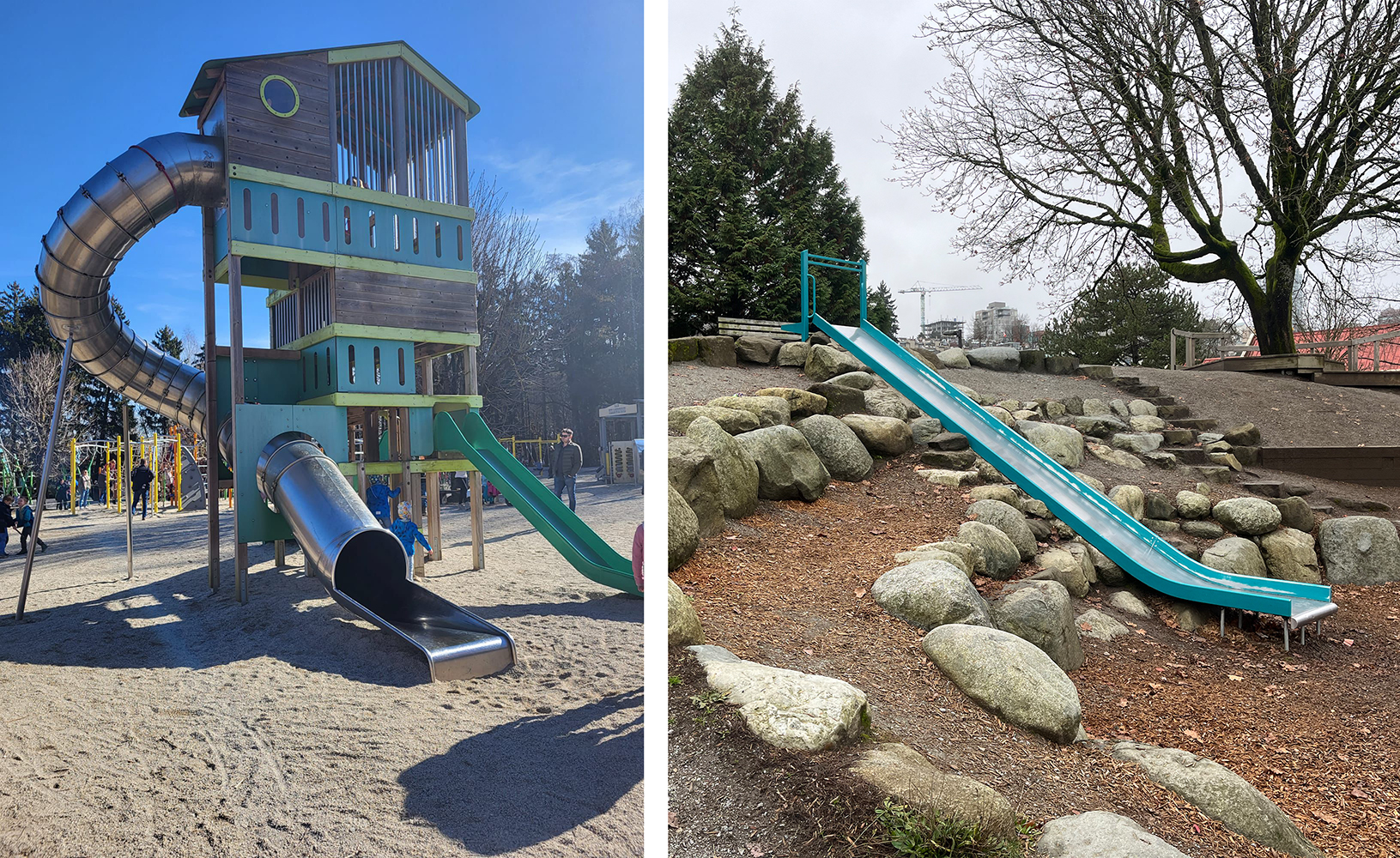
Left: Simone Heindl. Playground in Poing, Germany, located close to the City of Munich. This is a playground for all ages and displays a steep slide and a four-story structure. November 20, 2025. Personal photograph.
Right: Slide at False Creek, Vancouver, BC, playground. Reduced slope and shock-absorbing ground show demonstrate standards in BC playgrounds. November 16, 2025.
Furthermore, the height at which a protective shock-absorbing ground, such as rubber, is required is 40 cm in Canada (Sharp & Diamond et al.), whereas in Germany, up to 60 cm can be on asphalt and stone, and above 60 cm, soil, grass, bark, or gravel is required. Only at fall heights exceeding 1.5 m are shock-absorbing surfaces required (DGUV 39, 35) (“Spielplatzgeräte” 14). While there are examples of parameters being roughly equal, German playgrounds tend to be, on average, more risk-tolerant, with more lenient specifications.
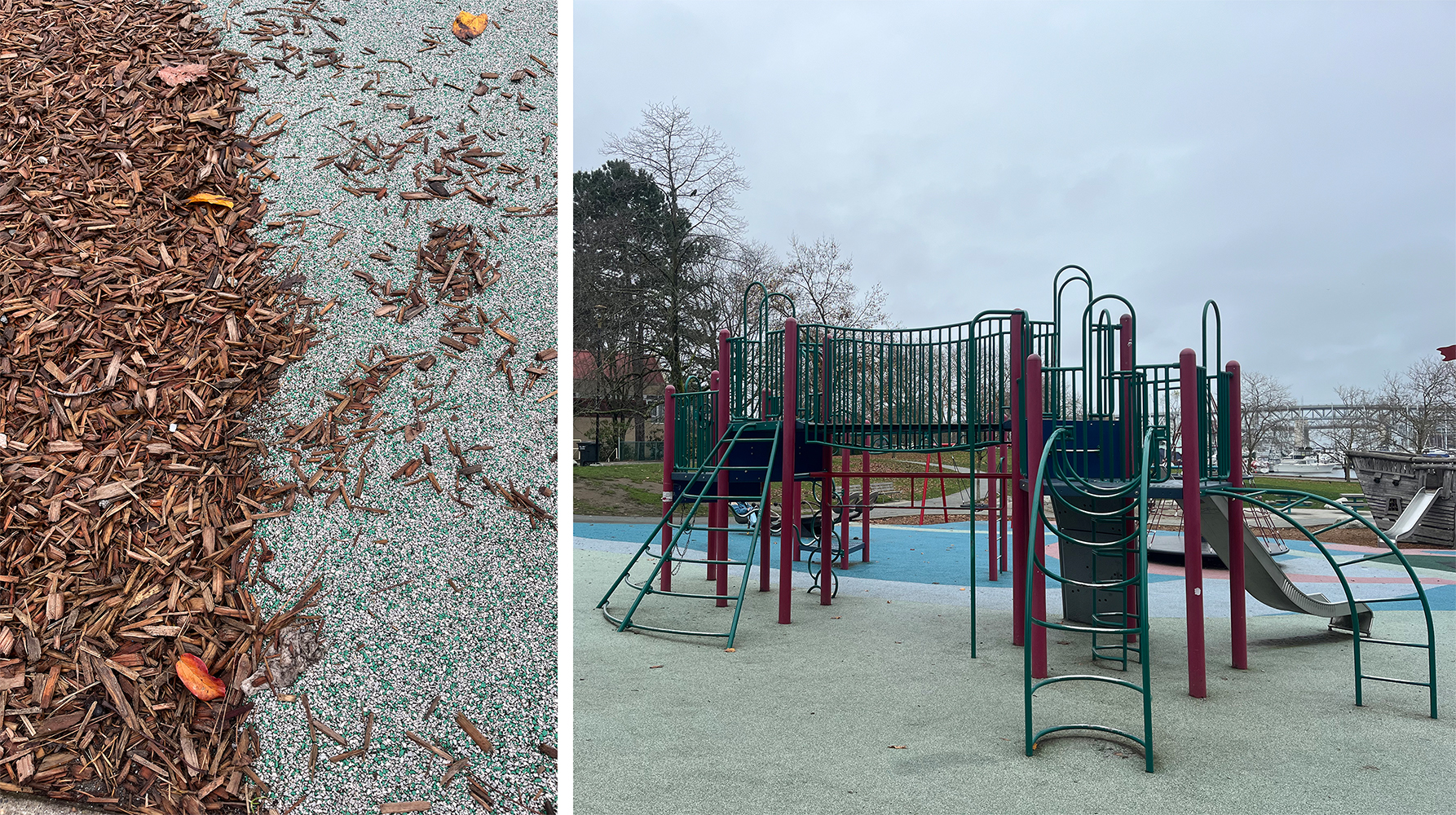
Left: Flooring of playground in False Creek, Vancouver, BC. On the left, we see tree mulch, which signifies the edge of the playground, and on the right, the shock-absorbing rubber required for fall heights greater than 40 cm. November 16, 2025.
Right: Playground in False Creek, Vancouver, BC. Interestingly, there is a shock-absorbing rubber flooring present throughout the playground. November 16, 2025.
Canada has seen a significant shift in the “safefication” of playgrounds since the 1980s, during which the Canadian Standards Association (CSA) played a much larger role in shaping technical standards for outdoor play spaces. This transformation has led to significant year-over-year reductions in paediatric hospitalisations for playground injuries. This is excellent, considering that unintentional injuries are the leading cause of hospitalisations and death for children across the globe (Herrington and Nicholls).
Some will point to this decrease in hospitalisations and double down on their opinion to make playgrounds even safer. Others, such as the leading Technical Inspection Agency in Germany, “TÜV”, have stated that overtipping this delicate balance can incur even greater risk by impeding children’s development (Danner). Even within Canada, professors such as Sue Harrington have argued that the CSA, which sets standards for children’s play spaces and equipment, does not consider children’s development and play needs, but instead prioritises risk reduction (Herrington and Nicholls) (Brussoni et al.). This shift toward risk reduction, according to an official assessment of play spaces conducted by the Vancouver Board of Parks and Recreation, was to “primarily reduce liability to those who install playspaces” (Sharp & Diamond et al.). Failure to comply with the CSA’s standards will very likely result in liability for the operator if an injury occurs (Bennet).
An example where liability was shifted to an occupier was seen in a case from 1979, where a judge found a fourteen-year-old boy only partially liable for striking a girl in the face by tipping over a large wooden slide by balancing a teeter-totter on top and rocking back and forth. The city of Toronto was found eighty per cent liable for the damages, which were attributed to its failure to take the necessary precaution of immobilising the slide and teeter totter into the concrete. The judge said it is reasonable to assume that children will use equipment for a purpose other than its intended use; therefore, the slide and the teeter-totter should have been cemented to the ground to prevent such misuse and damage (Reid).
Litigation poses a significant threat to achieving such a balance. This threat is also aknowledged in Germany: when asked whether there is a real danger that too much legislation could end up overprotecting children’s playgrounds, Franz Danner, a former engineer at TÜV Süd product service GmbH, responded, “Yes, there is very much a real danger of this happening … operators are feeling increasing pressure to ensure playgrounds are as risk-free as possible.”
When probed further on the issue, whether adopting American-style suing culture to become a more litigious society could potentially place greater pressure on manufacturers and inspectors to make playgrounds overly safe in Germany. He responded that the increase in lawsuits may give the impression that this is the case, yet he believes the opposite, stating that Judges still have sufficient common sense and that these decisions are well considered.
This begs the question: Is it possible that Canadians are more tempted to pursue litigation in personal injury cases as a result of the Canadian Common law system?
There are three main reasons why this might be the case. First, as established, the child will seldom be found at fault, which means legal responsibility more often than not falls to owners, operators, and parents. Secondly, contingency fees, which are unique to Canada, allow people to bring lawsuits without paying money up front. Instead, lawyers are guaranteed a percentage of the winnings. For Germans, starting litigation is very costly up front, which deters most people (“Lawyers’ Fees”). Having contingency fees gives the plaintiff less risk, as no money is required to initiate a lawsuit; either one sues, loses, and receives no settlement and pays no fees, or one sues and wins and pays their lawyer a percentage of the award (“Lawyers’ Fees”).
Third, the injury payouts in Canada are larger. While these values are rough estimates and depend heavily on extrinsic factors, averages still provide valuable insight. For example, loss of a limb in Germany would result in a payout of $113.000 CAD (“Schmerzensgeldtabelle – nach Beträgen sortiert”). In contrast, the same injury in Canada would result in a payout of roughly $200.000 (Anggadol), almost double the amount. Wrongful death compensation, which wasn’t recognised by German law until 2017 and now has a very narrow scope, will give small payouts ranging from $10.000 – $25.000, compared to the Canadian payout of $50.000 – $82.000 (Drucksache 18/11397, 1) (Hoossein).
If stricter regulations lead to fewer hospitalisations, deaths and lawsuits, then the law seems to be doing its job. At what point, however, does the question change from whether playgrounds are safe enough to whether playgrounds are developmentally adequate? How beneficial can risky play be for a child’s development, if it risks hospitalisations? This is where insights from developmental psychology and paediatrics become essential.
The Canadian Pediatric Society defines risky free play as play that involves thrilling, exciting, physically challenging activities like climbing, jumping, balancing, or rough and tumble play, as well as hiding or seclusion from the constant surveillance of adults” (Beaulieu). Consistent research over the past decade has shown that children need to take risks in play to promote learning and development (Brussoni et al.) (Little). This development is both physical and mental (Brussoni et al.). One paper argued that in Australia, children found to be removed from free play and restricted too much were more prone to obesity, mental health illness, lack of independence, decreased learning capacity and perceptions and judgment impediments (Eager and Little).
Mariana Brussoni, the director of the Human Early Learning Partnership and a Professor in the Department of Paediatrics and the School of Population and Public Health at the University of British Columbia, concluded from her research that children’s free play helps young children learn societal norms and values. They also develop physical and cognitive competencies, creativity, self-worth, and self-control (Brussoni et al.).
Risk is considered an essential component of play. It allows kids to test their physical limits, gain confidence, develop perceptual-motor skills, and extinguish fear (Danner, Little). This will enable them to learn more about risk management and apply it in other contexts (Little). An example of encompassing risk to extinguish fear is reflected in the lifting of height restrictions on playgrounds. While climbing higher could lead to a greater fall, the University of Trondheim also found that children who climbed higher on playgrounds were less likely to develop a fear of heights later in life. This shows that children who grapple with risk early on have diminished fear later in life (Danner).
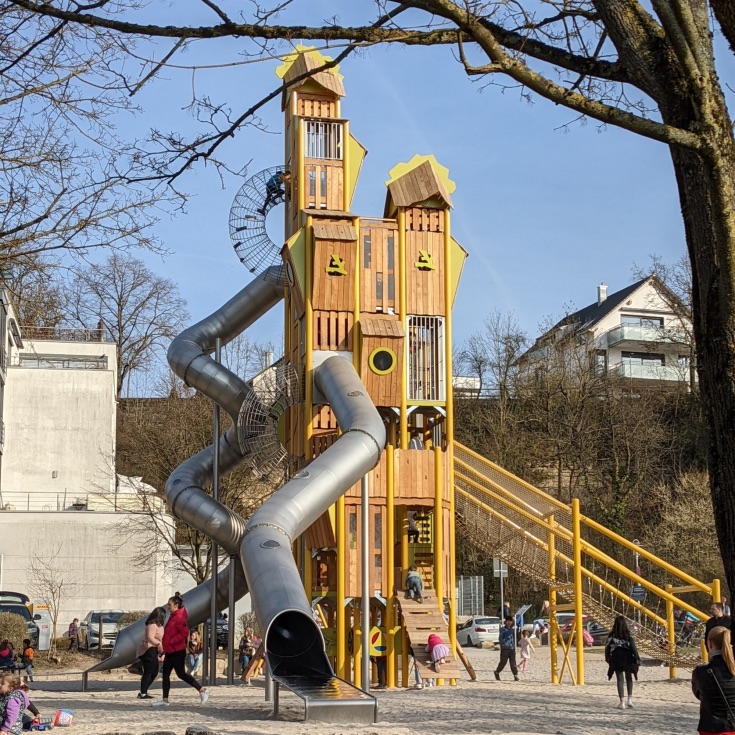
Playground located in Bietigheim-Bissingen, close to Stuttgart, Germany. This playground offers play at a staggering eleven meters, with slides that are nine meters tall (Eibe).
Based on the evidence given, it seems increasingly likely that Canada and Germany strike different balances between children’s safety and autonomy for various reasons. German Civil law, with its emphasis on children’s development through fostering independence, is more willing to accept a calculable risk. By contrast, Canadian law tends to allocate liability to operators and supervisors, supported by parental-liability statutes and precedents. These differences are not only reflected in courtrooms but also shape how parents in these countries approach the upbringing of their children.
Developmental research suggests that an imbalance of safety and autonomy can have severe consequences. Paediatricians and researchers around the world have, through their studies, emphasised the importance of free and risky play as a major driver of children’s physical, cognitive, and social development (Brussoni et al.). Excessive restrictions may leave a generation unable to deal with risk. Even the Canadian Pediatric Society now recognises that standards have become overly protective and need adjustment (Beaulieu). With this in mind, Germany’s tolerance of risk for the sake of development appears less as negligence and more as a mechanism of protection and learning to protect oneself. Reflecting on my childhood, I now see how valuable those hours of uninterrupted and unsupervised play were. This wasn’t negligence on the part of German society, but space to allow me to grow into who I am today.
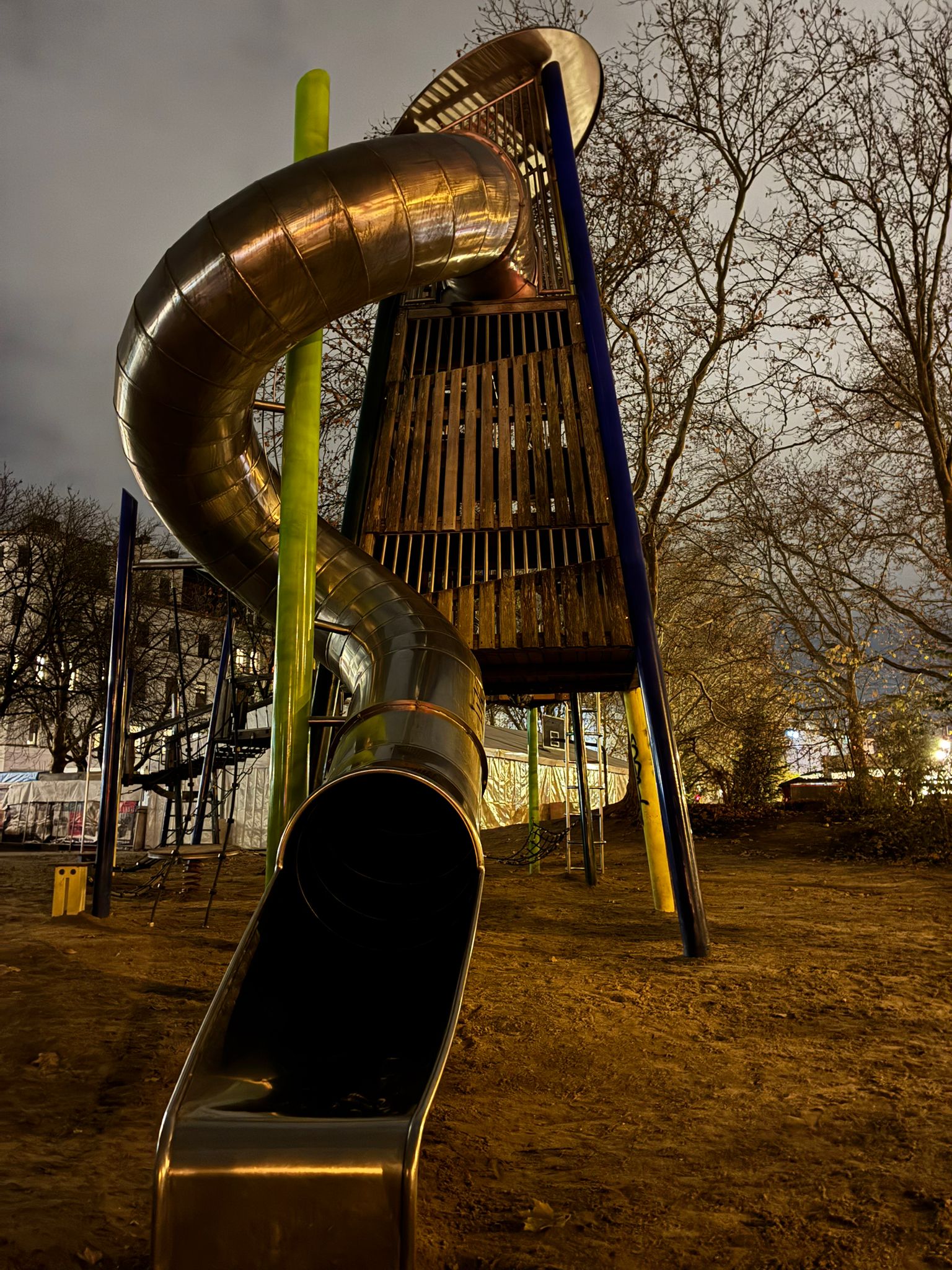
Lukas Heindl. Playground in Maxvorstadt, Munich, Germany. Playground structure with a large slide and a steep incline. Flooring is comprised of packed dirt and sand. November 20, 2025. Personal Photograph.
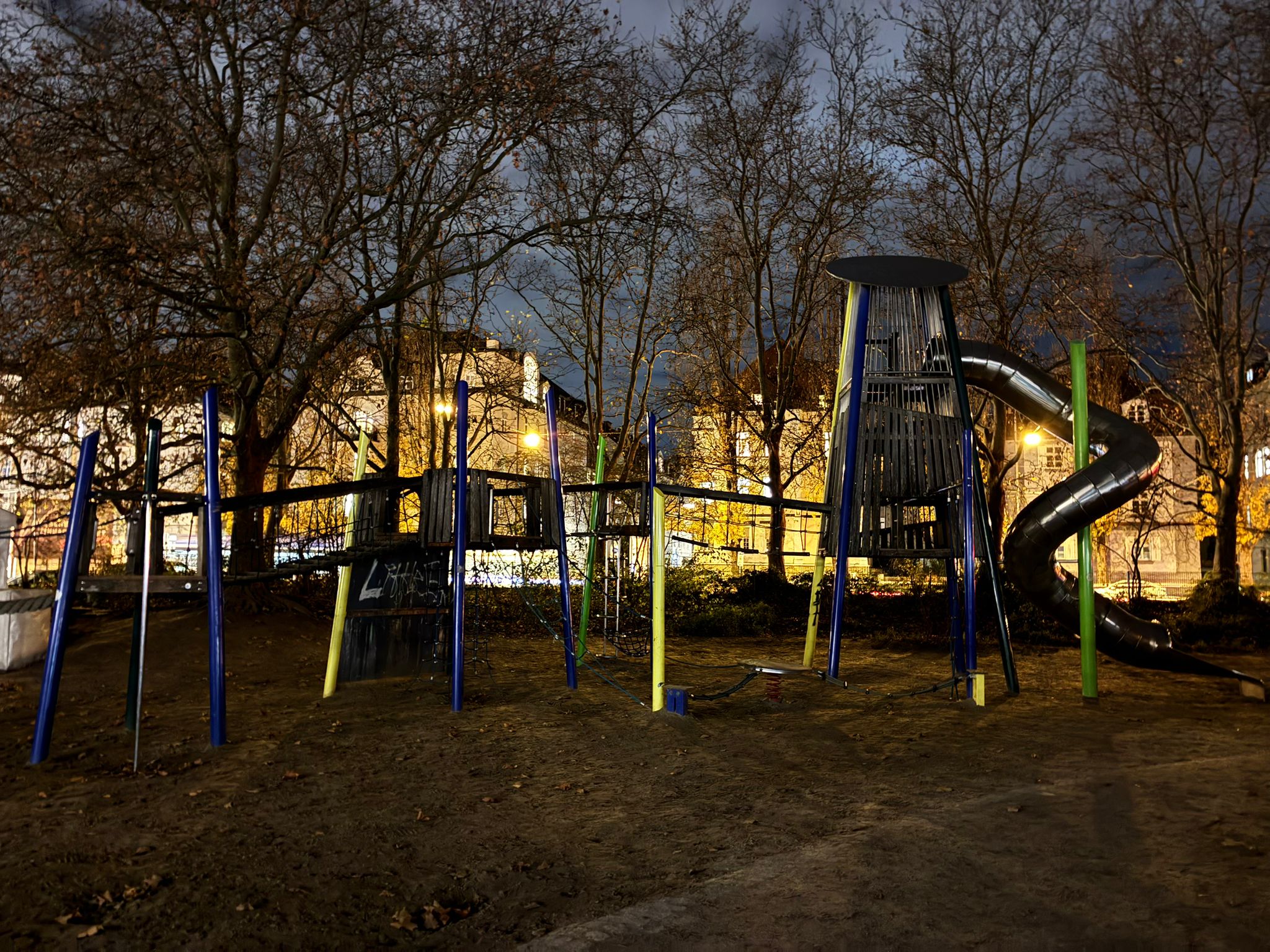
Lukas Heindl. Playground in Maxvorstadt, Munich, Germany. The playground offers a variety of obstacles at increased height with limited safety railings. November 20, 2025. Personal Photograph.
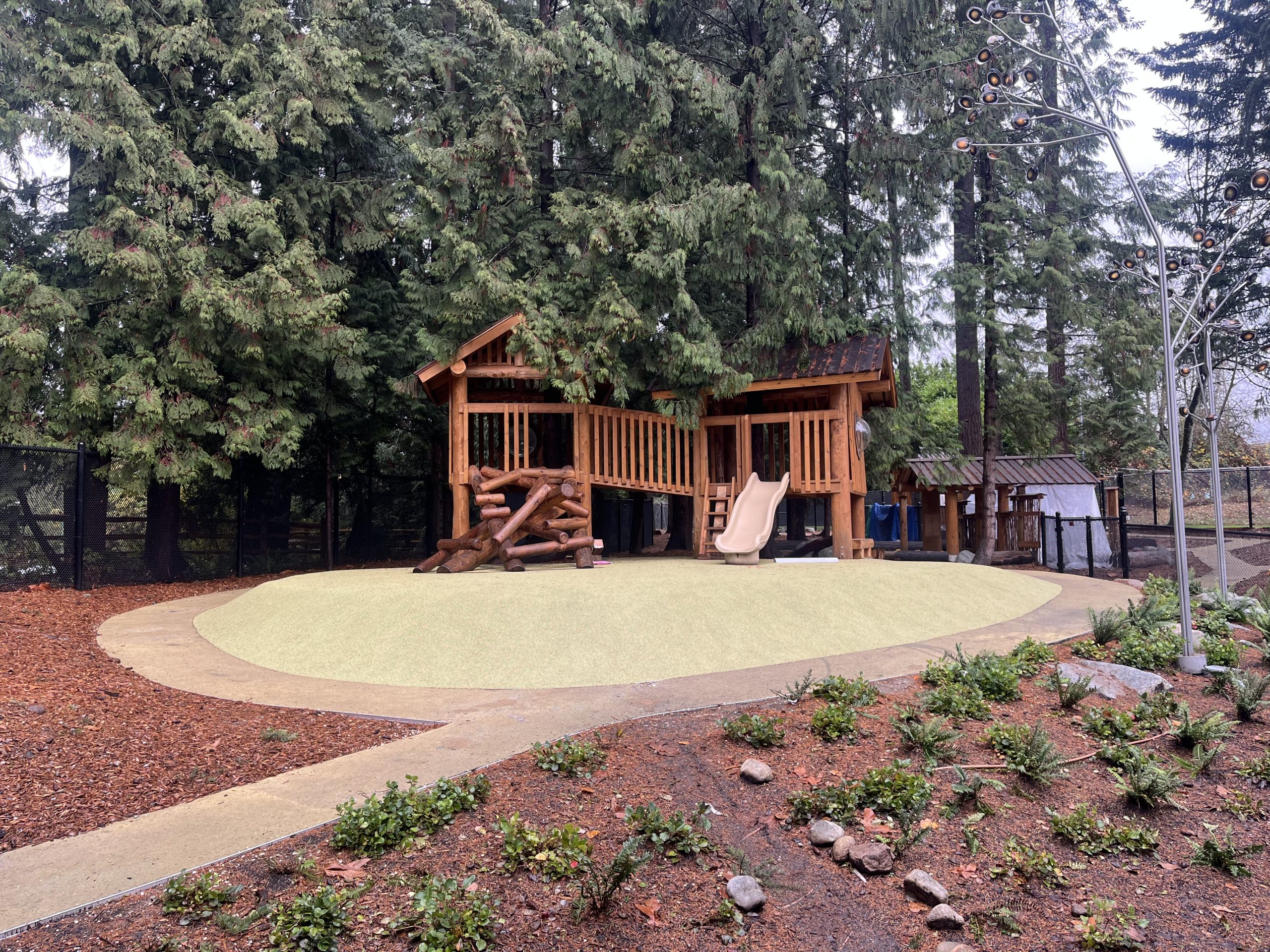
Playground located in a day care centre at Capilano University for children up to the age of 5. After speaking with one of the supervisors, I was told that the safety inspector flagged the log structure on the right as too dangerous. November 17, 2025.
Work Cited
“Abenteuerspielplatz Uelsen.” Grafschaft Bentheim Tourismus, www.grafschaft-bentheim-tourismus.de/poi/abenteuerspielplatz-uelsen. Accessed 22 Nov. 2025.
Anggadol, Kairos. “Personal Injury Settlement Amounts 101.” Canadian Lawyer, 26 Jan. 2024,
www.canadianlawyermag.com/practice-areas/personal-injury/personal-injury-settlement-amounts-101/383159. Accessed 22 Nov. 2025.
Beaulieu, Émilie, and Suzanne Beno. “Healthy Childhood Development through Outdoor Risky Play:
Navigating the Balance with Injury Prevention.” Canadian Paediatric Society, 25 Jan. 2024,
www.cps.ca/en/documents/position/outdoor-risky-play. Accessed 22 Nov. 2025.
Bennett, Ashley. “Playground Accident Lawsuit: Liability When Children Are Hurt in Public Playgrounds.” Soloway Wright, 10 Dec. 2019, https://solowaywright.com/news/playground-accident-lawsuit/. Accessed 29 Nov. 2025.
Brussoni, Mariana, Lise L. Olsen, Ian Pike, and David A. Sleet. “Risky Play and Children’s Safety:
Balancing Priorities for Optimal Child Development.” International Journal of Environmental
Research and Public Health, vol. 9, no. 9, 2012, pp. 3134–3148, doi:10.3390/ijerph9093134.
Accessed 22 Nov. 2025.
Bücker, Till. “Schutz vor finanziellem Ruin: Die Haftpflichtversicherung als absolutes Muss.”
Tagesschau, 16 Apr. 2025, www.tagesschau.de/wirtschaft/verbraucher/versicherungen-haftpflicht-podcast-gold-und-asche-100.html. Accessed 22 Nov. 2025.
Bürgerliches Gesetzbuch (BGB). 96th rev. ed., dtv Verlagsgesellschaft (Beck-Texte im dtv), 2025.
Bundesgerichtshof. “Urteil des VI. Zivilsenats vom 24.3.2009 – VI ZR 199/08 –.” juris, 24 Mar. 2009,
juris.bundesgerichtshof.de/cgi-bin/rechtsprechung/document.py?Gericht=bgh&Art=en&nr=47879&pos=0&anz=.
Christensen, Pia, and Miguel Romero Mikkelsen. “Jumping Off and Being Careful: Children’s Strategies of Risk Management in Everyday Life.” Sociology of Health & Illness, vol. 30, no. 1, Jan. 2008, pp. 112–130, doi:10.1111/j.1467-9566.2007.01046.x. Accessed 22 Nov. 2025.
Danner, Franz. “Spielplatz: Zu sicher ist sicher gefährlich.” INSICHT – Das Digitaljournal von TÜV
SÜD Product Service, TÜV SÜD, www.tuvsud.com/de-de/wissenswert/insicht/spielplatz—zu-sicher-ist-sicher-gefaehrlich. Accessed 22 Nov. 2025.
Deutsche Gesetzliche Unfallversicherung (DGUV). DGUV Information 202-022: Außenspielflächen und Spielplatzgeräte. Mai 2020, www.unfallkasse-nrw.de/fileadmin/server/download/Regeln_und_Schriften/Informationen_Schueler-UV/202-022.pdf. Accessed 22 Nov. 2025.
Drucksache 18/11397 – Gesetz zur Einführung eines Anspruchs auf Hinterbliebenengeld etc. Deutscher Bundestag, 18. Wahlperiode, 7 Mar. 2017, dserver.bundestag.de/btd/18/113/1811397.pdf.
Accessed 22 Nov. 2025.
Eager, David, and Helen Little. Risk Deficit Disorder. University of Technology Sydney;
Macquarie University, 2011. PDF file, www.academia.edu/1479806/Risk_deficit_disorder.
Accessed 22 Nov. 2025.
Eibe. “Ein Spiel-Gigant in Bietigheim-Bissingen.” eibe Referenzen, eibe Produktion + Vertrieb GmbH & Co. KG, www.eibe.de/unternehmen/referenzen/spielturm-bietigheim-bissingen. Accessed 22 Nov. 2025.
Herrington, Susan, and Jamie Nicholls. “Outdoor Play Spaces in Canada: The Safety Dance of
Standards as Policy.” Critical Social Policy, vol. 27, no. 1, Jan. 2007, pp. 128–138,
doi:10.1177/0261018307072210. Accessed 22 Nov. 2025.
Holden, Peter J. Risky Business: Managing the Legal Risks in Business. Federation Press, 2004.
Hoosein, Michael. “How Much Is the Average Wrongful Death Settlement?” MN Injury Lawyers,
15 Dec. 2023, www.mnhinjurylawyers.com/how-much-is-average-wrongful-death-settlement/.
Accessed 22 Nov. 2025.
“How Much Legislation Do Playgrounds Need?” Playground@Landscape, 27 Nov. 2018,
playground-landscape.com/en/article/2227-how-much-legislation-do-playgrounds-need.html.
Accessed 22 Nov. 2025.
Ilko, James. Interview. 4 Nov. 2025. Online via Teams.
Kersop, Marie. Interview. 31 Oct. 2025. In person.
Law Society of British Columbia. “Lawyers’ Fees.” Law Society of British Columbia – For the Public:
Working with Lawyers, www.lawsociety.bc.ca/for-the-public/working-with-lawyers/lawyers-fees/. Accessed 22 Nov. 2025.
Linden, Allen M., Lewis N. Klar, and Bruce Feldthusen. Canadian Tort Law: Cases, Notes &
Materials. 16th ed., LexisNexis Canada, 2022.
Little, Helen. “Promoting Children’s Risky Play in Outdoor Learning Environments.” The Education
Hub, 2 Dec. 2020, theeducationhub.org.nz/promoting-childrens-risky-play-in-outdoor-learning-environments/. Accessed 22 Nov. 2025.
Oldenbourg, Carl. Interview. 2 Nov. 2025. Online via Teams.
Osborne, Philip H. The Law of Torts. 6th ed., Irwin Law, 2020.
Parental Liability Act. [SBC 2001], ch. 45, British Columbia, King’s Printer, www.bclaws.gov.bc.ca/civix/document/id/complete/statreg/01045_01. Accessed 22 Nov. 2025.
Reid v. Guelph (City). 1975 CanLII 647 (Ont. S.C.), https://www.canlii.org/en/on/onsc/doc/1975/1975canlii647/1975canlii647.html.
“Revised Standard DIN 18034 Published.” Playground@Landscape, 16 Oct. 2013, Ausgabe 5/2013,
playground-landscape.com/en/article/1408-revised-standard-din-18034-published.html.
Accessed 22 Nov. 2025.
Ruiz-Casares, Mónica, and Deniz Kilinc. Legal Age for Leaving Children Unsupervised Across Canada. Canadian Child Welfare Research Portal, 2021. CWRP Information Sheet 213E,
cwrp.ca/sites/default/files/publications/Legal%20Age%20for%20Leaving%20Children%20Unsupervised%20Across%20Canada%20%282021%29.pdf.
Accessed 22 Nov. 2025.
“Rutschen.” Sichere Schule – Spielplatzgeräte, Deutsche Gesetzliche Unfallversicherung (DGUV),
www.sichere-schule.de/spielplatzgeraete/spielplatzgeraete/rutschen. Accessed 22 Nov. 2025.
Schilling, Bettina. “Warum Spielplätze in Deutschland abenteuerlicher sind als in Amerika.”
Spielplatztreff Blog, 22 July 2024,
www.spielplatztreff.de/blog/warum-spielplaetze-in-deutschland-abenteuerlicher-sind-als-in-amerika/.
“Schmerzensgeldtabelle – nach Beträgen sortiert.” Schmerzensgeldtabelle24,
www.schmerzensgeldtabelle24.de/schmerzensgeldtabelle-verkehrsunfall/schmerzensgeldtabelle-nach-btraegern-sortiert/. Accessed 22 Nov. 2025.
Sen, Ali Tahir. “1 – Entscheidungsbesprechung: Deliktsrecht – Deliktische Haftung von Minderjährigen.” Recht vertieft, 18 June 2022, www.recht-vertieft.de/2022/06/1-deliktsrecht/.
Accessed 22 Nov. 2025.
Sharp & Diamond Landscape Architecture Inc., Habitat Systems Inc., and DPI Territorial. Assessment of Playspaces: Vancouver Board of Parks and Recreation. July 2015, Vancouver Board of Parks and Recreation, parkboardmeetings.vancouver.ca/files/REPORT-PBAssessmentOfPlayspaces-20150701.pdf. Accessed 22 Nov. 2025.
“Spider 6-6.” Søve, https://sove.no/lekeapparater/klatreapparater/klatrenett/spider-6-6/?srsltid=AfmBOopxAqmVt6NRSjyor-j1Ef_49adhHKhCewpK2d0oWdF5GxfFd9Mt. Accessed 29 Nov. 2025.
“Spielplatzgeräte.” Sichere Schule, Deutsche Gesetzliche Unfallversicherung (DGUV),
www.sish.rms2cdn.de/files/pdf-brochures/spielplatzgeraete_1695915872.pdf. Accessed 22 Nov. 2025.
Yeung, Peter. “The Anarchic Playgrounds Where Putting Kids at Risk Is the Point.” Reasons to Be
Cheerful, 4 Sept. 2025, reasonstobecheerful.world/anarchic-playgrounds-risk-berlin-kolle37/.
Accessed 22 Nov. 2025.