


Harman Dhindsa
Harman is pursuing a Bachelor of Arts at Capilano University, majoring in Psychology with a minor in Legal Studies, and is currently in her final year. She has been named to the Dean’s List twice and continues to strive for that same level of achievement as she completes her degree. Raised in India and now living in Canada, Harman’s experiences across cultures have shaped how she understands people, identity, and the quiet ways social expectations influence everyday life. Alongside her studies, she currently volunteers as an Outreach Support Worker with Fraser Health. In this role, she supports individuals navigating mental health and substance use challenges, helping connect them to resources while offering steady, non-judgmental support. Harman hopes to pursue graduate studies in psychology and, eventually, open a private practice centered on emotional healing and culturally responsive care. She is also drawn to the intersection of psychology and law, with an interest in advocacy and supporting individuals through difficult and often misunderstood experiences.
At a red light in Vancouver, surrounded by traffic with nothing out of the ordinary in sight, M.S. leaned forward and sniffed a line of cocaine. At that moment, he understood what he was doing. He knew the risks involved and understood how quickly things could fall apart if a police car pulled up beside him or if a driver in another car noticed him. Nonetheless, he did it.

A quiet evening at a red light, surrounded by the ordinary rhythm of traffic, a moment passes unnoticed—one that reflects how easily significant decisions can exist within everyday life.
That moment did not come out of nowhere. Long before it, his relationship with substances had developed in an entirely different context. While growing up in India, alcohol was not uncommon in his environment. He often saw people drinking at social gatherings, so drinking started to feel normal, especially among young men. The shift became more visible after he moved to Canada. It started as something relatively common—skipping classes with other teenage boys and experimenting, trying something new for fun. At that time, it was driven by a sense of pleasure and curiosity. Eventually he went from an occasional user to someone who found himself struggling to stop using. What began with alcohol and later weed, developed into the use of more potent substances, including cocaine and fentanyl. The nature of the substances themselves changed; however, the role they played in his life also evolved from one of choice to one of necessity.
What becomes most compelling when looking at M.S.’s experience with substance use over the past seven years is not just how severe it became, but what that progression represents. How does someone get to a place where they consciously and willingly engage in behaviours that can potentially lead to their own destruction? The purpose of this paper is to explore this question by framing “addiction” not simply as a matter of choice, but as a process shaped by early life experiences, including genetic vulnerability and childhood trauma, as well as broader environmental and cultural influences. Drawing on both personal narrative and psychological research, it traces how substance use can evolve from normalized behaviour into a coping mechanism, and eventually into a compulsive cycle that feels difficult to escape.
This paper will also highlight how addiction is viewed in Punjabi communities with regard to family honor and social perception, and how these behaviors are perceived. In many cases, addiction is not only seen as a personal struggle, but as a reflection of the family itself, reinforcing stigma and silence around it. This ultimately creates barriers to open communication and seeking help from others, and it fails to adequately recognize an individual’s efforts in recovery.
Developmental and Neuropsychological Foundations of Substance Use Vulnerability
M.S. reflected on his childhood as relatively normal at the time. He had everything provided for, and that became his understanding of what “normal” meant. In many Punjabi households, there is often a quiet understanding that as long as material needs are met, things are considered to be okay. As a result, he experienced a sense of predictability and structure; however, those elements were present, so were other factors that quietly shaped many aspects of his young years. His father struggled with alcoholism, and it brought a kind of constant tension into the home, particularly in the relationship between him and his mother, shaping the atmosphere he grew up in. (M. S., personal communication; February 20, 2026). Research suggests that living in an environment where there is substance abuse does not only affect behavior through social learning, but it also can alter some of the basic biological processes of the brain. Studies examining children of individuals with alcohol use disorders have found differences in brain activity, particularly in electrophysiological markers such as reduced P300 responses and increased beta wave activity, even before these individuals begin using substances themselves (Porjesz & Begleiter, 2005; Rangaswamy et al., 2002). These patterns can lead to increased impulsiveness and potentially an increased risk of developing addictive behaviors.
M.S. recalled a moment from when he was just five years old, when he watched his father shoot his mother and then saw her wipe herself with a towel as she continued to bleed from the gunshot wound. He also said that he watched her getting stitches across her head, and that no one ever sat down with him to explain what had happened or ask how he felt about it. To him, it was just something that stayed with him. It was not until much later, when he began therapy, that he started to understand that what he had lived through was, in fact, trauma. (M. S., personal communication; February 20, 2026). Research on adverse childhood experiences supports this idea, showing that early trauma is strongly linked to later substance use and health risks (Felitti et al., 1998). Trauma that is not processed does not disappear. It becomes part of that underlying, less visible layer, and these layers of emotional pain shape how we react to stressors, typically without our conscious awareness. Thus, the trauma M.S. experienced at that time did not remain in the past. Rather, it continued to exist just beneath the surface of his psyche and influenced both emotional responses and ways of coping with stress.
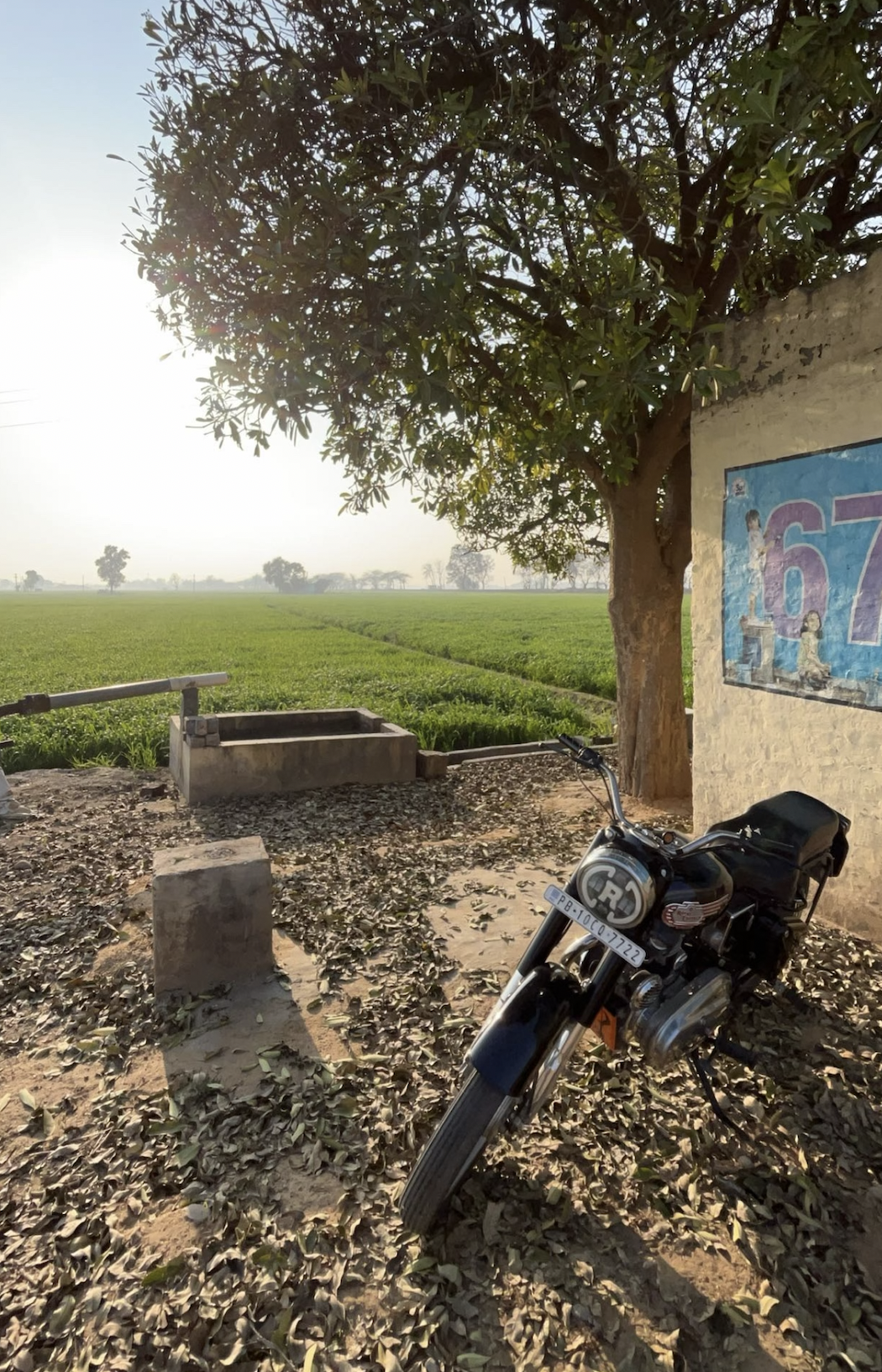
For M.S., these fields became a quiet refuge—one of the few places where he could step away from what was happening at home, even if only for a moment.
As M.S. moved into his teenage years, that exposure extended beyond the household and into social settings, where drinking was often tied to belonging and acceptance. Research on substance use in Punjab suggests that early exposure is often shaped by peer influence, family dynamics, and cultural acceptance rather than immediate dependency (Chavan et al.2019). When behaviours are normalized in this way, they become harder to identify as risky, and even harder to recognize when they begin to shift into something more serious.
From Coping to Compulsion: The Escalation of Substance Use and Loss of Control
As he settled into life in Canada, he found himself trying to adjust to a completely new environment. He said he relied on substances more frequently to make it through each day, not because of pleasure or escape, but just to be able to function. During that time, he reflected upon the experience stating, “it’s like there was a hole inside of me … I used substances to try and fill that hole.” (M. S., personal communication, February 20, 2026) This progression reflects what addiction research describes as a transition from reward-driven use to relief-driven use, where substances are maintained through negative reinforcement rather than pleasure. Over time, this process contributes to a state of allostasis, in which individuals rely on substances not to feel good, but to regulate persistent negative emotional states and maintain a sense of psychological stability (Koob & Volkow, 2016).

City lights glowing in the distance, beautiful from afar, yet still far from where M.S. felt he belonged.
By the end of those first couple of years in Canada, M.S. described himself as what most would consider a “functioning addict”. The functioning aspect referred to how well he appeared to be doing on the outside, in terms of work and school. It also reflected his ability to maintain those appearances to the extent that his addiction went undetected by others. However, he recalled that, emotionally, he had become increasingly distant from everything that once mattered, at times unable to care about the people or things that were important to him. He said there were moments when his choices no longer reflected who he believed he was, like selling a valuable gift his mother had given him just to buy drugs. (M. S., personal communication, February 20, 2026).
Over time, that constant tension became exhausting. The stress wasn’t just from the substance use itself, but from the routine, repetition and the idea that he was trapped in a cycle he didn’t have full control over. Additionally, what was beginning to emerge at night — he talked about having recurring nightmares of his childhood, standing near a pool of blood, filled with an overwhelming amount of fear and anxiety that did not leave him even after he woke up. To be asleep for him now wasn’t to find rest; it was simply something else he had to endure. By that point, using no longer felt like something he wanted. It felt like something he needed to silence the internal turmoil. (M. S., personal communication, February 20, 2026). Research suggests that substance use can function as an emotion-focused coping strategy, where the goal is not to solve the problem itself, but to reduce the emotional intensity associated with it. This helps explain why, even when individuals recognize the harm, the behaviour continues. (Lazarus & Folkman, 1984).
There was one time when that shifted into a deliberate decision. M.S. talked about choosing fentanyl; not because he didn’t know the risks were there, but in a way that felt connected to a deeper sense of exhaustion. He described it as if the line between control and relief had started to blur. It did not feel exciting; rather, it felt still. Then he overdosed. What remained was not merely the memories of what happened at that time but there also existed the realization of how much farther along everything had progressed, and how quickly it would have ended differently. (M. S., personal communication, February 20, 2026). As George F. Koob (2013) explains, addiction involves a shift “from impulsive to compulsive behavior driven not by the pursuit of reward, but by the need to alleviate negative emotional states.” At a neurobiological level, opioids such as fentanyl act on μ-opioid receptors to inhibit GABAergic neurons, reducing inhibitory control over dopamine pathways and producing a state that is often experienced as relief rather than stimulation (Chaudun et al., 2024). In this sense, the decision was not simply about seeking a high but was shaped by a state where relief felt more immediate than risk, and where the absence of the substance felt harder to tolerate than its potential consequences.
When Help Feels Out of Reach: Stigma and Silence in Addiction
The overdose led M.S. to understand that the problem was beyond the point where he could correct it on his own. He recognized that he needed to make changes and seek help. Yet, even in that moment, reaching out did not feel like a real option. This became even more complex within Punjabi culture, where personal struggles are often understood through a collective lens. The idea of “family honour” or “izzat” can play a central role in how actions are judged by others. People do not see an individual’s behaviour as simply being an individual’s own, but rather as it relates to the family’s overall reputation and status. Addiction is therefore not only a personal struggle; it also affects the entire family. Research on stigma shows that individuals with substance use disorders are often viewed as personally responsible for their condition, reinforcing blame and discouraging help-seeking (Corrigan & Watson, 2002). In South Asian communities, this is further intensified by concerns about social judgment and family image (Prajapati et al., 2021).
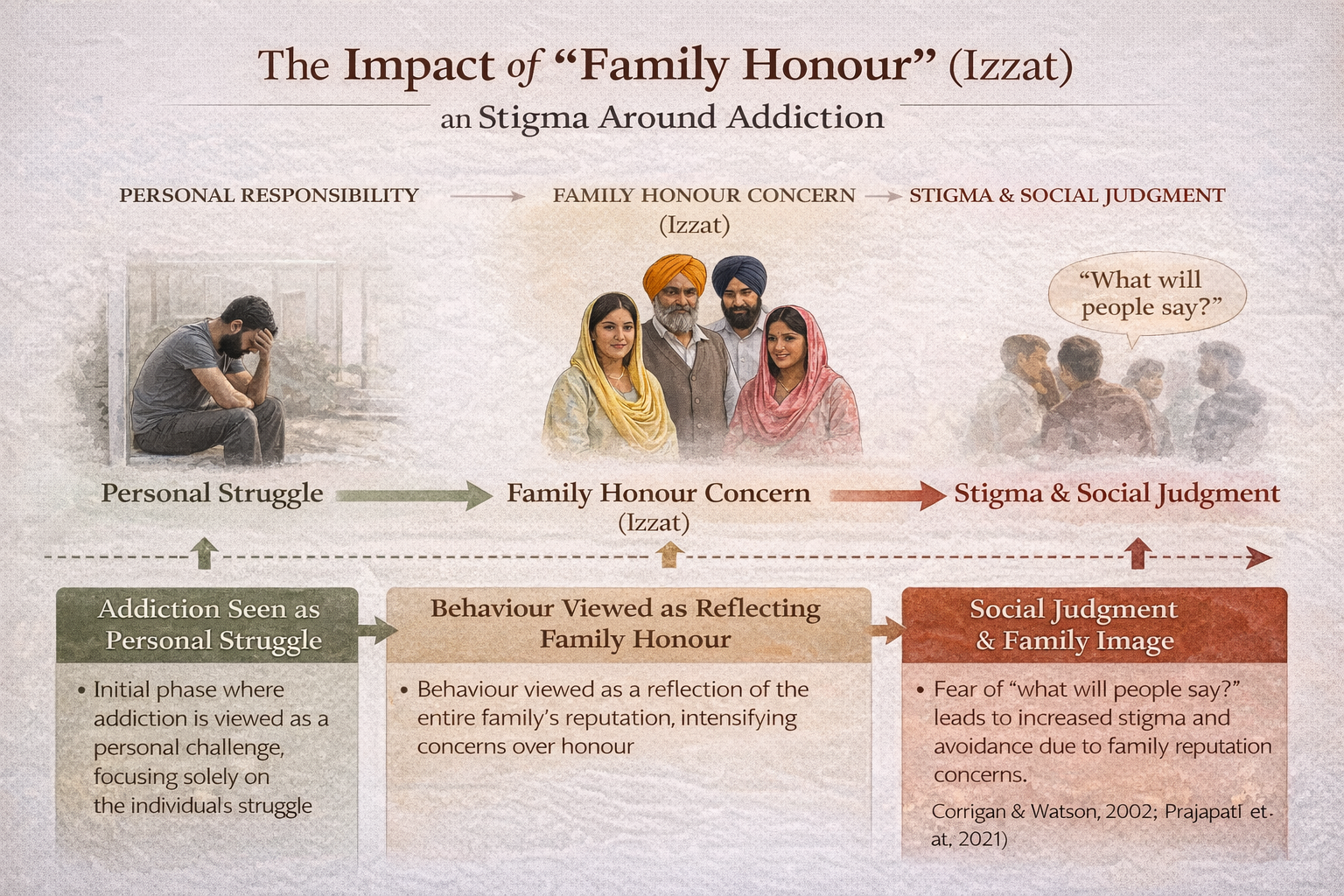
A framework showing how addiction, when tied to family honour (izzat), shifts from a personal struggle to a source of social judgment—deepening stigma and shaping M.S.’s experience.
For M.S., this meant that speaking about his struggles did not feel like an option. It felt like something that not only would expose him but also bring judgment upon the people around him (M. S., personal communication, February 20, 2026). In that kind of environment, silence becomes easier than honesty, but that silence also allows things to grow.
The Internalization of Stigma: Labels, Identity, and Barriers to Recovery
When M.S. finally had the courage to look for support and talk with his family about what he was going through, their response wasn’t altogether helpful. Rather than relief, they felt ashamed about even thinking of sending him to rehab because of how others might view them (M. S., personal communication, February 20, 2026). The negative response from M.S.’s family demonstrates another issue in many Punjabi families — that recovery can be difficult due to the lingering labels associated with addiction. Addiction is not always viewed as something one has experienced and is working through, but rather as a fixed identity defined by addiction. Corrigan and Watson’s study on stigma shows this to be true; people with substance use disorders are often reduced to enduring labels such as an “addict” that continue to shape how others perceive them regardless of progress (Corrigan & Watson, 2002).
What makes the process even more complex is that stigma does not just come from others. Over time, it can become something a person starts to believe about themselves. As Corrigan and Watson (2002) explain, self-stigma occurs when individuals internalize public attitudes, leading to reduced self-esteem and self-efficacy. In this sense, the impact of stigma is not limited to how others respond but it begins to shape identity. He described moments when, even after making progress, it still felt like the past was sitting just beneath the surface, influencing how he saw himself (M. S., personal communication, February 20, 2026).
Now that M.S. has been in recovery for the past two years, although some challenges have changed, many still remain. For M.S., addiction is not always communicated openly yet is present in everyday interactions. It shows up in the way questions are asked, the hesitation that accompanies those interactions, and the way his past finds its way into conversations that did not have anything to do with his present (M. S., personal communication, February 20, 2026). Even as he began to change, there was a noticeable gap between how he saw himself and how others seemed to see him. In Punjabi culture, perceptions of health are often tied to physical appearance, where having more weight is often associated with being healthier, while becoming leaner can be seen as a sign of something being wrong. As a result, positive efforts on his part are not always perceived as evidence of his progress; instead, they are sometimes viewed with suspicion, as looking different leads to assumptions that he might be using again rather than moving forward. He described moments when these assumptions came from within his own family, where concern and judgment often blurred together, making it difficult to distinguish care from doubt (M. S., personal communication, February 20, 2026).
Beyond Shame: Rethinking Addiction in Punjabi Communities
At the same time, the scale of the issue within Punjabi populations makes this shift even more urgent. As demonstrated by research conducted in Punjab, 11.3% of people experience substance misuse disorders and in over one third (35%) of all households, there is at least one person with a drug or alcohol problem (Chavan et al., 2019). The data suggests that there is a larger group involved than just the behavior of individuals who use drugs. Substance use does not exist at the margins of the community; rather it exists within the community. When so many families are affected by addiction, labeling addiction as a failure of the individual is both incorrect and damaging to the community’s ability to recognize its need to develop a collective understanding and response.
The disparity also shows that many of the individuals who could benefit from treatment resources never end up accessing them. The number of individuals experiencing a substance use disorder (SUD) in Punjab that seek some form of treatment is roughly 20% (Chavan et al., 2019). Research shows that nearly 80% of individuals with substance use disorders in Punjab do not receive treatment (Chavan et al., 2019). The stigma associated with SUD in families and communities along with the fear of being judged, causes most of these individuals to keep silent about their drug use rather than speak out about their struggles. Therefore, when seeking treatment is seen as bringing shame to the family, individuals are more likely to remain hidden in their struggles.
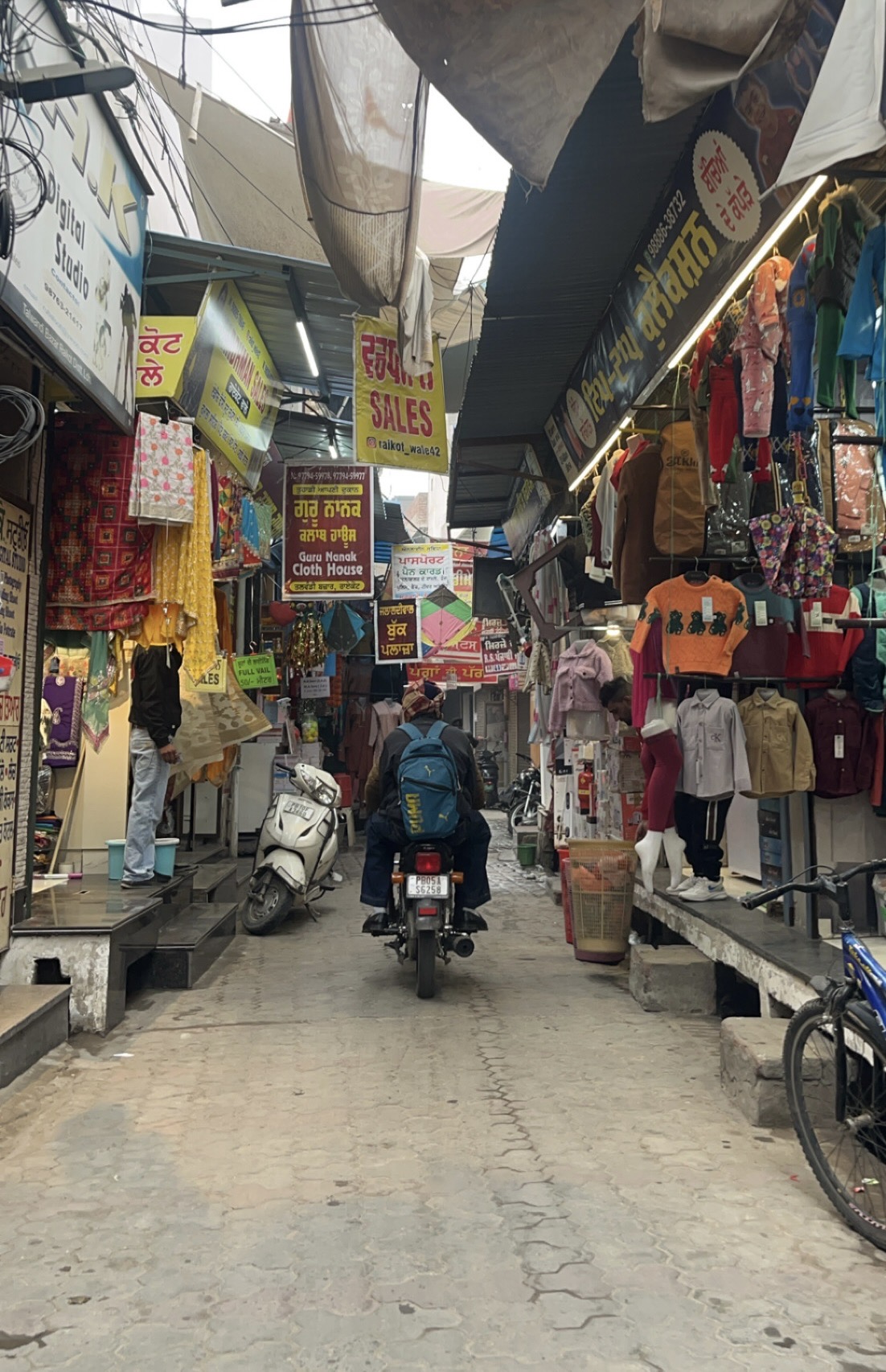
In spaces like these, everyday life unfolded around M.S., where belonging, routine, and early exposure blended seamlessly into what felt normal at the time.
Addressing addiction in Punjabi communities will require more than just individual effort; they also require a cultural shift in how we understand addiction. When addiction is still perceived as a moral failure or a matter of family honour, and not as a health issue, individuals are less likely to seek help and are much more likely to experience long cycles of silence and relapse. However, research has shown that increased mental health knowledge among communities will greatly reduce their stigmatizing attitudes toward substance abuse, thus shifting their view of these issues from individual failures to health problems (Corrigan et al., 2012). In this way, education becomes a crucial starting point for reducing stigma. Culturally appropriate conversations about mental health can be led by leaders in community settings such as gurdwaras. Furthermore, family-centered discussions that emphasize understanding over judgment also play an important role. Increasing access to resources such as community-based counselling, addiction services, and early intervention programs can make a significant difference, especially when these services are designed to reflect cultural values and lived experiences. When support feels familiar instead of distant, individuals are more likely to reach out before the situation escalates.
Conclusion
Looking back, that moment at the red light doesn’t feel as simple as it once seemed. In hindsight, it can be seen as an impulsive or reckless decision, but when you step back, it begins to reflect something much deeper. M.S.’s story creates a strong argument against the belief that addiction is just about a lack of willpower or personal failure. At the same time, the cultural environment he grew up in provides a further dimension of his experience. Beyond this, M.S. also expressed a desire to speak publicly about his experiences, not just to tell his story, but to make it easier for others to come forward without fear of judgment.
The question that remains is whether this understanding will begin to shift moving forward. Existing research reflects this tension, showing that while stigma and low treatment engagement remain persistent in Punjabi populations, emerging evidence suggests that increased mental health awareness and culturally tailored interventions are beginning to improve attitudes and access to care (Chavan et al., 2019; Corrigan et al., 2012; Puri et al., 2018). In this sense, the future of addiction in Punjabi communities is not fixed; it will depend on whether cultural perceptions are willing to evolve alongside the services that are already beginning to emerge.
References
Botvin, G. J., Griffin, K. W., & Nichols, T. R. (2000). Preventing adolescent drug abuse through a multimodal cognitive–behavioral approach: Results of a 3-year study. Journal of Consulting and Clinical Psychology, 68(6), 1011–1020. https://pubmed.ncbi.nlm.nih.gov/2212181/
Chaudun, F., et al. (2024). Distinct μ-opioid ensembles trigger reinforcement via GABA neuron inhibition. Nature. https://pubmed.ncbi.nlm.nih.gov/38778097/
Chavan, B. S., Garg, R., Puri, S., Arun, P., & Mattoo, S. K. (2019). Prevalence of substance use disorders in Punjab: Findings from national mental health survey. Indian Journal of Medical Research, 149(4), 489–496. https://pmc.ncbi.nlm.nih.gov/articles/PMC6676856/
Corrigan, P. W., & Watson, A. C. (2002). Understanding the impact of stigma on people with mental illness. World Psychiatry, 1(1), 16–20. https://pmc.ncbi.nlm.nih.gov/articles/PMC1489832/
Corrigan, P. W., Morris, S. B., Michaels, P. J., Rafacz, J. D., & Rüsch, N. (2012). Challenging the public stigma of mental illness: A meta-analysis of outcome studies. Psychiatric Services, 63(10), 963–973. https://pubmed.ncbi.nlm.nih.gov/23032675/
Felitti, V. J., Anda, R. F., Nordenberg, D., Williamson, D. F., Spitz, A. M., Edwards, V., Koss, M. P., & Marks, J. S. (1998). Relationship of childhood abuse and household dysfunction to many of the leading causes of death in adults. American Journal of Preventive Medicine, 14(4), 245–258. https://pubmed.ncbi.nlm.nih.gov/9635069/
Jorm, A. F. (2012). Mental health literacy: Empowering the community to take action for better mental health. American Psychologist, 67(3), 231–243. https://pubmed.ncbi.nlm.nih.gov/22040221/
Koob, G. F. (2013). Addiction is a reward deficit and stress surfeit disorder. Frontiers in Psychiatry, 4, Article 72. https://pubmed.ncbi.nlm.nih.gov/23914176/
Lazarus, R. S., & Folkman, S. (1984). Stress, appraisal, and coping. Springer. https://link.springer.com/rwe/10.1007/978-1-4419-1005-9_215
Murthy, P. (2010). Substance use and prevention in India: A review of existing interventions. Indian Journal of Psychiatry, 52(Suppl. 1), S60–S66. https://pmc.ncbi.nlm.nih.gov/articles/PMC3146212/
Porjesz, B., & Begleiter, H. (2005). Human brain electrophysiology and alcoholism. Alcohol Research & Health, 29(2), https://pubmed.ncbi.nlm.nih.gov/15303626/
Puri, N., Allen, K., & Rieb, L. (2018). Treatment of alcohol use disorder among people of South Asian ancestry in Canada and the United States: A narrative review. Journal of Ethnicity in Substance Abuse, 19(3), 345–357 https://www.tandfonline.com/doi/10.1080/15332640.2018.1532855
Prajapati, R., Liebling, H., & others. (2021). Access to mental health services for South Asian populations: A systematic review. International Journal of Environmental Research and Public Health, 18(7), 1–17. https://pmc.ncbi.nlm.nih.gov/articles/PMC8897382/
Rangaswamy, M., Porjesz, B., Chorlian, D. B., Wang, K., Jones, K. A., Bauer, L. O., Rohrbaugh, J., O’Connor, S. J., Kuperman, S., Reich, T., & Begleiter, H. (2002). Theta power in the EEG of alcoholics. Biological Psychiatry, 56(6), 431–439. https://www.biologicalpsychiatryjournal.com/article/S0006-3223(02)01362-8/abstract