


Angel Pan
Angel Pan is a fourth-year biomedical science student at Capilano University with a growing focus on occupational health and safety. She is passionate about identifying risks, improving workplace conditions, and applying scientific knowledge to support safer and more sustainable work environments. With a strong foundation in biology, anatomy, and physiology, she brings a detailed understanding of how physical demands and environmental factors impact the human body. Her academic background has strengthened her ability to analyze complex problems, interpret data, and develop evidence-based solutions. She is particularly interested in how workplace design, human behavior, and organizational systems interact to influence long-term health outcomes. Through her work, she aims to contribute to the development of safer, more efficient, and more resilient workplaces across a range of industries.
A Risk That Doesn’t Look Like One
As I bend down to read the meniscus and add water drop by drop to reach the exact volume while holding just still enough to get the number right, a slight discomfort crept into my knees. I felt the pain increasing more as each drop was added to the graduated cylinder and did not think much of it until I finally stood up and realized I had been kneeling on the floor this entire time. When the tight shoulders and tired arms from my neck bending in an awkward posture finally came to me, I had already damaged my body in ways that were not visible to me yet. I woke up with bruised knees the next day with no urgency or interruption, just another task completed the way it needed to be.

The author performs pipetting work in the laboratory.
Work environments like the laboratories, offices, and sitting in vehicles are all seen as safe and low-risk occupational settings, but that assumption overlooks a much broader consequence that extends beyond individual discomfort. Work-related musculoskeletal disorders (WMSDs) are recognized as one of the most prevalent occupational health issues globally today which can lead to long-term disability and economic burden (Mishra et al., 2025). Their impact is not limited to personal health as these conditions are strongly associated with reduced productivity, increased absence, rising healthcare, and compensation costs, but they all collectively affect organizational performance and economic output (David & Volling, 2026). What appears to be a minor and manageable issue at the individual level becomes a measurable financial concern when it is experienced across an entire workforce, even small reductions in efficiency accumulate into significant economic losses over time.
From Discomfort to Damage
The first sign of damage usually does not feel important or need immediate action, but it is this type of mindset that allows the issue to persist without realization. During my personal experiences in undergraduate studies, I carried this mentality while working in the lab; the discomfort in my wrists and shoulders became a routine part of completing tasks. I did not see it as a sign from my body telling me to stop, instead, I brushed it off and carried on. Tony Cao, an accountant, described similar experiences during his work in a hybrid model. Cao explained that “when I work from home, the setup is not ergonomic and I start experiencing pain at the end of the day,” while also noting that “in the office, I’ll sit in my chair for three or four hours straight without taking a break” (T. Cao, personal communication, March 2026). The discomfort does not interrupt productivity immediately and instead coexists with it. It is not until the work has been completed that those issues become noticeable.
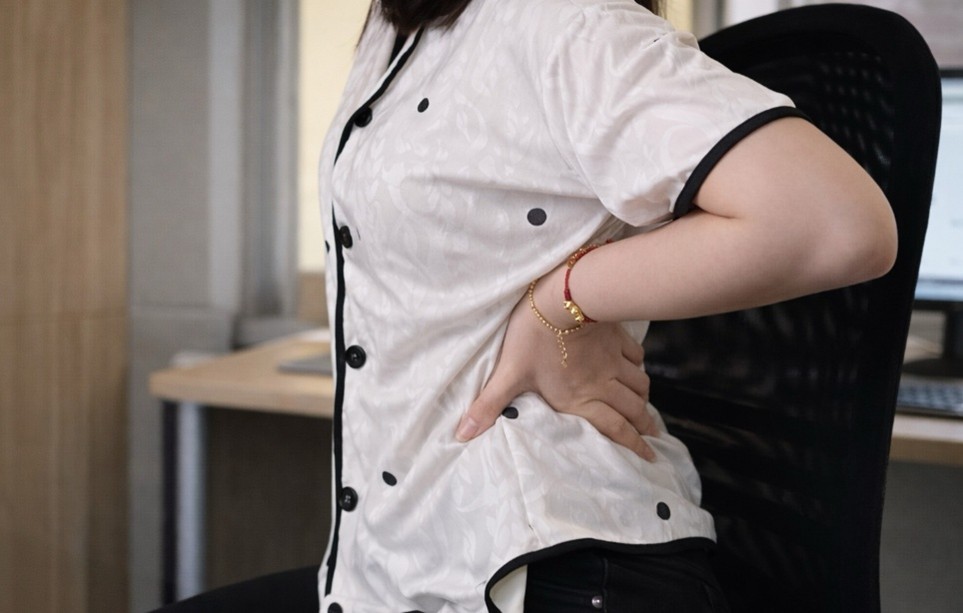
Lower back pain from sitting at the desk for an extended period.
Xianguo Yang, a driving instructor, described the same pattern. Yang explained that “I just keep going either because the lesson is not finished or I am on a tight schedule trying to get to the next student. I don’t notice it until I’m on my way home” (X. Yang, personal communication, March 2026). These experiences reflect a broader pattern where workers continue to perform tasks despite increasing discomfort and these types of habits have direct implications for productivity. Over time, this will eventually translate into measurable economic losses from the inevitable outputs reduction, error rate increases, and extended recovery time or absences from work, all of which affect both the individual’s performance as well as overall organizational efficiency (David & Volling, 2026).
The Hybrid Work Illusion
Hybrid work is often seen as an upgrade with more comfort, more flexibility, and more control over when to take breaks compared to regular on-site work, but that perception depends heavily on the presence of structure which is not always maintained outside of the traditional workplace. In the office, behaviors are shaped by the environment where breaks are reinforced and encouraged through visible cues from co-workers. However, at home, those cues disappear and instead rely on the employee to self-interrupt after an extended period of work time. The ergonomic setup at home is also often far from ideal as individuals lack the knowledge, resources, or access to appropriate equipment to have a safe and healthy work environment. Cao described his office setup as having “a high-quality ergonomic chair, a proper standing desk, and two adjustable monitors,” while at home, “my chair is old, the cushion is sunken, my desk is not tall enough, and the monitor sits around neck level instead of eye level” (T. Cao, personal communication, March 2026).
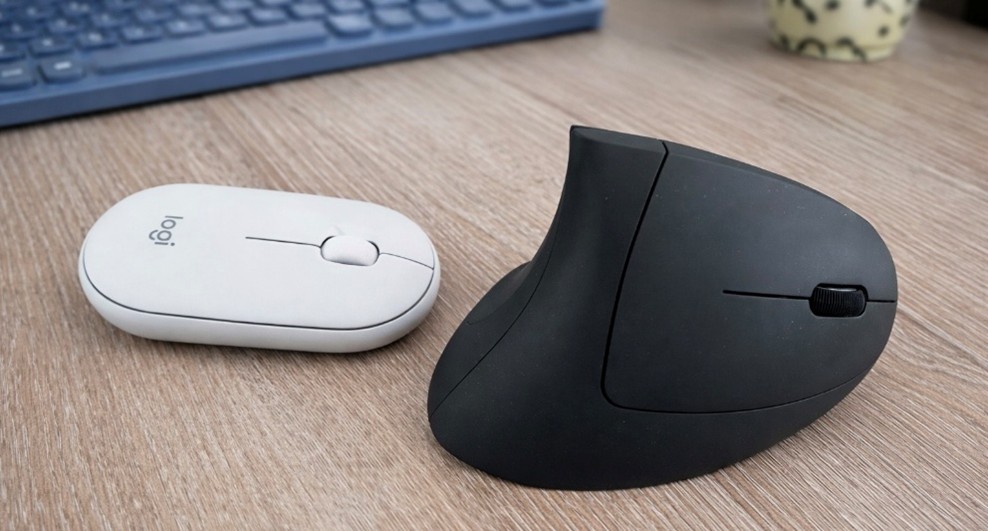
A standard computer mouse vs an ergonomic vertical mouse placed for comparison.
The demand of work remains unchanged, but the conditions have become less efficient and more physically demanding directly affecting performance and health of the workers. This shift does not simply increase discomfort; it increases the likelihood of work-related health issues which in turn contribute to financial losses through decreased output and higher healthcare-related costs (David & Volling, 2026). What is framed as flexibility often becomes a redistribution of cost and risk where the burden of maintaining an effective and safe work environment is transferred from the employer to the employee.
Equipment Without Equity
Ergonomic equipment such as adjustable chairs, standing desks, and ergonomic peripherals are visible interventions that can improve alignment, reduce strain, and lower the risk of injury (WorkSafeBC, 2025). However, the efficacy of these recommendations depends heavily on accessibility and are often non-practical in the real world as this equipment is usually not readily available nor affordable to most people. In the office, employers are expected to assess risks and ensure that work environments are designed to minimize injury (Government of Canada, 2022), but at home this responsibility becomes less defined.
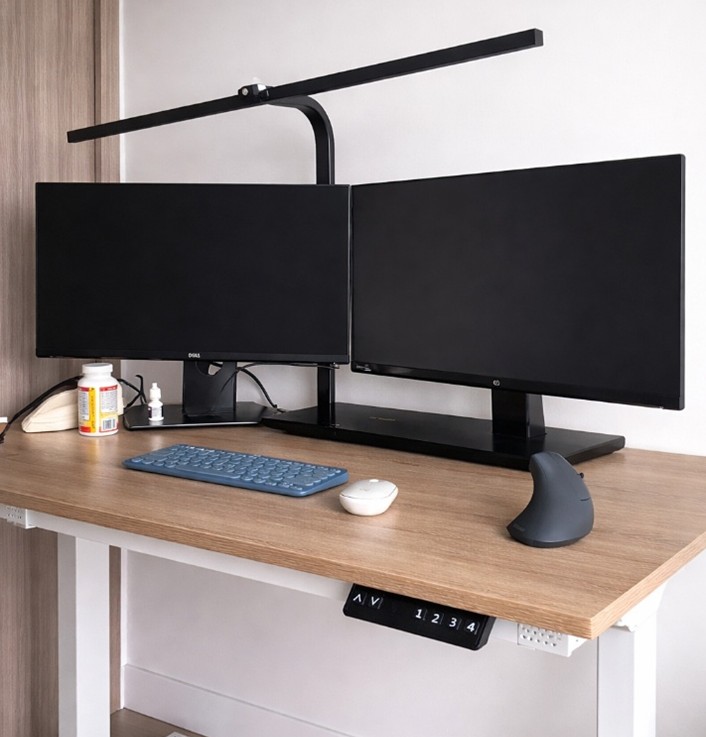
A height adjustable desk setup with dual monitors and ergonomic mouse ideal for office work.
Cao described how this shift occurs in practice, explaining that “working from home is considered a personal choice, so everything at home is your own responsibility,” and noting that “A good chair can cost $800 to $1,200. I’m not paying for that” (T. Cao, personal communication, March 2026). What appears to be flexibility becomes a transfer of cost, where workers who can afford proper equipment are better protected while those who cannot continue working under suboptimal conditions despite performing the same tasks. This short-term cost-saving decision made by the employer may seem effective at first, but it often overlooks the long-term financial consequences of unfulfilled ergonomic needs. Research has shown that upfront investment in ergonomic improvements has the ability to enhance productivity, elevate efficiencies, and improve operational outcomes when correct systems are implemented effectively (Abdous et al., 2023). Avoiding these investments results in reduced efficiency and does not eliminate the ultimate cost unlike what employers expect.
Sitting Without Escape
Sitting is often perceived as a harmless activity, but it becomes a constraint when it is prolonged and restricted within a confined environment. For Yang, this limitation is embedded in her work, as she explained that “you’re in the car for hours and there’s no space to move around. You cannot stop and get up whenever you want” (X. Yang, personal communication, March 2026). Research on professional drivers shows high prevalence rates of musculoskeletal disorders, particularly affecting the lower back, neck, and shoulders (Makki et al., 2026), and these conditions are closely linked to prolonged sitting and limited mobility. These disorders are not only common but also costly, as they account for more than half of work absences and contribute to significant economic impact on individuals, organizations, and society (Makki et al., 2026).
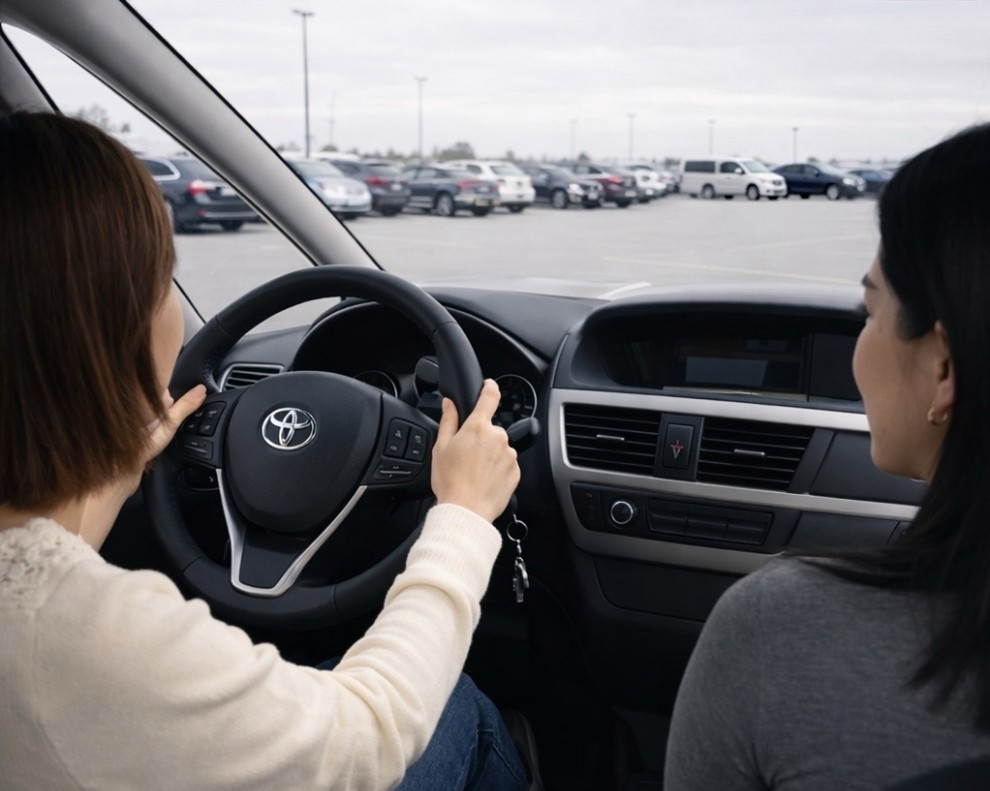
Image of driving instructor and student in a confined vehicle.
The implications extend beyond just physical discomfort, reduced mobility and sustained strain also contribute to decreased work capacity and increased fatigue. In industries that rely on consistent performance and physical endurance, these limitations translate into measurable economic losses with impacts on the larger scale, including significant numbers of lost workdays and reduced output across sectors (David & Volling, 2026). Even when ergonomic adjustments are made, remaining in the same position for extended periods continues to create strain, the issue is not solely bad posture but the inability to shift position during work regardless of good or bad posture.
Injuries by Design
Back in the lab, repeated pipetting and restricted head movement during microscopy are mandatory tasks. Workflows typically require one task to be completed before moving onto the next. This lack of variation in activity type leads to laboratory technicians performing a single activity for extended periods such as pipetting and microscopy for hours. Studies have consistently shown high prevalence rates of musculoskeletal disorders in laboratory environments (Aldhabi et al., 2025), indicating that the intensity and frequency of these exposures are common.

Liquid transferred into glass test tubes with a micropipette. Source: Pipette.com
Limitations of equipment further reinforce these findings as limited availability of multichannel pipettes or phone stands for microscopy force technicians to rely on single channel pipetting and hold devices steady for extended periods to capture microscopic images and videos. These constraints are created by resource allocation and workflow designs; workers do not have a choice but to follow them. Redesigning workflows to incorporate task variation and alternating between static and dynamic tasks can be a possible solution. Rather than concentrating tasks over extended periods, redistributing physical load by rotating between pipetting, cleaning, and microscopy can be helpful in reducing injury risks.
The Silence Around Pain
One of the most persistent features of ergonomic injuries is that it often goes unreported. It is actively normalized and reframed as many workers come to believe that discomfort is simply part of the job. Because it is experienced widely in others around them, the shared experience reinforces the idea that strain is standard and that it is not something that is preventable. Employees may not recognize the long-term effects associated with their discomfort, leading them to dismiss early symptoms as minor and not perceive it as indicators of cumulative harm (Lopes et al., 2026). Lopes et al. (2026) help emphasize that normalization of symptoms contributes to delayed reporting and as a result, the lack of intervention allows musculoskeletal conditions to progress. Over time, this results in a workplace culture that normalizes and accepts injuries and does not question whether it’s abnormal to experience pain daily.
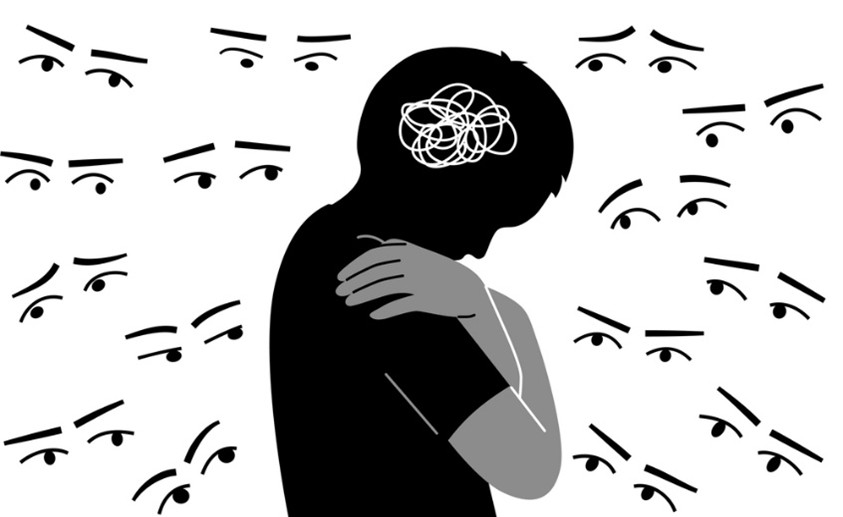
A person while surrounded by watchful eyes, illustrating how pain is often normalized and overlooked under social pressure. Source: assuredhopehealth.com
Underreporting is further shaped by how responsibility is understood and assumed in the workplace. Workers often internalize the belief that preventing injuries is their own responsibility (Maharani et al., 2024) not realizing it is the policy in place that is failing them. When employers have established protocols or safety policies, employees may assume that adequate protection is already in place and will trust that the system will protect them from serious harm. As a result of this, discomfort is often interpreted as a personal issue rather than a systemic failure. There are also potentially sociocultural pressures, adding an extra layer of anxiety when it comes to reporting. Al-Khiami et al. (2025) found that workplace hierarchy, institutional expectations, and fear of consequences can all discourage workers from speaking up. This can make the workers feel that reporting is not an act of protection but rather a disruption to their career progression. It is not a lack of awareness that leads to silence, but a deliberate response shaped by normalization of misplaced responsibility and concerns for professional consequences, allowing this issue to progress further.
Where Responsibility Actually Lies
Regardless of how these injuries are experienced, responsibilities are not ambiguous. Occupational health regulations in Canada explicitly require employers to identify, assess, and mitigate ergonomic hazards before they occur (Government of Canada, 2022). Employers are also expected to conduct risk assessments, provide training, and continuously evaluate workplace conditions (Province of British Columbia, 2025). Ergonomics is defined as a design principle at the organizational level that adapts work processes, tools, and environments to fit human capacity (WorkSafeBC, 2025), not individual responsibilities.
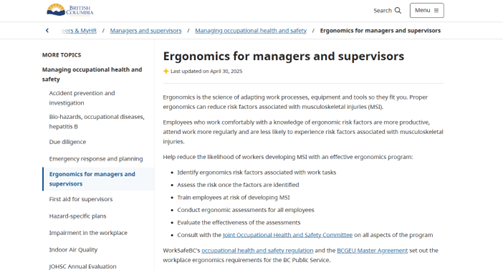
Screenshot of “Ergonomics for managers and supervisors” webpage.
Source: Government of British Columbia (2025).
Yet in practice, the responsibility is often diluted and redirected towards employees. Equipment is provided without optimizing workload, training is offered without ensuring it can be practically applied, and policies existing without consistent proactive enforcement. Effectively preventing WMSDs requires restructuring work first, then moving on to address individual behavior. This includes creating variations in tasks, allocating time for sufficient recovery, and conducting routine ergonomic assessments. Other helpful supports include providing proper equipment without financial burden and fostering an empathy driven culture where reporting discomfort is supported rather than being stigmatized.
Conclusion
Kneeling on the lab floor did not feel like a process of injury, neither did the hours Cao spent at his desk, nor the time Yang spent sitting behind the wheel. There is not a single moment when injury occurred nor is there a clear beginning, there is only a gradual shift from discomfort to persistence and persistence to injury. The progression is easy to miss since it does not directly interrupt work and therefore is easily ignored. Musculoskeletal injuries are not rare; they are built into the structure of modern work from repetition to prolonged hours. As long as those policies remain unchanged, the injuries and their health consequences will accumulate and become quiet outcomes that continue to persist unreported.
Acknowledgements
I would like to thank Capilano University, Faculty of Arts and Science for their support during this study. Special thanks to instructor Leah Bailly for the mentorship and guidance.
References
Abdous, M.-A., Delorme, X., Battini, D., & Berger-Douce, S. (2023). Multi-objective collaborative assembly line design problem with the optimisation of ergonomics and economics. International Journal of Production Research, 61(22), 7830–7845. https://doi-org.ezproxy.capilanou.ca/10.1080/00207543.2022.2153185
Aldhabi, R., Alzahrani, A., Alsobhi, M., Albadi, M., Alfawaz, S., Alabasi, U., Almaddah, M., Gmmash, A., Neamatallah, Z., & Gaowgzeh, R. A. (2025). Prevalence and risk factors of musculoskeletal disorders among clinical laboratory technicians. Healthcare, 13(12). https://doi-org.ezproxy.capilanou.ca/10.3390/healthcare13121406
Al-Khiami, M. I., Lindhard, S. M., & Wandahl, S. (2025). Prevalence of work-related musculoskeletal disorders and associated sociocultural reporting behaviors in Kuwait’s construction industry. Work, 81(3), 2937–2951. https://doi-org.ezproxy.capilanou.ca/10.1177/10519815251325780
Alfaro-Pozo, R., & Bautista-Valhondo, J. (2024). Impact of limiting the ergonomic risk on the economic and productive efficiency of an assembly line. International Journal of Production Research, 62(1–2), 122–140. https://doi-org.ezproxy.capilanou.ca/10.1080/00207543.2023.2283577
Demissie, B., Mekonnen, G. B., & Aytenew, T. M. (2025). Musculoskeletal disorders among computer user workers in Ethiopia: A systematic review and meta-analysis. Scientific Reports, 15(1), 1–15. https://doi-org.ezproxy.capilanou.ca/10.1038/s41598-025-96470-0
David, J., & Volling, T. (2026). Multi-objective ergonomic–economic project scheduling in construction: The case of photovoltaic system installation. Computers & Industrial Engineering, 213. https://doi-org.ezproxy.capilanou.ca/10.1016/j.cie.2026.111828
Government of Canada. (2022). Guide on the prevention of musculoskeletal injury (MSI). https://www.canada.ca/en/employment-social-development/services/health-safety/reports/ergonomics/module1.html
Lopes, M., & Lages, M. (2026). Work-related musculoskeletal disorders: Prevalence and contributing risk factors—A narrative review. Exploration of Musculoskeletal Diseases, 4, 1007117. https://doi-org.ezproxy.capilanou.ca/10.37349/emd.2026.1007117
Makki, F., Zangiabadi, Z., Rezaei, E., Sadeghian, Z., Sahebi, A., & Tahernejad, S. (2026). Musculoskeletal disorders among bus drivers: A systematic review and meta-analysis. International Journal of Occupational Safety & Ergonomics, 32(1), 58–66. https://doi-org.ezproxy.capilanou.ca/10.1080/10803548.2025.2499350
Maharani, C., Casteel, C., Rohlman, D., Afifi, R., Baker, K., & Fethke, N. (2024). “I am responsible”: Perceptions of employees on health and safety program implementation in small and medium sized businesses in Indonesia. Work, 80(3), 1181–1190. https://doi-org.ezproxy.capilanou.ca/10.1177/10519815241290284
Mishra, S., Avinash, G., Kundu, M. G., Verma, J., Sheth, A., & Dutta, A. (2025). Work-related musculoskeletal disorders among various occupational workers in India: A systematic review and meta-analysis. Journal of Occupational Health, 67(1). https://doi-org.ezproxy.capilanou.ca/10.1093/joccuh/uiae077
WorkSafeBC. (2025). Ergonomics. https://www.worksafebc.com/en/health-safety/hazards-exposures/ergonomics