


Madina Korry
Madina Korry is completing a Bachelor of Arts in Psychology at Capilano University, located on the traditional, unceded territories of the Squamish, Tsleil-Waututh, and Musqueam First Nations. Throughout her undergraduate studies, she has been consistently recognized for her academic excellence, earning placement on Dean’s and Merit lists.
Originally born in the former Soviet Union, Madina resided in Cuba for five years before relocating to Canada. Experiencing life across diverse socio-cultural landscapes allowed her to develop a nuanced appreciation for how external contexts and societal frameworks influence human cognition, learning, and social interactions.
Over her academic journey she cultivated a deep passion for cognitive and neuropsychology, specifically exploring the synergy of human-machine interaction. Her research interests center on the potential of digital frameworks to augment focus, knowledge retention, and overall user engagement.
Currently, she is pursuing a career in user interface, user exchange (UI/UX) research. She is focused on designing seamless, responsive digital environments that support the needs of students and neurodivergent youth. Her goal is to develop educational tools that are interactive, engaging, and specifically tailored to facilitate a personalized learning experience. She believes that digital technology represents an environment that can be shaped to better serve those who use it.
Introduction
The road to the veterinary hospital was painfully silent, the world strangely still beneath the pale morning sky. Swaddled in a soft pink blanket, I held Eleah’s tiny, fragile form against my chest. Her breathing was shallow and uneven, her warm, hazel eyes—once so vibrant—now vacant and dull, a reminder that she had nothing left to give. Through the slightly ajar window, a thin stream of morning air slipped into the car; I watched as the fine, snowy strands of her coat stirred in the breeze. Outside, through the hushed, motorless hum of the electric vehicle, the low, resonant croak of crows drifted through the air. Perched, ink-black silhouettes on the power lines, they stood like sentries, as if announcing her departure. For months, we battled infections, lived through multiple surgeries, and carried the weight of uncertainty, clinging to the hope that each treatment would buy us more time. As the car moved through the early morning streets, I hugged her tighter, knowing that the time had come to say goodbye.
Eleah’s story is not unique; it reflects a much bigger issue. Domestic rabbits are often perceived as low-maintenance pets; in reality, they require specialized care, veterinary attention, and long-term commitment. Such misconceptions frequently result in rabbits being surrendered to shelters or abandoned altogether, leading to serious consequences, not only for animal welfare, but also the public. This paper examines how these misconceptions drive rabbit abandonment, analyzes the resulting impact on animal welfare, ecosystems, and public infrastructure, and proposes a range of practical and policy-based solutions to address the crisis.
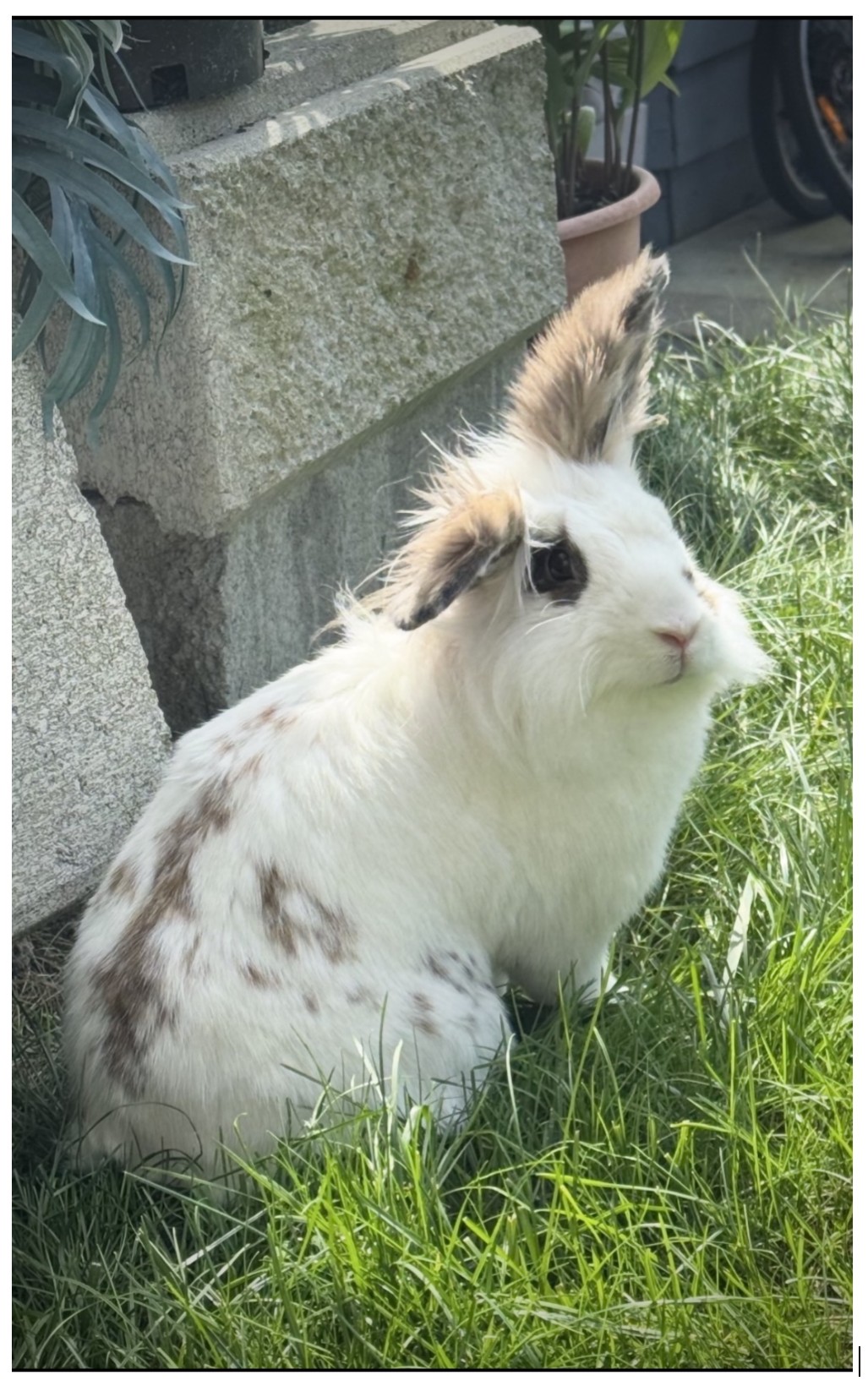
A Lionhead rabbit abandoned in a box at the West Vancouver SPCA. Due to neglect, she suffered from a spinal injury that severely limited the use of her hindquarters.
Animal Welfare
The word ‘rabbit’ often evokes a familiar image—adorable, soft, gentle, a pet meant to be held and cuddled. This archetype is likely rooted in cultural icons like Bugs Bunny, casually chewing on a carrot, or an Easter Bunny—the childhood symbol people grow up with, that turns a living animal into a seasonal gift. That image feels natural, almost unquestionable, and it shapes the decisions individuals make without ever being challenged; it is not an accurate representation. The idea of a bunny as an easy starter pet—something that fits neatly into life without reshaping it—is an illusion. That assumption unravels quickly; the once-adorable, fluffy animal can become incredibly aggressive if not spayed or neutered. It instinctively doesn’t like being picked up—because, evolutionarily, being lifted off the ground meant being caught by a predator. Even the carrot is a myth; it is high in sugar and is best reserved for a rare treat. Rabbits (lagomorphs) depend on a steady diet of coarse hay to keep their digestive systems functioning properly. Without it, their health can decline rapidly. That same gap between expectation and reality becomes even more serious when it comes down to illness. Rabbits are frequently assumed to require little medical attention, but that belief is also false (Gray, 2025). The relentless recurrence of illness and the grueling complexity of treatment are illustrated in my experience with Eleah.
Her illness began as something easy to dismiss—a small lump beneath the white silk of her cheek. It felt contained, almost insignificant; however, the reality was far uglier. Within days, the growth expanded rapidly, like an aggressive tumour. What I had expected to be a simple drainage and a round of antibiotics instead necessitated an invasive surgical procedure. The unique pathology of a rabbit abscess differs significantly from that of other animals—it is walled off, trapping bacteria and caseous, purulent discharge inside dense, fibrous capsules. Treatment required marsupialization: surgically removing infected tissue and leaving the wound open (McClure, 2024; Rabbit Welfare Association & Fund, 2013). Her delicate face no longer looked recognizable. Flesh pulled back, exposing a raw, bloodied crater that had to remain open to facilitate continued drainage. My daily life became a routine of syringe feeding, wound care, antibiotics, and pain medication, multiple times a day. Just as she began to heal, the abscess returned—deeper, more aggressive. She underwent three surgeries. With each surgery, more tissue was removed, causing damage to her facial nerves that left one side of her face permanently paralyzed. Then, the healing was interrupted by a much more insidious progression. It began with a cloudy eye—an infection initially dismissed as minor. This symptom, however, was the first manifestation of a far more grave diagnosis: Encephalitozoon cuniculi, a microscopic parasite that may remain dormant for years before becoming active, often triggered by stress (Mäkitaipale et al., 2022). What followed was the progression of neurological decay. Her eyes moved up and down in a fast, uncontrollable rhythm, causing a loss of balance and orientation that forced her into a circling motion. With her head severely tilted to one side, her body involuntarily followed until she could no longer remain upright. She fell repeatedly, struggling to get back up, but her form could not respond the way it once did.
When owners are confronted with the stark realities of their obligations, they often realize—too late—that they were unprepared and lacked the necessary knowledge. Overwhelmed and unable to continue, they surrender the animal. This lack of preparedness is echoed in a study carried out by U, Hou, and Protopopova, animal welfare researchers at the University of British Columbia, who found that “the majority of rabbits (96.9%) were surrendered for human-related reasons…” (U., Hou, & Protopopova, 2024).
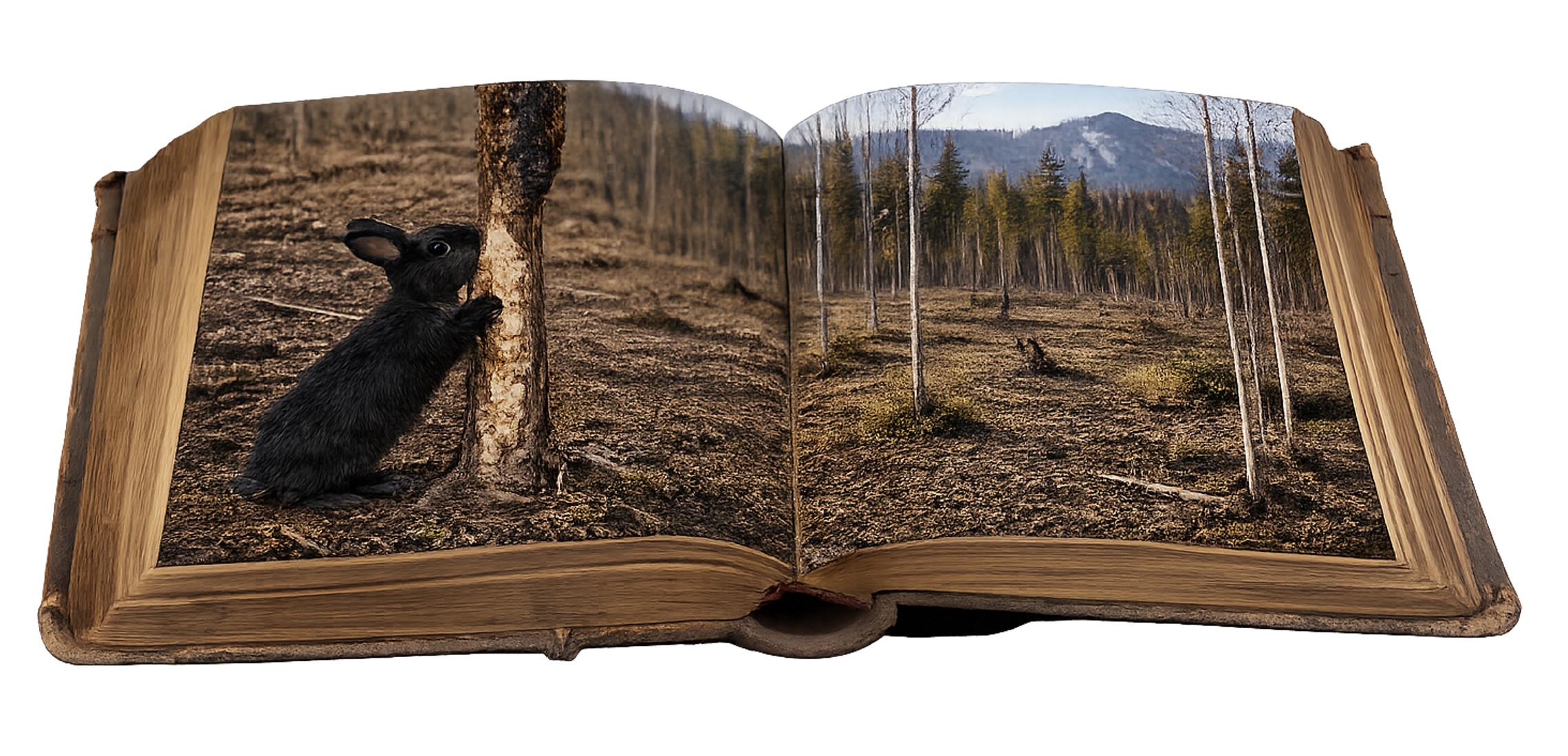
Feral rabbit stripping bark from trees to survive during winter months when food sources are scarce.
Ecological Impact
Crucially, what happens when rescues are unable to take in more rabbits? Organizations like the Vancouver Rabbit Rescue & Advocacy (VRRA), a nonprofit dependent largely on volunteers, are already operating at capacity. In my February 26, 2026, interview with Olga Betts, founder of VRRA, she explained, “We don’t have the space or the money or the volunteers to take care of them all, and we can’t compromise the well-being of the bunnies currently in our care” (O. Betts, personal communication, February 26, 2026). Believing they are left with no viable alternatives, owners abandon their rabbits in urban parks and green spaces. This is where Eleah was found: outside, carrying a litter, ill, and no longer eating. It remains uncertain if her abandonment was a consequence of her condition or whether it occurred after; regardless, by the time she was discovered, the illness had progressed so far she required a C-section. Tragically, her kits did not survive but what if they had.
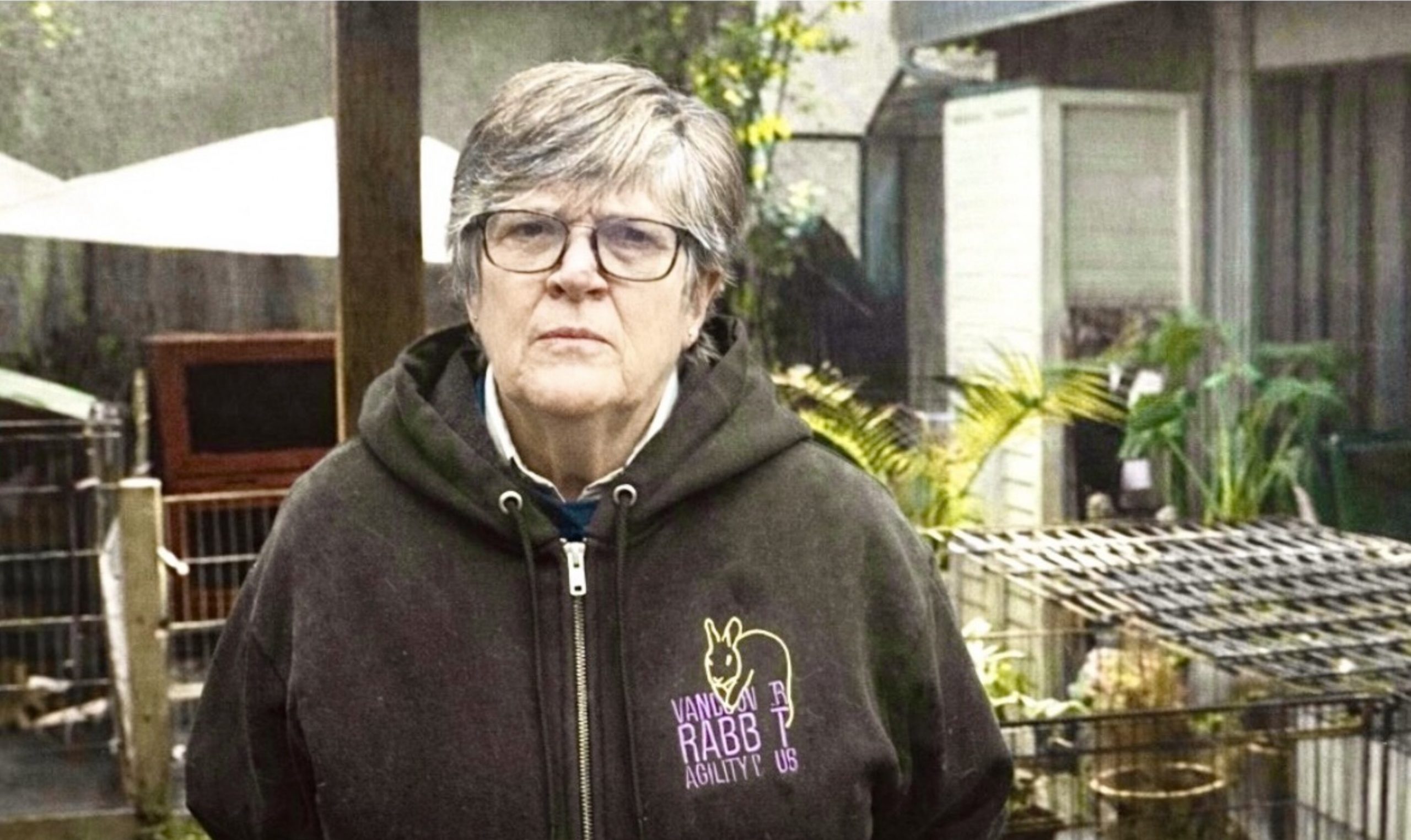
Olga Betts, founder of Vancouver Rabbit Rescue and Advocacy (VRRA), converted her residence into a dedicated rescue facility.
Domesticated rabbits are descendants of European and Eastern cottontails. They are an invasive species introduced to British Columbia in the 1960s (Houle, 2024). Unlike native wildlife, they reproduce rapidly and without natural regulation. A single litter can reach as many as twelve, and a female can become pregnant almost immediately after giving birth. This cycle repeats every thirty days. It doesn’t take long before a small number grows into a population (Zeidler, 2025).
While it may seem they are returning to their natural home, releasing a domestic rabbit is detrimental; they are exposed to traffic, predators, or disease and don’t survive long. However, some do, and that’s where the problem begins. According to Nick Wong, ISCBC Manager of Science and Research, “Invasive rabbits can have significant ecological and economic impacts. They can eat a lot of vegetation in early spring…”(Wong, as cited in Houle, 2024). It’s a steady stripping of the landscape. Shrubs are reduced down to stems. Young trees are stripped of bark, cutting off the flow of nutrients and water. New growth emerges and is removed again, leaving the ecosystem unable to recover (Young, 2025).
From there, the ecological disruptions begin to radiate outward. As vegetation declines, animals that depend on it are forced to adjust. Deer and other ungulates lose consistent access to food and are forced to seek out new areas. Ungulates are the main prey source for predators such as mountain lions and wolves. This raises the question: why do predators not pivot to rabbits since it’s an abundant food source? However, rabbits are too small, too quick and provide insufficient caloric energy. Thus, large predators are forced to follow their usual prey even into Urban Corridors (Biology Insights, 2025). Consequently, this shift creates a significant safety risk for children and pets; however, this dynamic proves equally detrimental to the predators themselves. (Parks Canada, 2022). As is often the case, they are either relocated or euthanized, furthering the decline of already struggling populations. Then there is the snowshoe hare, a keystone species, meaning multiple smaller predators depend on it, but most critically, the Canada lynx—a specialist hunter. It relies on it almost exclusively. When hare populations drop, lynx populations follow (Parks Canada, 2020). If this pressure persists, predator numbers will dwindle, eventually leading to extirpation. This strips another layer of balance from the system.
While this is occurring, the structure of the landscape begins to change. As native vegetation is stripped away, it is replaced by dense, fast-growing invasive plants causing the underbrush to become thicker and more continuous (Government of British Columbia, 2024). This results in what is known as ladder fuel—vegetation that allows fire to climb from the forest floor into the canopy. Under these conditions, fires burn hotter, spread more quickly, and become significantly more difficult to control (FireSmart BC, n.d.).
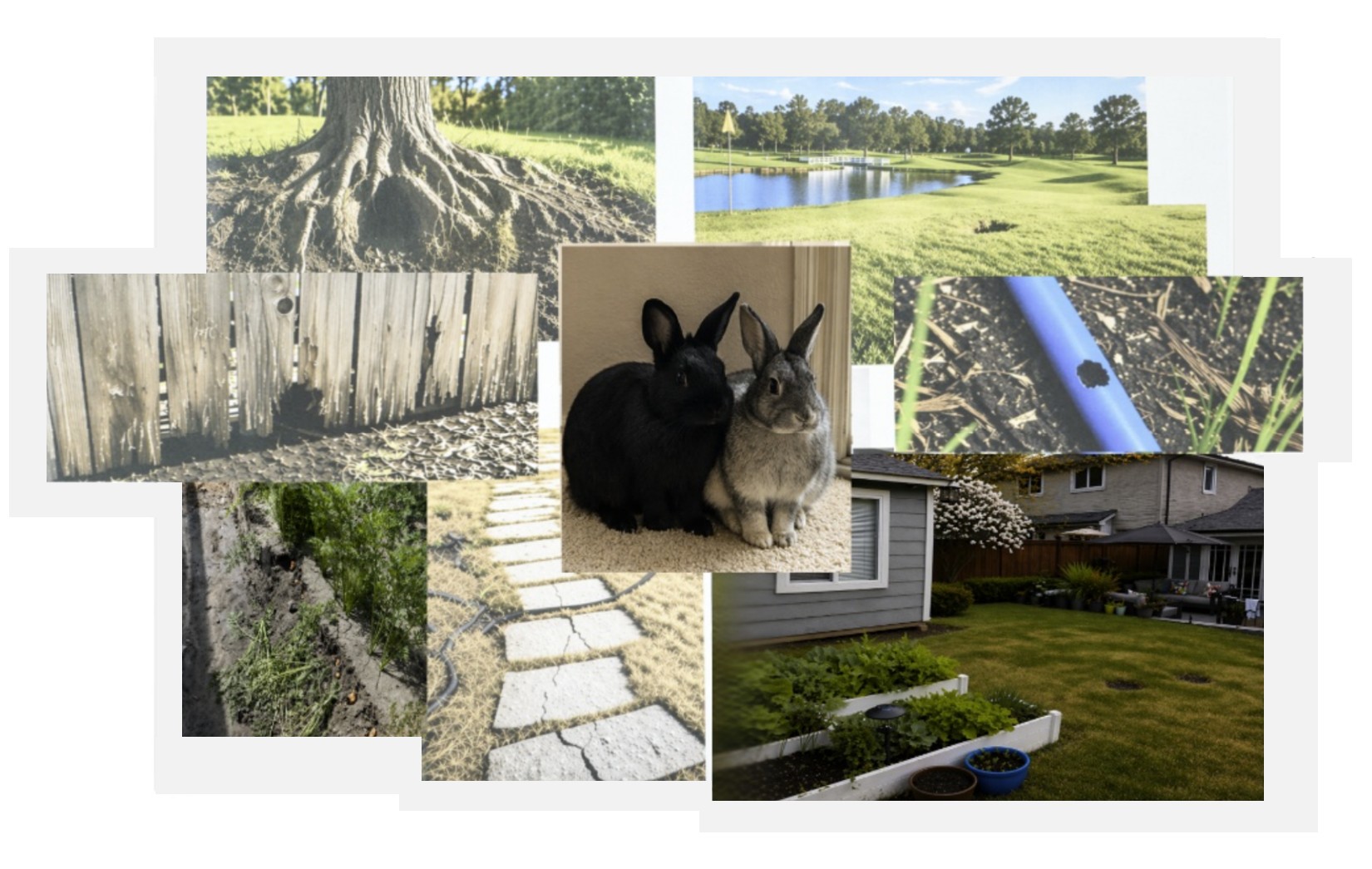
A clockwise progression starting from the top left: a warren established beneath tree roots. Rabbits trim back root systems to keep their burrows free of obstruction; a puncture discovered in a water pipe after a drop in water pressure; visible voids in a degraded lawn; shifting and fracturing pavement stones; herbaceous damage due to rabbit foraging; and fencing requiring repair due to persistent gnawing and burrowing.
Infrastructure Damage
However, the consequences extend further. Consider the following scenario. The damage begins subtly as a yielding of the earth—a sensation of the ground giving way that is often dismissed as natural soil settling. Yet, the instability becomes impossible to ignore; grass becomes uneven, and stone walkways begin to tilt and fracture. Upon excavation, these sites reveal a network of smooth, persistent tunnels running directly along the home’s foundation. While repairing a localized tunnel may cost several thousand, a network that extends beneath the foundation can result in staggering restoration costs, often exceeding tens of thousands of dollars (Cope, 2025; True Level Concrete, 2024).
These voids represent a critical loss of load-bearing support—the physical removal of soil that once held the weight of the structure. This is precisely why the ground softens long before visible damage appears; it explains the uneven settling of the earth, the sudden collapse of turf, the shifting of pathways, and why stone, asphalt, even concrete begin to crack under stress. The public is largely unaware of this problem, as the subtle activity above the surface offers no hint of the extensive destruction occurring below (Cope, 2025). The problem continues to compound. Rabbits can damage underground cables, pipelines, and irrigation systems—they don’t bypass these structures, they chew through them (Young, 2025). Rainwater transforms these voids into conduits that funnel concentrated streams of water directly toward the foundation. This localized saturation further compromises the soil’s load-bearing capacity and exerts significant hydrostatic pressure against basement walls and footings. For homes with crawlspaces or shallow foundations, this hydraulic erosion is particularly problematic; the constant fluctuations between swelling and shrinking destabilizes the structure from within, accelerating foundation failure. Thus, areas that have been previously repaired don’t hold and sink all over again (Cope, 2025).
The scope of this destruction extends beyond private property. In fact, municipalities are combating the same pattern at scale. According to a December 2025 report by the City of Nanaimo, “Rabbit activity damages infrastructure, including facilities and sports fields, resulting in costly repairs, safety hazards, and increased liability issues.” (City of Nanaimo, 2025). The financial implications are substantial. In 2022, Delta saw a surge in its stray population, which resulted in nearly half a million of taxpayers’ dollars in damages—and these costs repeat (Clarkson, 2023). Residents who live in multi-level buildings are also not immune to consequences. While the structures themselves are supported by deep foundations, rabbit activity nonetheless destabilizes the surrounding ground, creating sinking patches and shifting walkways. Moreover, they may damage irrigation systems, sever plant roots, damage landscaped surfaces, and other ground-level infrastructure. Resolving the problem isn’t simple—rabbits multiply faster than removal efforts can keep up, control is regulated, relocation is restricted, and effective management requires time and ongoing expense (City of Nanaimo, 2025). What begins as a singular repair eventually evolves into a cycle of perpetual maintenance. These expanding requirements—higher maintenance fees, increased inspections, pest control, preventative measures— gradually inflate operating budgets and, consequently, depreciate property value.
These vulnerabilities become most evident during the due diligence phase of a real estate transaction. Prospective buyers typically commission specialized inspections and examine maintenance records, where a pattern of repair often becomes a significant liability that deters investment.

Eleah enjoying the outdoors during a period of stability.
Solution
A comprehensive solution requires a combination of policy reform, expanded veterinary capacity, improved financial accessibility, and increased public awareness. This issue will not resolve on its own. Responsibility doesn’t end with ownership—yet systemically, there is little in place to facilitate that. One approach may involve a policy requiring rabbits to be registered in the same way dogs are, making abandonment traceable. Furthermore, fines must reflect the real cost—accounting for both ecological damage and infrastructure expenses. Mandatory spaying and neutering would address the mechanism driving the problem at its source.
However, legislative mandates alone don’t solve the problem. Because rabbits are classified as exotic animals, their care depends on a limited pool of specialized veterinarians. Most veterinary clinics and hospitals do not offer those services, and specialized facilities are often fully booked (Fowler, 2025). This was the reality I faced. In Eleah’s final seventy-two hours, she could no longer eat or drink on her own. Every thirty minutes, I syringe-fed her water—just enough to keep her comfortable. It was painful to watch, and I was desperate to end her suffering, but no specialist was available, not even her own. Sadly, even euthanasia requires an exotic veterinarian. On the final night, she began seizing violently and continuously as I frantically watched the minutes crawl toward sunrise. It was only through my desperate pleading, and the pity of one specialist, that Eleah was finally granted peace.
Specialized care is not only limited, it is also very expensive. Whereas a standard veterinary visit may cost approximately $50, the cost for exotic veterinary care can approach $100. Beyond the lack of specialized care, pet insurance frameworks frequently deny coverage for preexisting conditions, impose restrictions, or exclude exotic animals from their policies altogether (Clarke, 2024; Fowler, 2025). Consequently, owners are often left to manage substantial out-of-pocket expenses. For example, each of Eleah’s surgical procedures reached approximately $2,700, supplemented by an additional $300 for pre-surgical appointments and medication. How can these systemic limitations be addressed?
Increasing training opportunities—through incentives, scholarships, and specialized pathways in exotic animal medicine— would expand the number of veterinarians qualified to treat rabbits. Additionally, broadening insurance frameworks for exotic species would help remove a critical financial barrier, reducing the likelihood of surrender or abandonment. Finally, increased funding would allow rescues like VRRA to increase their capacity, thereby reducing feral rabbit population growth.
While these reforms may suggest an increase in public spending, these costs are already built into municipal budgets. However, if feral rabbit population continues to expand, these expenses will inevitably result in a greater taxpayer burden, which is why proactive prevention is a fiscal necessity. Most importantly, sustainable change begins with awareness and education. When the consequences are made explicit, the public is more likely to seek the necessary information, understand the responsibility involved, and make more informed decisions. A national awareness campaign, such as a “Message from the Government of Canada,” would serve as an effective step toward public education. Without significant shifts at the level of policy and awareness, rabbits like Eleah will continue to be abandoned—and the costs to the community will continue to compound.
Conclusion
Today she rests beneath the magnolia tree in the garden near my home—wrapped in burlap, a sprig of eucalyptus gently lies across her form—a token to follow her beyond this life. In spring, velvety petals gather around her—delicate and ephemeral, like the memory of her. And yet, beyond the quiet limits of this place, life carries on.
As the early morning light stretches low across the grass, they pause—ears raised, bodies low—unhurried, as if they belong. People glance, sometimes point, and move on. They are seen, and yet unseen. Everything remains as it appears—unchallenged, familiar even. So nothing changes—only continues, as it always has. The world keeps turning, the birds keep singing—and still, something here is faintly calling. Enough to be heard, if we choose to listen, so that they no longer remain ghosts of our city.
References
BC SPCA. (2022). Position statement on feral rabbits. https://spca.bc.ca/programs-services/leaders-in-our-field/position-statements/position-statement-on-feral-rabbits/
Baz-González, E., Martin-Carrillo, N., García-Livia, K., Abreu-Acosta, N., & Foronda, P. (2022). Molecular detection of microsporidia in rabbits (Oryctolagus cuniculus) in Tenerife, Canary Islands, Spain. Biology, 11(12), 1796. https://doi.org/10.3390/biology11121796
Billingsley, J. M. (2024). Domestic rabbit abandonment in Canada: The law and societal perspectives on rabbits. The Global Journal of Animal Law, 12(3). https://journal.fi/gjal/article/view/148970
Biology Insights. (2025, July 26). Predator-prey dynamics in an ecosystem. https://biologyinsights.com/predator-prey-dynamics-in-an-ecosystem/
British Columbia Ministry of Agriculture and Food. (2024). Rabbit hemorrhagic disease (RHD) [Fact sheet]. https://www2.gov.bc.ca/assets/gov/farming-natural-resources-and-industry/agriculture-and-seafood/animal-and-crops/animal-disease/rhd_updated_20240311.pdf
Canadian Food Inspection Agency. (2025). Rabbit haemorrhagic disease. https://inspection.canada.ca/en/animal-health/terrestrial-animals/diseases/immediately-notifiable/rabbit-haemorrhagic-disease
City of Nanaimo. (2025, December 15). Feral rabbits in Nanaimo. https://pub-nanaimo.escribemeetings.com/filestream.ashx?DocumentId=61247
City of Richmond. (2022, February 2). 2022 feral rabbit update: Report to committee. https://citycouncil.richmond.ca/__shared/assets/_1_-_2022_Feral_Rabbit_Update61228.pdf
City of Vancouver. (n.d.). Rabbits. https://vancouver.ca/parks-recreation-culture/rabbits.aspx
Clarke, D. (2024, September 13). What is the best exotic pet insurance in Canada? HelloSafe. https://hellosafe.ca/en/pet-insurance/exotic
Clarkson, B. (2023, March 29). Rabbit rescue society warns Vancouver’s feral population is about to boom, unless the city steps in. CTV News. https://www.ctvnews.ca/vancouver/article/rabbit-rescue-society-warns-vancouvers-feral-population-is-about-to-boom-unless-the-city-steps-in/
Cope, L. (2025, December 9). Can rabbits damage a house foundation? EngineerFix. https://engineerfix.com/can-rabbits-damage-a-house-foundation/
FireSmart BC. (n.d.). Ladder fuels and continuity graphic. https://firesmartbc.ca/resource/ladder-fuels-and-continuity-graphic/
Fowler, C. (2025, October 29). Why is vet care for exotic pets so complicated & expensive? 4 reasons. The Vet Desk. https://thevetdesk.com/pet-health-wellness/general/why-is-vet-care-for-exotic-pets-complicated-expensive/
Government of British Columbia. (2024, August 21). Invasive plants. https://www2.gov.bc.ca/gov/content/environment/plants-animals-ecosystems/invasive-species/management/plants
Gray, E. (2025, October 29). 14 rabbit myths and misconceptions you need to stop believing now! The Vet Desk. https://thevetdesk.com/pet-lifestyle/rabbits/rabbit-myths-misconceptions/
Houle, L. (2024, March 28). The Easter bunny blues. Invasive Species Council of British Columbia. https://bcinvasives.ca/news/the-easter-bunny-blues/
Mäkitaipale, J., Järvenpää, E., Bruce, A., Sankari, S., Virtala, A.-M., & Näreaho, A. (2022). Seroprevalence of Encephalitozoon cuniculi and Toxoplasma gondii antibodies and risk-factor assessment for Encephalitozoon cuniculi seroprevalence in Finnish pet rabbits (Oryctolagus cuniculus). Acta Veterinaria Scandinavica, 64, Article 22. https://doi.org/10.1186/s13028-022-00622-5
McClure, D. (2024). Disorders and diseases of rabbits. Merck Veterinary Manual. https://www.merckvetmanual.com/all-other-pets/rabbits/disorders-and-diseases-of-rabbits
Parks Canada. (2020, October 16). Canadian lynx. Government of Canada. https://parks.canada.ca/pn-np/ab/banff/nature/faune-flore/mammiferes-mammals/carnivores/lynx
Parks Canada. (2022, May 27). Cougar safety. Government of Canada. https://parks.canada.ca/pn-np/ab/banff/nature/faune-flore/mammiferes-mammals/carnivores/lynx
Rabbit Welfare Association & Fund. (2013, February). Abscesses – further reading. https://rabbitwelfare.co.uk/abscesses-further-reading/
U., A. S. Y., Hou, C. Y., & Protopopova, A. (2024). Rabbit intakes and predictors of their length of stay in animal shelters in British Columbia, Canada. PLoS ONE, 19(4), 1–22. https://doi.org/10.1371/journal.pone.0300633
Young, L. (2025, October 16). Why are rabbits a problem? Institute for Environmental Research and Education. https://iere.org/why-are-rabbits-a-problem/
Zeidler, M. (2025, December 17). As Nanaimo’s feral rabbit population grows, so does damage to city parks, says staff report. CBC News. https://www.cbc.ca/lite/story/9.7018744
True Level Concrete. (2024, March 13). What does foundation repair really cost? Ultimate Vancouver guide 2024. https://www.truelevelconcrete.ca/what-does-foundation-repair-really-cost-ultimate-vancouver-guide-2024/
Ermakova, S. (n.d.). Open old book with landscape [Stock image]. Adobe Stock. https://www.bing.com/images/search?q=open+old+book+with+the+scorched+earth+inside+Ermakova%2C+S.&qs=n&form=QBIRMH&sp=-1&lq=0&pq=open+old+book+with+the+scorched+earth+inside+ermakova%2C+s.&sc=0-57&cvid=0CF1142AC1F24E28AC08A16408CF2F0F&first= Modified by Korry, M. using ChatGPT [Large language model], April 6, 2026.