
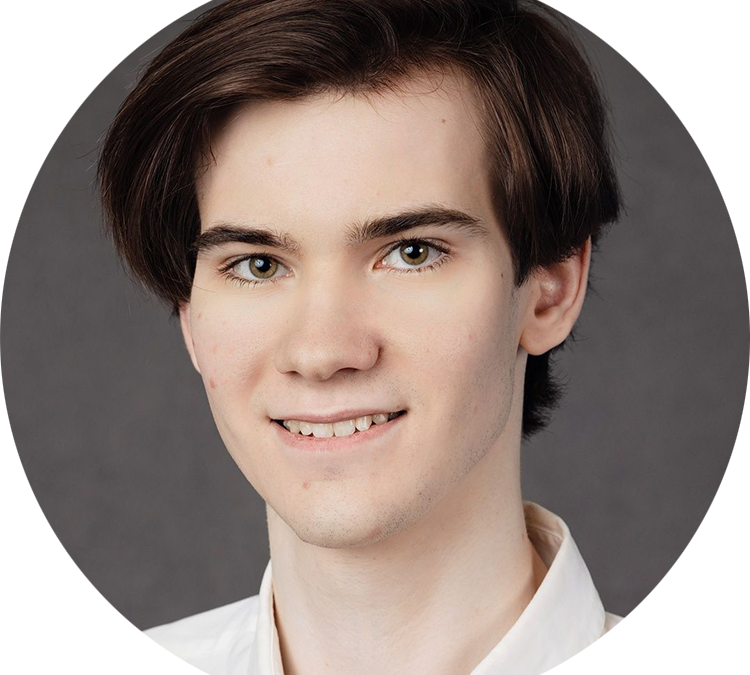

Miles Ingram
Miles Ingram is completing his Bachelor of Arts Degree with a Major in Psychology and Minor in Sociology at Capilano University. Throughout the past year of his studies, he had been applying what he had learned throughout his degree, through caring for his stepfather who had glioblastoma. Studying behavior, cognition, neuropsychology and stress related to caregivers helped him understand what his stepfather was experiencing and how to help his family navigate home care.
Introduction
My family has always been unorthodox and breaks conventions. My stepfather grew up in Southern Africa. I met him after he had moved to Canada, where he continued his global career in an executive role, constantly searching for new opportunities. As his latest project was gaining traction in March 2025, my stepfather was taken to the ER after his language had rapidly deteriorated. Imaging found a bleeding malignant mass in his left temporal lobe that was surgically removed, leading to a diagnosis of glioblastoma multiforme (GBM). GBM is a grade 4 glioma, also referred to as a glioblastoma, which is a grade 4 glioma, which is a type of cancer typically emerging from the brain, via the cortex and brain stem.
GBM is an aggressive, unpredictable disease leading to a variety of symptoms, including cognitive and motor dysfunction. It is viewed as a terminal diagnosis, which is treated largely through aggressive treatments, such as chemotherapy, radiation and surgical resection. Patients with GBM are encouraged to participate in palliative and hospice home care programs, where spouses and family members act as informal caregivers. These combined factors contribute to psychological stress within families, harming their agency and wellbeing, while also posing significant challenges to medical systems through their unpredictability and limited available treatments. From within the medical system and through community resources, increasing access and awareness of services, treatments and support systems decreases associated risks with home care for glioblastoma patients, while improving patient needs.
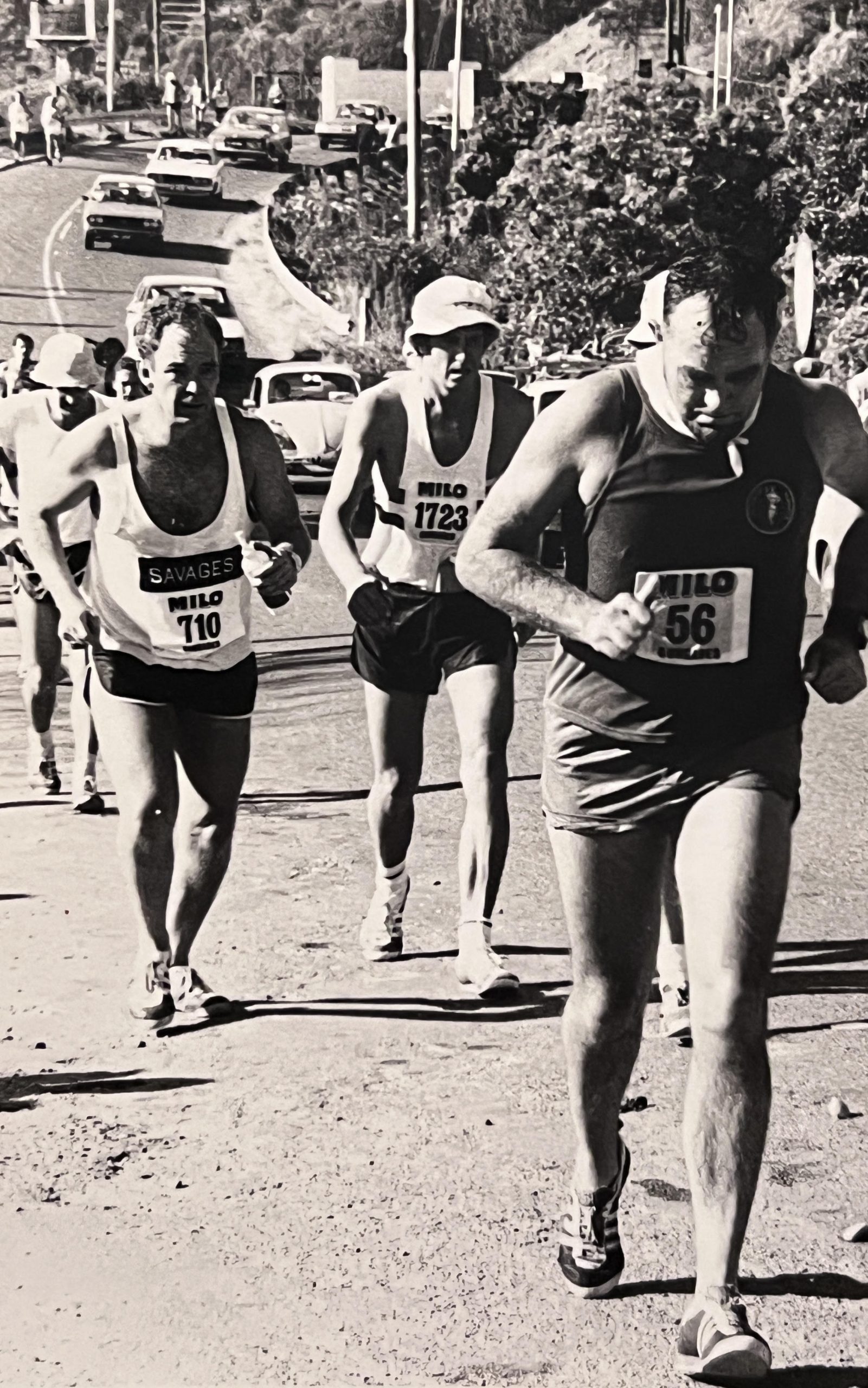
My Stepfather (centre), exhibiting his steely grit and determination while running the Comrades Marathon in South Africa, circa 1975. This 90 kilometre marathon is the world’s oldest and largest ultra-marathon in the world, a gruelling and notorious marathon with a 12 hour time limit cutoff. He ran the ultimate marathon of his life over the course of the past year, but unlike most battles he waged, he lost on February 13th, 2026.
My Family’s Journey Through Home Care
My stepfather was treated at Lions Gate Hospital, and the medical team expressed that they had never encountered a patient like him. Many patients have reduced mobility and function as they recover from the trauma of brain surgery, but my stepfather was on his feet within a day and was a unicorn patient who left a lasting impression. They released him early, on the condition that he avoided being physically strenuous, and that he kept the wound on his head bandaged, clean and dry. He was also instructed not to drink. To my stepfather, these were unnecessary hindrances to his life. Within hours, he had undressed the wound, showered, had a drink and was ready to get back out in the world.
Waiting for the diagnosis was emotionally distressing and hard for my family, well, most of us. Our family doctor did a home visit, where he spent fifteen minutes explaining to my stepfather his diagnosis of Glioblastoma IDH-Wildtype Unmethylated MGMT. His sub-variant is extremely aggressive and chemotherapy resistant, reducing the effectiveness of available treatments. After learning of this diagnosis, and a life expectancy of 4 to 8 months. My stepfather responded with a heartfelt retort, “Interesting”. He then went back to cooking dinner.
Ten days after surgery, my stepfather returned to his office, managing corporate assets, and quickly returned to physical activities, including biking and kayaking. He was happiest in the early stages of disease progression.
Instead of agreeing to chemotherapy and radiation, he reached out to a former oncologist whose license had been stripped by the College of Physicians and Surgeons and embarked on a course of supplements, 50,000 IU of vitamin D and alternative medicines.
Three months post-surgery, he commenced a 20-day fast and asked us to cycle with him for the day. On the ferry ride to our destination, he collapsed. We sat in the park until he recovered enough to board a later ferry. After disembarking, he collapsed and was greeted by medics who gave him glucose gel and wanted to transport him to the hospital. Knowing that he would have been given intravenous fluids and nutritional advice, he put his life in peril and rejected the intervention.
Three months post-surgery, my stepfather’s language was failing rapidly, his belief in alternative medications waned, and the results of a second MRI were bleak. He requested radiation and had a second surgery. It was beyond clear that his executive functioning had slipped away. He faced increasing alcoholism, disinhibition and psychotic episodes. We were told he had frontal lobe syndrome.
My stepfather started radiation in August 2025. Due to his escalating disinhibition, his relationship with my mother grew more turbulent. Rational arguments against his increasingly unstable behaviour were typically followed by explosive profanity. His language further deteriorated, he needed a cane to walk, and he had lost his right peripheral vision. The primary tumour site was impacting the frontal lobe, creating a litany of symptoms that destroyed his empathy. The radiation treatment was prolonging his life; however, the process was killing healthy brain tissue and creating even more permanent brain damage.
He was quick to aggression and made reckless decisions daily. Caught between trying to respect the wishes of a dying man who was oftentimes unrecognizable from his former self, and doing what is best for her family, my mother often felt conflicted over what was right. By late fall, she was repeatedly told to call 911 if she felt unsafe. It was a difficult line to cross, as she feared that her ability to see him or continue to care for him would be stripped away.
In late November, I returned home to find a municipal employee and my neighbours in my yard. My stepfather’s mancave in the basement had water spewing from plumbing adjacent to the exterior wall. I went down to help, only to be eviscerated by my stepfather for wearing my shoes because they would track dirt into the flood zone. He verbally terrorized us, and that night reflected the extensive cognitive decline, along with the extent of his mania and psychosis. He had broken a vacuum trying to suck up water that he insisted had come out of the floor, and not the plumbing.
The verbal abuse was so extreme that the licensed plumber refused payment and my mother explained to the municipal worker that she was not an abused wife, but a caregiver. A significant shift had occurred that night: It was clear that he had lost the environmental awareness not to fly into a rage in front of friends or strangers.
In December, while we visited a Christmas market, my stepfather fueled his escalating alcohol addiction at a nearby bar with a former colleague, who was a stranger to the rest of us, and invited him to Christmas dinner. On the way home, we stopped for groceries. I was devastated, watching my stepfather trying to navigate the aisles. He was lost and overwhelmed. His special awareness was gone. He could not figure out where to go or understand what to do with the ingredients he had been cooking with for decades.
On Christmas Day, my stepfather’s former colleague came for dinner. At one point, he stepped out of the room, and my stepfather grew agitated and animated. He loudly counted out on his fingers: “One, two, three, four, five, five hours! People need to know when to fuck off.” The impassioned tirade made his exuberant demonstration uncomfortable and hilarious, with my mother receiving second-hand embarrassment.
January was relatively peaceful; my stepfather had started to slow down his global search for cures. There were sharp cognitive declines, but he was still obsessed with the price of gold, despite having sold all of his within the past couple of years. He was waiting on MRI results, hoping for a third and unlikely craniotomy. He was failing rapidly and at a pivotal stage in his disease progression. At the start of the month, he navigated a bus to downtown Vancouver to meet with his assistant. By the end of the month, he was struggling to walk to a local pub, five minutes from home.
By early February, my stepfather was mostly bedridden. His language aphasia had escalated, and he had debilitating vertigo and right-body weakness. A doctor visited and delivered the crushing blow that the cancer had reached his midbrain and brainstem. For three days, my stepfather held out hope until our family doctor visited and told him that the surgeon had officially stated that a 3rd surgery was not viable. In mid-February, my stepfather passed away in our family home through medically assisted dying (MAID), after a long and tumultuous journey through brain surgeries, radiation and alternative medicine.

My Stepfather’s collection of airline tickets and passports from a lifetime of travel.
Alternative Perspectives of Patient Care
I interviewed Elizabeth, from Australia, a woman my mother met in an online forum for caregivers to GBM patients. It became abundantly clear that we were not alone. She discussed her husband Tom’s journey through medical care for GBM and her experiences caring for him. Tom had a fast-growing form of GBM. Three weeks after his initial surgical resection and before the start of chemotherapy and radiation, a 3.5cm tumour mass regrowth had occurred. Due to the location in the frontal lobe and rapid progression, Tom had only a short period of time before experiencing cognitive impairments, including paranoia, delusions and psychosis. During the course of his treatment, he recognized medical staff managing symptoms as allies, but was antagonistic towards psychiatrists and Elizabeth, who were concerned with his cognition and psychosis.
Tom, whom Elizabeth described as kind and compassionate before his GBM diagnosis, had become violent. In the interview, she relived a moment of hostility, where Tom was “Throwing verbal threats at me, telling me he was going to throw me over the fence and I needed to get my brother to come and… protect me” Elizabeth, Personal Communication, March 16, 2026).
Tom’s paranoia extended towards his stepchildren and made his family feel unsafe, until the last few weeks of his life, when he had a behavioural shift and his personality became more reflective of who he was before the disease.
I conducted an interview with Dr. Lam, a Vancouver-based neurologist who spent one month of training working exclusively with patients who had brain tumours, most commonly GBM. While treating brain tumours is not his subspecialty, he is involved in diagnosing GBM and symptom management, such as seizures and headaches. In our conversation, I discussed how my family has referred to GBM as a dementia-like disease, inquiring whether GBM can produce dementia-like symptoms. He responded with, “If it invades the part that produces dementia symptoms, like inhibition, language, memory, then yes.” (Dr. Lam, Personal Communication, March 10, 2026). Primarily, the frontal and temporal lobes are areas that drive many memory and cognitive functions.
Dr. Lam also outlined the primary differences from a symptoms management and planning perspective, such as progression rate and order of symptom emergence. Dementia typically progresses more slowly with a more predictable pattern of cognitive symptoms. Patients with dementia eventually require long-term care and may eventually be bed-bound with incontinence. Patients with glioblastoma can also experience these symptoms, but progression is often faster and may be less predictable (Personal Communication, March 10, 2026).
The unpredictability of GBM is challenging for patients, caregivers and medical staff, and continues to be a challenge globally.
A study conducted by United States researchers on how caring for GBM patients impacts caregivers, researchers Au (et al., 2022), noted in the study that there was a lot of variance in how caregivers are impacted by taking care of family members with glioblastoma. Primary driving factors are tumour location and the specific types of GBM. This study found that quality of life improved for caregivers caring for GBM patients with frontal lobe lesions, after the initial surgery, as a result of the symptom relief. This study also found that patients with lesions that were not in the frontal lobe had more issues with memory. Caring for family members with difficulties with memory, mobility, cognitive decline and a lack of independence for daily tasks, including using the bathroom, contributes to more time spent as a caregiver and burnout.
Caregiver work is demanding and can be costly as loved ones are often required to sacrifice time away from work and other obligations. Being a caregiver is a burden that can contribute to symptoms of anxiety and depression. Anxiety can also serve as a facilitator for over-caring, where caregivers become emotionally depleted, resulting in burnout (Gérain & Zech, 2019).
For the medical system, caregivers and patients, the unpredictability of GBM intersects in one key area: the initial diagnosis. In my discussion with Elizabeth, I asked her if she felt she was prepared by her medical team for what to expect. Her response was “Absolutely not… one doctor, and it was one of the… early doctors who… on the day he was diagnosed, said, oh, it’s the frontal lobe, so there could be some changes in empathy.” The lack of information posed further issues because she was unable to adequately explain to his family what she was experiencing or what to expect. Doctors are not at fault for their inability to provide clear answers, as they are unable to predict the course of the disease and the myriad symptoms, or to provide accurate roadmaps of what lies ahead. Many patients are unsatisfied with the amount of information they receive on diagnosis and how it is explained to them.
In a Swedish study conducted from 2016 to 2017, 25 patients who had been recently diagnosed with gliomas from grade 2 to grade 4 (GBM) were interviewed on the topic of diagnosis transparency. This qualitative assessment indicates general trends within the participant pool for stressors in the process and how they would have liked the information to be given to them. The consensus was that information about diagnosis should be personalized, based on the amount of information patients want to know when receiving a diagnosis. Patients typically fell into three categories: Some of them only wanted to know the positive aspects of their diagnosis and avoided learning information that could make them lose hope. Others wanted an honest, broad perspective and general information about the diagnosis and prognosis. The third category of patients wanted to be told everything the doctors knew. Many patients used their health records to research their diseases independently of the system (Malmström et al, 2021).
Based on my own lived experience with my stepfather’s condition and the discussion I had with Elizabeth, patients and their families should be able to regulate how much information they receive about a GBM diagnosis, including the potential for neurological decline and possible symptoms of psychosis, delusions and paranoia. Neither Elizabeth nor my family were prepared for the erratic behaviour and dementia-like symptoms in the early stages. As discussed by Au (et al., 2022), lesions in the frontal lobe area can have symptom relief. However in my personal experiance further tumour growth in areas of the brain associated with memory and executive functioning can lead to what my family referred to as dementia-like symptoms. If patients and families understand the severe unpredictability of disease progression early, it allows for safety measures to be introduced before the disease progresses. By the time my family understood how cognitively impacted my stepfather would become, it was too late to have him adhere to restrictions on his lifestyle or for him to accept mobility supports.

A Pirate ship, my Stepfather bought in Mauritius in the 1980’s. It had been his dream to retire to Mauritius.
Classifications and Treatment Challenges of Glioblastoma
When diagnosed with GBM, the biopsy results reveal two major signifiers of the tumours and resistances affecting the prognosis, treatment recommendations and predicted long-term outcomes.
The first is whether the cancer has made changes to the metabolic enzyme isocitrate dehydrogenase (IDH). Glioblastoma IDH-Mutant astrocytoma has changes to IDH 1 and IDH 2 enzymes. These patients have better long-term survival than those without any alterations. They are diagnosed with Glioblastoma IDH-wildtype (Mason et al., 2025).
The second is the methylation status, GBMs are classified based on the methylation of the DNA-repairing gene encoder MGMT (O6-methylguanine-DNA methyltransferase). When MGMT is methylated, the gene that encodes the ability to repair DNA is suppressed, making chemotherapy more effective. Patients with unmethylated MGMT have more chemoresistant cancer, because MGMT repairs cancer cells after they are damaged by chemotherapy, leading to poorer long-term results. For these patients choosing chemotherapy, it extends life expectancy by less than a month. (Bai et al., 2023; Mason et al., 2025; Van Gool et al., 2021).
The current standard of care is Radiation and Temozolomide, an oral chemotherapy medication for certain brain cancers, including GBM (Mason et al., 2025). The viability of these treatments and tumour location impact the viability of a surgical resection. These considerations account for the life expectancy range, according to Dr. Lam. After diagnosis, prognosis typically ranges between 6 months to 5 years, with people rarely living longer than 10 years (Dr. Lam, Personal Communication, March 10, 2026). This is in line with the median survival rate for GBM patients in Canada diagnosed between 2010 and 2017 (Walker et al., 2022).
Clinical trials for alternative treatment approaches have shown some promising results, with significant focus on precision medicine approaches, using tumour-specific biomarkers to prompt care. Focus has primarily been on immunotherapy treatments that create an immune system response, causing the immune system to fight the tumour’s microenvironment. Multiple treatment approaches exist within immunotherapy, some of which have proven to have promising results for quality of life preservation, through symptom management and more tolerable side effects compared to temozolomide. However, GBM is considered a cold tumour. It is considered a “cold” tumour, as they have low T-cell infiltration, causing the cancer to be immunosuppressive, reducing treatment effectiveness. Currently, immunotherapy or other precision treatments have not been considered a cure, and GBM remains a terminal diagnosis (Ouyang et al., 2024; Gool et al., 2021; Ouyang et al., 2024).
Medical System Challenges
For my stepfather, the hope of an alternative medicine cure or getting into a clinical trial improved his quality of life, as he held optimism. He spent months researching clinical trials, primarily on immunotherapy vaccine treatments. However, all the options he was considering were outside of Canada, and some were ethically questionable.
While precision medicine in oncology is continuing to gain traction and is emerging as an effective treatment option, there are systemic challenges in expanding this area of research in Canada’s medical system. Canada Health works to maintain and improve access to healthcare, while also working with the Canadian Health and Technology Assessment (HTA) on drug reviews and creating efficiency improvements in the timing and access to new therapy treatments (Government of Canada, 2026). Under a conventional framework, primarily granting research approval to randomized data analysis research designs. This poses a systemic barrier to expanding research for precision oncology, as many treatments require screening to cross-match a study participant’s biomarkers with the treatment. Necessitating individualized screenings makes these studies non-randomized, reducing research approval and funding for genomic research opportunities in Canada. Shifting away from the conventional requirements to develop clinical trials would increase opportunities for precision therapy techniques (Liu et al., 2022).
Within Canada, there is further support for expanding GBM treatments and immunotherapies, which fall within the umbrella of precision oncology and generally utilize biomarker screening. In an edition, a Delphi Study where 14 Canadian experts in the fields of neuro-oncology, neuropathology, neurosurgery, radiation oncology and medical oncology. To form consensus on new approaches for diagnosis, classification and patient management within Canadian health care via three iterative rounds of anonymous surveys using a Likert scale. As part of the recommendations, the panel of experts believed the Canadian medical system should consider therapy and immunotherapy for GMB patients with recurring tumour growth (Mason et al., 2025).
Despite global initiatives to find successful treatments or cures, Canada lags behind other nations. For example, France has initiated Genomic Medicine France 2025, a plan that was set to open access for genomic medicine for all patients who benefit from the treatments, while removing infrastructural impediments and improving data consolidation (Liu et al., 2022).
Improving access for research into precision medicine and research requiring biomarkers would improve access to potential treatment options, providing hope for patients with possible quality of life improvements through advanced symptom management benefits caregivers if patients with GBM are experiencing less neurological decline. This would also create quality-of-life improvements for caregivers, patients seeking treatment options internationally, adding stress and complexity to treatment and patient care.
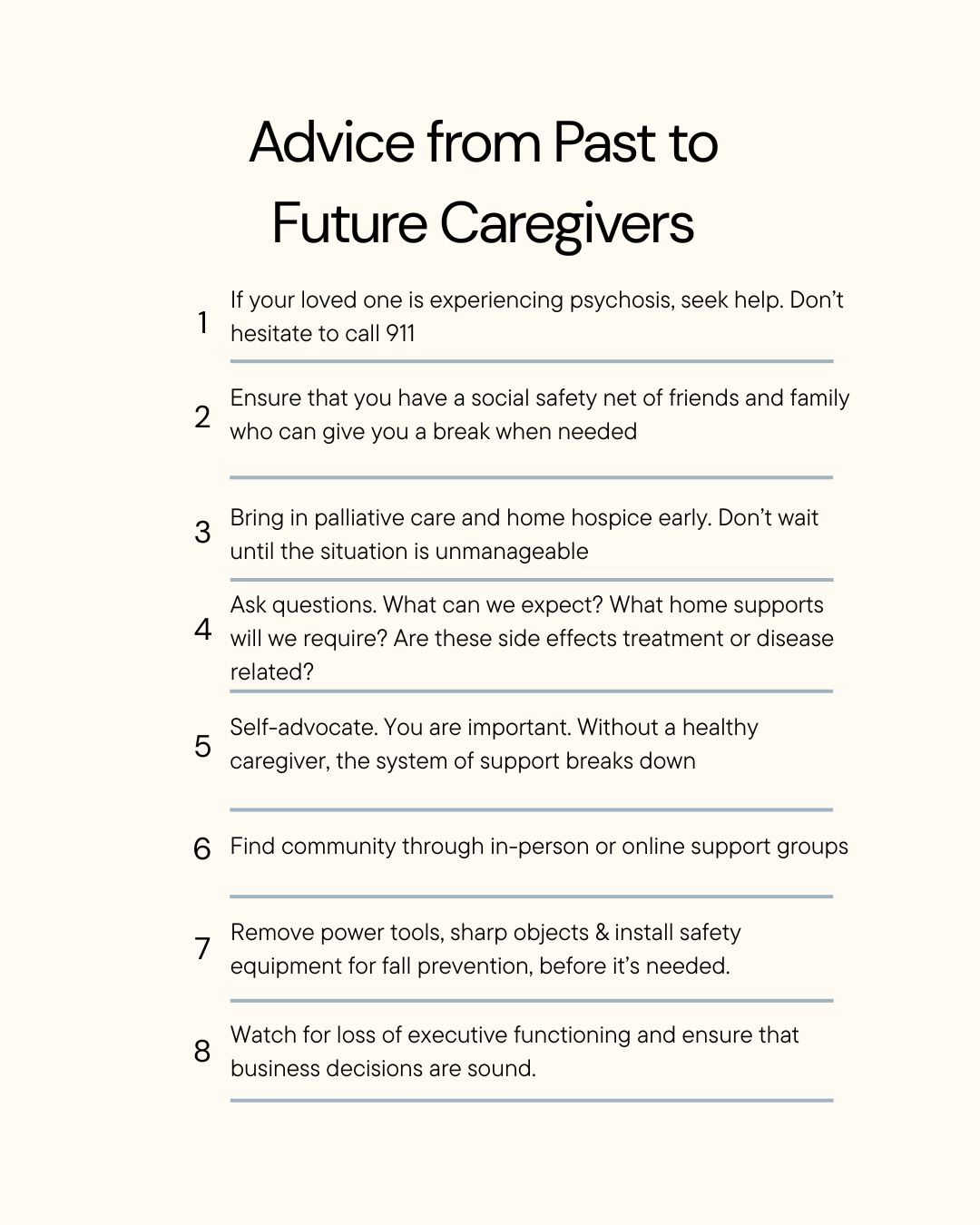
8 pieces of advice I wish my family had, when we took on the role of caregivers.
Conclusion
Throughout the 10 devastating months that my stepfather was a patient with glioblastoma, the medical system in British Columbia almost entirely covered the costs of his care and provided sufficient services to support my family. However, as Elizabeth felt, we were underprepared for what we would be taking on. There were months during his illness when my stepfather was of danger to himself and others.
While my stepfather had somewhat of an understanding as to the scope of potential symptoms that lay ahead, he became many versions of his original self. As the disease spread to new areas of his brain, he lost the ability to comprehend that his extreme volatility and erratic behaviour were severely impactful to the family. He had planned for MAID, to avoid an unpleasant ending, but lost all perspective until the very end. I believe that this was the crux of the escalating crisis in our family. Somebody of exceptionally high intelligence lost all self-awareness, and we were incapable of creating a safe environment for all concerned.
My stepfather also had several falls during the course of his disease, as he did not allow us to implement home safety care until it was too late. He only accepted a walker and wheelchair 48 hours before he passed away, and a hospital bed on the final day of his life. Had my family started the process of introducing hospice home-care practices for dementia-like symptoms and had gone into this journey with more information on how devastating the psychological changes would be, we may have had an easier time providing care for my stepfather. Through the lived knowledge and experiences discussed, it is also clear that the individual’s personality type can play a pivotal role in disinhibition and psychosis. However, pre-existing personality is also not a clear indicator. As discussed with Elizabeth, patients can have significant shifts in personality when the frontal lobe is impacted, causing them to behave in ways that are entirely out of character.
My stepfather was not alone. All GBM patients experience brutal physical and cognitive decline, with varying symptoms due to disease location. An unpleasant ending is all but inevitable. However, increased availability to the promising new treatments he desired may have extended or improved the quality of life for his final months. Improved symptom management might have allowed my family to have more quality time with him before he passed away, rather than witnessing him lose his sense of self. I hold hope that globally available advancements in GBM treatments may someday bring promise to patients and caregivers, so that fewer patients and families ever experience such a heightened sense of fear for their physical and/or psychological safety in the family home.
References
Au, T.H., Willis, C., Reblin, M. et al. (2022). Caregiver burden by treatment and clinical characteristics of patients with glioblastoma. Support Care Cancer 30, 1365–1375. https://doi.org/10.1007/s00520-021-06514-0
Bai, P., Fan, T., Sun, G., Wang, X., Zhao, L., & Zhong, R. (2023). The dual role of DNA repair protein MGMT in cancer prevention and treatment. DNA Repair, 123, 103449. https://doi.org/10.1016/j.dnarep.2023.103449
Gérain, P., & Zech, E. (2019). Informal Caregiver Burnout? Development of a Theoretical Framework to Understand the Impact of Caregiving. Frontiers in Psychology, 10, 466359. https://doi.org/10.3389/fpsyg.2019.01748
Government of Canada (January 1, 2026) Notice to industry: Aligned reviews between Health Canada and health technology assessment organizations. https://www.canada.ca/en/health-canada/corporate/transparency/regulatory-transparency-and-openness/improving-review-drugs-devices/notice-aligned-reviews-health-canada-health-technology-assessment-organizations.html
Liu, G., Cheung, W. Y., Feilotter, H., Manthorne, J., Stockley, T., Yeung, M., & Renouf, D. J. (2022). Precision Oncology in Canada: Converting Vision to Reality with Lessons from International Programs. Current Oncology, 29(10), 7257-7271. https://doi.org/10.3390/curroncol29100572
Malmström, A., Åkesson, L., Milos, P., Mudaisi, M., Bruhn, H., Strandeus, M., & Karlsson, M. (2021). “Do I want to know it all?” A qualitative study of glioma patients’ perspectives on receiving information about their diagnosis and prognosis. Supportive Care in Cancer, 29(6), 3339-3346. https://link.springer.com/content/pdf/10.1007/s00520-020-05846-7.pdf
Mason, W. P., Harrison, R. A., Lapointe, S., Lim-Fat, M. J., MacNeil, M. V., Mathieu, D., Perry, J. R., Pitz, M. W., Roberge, D., Tsang, D. S., Tsien, C., Zadeh, G., & Easaw, J. (2025). Canadian Expert Consensus Recommendations for the Diagnosis and Management of Glioblastoma: Results of a Delphi Study. Current Oncology, 32(4), 207. https://doi.org/10.3390/curroncol32040207
Ouyang, P., Wang, L., Wu, J., Tian, Y., Chen, C., Li, D., Yao, Z., Chen, R., Xiang, G., Gong, J., & Bao, Z. (2024). Overcoming cold tumors: A combination strategy of immune checkpoint inhibitors. Frontiers in Immunology, 15, 1344272. https://doi.org/10.3389/fimmu.2024.1344272
Van Gool, S. W., Makalowski, J., Fiore, S., Sprenger, T., Prix, L., Schirrmacher, V., & Stuecker, W. (2021). Randomized Controlled Immunotherapy Clinical Trials for GBM Challenged. Cancers, 13(1), 32. https://doi.org/10.3390/cancers13010032
Walker, E., Liu, J., Davis, F., Climans, S., & Yuan, Y. (2022). Brain tumour registry of Canada (BTRC): Survival report 2010–2017. Brain Tumour Registry of Canada (BTRC), A Surveillance Research Collaborative. https://btregistry.ca/2022-Survival-and-Prevalence-report/