


Jade Tran
Jade Tran is an international student from Vietnam who came to Canada in 2019. She is currently completing her Bachelor of Arts in Psychology at Capilano University. Her academic interests focus on human development and the ways early life experiences shape who people become.
Jade is especially passionate about working with and advocating for children, with a focus on creating supportive and nurturing environments for young individuals. She hopes to use her education to better understand how children grow, adapt, and develop.
The lights would go out early. After 7 p.m., the streets were quiet. Not the kind of quiet that feels peaceful, but the kind that feels controlled. People stayed inside because they had to. There were curfews, shortages, and a sense that life was still trying to recover from something that had already broken it apart.
This was what childhood looked like for my mother.
She was born in 1973 in Vietnam, just after the war ended. Though, the end of war did not mean stability. It meant rebuilding in a country that had been deeply affected economically, politically, and socially. There was no milk. Food was limited. Movement was restricted. As she described it, “After 7 p.m., the country was under curfew, and people were not free to move around” (Le, personal communication, 2026).
When I first heard these stories, they felt distant from my own life. It sounded like something from a history textbook, not something that shaped the person sitting in front of me. However, the more she spoke, the more I began to understand that her childhood was not just about hardship, it was about learning how to live within it.
Her education took place in conditions of scarcity. Schools lacked resources, and the quality of education was limited. She was not naturally a top student, but she worked hard to keep up. At the same time, she was already contributing to her family’s income at a young age. Unlike many students whose main responsibility is school, she had to balance studying with working, knowing that her efforts directly affected her family’s stability.
Inside the home, however, there was still structure. Her father was strict about education and deeply invested in her future. Even when he became older and physically weaker, he continued to emphasize the importance of learning. He repeatedly encouraged her to return to school and pursue higher education, even when working full-time seemed like the more immediate necessity. His expectations were clear, education was not optional, it was the path forward.
This discipline was not abstract. It showed up in specific ways. He monitored her relationships carefully and was highly protective of her future. At one point, he even asked her boyfriend to fill out a form about his personality, wanting to understand who she was involved with and whether he would be a good influence in her life. While this may seem unusual, it reflected a deeper intention, he was trying to create stability and protect her long-term future in an unstable environment.
After graduating high school, she temporarily stepped away from school to work and support her family. However, the value her father placed on education stayed with her. Eventually, she returned to her studies, entered law school, and after years of persistence, became a prosecutor. Her path was not linear or easy, but it was shaped by both responsibility and guidance.
Her story is not one of avoiding adversity, but of navigating it over time. The conditions she grew up in did not disappear. Instead, she adapted to them, step by step, through responsibility, persistence, and the structure provided by her father.

The author’s mother (in the middle) as a newly appointed prosecutor, reflecting the outcome of persistence and long-term effort.
The Way We Usually Understand Adversity
In psychology, adversity is often understood through the framework of Adverse Childhood Experiences (ACEs). These include experiences such as poverty, neglect, household instability, and exposure to violence. Research consistently shows that higher ACE exposure is associated with increased risk for negative health and psychological outcomes. The original ACE study by Felitti et al. (1998) found a strong relationship between childhood adversity and later-life conditions such as depression, substance use, and chronic illness. More recent research has extended these findings into early childhood. For example, Webster (2022) found that children with higher ACE scores had significantly increased odds of developmental difficulties.
These findings are important. They show that adversity has real and measurable effects. However, the way this research is often interpreted has led to a simplified narrative that adversity leads to dysfunction. Over time, “increased risk” has started to be understood as an “inevitable outcome.” That is where the issue begins because risk is not the same as certainty.
When Adversity Becomes Identity
One thing I started noticing while working on this topic is how easily adversity becomes a label. In both academic research and everyday conversations, people are often described in terms of what they went through. Some people are described as a trauma survivor, or someone with a difficult background. While these descriptions are not wrong, they can sometimes become the main way a person is understood. This is especially common with ACE research. Because the framework is so focused on identifying risk, it can unintentionally reduce people to their ACE score as if that number captures their entire developmental trajectory.
When I look at my mother, that kind of framing feels incomplete. If I only see her as someone who survived, I would miss everything else such as her discipline, her emotional control, her ability to adapt, and her persistence over time. More importantly, I would miss the fact that she is not defined by what happened to her. She is defined by what she did with it. This distinction matters because when adversity becomes identity, it limits how we see people, not just others, but also ourselves.
Another question that came up while writing this is, what do we actually mean when we say someone is “damaged” by adversity?
In research, damage is often defined through measurable outcomes such as mental health disorders, physical illness, or developmental delays. These are important indicators, but they do not capture the full range of human experience. Someone might not meet the criteria for dysfunction, but still carry emotional weight from their past. At the same time, someone might experience hardship and develop strengths that are not easily measured. This makes the idea of “damage” more complicated than it first appears.
In my mother’s case, she does not describe herself as damaged. She acknowledges the hardship, but she does not see it as something that limited her. Instead, she sees it as something that shaped her in both difficult and meaningful ways. This challenges the idea that adversity can be categorized simply as either harmful or beneficial. In reality, it is often both.
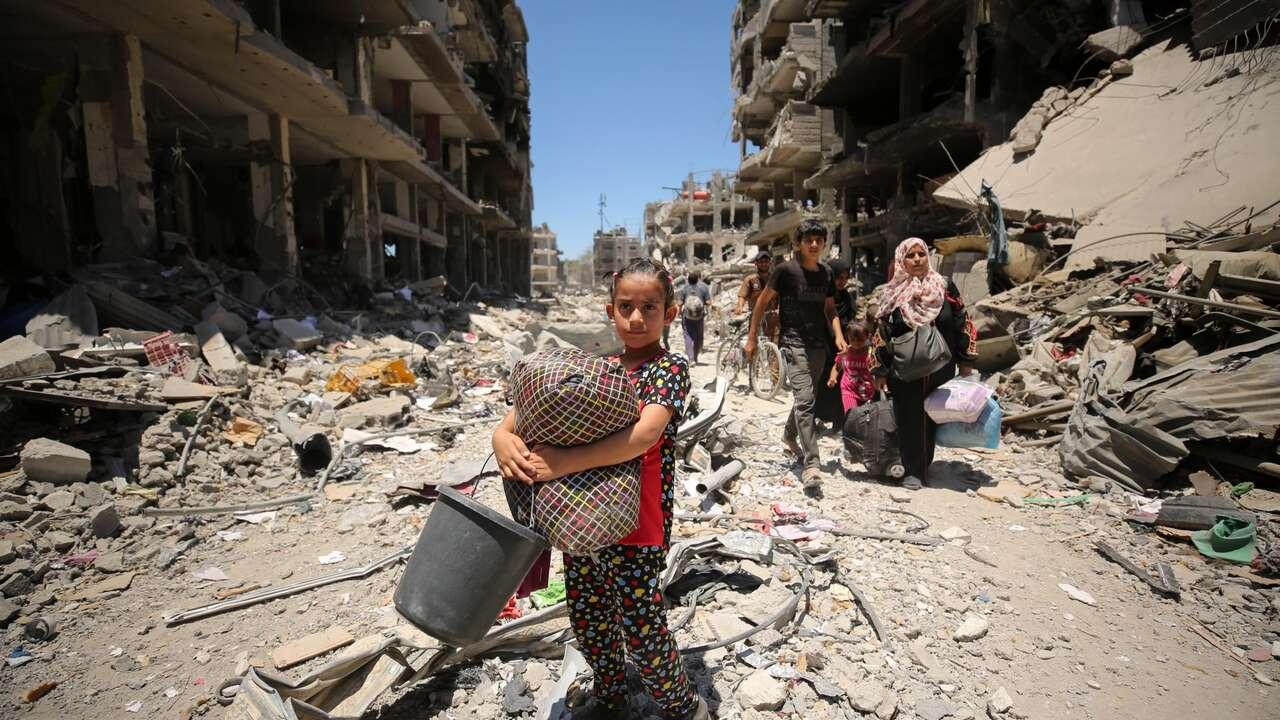
Children growing up in conflict-affected environments today, highlighting the ongoing reality of adversity and the importance of understanding resilience.
The Role of Relationships
One of the most important factors shaping development is not just adversity itself, but the relationships surrounding it. Attachment theory suggests that children who grow up with at least one stable and supportive caregiver are better able to regulate stress and develop a sense of emotional security. The National Scientific Council on the Developing Child (2015) emphasizes that supportive relationships can buffer the effects of adversity and promote resilience.
Looking at my mother’s story, this becomes clear. Yes, she grew up in a post-war environment. Yes, there was poverty and uncertainty. However, there was also her father who was consistent, disciplined, and deeply invested in her future. Even in hardship, there was care. Even in instability, there was structure.
Research supports this idea. Macfie et al. (2015) argue that even in situations where children take on early responsibility, the presence of a stable caregiver can prevent long-term dysfunction. This suggests that adversity does not act in isolation. It is shaped by the environment in which it occurs.
I also see these patterns reflected in how she parents me. She is strict when it comes to education and expectations, continuing the same emphasis her father placed on discipline and long-term success. At the same time, she creates space for individuality. For example, she allows me to express myself in ways that would typically be considered unconventional in Vietnamese culture, such as dyeing my hair or having piercings.
This balance between structure and freedom reflects the same combination she experienced growing up. It shows how resilience and values are not only developed individually, but also passed down across generations.
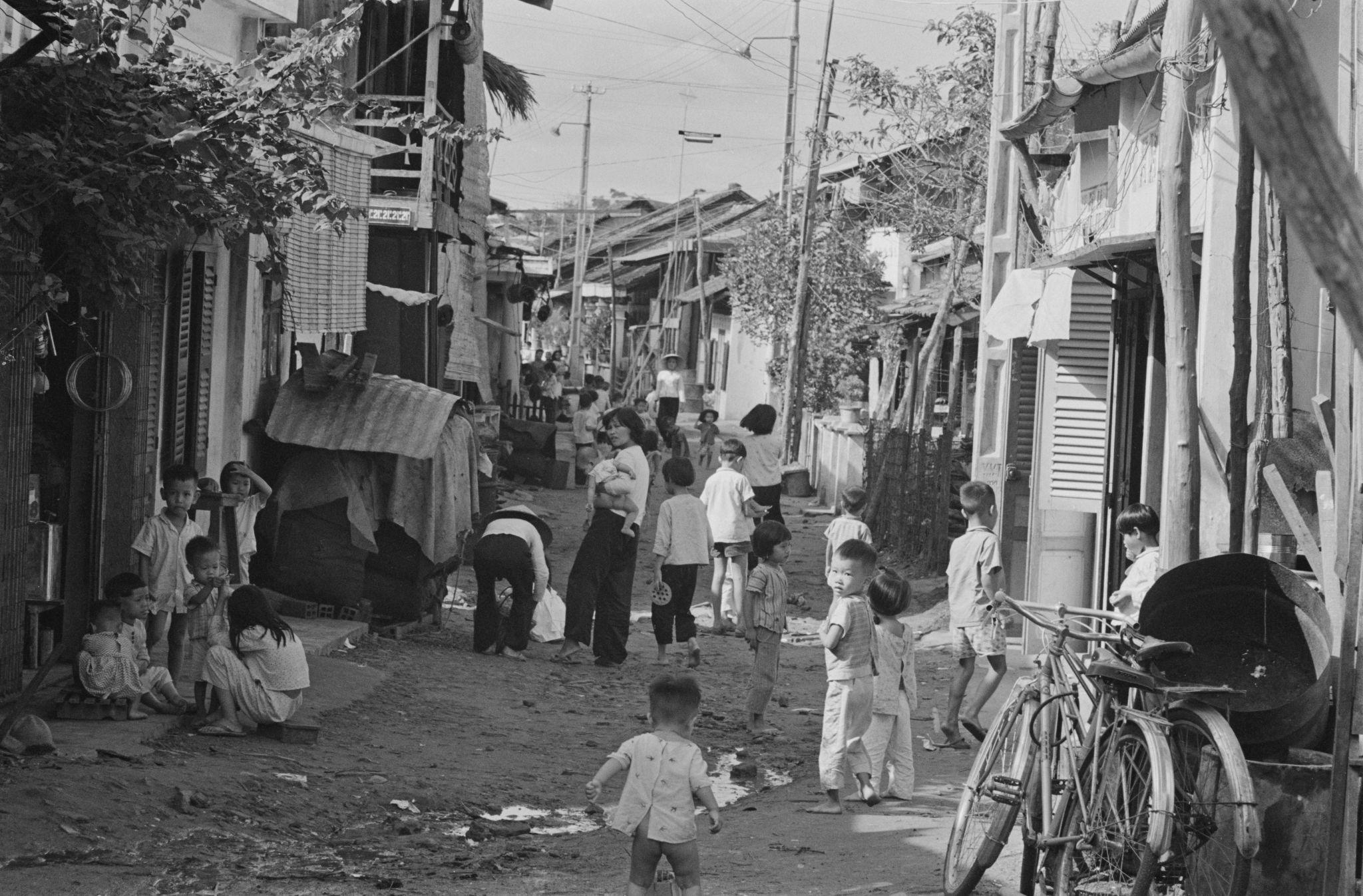
Daily life in post-war Vietnam, where economic challenges and social instability shaped childhood environments.
Individual Differences and Personality
Another important factor is that individuals do not respond to adversity in the same way. The Five-Factor Model of personality identifies neuroticism as a trait associated with emotional instability and sensitivity to stress (McCrae & John, 1992). Individuals who score higher in neuroticism tend to experience stronger emotional reactions, while those who score lower tend to remain more stable under pressure. Research by Campbell-Sills et al. (2006) found that resilience is negatively associated with neuroticism. In other words, individuals who are less emotionally reactive are often better able to cope with stress.
When my mother took a personality test, she scored low in neuroticism. She does not become easily overwhelmed. Instead, she approaches challenges with a sense of control and steadiness. Though, this finding does not mean her life was easy. It means she experienced it differently. That difference matters, because it shows that adversity alone cannot determine outcomes.
Her resilience is also visible in her life today. When my grandfather was 88 years old, he experienced a serious fall and was hospitalized. During that time, my mother managed multiple responsibilities at once. She worked a full-time job, took care of him during his recovery, and continued raising me, as I was only twelve years old at the time. Despite the emotional and physical demands of this situation, she remained calm and composed, focusing on what needed to be done rather than becoming overwhelmed.
After he passed away, I saw a different side of her. She grieved quietly, sometimes crying on her own, but she continued to maintain her responsibilities. At the same time, she made it a priority to regularly visit the place where we scattered his ashes in the ocean. This routine reflected both her emotional depth and her ability to continue moving forward. Her resilience was not the absence of emotion, but the ability to carry it while still functioning.

Newspaper coverage and a personal poem written by the author’s grandfather (on the left), representing his values, life experience, and lasting influence.
Responsibility, Meaning, and Growth
When I asked my mother whether taking on responsibility at a young age helped her later in life, she answered without hesitation, “Those challenges helped me mature and gave me strong resilience” (Le, personal communication, 2026). Her response reflects a perspective that is often missing from discussions of adversity. We tend to view early responsibility as something purely negative, and in many cases, it is. Her experience suggests that responsibility can also shape development in complex ways. She did not describe her childhood as purely damaging. Instead, she described it as something that contributed to her growth. This aligns with the idea of positive reappraisal, where individuals interpret difficult experiences in a way that gives them meaning. While adversity should not be romanticized, it is important to recognize that individuals are not passive in the face of hardship. They actively interpret and respond to their experiences.
Why This Matters Today
This issue remains highly relevant in today’s world. Many children continue to grow up in environments shaped by war, displacement, and instability. According to recent data from UNICEF, over 473 million children, nearly one in five globally, are currently living in areas affected by conflict, the highest level recorded in recent history. In addition, close to 50 million children have been displaced due to violence and war, often losing access to stable housing, education, and basic resources (UNICEF, 2024). In these contexts, adversity is not a single event, but an ongoing condition that influences daily life and development. The way we understand adversity, therefore, has real consequences for how we respond to these children not only at an individual level, but also in broader systems such as education, healthcare, and policy. If we assume that adversity inevitably leads to dysfunction, we risk approaching these individuals with lowered expectations, focusing primarily on their deficits rather than potential. This perspective can unintentionally reinforce limitations by treating children as already damaged, rather than as capable of growth.
However, if we recognize the complexity of development, we can take a more balanced and empowering approach. This means acknowledging adversity while also paying attention to protective factors that support resilience. Research consistently shows that stable relationships, particularly with caregivers or trusted adults, play a crucial role in buffering the effects of stress. In addition, opportunities for skill-building, education, and social support can significantly influence long-term outcomes. By shifting the focus from what is lacking to what can be strengthened, we move toward an approach that not only addresses hardship but also supports development in a more comprehensive way.

The author’s mother in the present day during her visit to Canada where her daughter studies.
Conclusion
Adverse childhood experiences matter. Research clearly shows that they increase the risk of negative outcomes. However, risk does not mean inevitability.
My mother’s story demonstrates that adversity and resilience can exist together. Her experiences of growing up in post-war Vietnam involved hardship, responsibility, and instability. Yet, these experiences did not lead to dysfunction. Instead, they contributed to the development of strength, determination, and success. Recognizing this complexity allows for a more thorough understanding of development. It challenges the idea that adversity determines outcomes and highlights the role of relationships, personality, and meaning. Adversity may shape a life, but it does not have to define it.
This shift in perspective also changes how we think about responsibility as a society. If we assume that adversity leads to dysfunction, then interventions may focus only on repair, or trying to fix what is assumed to be broken. However, if we recognize that individuals are shaped by both risk and protective factors, then support can be oriented toward strengthening what already exists. This includes investing in stable relationships, creating environments that promote emotional security, and recognizing individual differences in coping and resilience. It also requires moving away from viewing people as defined by their past, and instead understanding them as individuals whose development is still unfolding. In this way, acknowledging complexity is not just theoretical, but it has real implications for how we approach education, mental health, and social support systems.
References
Campbell-Sills, L., Cohan, S. L., & Stein, M. B. (2006). Relationship of resilience to personality, coping, and psychiatric symptoms in young adults. Behaviour Research and Therapy, 44(4), 585–599. https://doi.org/10.1016/j.brat.2005.05.001
Felitti, V. J., Anda, R. F., Nordenberg, D., Williamson, D. F., Spitz, A. M., Edwards, V., Koss, M. P., & Marks, J. S. (1998). Relationship of childhood abuse and household dysfunction to many of the leading causes of death in adults. American Journal of Preventive Medicine, 14(4), 245–258. https://doi.org/10.1016/S0749-3797(98)00017-8
Macfie, J., Brumariu, L. E., & Lyons-Ruth, K. (2015). Parent–child role confusion: A critical review of an emerging concept. Developmental Review, 36, 34–57. https://doi.org/10.1016/j.dr.2014.11.002
McCrae, R. R., & John, O. P. (1992). An introduction to the five-factor model and its applications. Journal of Personality, 60(2), 175–215.
National Scientific Council on the Developing Child. (2015). Supportive relationships and active skill-building strengthen the foundations of resilience. Harvard University.
Not the new normal’ – 2024 “one of the worst years in UNICEF’s history” for children in conflict. (2024). UNICEF Canada : For Every Child. https://www.unicef.ca/en/press-release/not-new-normal-2024-one-worst-years-unicefs-history-children-conflict
Webster, E. M. (2022). The impact of adverse childhood experiences on health and development in young children. Global Pediatric Health, 9. https://doi.org/10.1177/2333794X221078708