


Jessie Saunders
Jessie Saunders (she/her) is completing her Bachelor of Science Degree in Environmental Science at Capilano University. Through her undergraduate studies, she has developed a strong passion for the environment, with a particular interest in ecology and marine ecosystems. Jessie’s recent academic work in microplastics has strengthened her commitment to understanding human impacts on the environment and she plans to pursue a career in environmental science after graduation.
Standing on one of the Burrard Inlet’s many beautiful beaches, the ocean appears pristine. However, beneath the surface, invisible plastic particles move through every aspect of the marine environment, from kelp, to fish, and eventually into humans. As of right now, over 170 trillion microplastic particles are estimated to be in the world’s oceans (Plastic Pollution Coalition, 2025). That means that there are approximately 21,000 plastic particles in the ocean for every person on the planet (Davison, 2024). While this itself is alarming, these tiny pieces of plastic are not only found in the ocean but have also been detected in drinking water, human organs, and even human brain tissue (Main, 2024).
While this problem continues to grow, research still has not uncovered whether microplastics in the marine environment undergo bioaccumulation, biomagnification, or both, or neither. Current research suggests that microplastics do not show clear evidence of biomagnification in the marine environment but instead tend to bioaccumulate in organisms of lower trophic levels (Miller et al., 2020). Microplastics accumulate more in lower-trophic-level animals mainly due to species-specific biological traits, and do not transfer significantly to predators because of where they collect in the body. Although the full implications remain uncertain, this accumulation of plastic at the base of the food chain threatens ecosystem stability and human health, emphasizing the need for continued research and policy action in the Burrard Inlet.
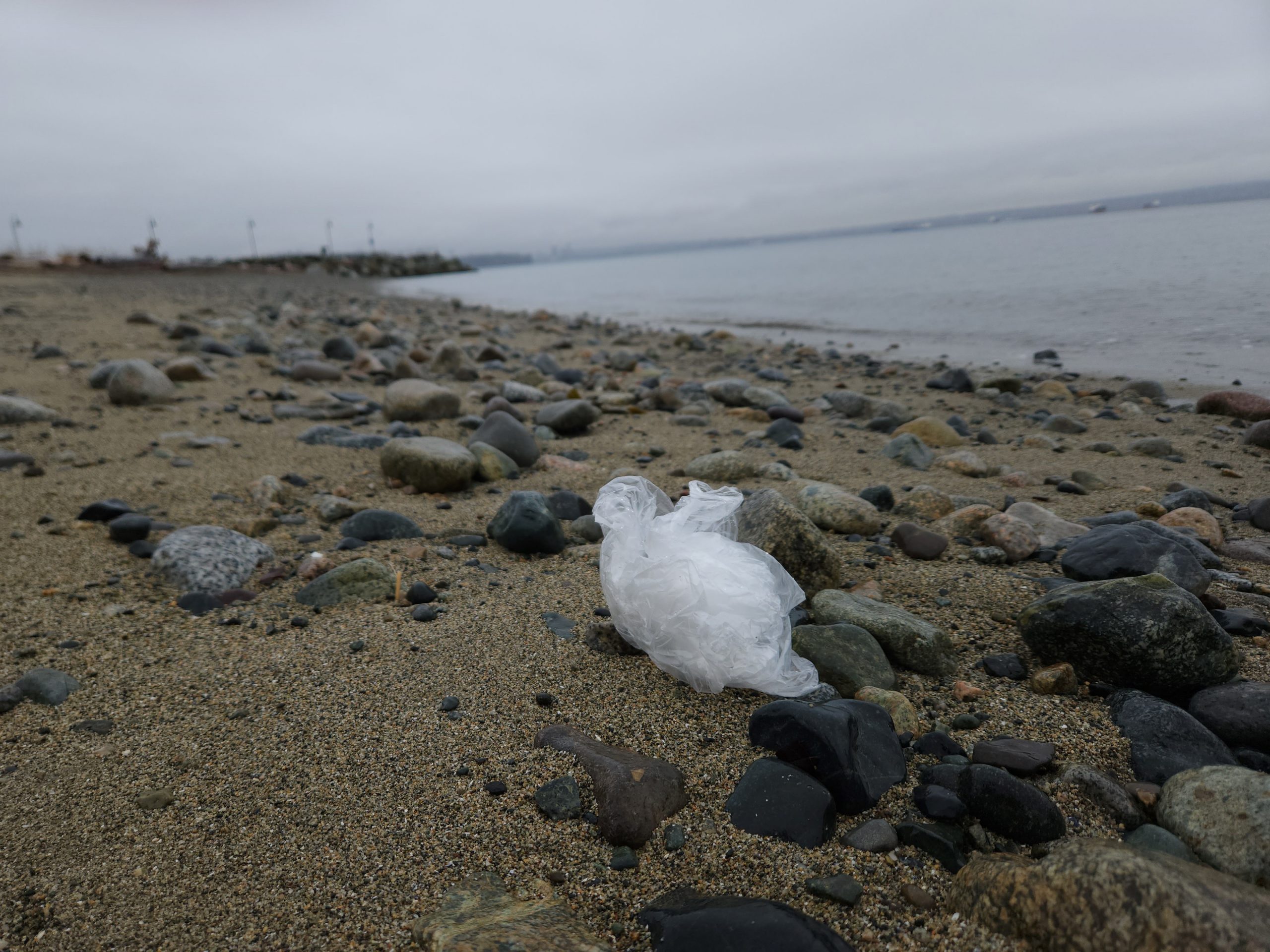
Litter along the shore of the Burrard Inlet (image taken from Dundarave Beach). At first glance, many local beaches appear clean. However, pieces of plastic debris can be found everywhere and often blend into sand, rocks, and seaweed. Visible debris is only a small part of the problem, as the real threat comes from miniscule pieces of plastic that are rarely visible to the naked eye. Seemingly harmless plastic bags or bottles gradually break down and can fragment into microplastics, contributing to already polluted waters. Within beach sediment and ocean waters, countless microplastic particles accumulate and pose long-term risks to marine life and the stability of the food web.
What are Microplastics?
Microplastics can be defined as plastic particles smaller than five millimeters in size (Duis & Coors, 2016). Microplastic particles are ubiquitous in the marine environment and are continually released into waterways by human activities (Duis & Coors, 2016). Microplastics have high resistance to degradation, so once they enter the environment, they remain there for a very long time, taking hundreds to thousands of years to fully decompose (National Geographic Society, 2023). An area of ongoing research and debate in the world of microplastics is how these pieces of plastic move through marine food chains. A fundamental question remains unanswered: do microplastics biomagnify in the oceans? Biomagnification occurs when a substance accumulates in an animal and is then transferred to its predator when that animal is eaten. This results in a greater concentration of this substance in animals higher up in the food chain (Covernton et al., 2022). Bioaccumulation, while it may sound similar, refers to the gradual buildup of a substance within a single organism (Covernton et al., 2022). These two concepts are mainly used to describe the movement of dissolved chemicals, such as mercury, but have recently been applied to microplastics as well (Miller et al., 2020). However, it is not clear whether physical plastic particles, even microscopic ones, behave in the same way as soluble substances (Miller et al., 2020). Regardless, microplastic movement up the food chain can have direct consequences on ecosystem stability and poses a risk to higher-trophic-level species, including humans. For these reasons, it is important to understand exactly how microplastics transfer across trophic levels in an ecosystem.
Impact of Microplastics on Marine Ecosystems
Microplastics can have significant impacts on marine ecosystems, affecting biogeochemical cycles, producers, and organisms of all trophic levels (Guzzetti et al., 2018). When ingested, microplastics can cause numerous physiological complications in marine organisms, primarily due to their accumulation within the digestive tract and tissues as well as their ability to cause blockages (Guzzetti et al., 2018). This has been shown to decrease feeding in affected animals, leading to reductions in growth, lower reproductive rates, and increased susceptibility to disease. Prey populations then decline, leaving predators with less available food, which can lead to switches in diet and predator population declines (S. Wang, personal communication, Nov 10, 2025). While microplastics themselves do not move up trophic levels, these impacts can create a ripple effect that end up disrupting the entire food chain. Microplastics can also absorb metals, additives, and other harmful chemicals present in the water (Guzzetti et al., 2018). The ingestion of harmful chemicals associated with microplastics can disrupt activity and feeding behaviours, alter immune system function, and negatively affect survival, development, and reproductive success (Guzzetti et al., 2018).
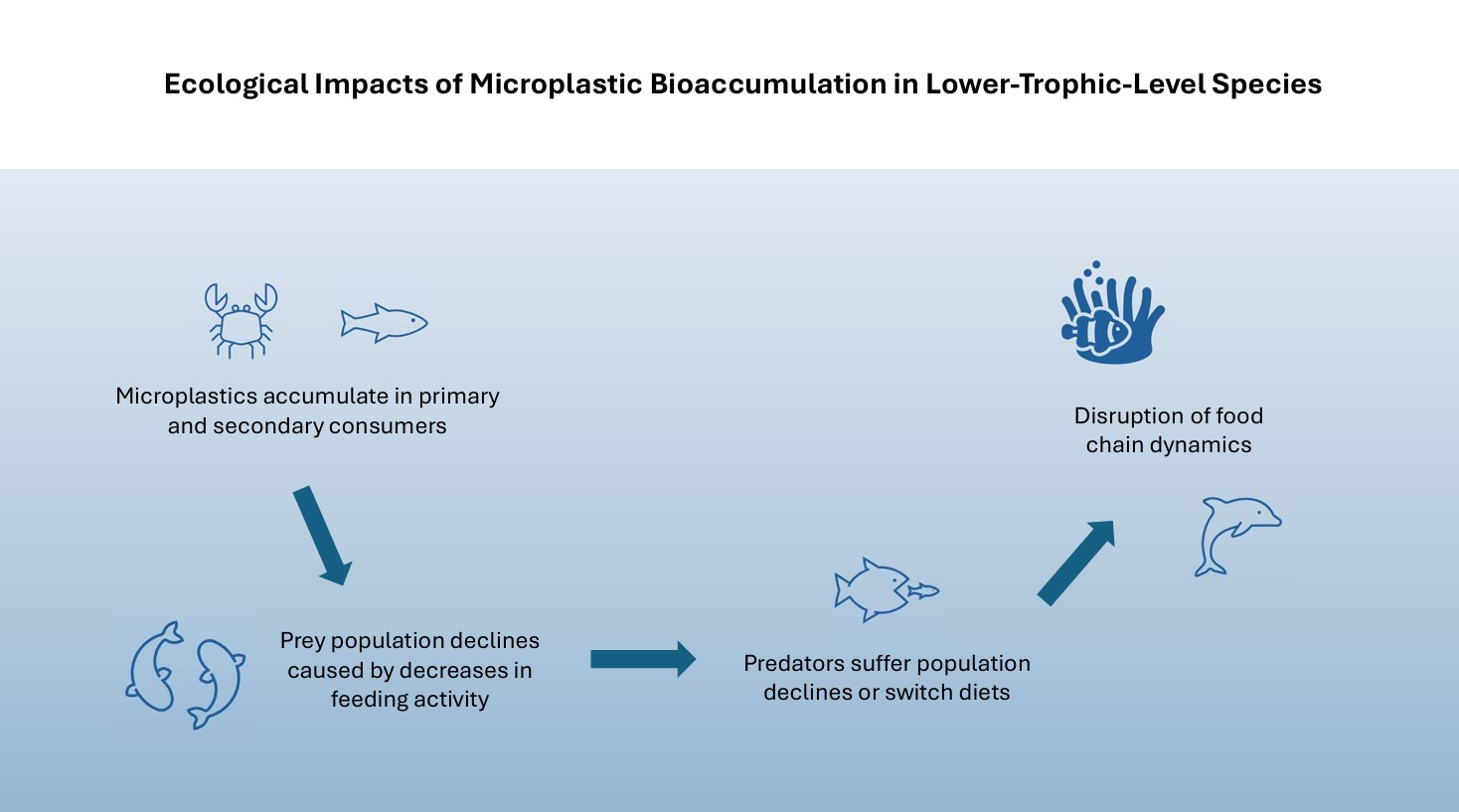
The impacts of microplastic bioaccumulation in lower-trophic-level organisms. Even though microplastics do not move up trophic levels through biomagnification, they can still disrupt the stability of marine food webs. Microplastics accumulate most in primary and secondary consumers, where they can cause blockages and impair feeding, growth rates, and overall health. These effects can lead to population declines in prey species, which can in turn affect the predators that rely on them. As food becomes less available, predators may be forced to switch diets or experience population declines of their own. Such shifts can alter food chain dynamics and can reduce survival and reproductive success in predator populations.
The Burrard Inlet
As someone who grew up in North Vancouver, I always saw the Burrard Inlet as natural and full of life, and it was a place where I was able to learn directly from the environment. Living so close to both the forest and the ocean established in me a respect and love for the environment from a very young age. The Burrard Inlet is home to the Tsleil-Waututh people, whose name means “People of the Inlet.” My views on the environment have been heavily influenced by First Nations’ knowledge. I attribute much of this to my elementary school in Deep Cove, which integrated teachings from Tsleil-Waututh and Squamish Nations into daily learning. It was not until I explored microplastics during my studies at Capilano University that I realized just how polluted our local waterways are. The Burrard Inlet is an important ecosystem within the Salish Sea and is an area of high biodiversity. This area is also heavily influenced by human activity, including land-use changes, shipping activities, industry, and urban development. Because of these impacts, the health and diversity of the Burrard Inlet’s marine ecosystem have been deteriorating, with microplastics being a major concern.
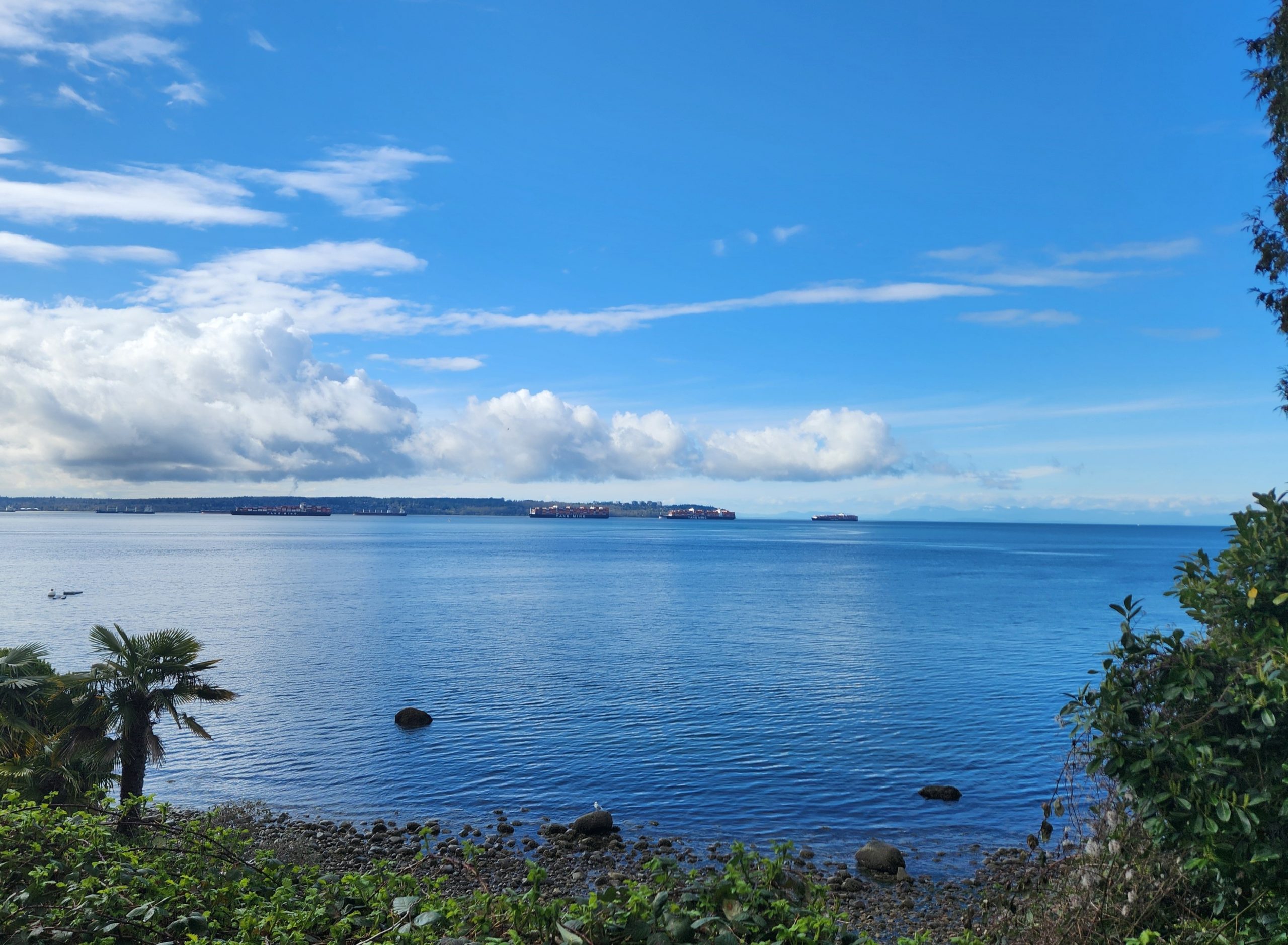
View of the Burrard Inlet from West Vancouver. This image provides a wide view of the Burrard Inlet, the central focus of this article. While there are many natural elements within the landscape, including the trees and water, the several cargo ships are hard to miss. Urban neighborhoods, industrial facilities, and shipping routes line the shores, replacing what was once a rich and abundant ecosystem. With development extending all the way to the water’s edge, pollution from wastewater and runoff enters the Inlet continuously. This image illustrates how a landscape that looks full of nature from afar carries a long history of colonization and ecological degradation.
Before European colonization, the inlet consisted of clean waters and productive ecosystems. Under the page Restoring a Healthy Inlet on their website, the Tsleil-Waututh Nation refer to this natural beauty saying: “There was a richness. There was abundance” (2023). The Tsleil-Waututh people survived through sustainable hunting and land-use practices while showing respect to the inlet that provided for them (Tsleil-Waututh Nation, 2023). However, over the past two hundred years, the Burrard Inlet has changed dramatically due to colonization and urbanization. “Key marine resources in Burrard Inlet were wiped out, contaminated, or made inaccessible. Natural areas were built over and paved. Our economy was shattered” report the Tsleil-Waututh Nation (2023). Recent reports by the Tsleil-Waututh Nation (2023) reveal just how drastically the inlet has changed from 1792 to 2020. Over seven hundred different contaminants were identified in the waters and “1,214 hectares of intertidal and subtidal areas have been lost to development and change, including more than half of the inlet’s intertidal areas” (Tsleil-Waututh Nation, 2023). In addition to industry presence, urban and residential areas introduce countless contaminants into the Burrard Inlet through runoff and wastewater (Tsleil-Waututh Nation, 2023). This devastating pollution has severe implications for the Tsleil-Waututh people and affects their right to live and harvest food from the inlet (Tsleil-Waututh Nation, 2023). Many culturally important species that they relied on, like herring, halibut, and sturgeon, have been essentially eradicated from the Burrard Inlet (Vanderdeen, 2025). By failing to develop effective mitigation measures against local pollution, we risk losing even more species and vital ecosystems that are important to the Tsleil-Waututh people and to everyone who calls the Burrard Inlet home.
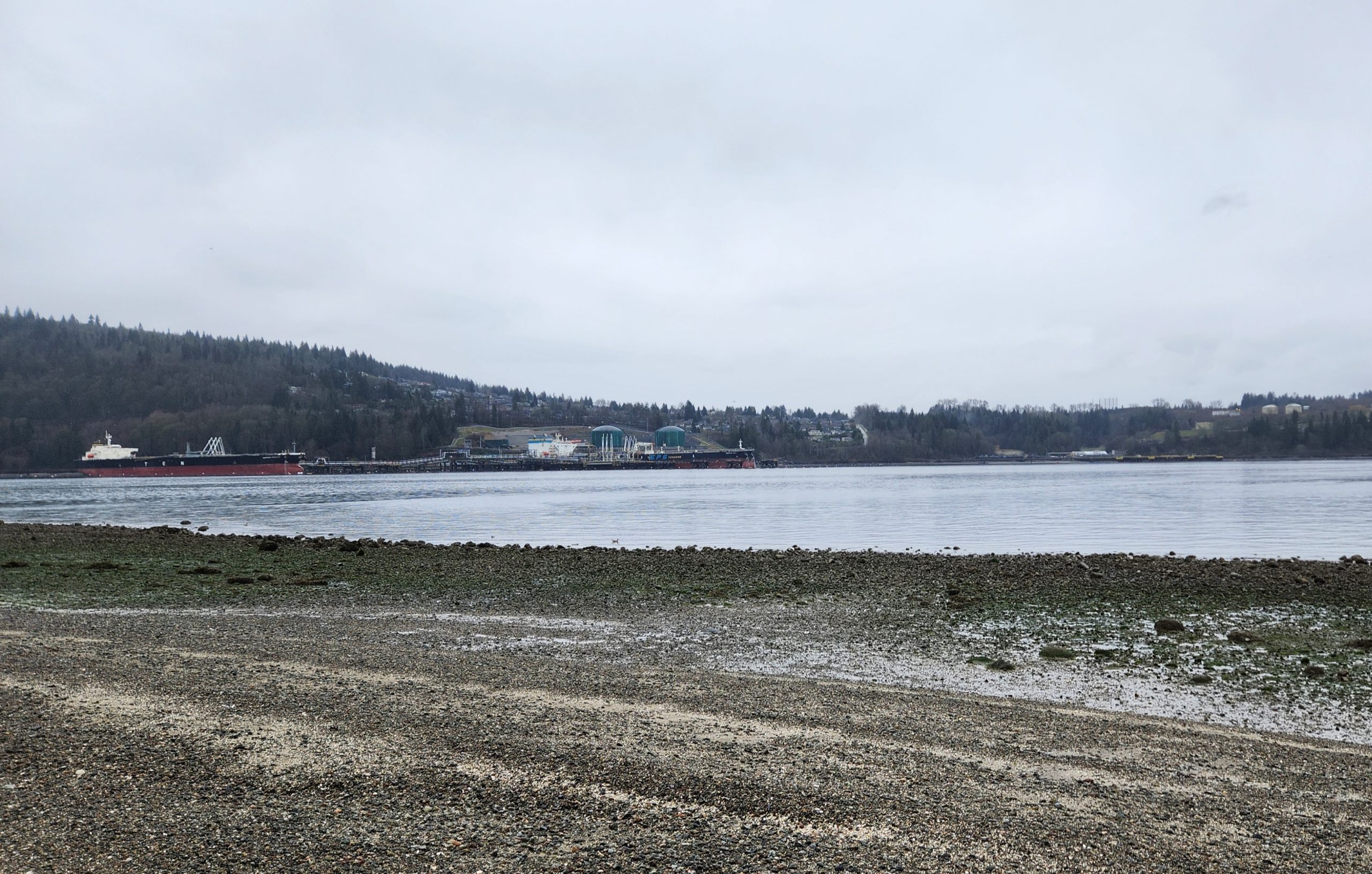
Image taken from the beach at Cates Park/Whey-ah-Wichen, looking across the Burrard Inlet towards an industrial facility. Cates Park is known as a peaceful, recreational place where people come to connect with nature, yet this view reveals the extent of industry that shapes the Burrard Inlet. Right across the water, there are numerous industrial facilities that contribute to ongoing pollution in these waters. While visitors enjoy Cates Park, it is hard to ignore the factories staring back at you. Located on the unceded territories of the Tsleil-Waututh and Squamish Peoples, this landscape highlights how colonization and industrial development have damaged Indigenous waters and their cultural relationships with the inlet.
Sources of Microplastics in the Burrard Inlet
There are many ways that microplastics can enter marine environments, with human activity and wastewater being the main contributors. In the marine environment, fibers are usually the dominant type of microplastic, with the most common sources being synthetic textiles and clothing (Noël et al., 2022). The majority of these microfibers are released from textiles when they are washed in washing machines (Noël et al., 2022). Microfibers end up in the marine environment after they are released into wastewater, which then flows into rivers and streams, and eventually the ocean (Noël et al., 2022). Most wastewater treatment facilities efficiently filter out the majority of microplastics before releasing them into the environment (Duis & Coors, 2016). However, as Stephanie Wang from Ocean Wise explained, “[Wastewater treatment plants] have an efficiency of about ninety-five percent, which means they are still releasing five percent. If you are releasing five hundred megaliters [of wastewater], then you are still looking at thousands of microplastic particles going out daily” (personal communication, Nov 10, 2025). Currently, there are twenty-one facilities that are authorized to dump wastewater into the Burrard Inlet without removing all contaminants (Cruickshank, 2024). Stormwater runoff is another major source of microplastic pollution in the marine environment (Rosso et al., 2024). Especially in Vancouver, where storm events with heavy precipitation are common, storm drains can overflow, allowing wastewater to enter the ocean with very little treatment (S. Wang, personal communication, Nov 10, 2025).
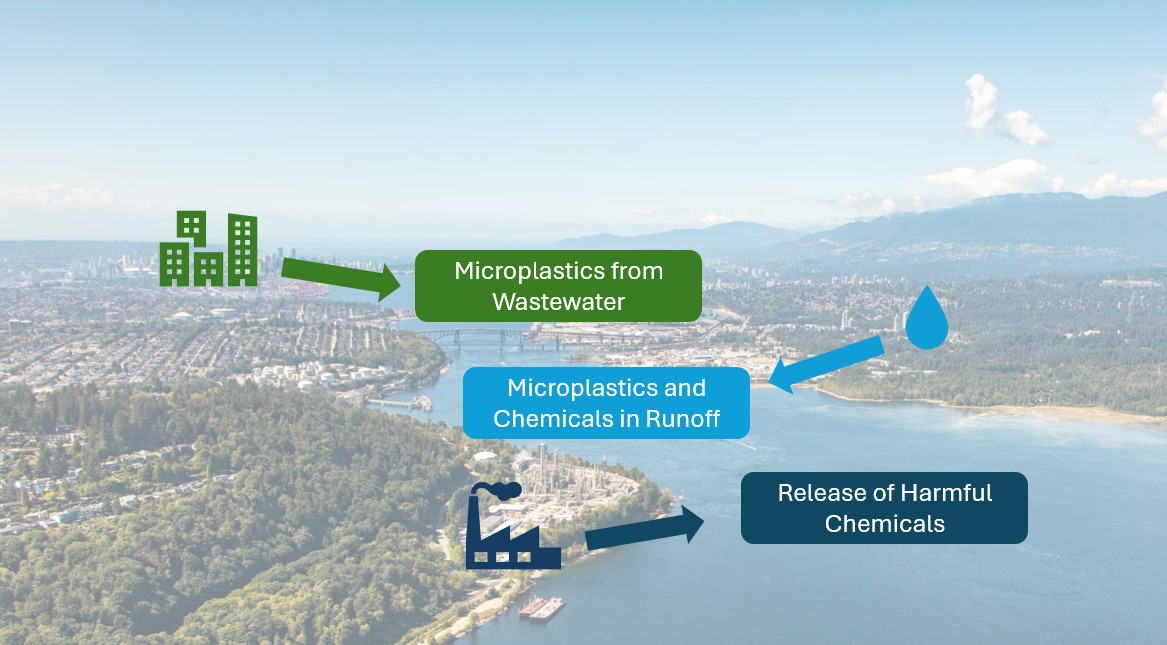
The major pathways through which microplastics and other pollutants enter the Burrard Inlet. Wastewater from urban areas is responsible for the majority of microplastic release into the marine environment, much of it originating from microfibers released from washing clothes. Stormwater runoff introduces additional microplastic particles along with chemicals washed from roads and households, especially during heavy rainfall events. Industrial activity along the inlet’s shores contributes further contamination through the release of harmful chemicals that microplastics are able to absorb. Together, these inputs create a continuous flow of pollution into the Burrard Inlet, influencing water quality and the overall health of local ecosystems.
(Background image from Port of Vancouver, 2025, https://www.portvancouver.com/article/new-port-vancouver-navigation-aids-enhance-marine-traffic-safety-and-fluidity-eastern)
While industry plays a major role in water pollution in the Burrard Inlet, it is more responsible for releasing harmful chemicals into the ocean rather than the direct release of microplastics. Stephanie from Ocean Wise elaborated on this and explained: “For industry, chemical contaminants are the big one. Plastic is usually coming from waste management and people’s behaviour, like littering, and the use of single-use plastics” (personal communication, Nov 10, 2025). However, as mentioned above, microplastics are able to absorb chemicals present in the water, adding an additional concern for the Burrard Inlet. Industrial activity along the Burrard Inlet is likely intensifying the ways that microplastics already impact the local marine ecosystem.
Do Microplastics Biomagnify in the Oceans?
Evident in literature is that microplastics do not show clear evidence of biomagnification. One of the main reasons scientists believe that microplastics are not biomagnifying in the marine environment is that plastic does not behave or interact with marine organisms in the same way as dissolved chemicals, which is what the term biomagnification is mainly used for (Miller et al., 2020). In other words, microplastics “generally only come into contact with body cavities designed to pass material (i.e. gills or gastrointestinal tract) and do not readily absorb into the tissues of animals” (Miller et al., 2020, p. 18). Microplastics can move into different tissues and organs; however, it is a much slower process compared to chemicals. Accordingly, most microplastics that are ingested are excreted quickly and do not remain in the digestive tract for long. For these reasons, microplastics do not transfer efficiently from prey to predator, nor do they accumulate up the food chain. Instead, microplastics appear to accumulate more in animals lower in the food chain. Research by Miller et al. (2020) suggests that microplastics accumulate most in primary consumers, such as zooplankton, oysters, and mussels, and secondary consumers, such as large fish, sea turtles, bivalves, and arthropods. This pattern is “strongly linked with feeding strategies of marine species,” particularly filter feeders that capture small particles from the water column (Miller et al., 2020, p.18).
However, some studies suggest that microplastics can, in fact, transfer across trophic levels. A review article by Nelms et al. (2018) suggests that biomagnification may be a pathway for microplastic movement, particularly in “species whose feeding ecology involves the consumption of whole prey” (p. 999). However, much of this research was conducted in laboratory environments, and how these findings translate to the natural environment remains unclear. Altogether, these findings show that while microplastics likely do not move up the food chain the same way that chemicals do, they still accumulate in organisms in ways that require further research.
Microplastic Bioaccumulation in the Burrard Inlet
What does this mean for the food chain in the Burrard Inlet? Local research is consistent with studies from other regions and shows that microplastics do not move up trophic levels in the Burrard Inlet but instead accumulate lower in the food chain. A local study by Covernton et al. (2022) assessed how microplastics accumulate in marine food webs at three locations on southern Vancouver Island. This study concluded that “bioaccumulation factors for microplastics in digestive tracts decreased with trophic position, suggesting several orders of magnitude higher bioaccumulation for lower-trophic-level than higher-trophic-level animals” (Covernton et al., 2022, p. 17). This means that microplastics accumulate within every major trophic level but do not move significantly between them. In agreement with similar studies, Covernton et al. (2022) found evidence that ecological traits like suspension feeding and body size influence microplastic accumulation in the digestive tracts of animals lower in the food chain. Overall, findings indicate that “the movement of microplastics through marine food webs is facilitated by species-specific mechanisms, with contamination susceptibility a function of species biology, not trophic position” (Covernton et al., 2022, p. 1). As a result, lower-trophic-level animals are more exposed to microplastic pollution and are therefore at the greatest risk of negative health impacts. This impact is likely amplified at more urban locations, like the Burrard Inlet, where contamination levels are higher due to increased human activity.
Health Implications for Humans
The subject of microplastic biomagnification is crucial for understanding how microplastics enter the human body. Even though microplastics do not biomagnify, humans are still at risk. If species of fish and shellfish (primary and secondary consumers) are experiencing higher levels of microplastic accumulation, humans may be ingesting more microplastics than we realize. These are species that are often eaten whole by humans, including the tissues where microplastics tend to accumulate the most. The fact that microplastics do not biomagnify does not mean that humans are in the clear but instead changes which foods might provide the highest exposure. However, a key question remains: “How are the microplastics that we ingest affecting our health?” We know that microplastics have been found in several human organs and that we consume them daily through drinking water, food and even the air (Perkins, 2025). Scientists know that microplastics are present in humans and that they may have certain effects, but few of these impacts have been proven. A big complication is that it is difficult to isolate a direct consequence of microplastic contamination in the body because of the many different factors influencing human health. Additionally, researching a pollutant along with its specific health impacts requires long-term clinical trials to yield conclusive results (S. Wang, personal communication, Nov 10, 2025). Continued research into where microplastics originate and how they enter the environment will help us better understand how humans are being impacted.
Microplastic Conservation in the Burrard Inlet
Local conservation organizations, like Ocean Wise, offer a hopeful outlook for the future of the Burrard Inlet. I was fortunate to meet with Stephanie Wang, the manager of the Ocean Wise plastics lab. During a tour of their lab facilities at the Pacific Science Enterprise Center, Stephanie provided insight into how they are tackling local microplastic pollution. Microplastics are everywhere in the marine environment, making mitigation and conservation a significant challenge. Because household and urban waste are the largest sources of microplastics in the environment, this is where Ocean Wise focuses its efforts. Stephanie explained Ocean Wise’s approach to microplastic mitigation: “We always say, what can we do to remove microplastics? But the focus is not removing it, the focus is actually going to the source, how we can stop it from the beginning. ‘Close the tap’, that’s the metaphor we always use” (personal communication, Nov 10, 2025). Ocean Wise has partnerships across multiple sectors to work toward closing the tap and limiting the number of plastic particles released into the environment.
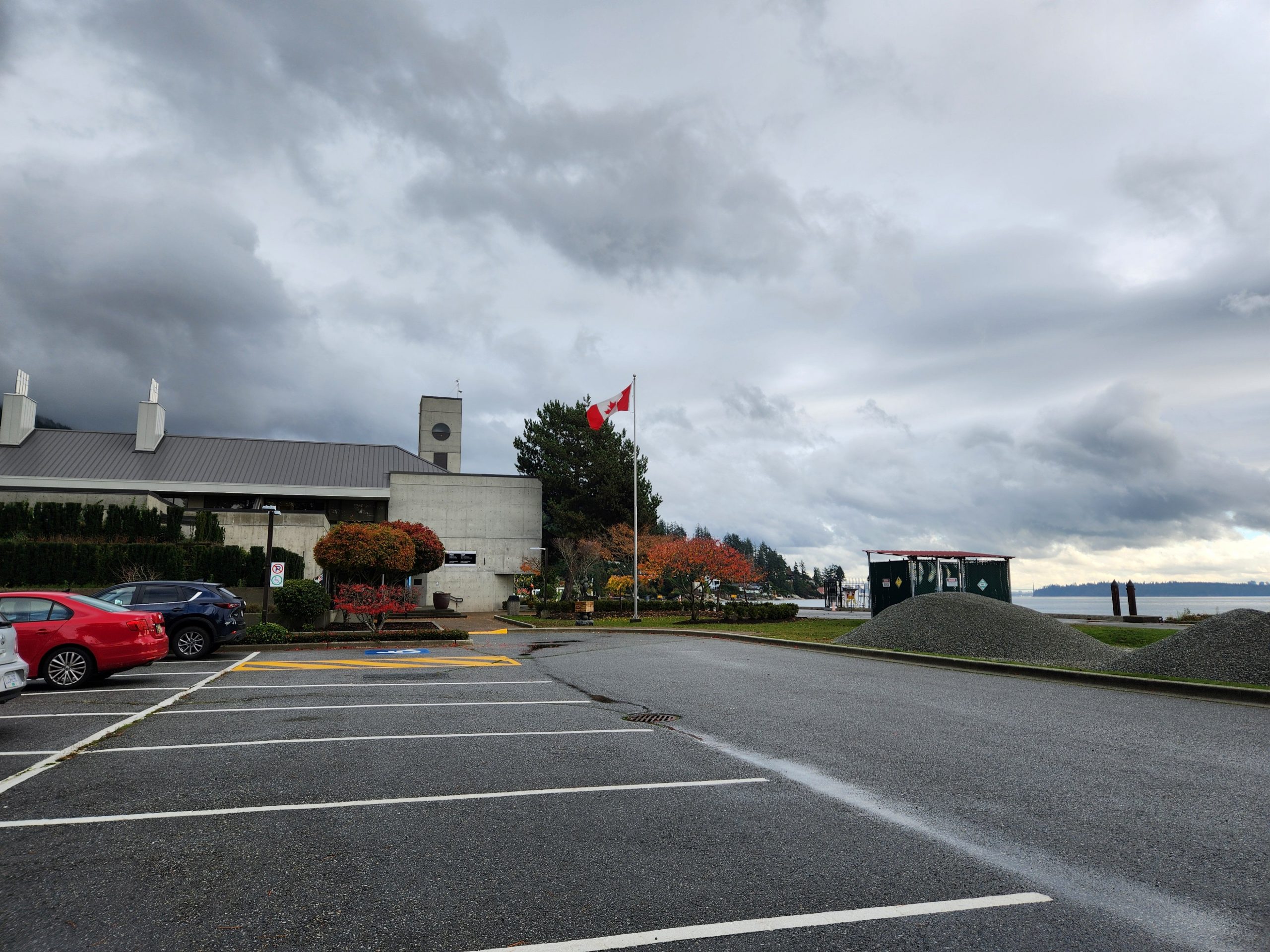
Pacific Science Enterprise Center (PSEC), located on Marine drive in West Vancouver. With its prime oceanfront location, PSEC focuses much of its work on aquatic ecosystems and improving local marine environments. The facility provides laboratory spaces to research organizations such as Fisheries and Oceans Canada (DFO), the Coastal Ocean Research Institute (part of Ocean Wise), and the BC Centre for Aquatic Health Sciences. By bringing together government agencies, academic researchers, and Indigenous partners, PSEC supports collaborative research aimed at advancing scientific knowledge on ocean science, aquaculture, and ecosystem health. It is also home to Ocean Wise’s Plastics lab, where researchers study microplastic pollution and develop promising solutions for the microplastic crisis.
One of Ocean Wise’s major research initiatives focuses on the textile industry and household laundry machines. During our conversation, Stephanie mentioned that Ocean Wise has partnered with clothing brands like Patagonia and Arc’teryx and explained: “They send us hundreds of different types of textile swatches, and we look at how those behave during the laundry process” (personal communication, Nov 10, 2025). Another way to reduce microfiber release is to target laundry machines directly. “Laundry filters really work,” explained Stephanie, “It works really well, they remove ninety percent of the microfibers created every washing cycle” (personal communication, Nov 10, 2025).
Ocean Wise also devotes many resources to education in order to raise public awareness of the microplastics crisis. Information and data acquired from their research and collaborations with industry partners, apparel companies, designers, and innovators allow them to share their knowledge with the local community. “We focus a lot on youth,” said Stephanie, “we have programs that cover from kindergarten to university, and we also have programs for eighteen- to thirty-year-olds” (personal communication, Nov 10, 2025). Stephanie emphasized how important education is in bringing this issue to light and noted that their awareness campaigns genuinely make a difference (personal communication, Nov 10, 2025). “I find that a lot of people in Vancouver are really connected to their environment,” Stephanie shared (personal communication, Nov 10, 2025). “This is our neighborhood, our mountains, our water, so we want to protect it. I see a lot of that awareness from the public” (S. Wang, personal communication, Nov 10, 2025). My visit to the Ocean Wise lab made it clear that research, while incredibly important, is not enough on its own. Research on microplastics needs to be paired with public education and getting the local community involved. Hearing Stephanie describe their conservation strategy, starting at the source, shifted the way I thought about solutions to microplastic pollution. It made me think about how I may be contributing to microplastic pollution in the Burrard Inlet and how I, and others, can reduce our impacts.
The Need for Further Research
Although there is still not enough research to prove that microplastics biomagnify in the oceans, their accumulation at the bottom of the food chain threatens ecosystem structure and stability. Stephanie from Ocean Wise stressed that we still have a long way to go in microplastics research, especially regarding human health impacts. “Right now, there are so many studies that talk about how [microplastics] are in our organs, in our ovaries, in the blood stream,” she explained, “we shouldn’t wait until it’s proven that somebody’s health is strictly related to this pollutant and then do something about it” (S. Wang, personal communication, Nov 10, 2025). She concluded, “We need another forty years to study what the impact is on human health. And that might be too late” (S. Wang, personal communication, Nov 10, 2025).
Surprisingly, the local study by Covernton et al. represents the only published research on microplastic biomagnification in British Columbia. Furthermore, it is only one of a few peer-reviewed studies on this topic in all of Canada. While conducting my research on microplastics, I was shocked by how little work has been published on microplastics in the Burrard Inlet area. This lack of published research became another reason why I wanted to explore biomagnification more deeply. A major reason for this gap is that microplastic research is still developing, not just locally, but also globally. Microplastic research is a very time-consuming process, and it takes a long time to generate publishable results (S. Wang, personal communication, Nov 10, 2025). For example, just the process of detecting very small microplastic particles (in the nanometer range) requires specialized spectroscopic equipment and is a very lengthy process (Drobne et al., 2025). Furthermore, researching the impacts of microplastics on the health of marine animals and humans is particularly complicated and difficult to prove. While they can take decades to publish, long-term studies on microplastics are incredibly valuable as they allow researchers to identify potential patterns in microplastic uptake and movement within an ecosystem (Carrillo-Barragán et al., 2024).
As microplastics continue to enter waterways at an alarming rate, it is imperative that funding and future research focus on how the movement of microplastics through trophic levels is impacting the health of both ocean ecosystems and humans. By understanding how microplastics move through local marine food chains, we can better protect vital ecosystems and develop effective microplastic mitigation strategies. If action is not taken, we risk long-term population declines in species that have already endured centuries of environmental disruption, as well as further degradation of a culturally significant and biodiverse region. Failing to address microplastic pollution and its impacts risks intensifying ecological harm in the Burrard Inlet and could lead to irreversible consequences for both the local environment and human health.
References
Carrillo-Barragán, P., Fitzsimmons, C., Lloyd-Hartley, H., Tinlin-Mackenzie, A., Scott, C., & Sugden, H. (2024). Fifty-year study of microplastics ingested by brachyuran and fish larvae in the central English North Sea. Environmental Pollution, 342. https://doi-org.ezproxy.capilanou.ca/10.1016/j.envpol.2023.123060
Covernton, G. A., Cox, K. D., Fleming, W. L., Buirs, B. M., Davies, H. L., Juanes, F., Dudas, S. E., & Dower, J. F. (2022). Large size (>100‐μm) microplastics are not biomagnifying in coastal marine food webs of British Columbia, Canada. Ecological Applications, 32(7), 1–24. https://doi-org.ezproxy.capilanou.ca/10.1002/eap.2654
Cruickshank, A. (2024, May 22). 5 things to know about water pollution at Canada’s busiest port. The Narwhal. https://thenarwhal.ca/bc-burrard-inlet-pollution-five-takeaways/
Davison, T. (2024, November 5). How Much Plastic is in the Ocean in 2024? Clean Hub. https://www.cleanhub.com/blog/how-much-plastic-in-the-ocean
Drobne, D., Kalčikova, G., Braun, U., Lukas, M., Reuther, R., Tobin, L., & Giese, B. (2025). How Problems with Microplastics in Research and Application Can be Overcome: Lessons From the Experience of Plastics Stakeholders. Global Challenges, 9(11). https://doi-org.ezproxy.capilanou.ca/10.1002/gch2.202500271
Duis, K., & Coors, A. (2016). Microplastics in the aquatic and terrestrial environment: sources (with a specific focus on personal care products), fate and effects. Environmental Sciences Europe, 28(1), 2. https://doi.org/10.1186/s12302-015-0069-y
Gouin, T. (2020). Toward an Improved Understanding of the Ingestion and Trophic Transfer of Microplastic Particles: Critical Review and Implications for Future Research. Environmental Toxicology & Chemistry, 39(6), 1119–1137. https://doi-org.ezproxy.capilanou.ca/10.1002/etc.4718
Guzzetti, E., Sureda, A., Tejada, S., & Faggio, C. (2018). Microplastic in marine organism: Environmental and toxicological effects. Environmental Toxicology and Pharmacology, 64, 164–171. https://doi.org/10.1016/j.etap.2018.10.009
Main, D. (2024, August 21). Microplastics are infiltrating brain tissue, studies show: ‘There’s nowhere left untouched.’ The Guardian. https://www.theguardian.com/environment/article/2024/aug/21/microplastics-brain-pollution-health
Miller, M. E., Hamann, M., & Kroon, F. J. (2020). Bioaccumulation and biomagnification of microplastics in marine organisms: A review and meta-analysis of current data. PLoS ONE, 15(10), 1–25. https://doi-org.ezproxy.capilanou.ca/10.1371/journal.pone.0240792
National Geographic Society. (2023, October 31). Microplastics. National Geographic. https://education.nationalgeographic.org/resource/microplastics/
Nelms, S. E., Galloway, T. S., Godley, B. J., Jarvis, D. S., & Lindeque, P. K. (2018). Investigating microplastic trophic transfer in marine top predators. Environmental Pollution, 238, 999–1007. https://doi-org.ezproxy.capilanou.ca/10.1016/j.envpol.2018.02.016
Nihart, A.J., Garcia, M.A., El Hayek, E. et al. (2025). Bioaccumulation of microplastics in decedent human brains. Nature Medicine, 31, 1114–1119. https://doi.org/10.1038/s41591-024-03453-1
Noël, M., Wong, C., Ross, P. S., Patankar, S., Etemadifar, A., Morales-Caselles, C., Lyons, S., & Delisle, K. (2022). Microplastics distribution in sediment and mussels along the British Columbia Coast, Canada. Marine Pollution Bulletin, 185. https://doi-org.ezproxy.capilanou.ca/10.1016/j.marpolbul.2022.114273
Perkins, T. (2025, August 28). Humans inhale as much as 68,000 microplastic particles daily, study finds. The Guardian. https://www.theguardian.com/environment/2025/aug/28/microplastics-in-hair-study
Plastic Pollution Coalition. (2025, June 26). How Microplastics are Changing the Oceans. https://www.plasticpollutioncoalition.org/blog/2025/6/26/how-microplastics-are-changing-the-oceans
Rosso, B., Vezzaro, L., Bravo, B., Sambo, F., Biondi, S., Barbante, C., Gambaro, A., & Corami, F. (2024). From the highway to receiving water bodies: identification and simultaneous quantification of small microplastics (< 100 µm) in highway stormwater runoff. Environmental Science and Pollution Research, 31(52), 61845–61859. https://doi-org.ez0070roxy.capilanou.ca/10.1007/s11356-024-35302-6
Tsleil-Waututh Nation. (2023). Restoring a Healthy Inlet. https://twnation.ca/restoring-a-healthy-inlet/
Vanderdeen, L. (2025, Aug 16). Study finds impacts of colonization destroyed nearly 90% of Burrard Inlet food ecosystems. CBC News. https://www.cbc.ca/news/canada/british-columbia/impacts-colonization-burrard-inlet-bc-1.7594553