


Parsa Mojgan
Parsa Mojgan (he/him) is completing his Bachelor of Science Degree with a concentration in Computer Science at Capilano University. Throughout his studies, Parsa has developed a strong foundation in programming, data analysis, and problem-solving, with experience in applied computational methods. He enjoys exploring how technology, human behaviour, and design intersect, and he often integrates concepts from psychology, data science, and user experience into his academic and independent projects.
Parsa’s background includes several years of professional sales experience, where he developed customer focused communication skills and a deep understanding of how people make decisions in fast paced environments. These experiences have shaped his interest in analytical thinking, and decision-making. Outside of academics, he is entrepreneurial, self-directed, and consistently engaged in learning new tools and developing personal projects.
After completing his degree, Parsa plans to pursue a master’s in business management, with the goal of expanding his knowledge of leadership, organizational strategy, and entrepreneurship. He hopes to eventually open his own sports facility, combining his passion for athletics with his interest in creating community-oriented spaces. Sports have always played a central role in his life, and he aims to build a space that supports active living and fosters connections through movement, training, and recreation.
Introduction
Successful trading is often framed as a matter of analysis, identifying patterns, reading charts, and applying strategy. Yet many traders fail not because they lack technical knowledge, but because they are unprepared for the psychological demands of the market. “95 percent of futures traders lose all their money within the first year of trading” (Douglas, 2000, p.6) a statistic that shows how difficult it is to make rational decisions in an environment defined by uncertainty and rapid change. Beginners often underestimate the psychological side of trading, assuming that skill comes from understanding price action alone. In reality, their first encounters with volatility reveals how quickly fear, hope, regret, and human impulses can override well-reasoned plans. This article illustrates why the psychological side of trading is foundational rather than secondary. Across three pillars, I explore: (1) the emotional landscape of early trading, (2) the brain systems that amplify the intensity of market uncertainty, and (3) the strategies that help traders regulate emotion and act consistently.
Pillar one: The Emotional Landscape of Early Trading
In the age of digital trading, a financial decision can be made by just pressing a buy or sell button on your smartphone. The availability of mobile trading systems implies that market participants can enter volatile markets with the lowest barriers, yet there is little protection from the emotional intensity that accompanies real time price movements. One of the most common experiences of new retail investors and traders alike is that of emotional disruption when encountering actual market volatility. Recent qualitative research shows that sudden price swings trigger immediate emotional responses such as fear, confusion, and instability even before traders have developed the tools to interpret or regulate these reactions (Supriadi, 2025). Experimental evidence reflects the same trend: in controlled simulations, inexperienced traders reported that market declines were overwhelming and disorienting and that abrupt losses led to a sense of reduced control (Finet et al., 2025). “Today’s investors are more emotional, reactionary, and headline-driven than ever. The 24/7 news cycle, trends on social platforms, influencers, and instant market updates amplify emotion and reduce patience. The result is a shift from long-term thinking to impulse-driven decisions based on noise and emotions, not fundamentals” (M. Bisheh, personal communication, November 11th, 2025). By analyzing emotional responses such as fear, anxiety, guilt, regret, and the intensified pressures of digital trading I argue that initial exposure to volatility is processed primarily through emotion, revealing a psychological entry point into trading that precedes deliberate interpretation of risk.
Fear often shapes the earliest stages of trading by narrowing attention and reshaping perception in ways that traders often do not recognize. When fear becomes the primary driver of decision-making, the range of available information narrows; traders attend only to cues that confirm the possibility of loss while filtering out signals that point to alternatives or opportunities (Douglas, 1990). This perceptual shift makes losses feel more imminent than they are and turns routine fluctuations into threats. Douglas explains that fear of losing money, being wrong, or missing an opportunity often becomes “the primary motivation to do or not do something,” restricting a trader’s ability to evaluate situations objectively (p. 11). As fear intensifies, traders hesitate even when they have a pre-existing plan for the market, this creates a gap between intention and execution. During my early days of trading, there were moments where I saw possible opportunities which the market presented but still froze, not because my analysis was unclear, but because fear made the market feel riskier and more personal than it truly was.
Fear usually develops into long term anxiety as the traders interact more with the markets. This type of emotional unease increases when the results seem uncertain, yet the mind stays on the prospect of losing more. Anxiety impacts the way traders process information, shifting their attention towards the negative outcome and exaggerating ambiguity. Commonly used behaviors expressed by many retail investors in online environments include uncontrollable monitoring of price movements, inability to disconnect during volatile times, and checking their screens every few minutes or feeling compelled to see movements develop (Supriadi, 2025). I also experienced this feeling, At times I felt like I was stuck to the screen for hours, especially when I was in a live trade monitoring each candle closely, even though my bias and strategy did not require me to do so, the anxiety I felt as was a result of uncertainty and the potential of the negative outcome I was not prepared for.
Guilt and regret often follow as traders evaluate the outcomes of their decisions. Guilt arises when individuals view a loss as evidence of personal inadequacy or poor judgment, and many traders describe replaying moments where they “should have known better” (Supriadi, 2025). The emotional weight of guilt narrows attention and leads to conservative overcorrections, such as avoiding new opportunities or reducing positions excessively. Regret, however, takes shape through counterfactual thinking. Traders frequently imagine what might have happened had they sold earlier, waited longer, or chosen a different entry point. In simulated environments, individuals reported frustration after realizing their timing had been off, which led to hesitation and reluctance to make subsequent decisions (Finet et al., 2025).
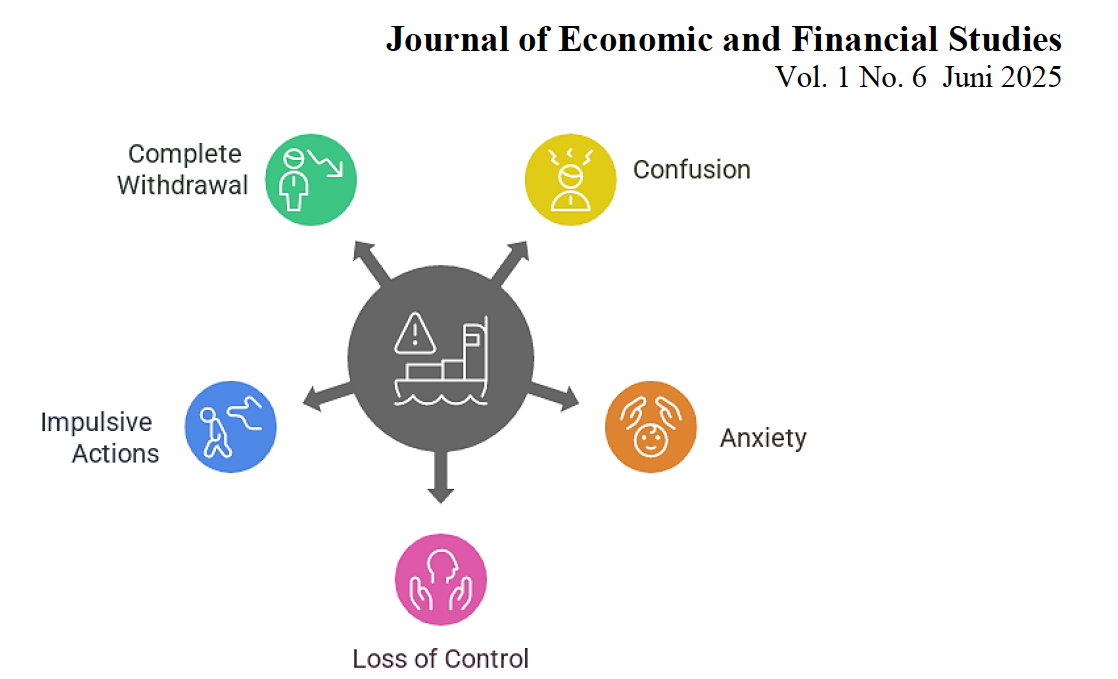
Common emotional reactions among new traders while engaging with the markets (Kharisma, 2025).
While guilt and regret arise from personal outcomes, fear of missing out (FOMO) is triggered externally by observing what others appear to be gaining. It introduces a different kind of emotional pressure, one that is not triggered by losses but by observing gains that other people appear to be capturing. Digital investment platforms intensify this response by embedding trading directly within social media like environments. FOMO often arises from “pervasive apprehension that others might be having rewarding experiences from which one is absent,” creating compulsive urges to act (Bomnüter et al., 2023, p. 6). This phenomenon becomes a pressure to enter positions quickly, especially when online sentiment accelerates. Retail traders frequently describe moments where the speed of online sentiment made it difficult to pause or evaluate properly (Supriadi, 2025).
This pressure is compounded by the emotional amplifiers built into trading apps. App based trading environments, real time price displays, popularity rankings, and gamified interfaces create “feedback loops” that heighten engagement and urgency (Bomnüter et al., 2023). FOMO is especially strong among newer traders who have less experience regulating emotional impulses. During my conversation with a financial analyst, when asked why investors chase trends, he explained: “FOMO is one of the most expensive emotions in markets. It forces bad timing, rushed decisions, and diluted judgment, convincing investors that missing out is worse than losing money, when in reality, the opposite is true” (M. Bisheh, personal communication, November 11th, 2025).
When I began my journey, most of my early losses came not only from having the wrong strategy but from the emotions I did not yet recognize shaping my decisions. FOMO influenced when I entered the market, and greed influenced how long I stayed in a position, often pushing me to hold trades well past the point where my original reasoning applied. The decisions that followed were not guided by evaluation or analysis but by unresolved emotional tension. Over time, I learned that these reactions were less about strategy and more about the underlying emotional processes that I hadn’t yet learned to manage.
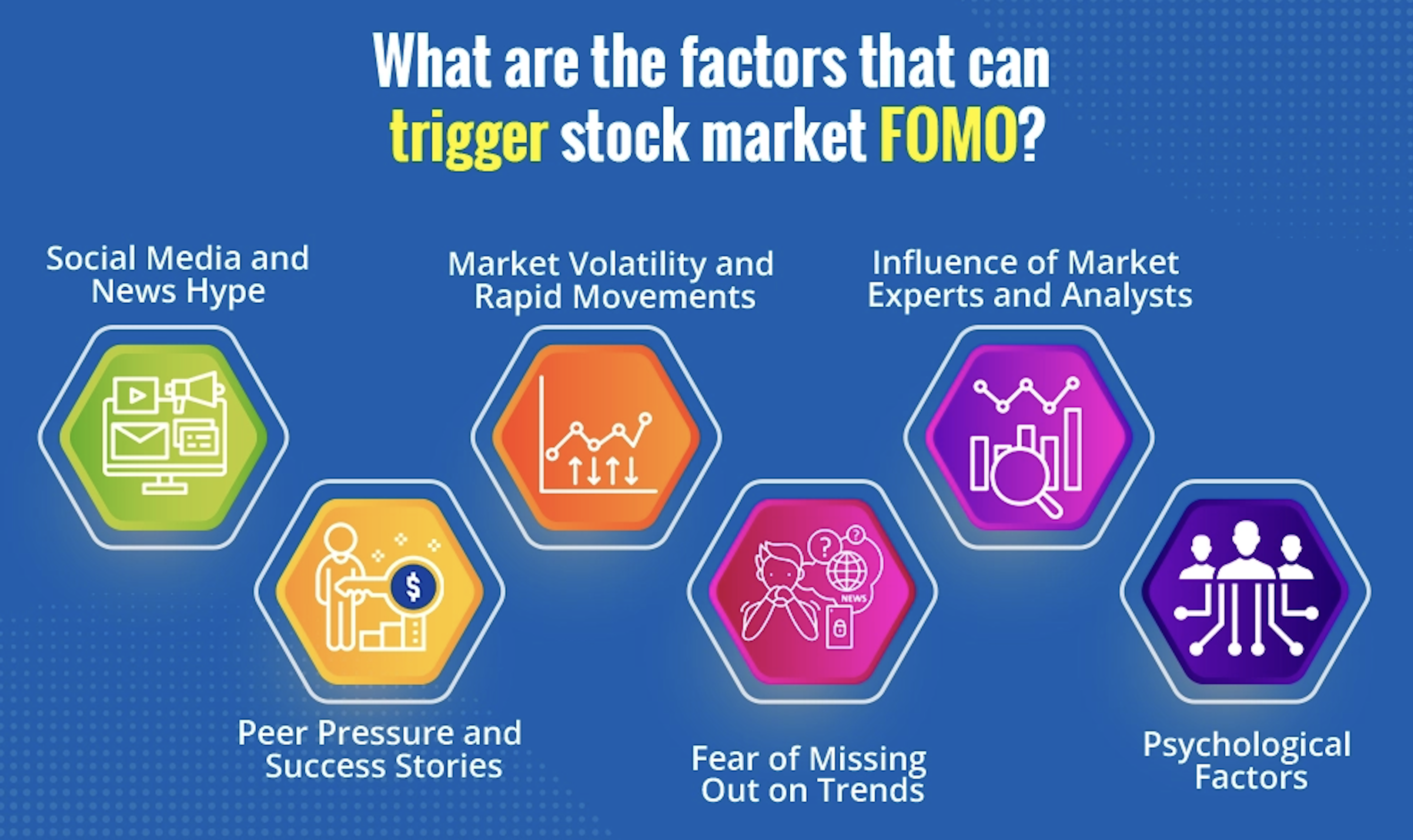
Visual summary of the common triggers behind stock market FOMO, from social hype and volatility to peer influence and psychological factors.
Pillar 2: How the Brain Responds to Reward and Unpredictability
Financial markets can feel unusually intense, even compared to other demanding tasks, because they activate biological systems which evolved to respond quickly to unpredictable situations. When I first started trading, I noticed that certain moments captured my attention more sharply than others, especially when the market presented conflicting signals or rapid, unexpected shifts. A trade that suddenly moved in my favor felt electrifying, while a position that turned against me pulled my focus entirely onto the screen. At first, I thought these reactions felt personal, as if they reflected something about my nature. As I educated myself and read more about the neuroscience of learning and decision making, I realized that much of this intensity comes from how the brain naturally processes reward, risk, and uncertainty.
The brain’s reward system plays a central role in this response. Dopamine, the chemical messenger central to this system, does not only register rewards, it primarily registers unexpected rewards. Dopamine producing neurons “construct and distribute information about reward-predicting stimuli” and fire most strongly when an outcome is better or worse than predicted (Schultz et al.,1997). An illustration in the same study demonstrates this clearly: dopamine activity surges when a reward arrives without warning and drops below baseline when an anticipated reward does not materialize. The authors describe these shifts as “errors in the prediction of reward,” emphasizing that dopamine signals reflect surprise rather than the reward itself (Schultz et al.,1997). This research helped me understand why I found myself reacting so strongly to sudden movements in my trades, even when the financial stakes were small. My reactions were not simply emotional; they were biological responses to events that violated my expectations.
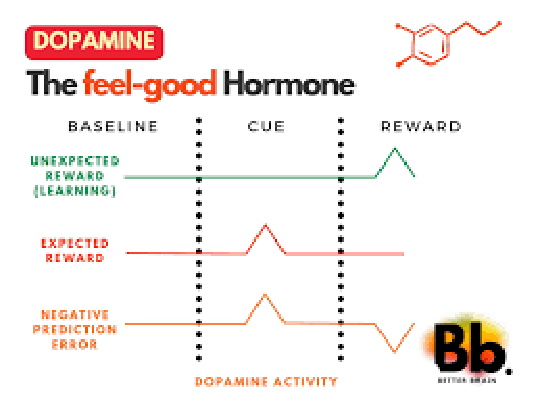
This diagram illustrates how dopamine responds to surprise. When something turns out better than expected, the signal jumps; when a reward is predictable, the response shifts to the cue; and when a reward doesn’t happen, the signal drops. This pattern mirrors how traders experience sudden gains and disappointing outcomes.
Understanding this concept is crucial, because financial markets are filled with unpredictable moments. Even when a trade seems logical, the exact timing and size of the outcome is almost never certain. A sudden favorable price movement becomes the kind of unexpected event that produces a strong internal signal, and the same is true when a position turns unexpectedly negative. In both cases, the intensity a trader feels is tied to the brain reacting to a surprise, not simply the presence of gain or loss.
While dopamine helps explain why wins can feel rewarding or energizing, it does not fully explain why losses or instability feel so heavy. For that, I looked at the brain systems responsible for detecting potential risk. Research using brain-imaging methods has shown that humans rely on at least two distinct systems when evaluating uncertain decisions. One system estimates possible positive outcomes, while another monitors signs of instability or danger. Brain activity linked to reward anticipation increased before individuals chose riskier options, while activity in a region associated with monitoring uncertainty increased before safer or more cautious choices. Furthermore, signals in the area tied to reward “preceded risky choices,” while signals in the risk-monitoring area “preceded riskless choices” (Kuhnen & Knutson, 2005). This indicates how the brain does not treat all decisions the same, it essentially runs two different systems at once, each creating a different internal signal before a person commits to an action.
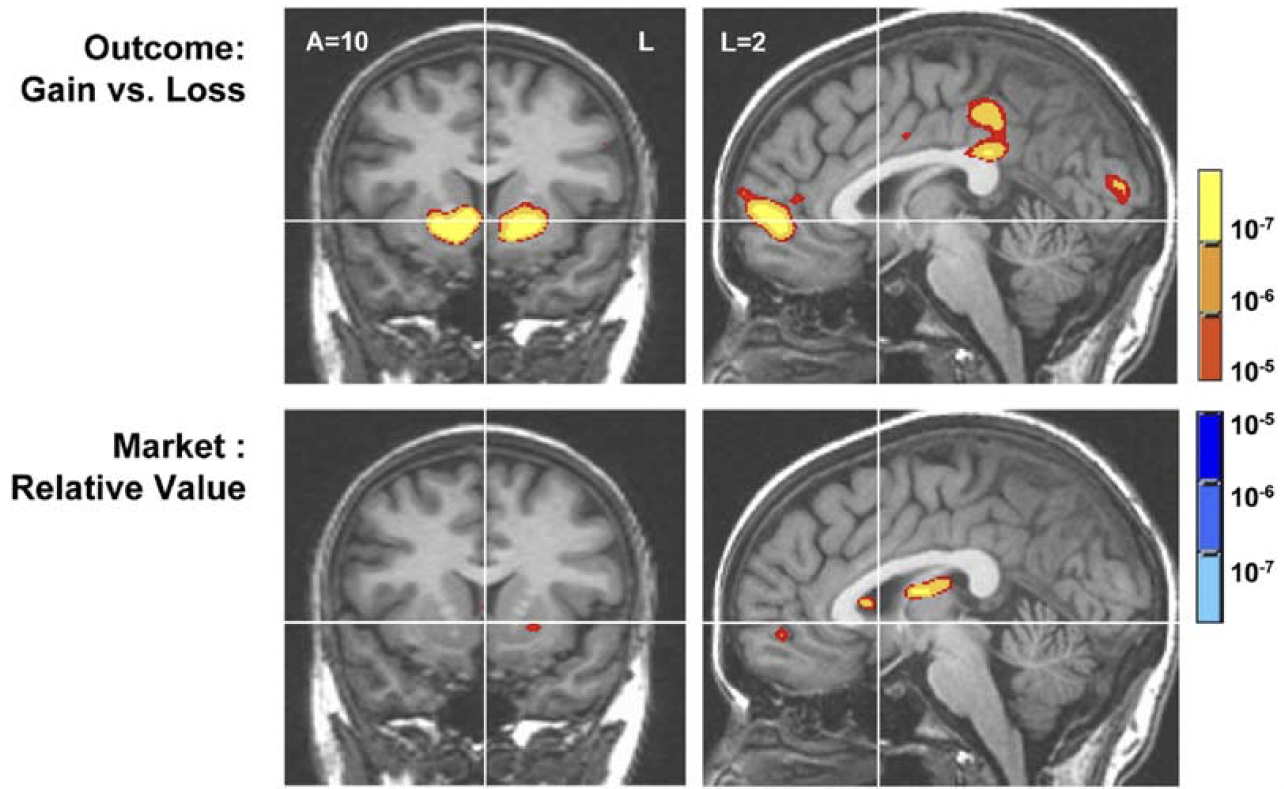
This figure shows how the brain responds differently to financial outcomes. The top images highlight stronger activation in reward related regions when participants experienced gains compared to losses. The bottom images show neural activity when comparing chosen versus unchosen market outcomes, illustrating how the brain continues to evaluate relative value even after a decision is made. These patterns support the idea that trading engages distinct neural circuits for reward, risk, and comparison, which helps explain why market outcomes can feel so immediately and intensely internal (Kuhnen & Knutson, 2005).
What makes this particularly relevant, is that market decisions often require rapid evaluation. A chart can shift in seconds. Price movement is incredibly rapid, and the brain must integrate information from both the reward-oriented system and the risk-monitoring system almost instantly. This dual activation can create a sense of internal friction, not in an emotional sense but in a biological one. The reward estimating system signals opportunity, while the risk monitoring system signals instability. Both systems are simply doing their job: one highlights potential benefits, and the other highlights potential threats. Recognizing this helps an investor understand why some decisions feel mentally louder than others, even when feeling consciously stressed or excited. The brain responds to market information by producing internal signals that track possible outcomes, and those signals become stronger when the situation is uncertain.
A third piece that contributes to the intensity of trading is the long-term effect of repeated exposure to financial uncertainty. Recent research examined experienced investors and found differences in areas of the brain involved in reward processing, internal bodily awareness, and monitoring of potential threats. According to the study, professional investors showed increased structural connectivity in regions linked to “reward processing” and “interoceptive awareness,” and differences in the areas associated with detecting potential negative outcomes (Ortiz-Terán et al., 2021). The authors also found that genes related to dopamine and stress hormones were more expressed in these regions, suggesting long-term adaptation. In simple terms, frequently encountering unpredictable outcomes appears to strengthen the neural circuits involved in evaluating both rewards and risks.
In my experience, the more I traded, the more I noticed my reactions changing, not necessarily in emotional intensity, but in speed and immediacy. Certain types of market movements that once surprised me became patterns I recognized more quickly. My attention sharpened during specific conditions, sometimes before I consciously realized why. These shifts aligned with how the research describes neural adaptation: repeated exposure builds sensitivity, pattern recognition, and faster internal signaling (Ortiz-Teran et al., 2021). Rather than seeing this as a psychological flaw or personal inconsistency, I began to understand it as the brain adjusting to an environment where outcomes shift quickly and unpredictably.
When these three components, dopamine responses to surprise, dual-system evaluation of risk, and neural adaptation to uncertainty are combined, they help explain why trading often feels more intense than other decision-making tasks. The experience is not purely emotional; it is grounded in the way the brain processes information about rewards and threats. Trading continuously provides unexpected outcomes, activates biological systems that evaluate risk and opportunity, and strengthens those systems through exposure. Understanding this concept has allowed me to interpret my trading experiences more clearly. The intensity I experience does not come from weakness or lack of discipline; it comes from interacting with an environment that naturally triggers some of the brain’s most fundamental evaluation mechanisms.
Pillar 3: Strategies for Navigating the Emotional Demands of Trading
The regulation of emotions in trading is not the removal of fear, greed, uncertainty, or frustration. Rather, it is a result of establishing mechanisms that ensure that such emotions do not take over in decision making. Traders operate in an environment of endless uncertainties where outcomes cannot be predicted, only managed (Douglas, 2000). Without psychological constructs and behavioural safeguards, traders will automatically react to the market with either fear or hope instead of rationality. This section introduces some of the strategies that I propose, based on the fundamental concepts of Mark Douglas who is considered the father of trading psychology and my own trading development.
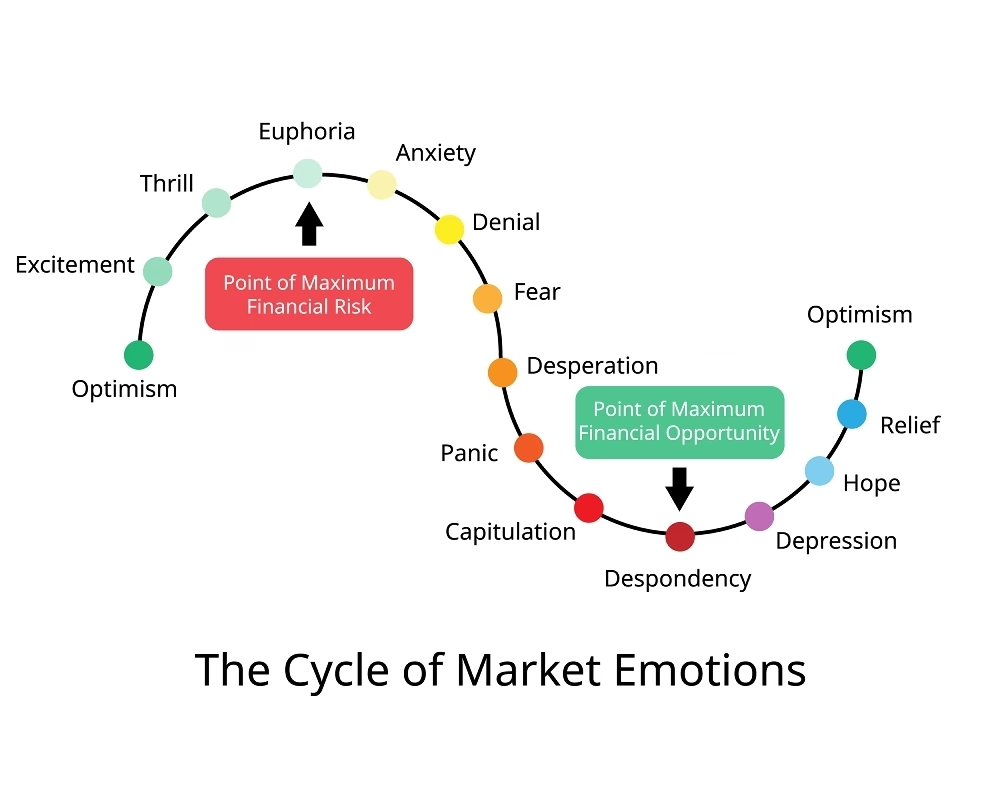
This diagram highlights common emotional reactions that traders experience during volatile market conditions, including confusion, anxiety, impulsive decisions, and withdrawal patterns often seen when individuals face uncertainty without established strategies or risk frameworks.
A foundational strategy is the establishment of a comprehensive trading plan. Douglas argues that inconsistency occurs when traders use intuition or situational judgment in a highly uncertain environment of financial markets. The market presents infinite variables, and without preset rules, emotions fill the vacuum. As he explains, if you don’t have a plan, then everything is possible and nothing is consistent (Douglas, 1990). The existence of a detailed plan, one that specifies entry criteria, exit conditions, risk limits, invalidation points bring structure to an otherwise unstructured market. Before I started implementing strict rules to my trading, I would find myself chasing the price action, I would exit the market on a downtrend just to see the price bounce back up immediately after my exit. “Disciplined investors follow a plan even when it feels uncomfortable. Reactive investors abandon the plan when emotions peak. The difference in long term outcomes between the two is massive” (M. Bisheh, personal communication, November 11th, 2025).
Risk management should be an integral part of any trading plan, the degree of the risk that you are taking on should be evaluated before the execution of trade. According to the expert I interviewed “Personal finances, anxiety, uncertainty, or instability outside the market directly influence behaviors inside it. That’s why I always say: invest only money you don’t need for daily life or near-term obligations” (M. Bisheh, personal communication, November 11th, 2025). If traders haven’t accepted the risk associated with their actions, they will try to avoid it, consciously or unconsciously. However, when they genuinely accept the risks, they will be at peace with any outcome. Douglas explains “when you accept the risk the way that pros do, you won’t perceive anything that the market can do as threatening if nothing is threatening, there’s nothing to fear” (Douglas, 2000, p.65). Once I understood the concept of risk management and developed my strategies accordingly, the emotional turbulence I associated with trading during my early days decreased immensely, because I had already accepted the potential negative outcome of my decision.
Personally, I have found journaling to be one of the most useful methods for learning about yourself as a trader. Every trader enters the market with a different temperament, tolerance for uncertainty, and sensitivity to emotional triggers so a strategy that feels straightforward to one person may seem completely unmanageable to another. Because of this, journaling becomes an invaluable tool. Although it is rarely emphasized when traders begin their journey, it is one of the most overlooked yet most effective instruments available to them. A trading journal is more than a record of past trades; it is a method of examining your own decision making. It allows you to capture not only the technical details of each trade, but also the logic, context, and emotional state that shaped it. Over time, this creates a map of behaviours and patterns that would have been impossible to detect in real time. Journaling also reinforces one of Douglas’s central ideas: traders evolve when they learn from repetition rather than repeat mistakes unconsciously. He explains that markets offer endless opportunities for feedback, but without conscious reflection, traders recreate the same experiences repeatedly (Douglas, 1990). This insight aligns closely with what I observed in my own development. Reviewing journal entries made it clear that certain mistakes such as closing trades too early, chasing reversals, and abandoning my rules were not random but patterned responses that happen more often than I imagined. Seeing these patterns on paper helped transform them from habits into variables I could control. Since I started journaling two years ago it has provided me with a framework to separate the market’s movement from my own unique internal responses.
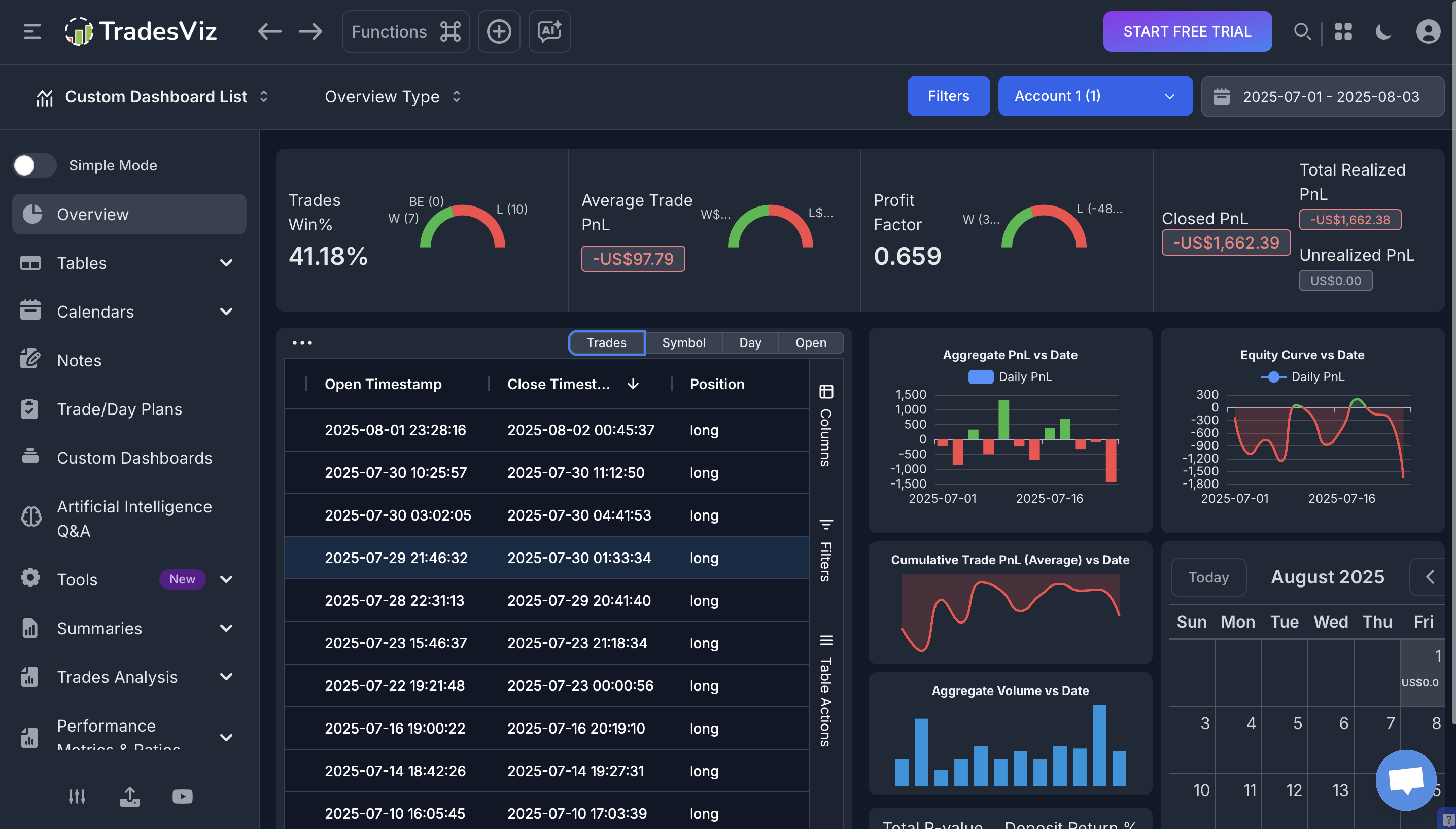
Example of a digital trading journal platform which I use, where traders can record entries, track performance metrics, and attach screenshots or notes. This type of layout helps identify patterns in both strategy and emotional decision making.
Conclusion
Throughout my trading journey, I began to see that the challenges I faced were rarely about strategy and almost always about the internal responses that surfaced under pressure. Volatility exposed parts of my decision making that technical analysis could not address; how quickly my attention narrowed under stress, how instinctively I reacted to uncertainty, and how easily my emotions could override a plan I believed in. With time, I realized that what mattered most was not eliminating these reactions but understanding the conditions under which they emerged and building systems that could contain them. The expert I interviewed summarized this lesson in a way that has stayed with me: “Stay humble. Study constantly… The markets have their own rhythm, and no degree or book fully prepares you for the psychology of real capital, real pressure, and real outcomes” (M. Bisheh, personal communication, November 11, 2025). This research ultimately showed me that consistency develops through structure and self-awareness through recognizing how the mind behaves in uncertainty and designing processes that keep those reactions from becoming the decision maker.
References
Schultz, W., Dayan, P., & Montague, P. R. (1997). A neural substrate of prediction and reward. Science (New York, N.Y.), 275(5306), 1593–1599. https://doi.org/10.1126/science.275.5306.1593
Kuhnen, C. M., & Knutson, B. (2005). The neural basis of financial risk taking. Neuron, 47(5), 763–770. https://doi.org/10.1016/j.neuron.2005.08.008
Ortiz-Teran, E., Diez, I., Sepulcre, J., Lopez-Pascual, J., & Ortiz, T. (2021). Connectivity adaptations in dopaminergic systems define the brain maturity of investors. Scientific reports, 11(1), 11671. https://doi.org/10.1038/s41598-021-91227-x
Douglas, M. (1990). The disciplined trader: Developing winning attitudes. New York Inst. of Finance. forexfactory.com/attachment/file/5021819?d=175514820
Kharisma, F. (2025). How retail investors manage emotions and make decisions during market volatility in the digital era. In Journal of Economic and Financial Studies [Journal-article]. https://journals.ai-mrc.com/finanomics
No Limits? Effects of FOMO and gamification on individual investment behaviour in neo-broker stock trading. (2023). [Conference paper]. In Reorganization of Media Industries: Digital Transformation, Entrepreneurship and Regulation (pp. 1–18). Deutsche Gesellschaft für Publizistik- und Kommunikationswissenschaft e.V. https://doi.org/10.21241/ssoar.90870
Finet, A., Kristoforidis, K., & Laznicka, J. (2025). Emotional reactions of students to perceptions of negative trends and small losses in Short-Term Stock Market Simulation. International Journal of Financial Research, 16(3), 74. https://doi.org/10.5430/ijfr.v16n3p74
Supriadi, A. & Universitas Sultan Ageng Tirtayasa, Indonesia. (2025). Emotional responses and cognitive resilience of retail investors in digital market turbulence. In Journal of Economic and Financial Studies (Vols. 1–1, Issue 8) [Journal-article]. https://journals.ai-mrc.com/finanomics
Ackert, L. F., Kennesaw State University, Federal Reserve Bank of Atlanta, Church, B. K., Georgia Institute of Technology – Main Campus, Deaves, R., & McMaster University. (2003). Emotion and financial markets. In Federal Reserve Bank of Atlanta Economic Review (pp. 33–41). digitalcommons.kennesaw.edu/cgi/viewcontent.cgi?article=1910&context=facpubs
GK, C. & MDI Murshidabad. (2020). A note on psychology of investing. In C. GK & MDI Murshidabad, MDIM Business Review (Vols. 1–1, pp. 32–38). mdim.ac.in/wp-content/uploads/2020/07/page-32-38.pdf
Douglas, M. (2000). Trading in the zone: Master the market with confidence, discipline, and a winning attitude. New York, NY: Prentice Hall Press.