


Avery Wood
Avery Wood (She/Her) is completing a Bachelor of Arts degree in Psychology at Capilano University. Originally from Banff, Alberta, Avery moved to the Lower Mainland at a young age, where her early experiences shaped her growing interest in community-centred, relational, strengths-based work. Avery has almost 10 years of volunteer and professional experience supporting children, youth, and individuals with diverse needs—her current role is as a Behavioural Technician and Mental Health Support Worker, where she is committed to fostering genuine, human-centered connections while thoughtfully balancing authenticity and professionalism. Her academic and professional journey continues to fuel her exploration of how ethical boundaries and authentic presence can coexist within the field of psychology.
Abstract
This article examines the tension between authenticity and professionalism in psychology. It highlights ways in which ethical norms and expectations of objectivity can sometimes suppress authentic human connections. While boundaries and professionalism are essential, a culture of emotional restraint may limit opportunities for trust, empathy, and relational growth. Using a strengths-based lens, this article explores how embracing authenticity can enhance both academic and professional practice, reframing it as a source of ethical, relational and collective strength rather than a liability. The goal is to foster dialogue and promote change regarding authentic engagement, which can build and support connections while maintaining ethical practice and collective well-being within the field.
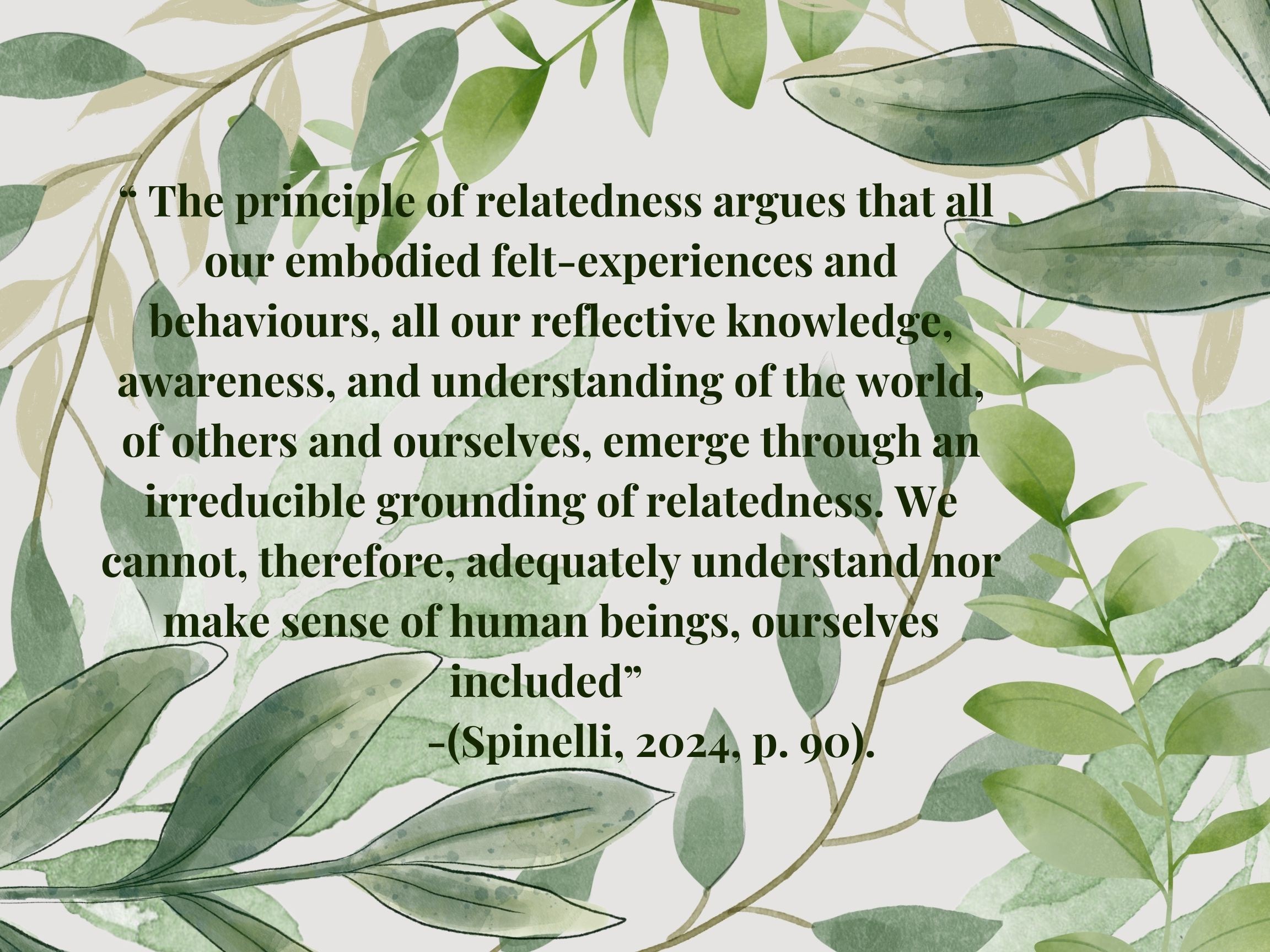
The principle of relatedness…” This quote captures the essence of how all Knowledge, reflection, and action emerge through connection– resonating with my experiences as a student, mental health worker and human being.
In Psychology, professionalism is often equated with emotional restraint. Students and practitioners are often taught to listen closely, maintain composure, and never reveal too much of themselves. In professional settings, this expectation often feels like wearing a mask. I remember my very first experiences of this. For context, I was in a meeting for a child I worked with as their Behaviour Technician and Mental Health Support Worker. The comments that had caused me to raise an eyebrow, quite literally, were in response to an attempted joke made at the expense of that child’s traumatic experiences. I regretfully said nothing to the group during that meeting; however, later, after this experience, I was told that my facial expressions were seen as “too personal,” even though they were simply a natural human response rooted in empathy and care. This moment has stayed with me and has since made me question how often authenticity is mistaken for unprofessionalism within the field.
I have also experienced this tension within academic settings. Some of the most meaningful experiences I have had so far in my educational journey have come from a handful of courses led by a psychology professor at Capilano University. In this environment, I experienced what authentic learning feels like when trust, consent, and openness are prioritized. Dr. Justin Wilson modelled relational presence and emotional authenticity, demonstrating how instructors can teach rigorous psychological concepts without resorting to detachment or rigid professionalism. By fostering an environment where both he and the students could show up as their authentic selves, it allowed for genuine dialogue and community building, enabling growth not only academically but also personally. This approach highlighted an important contrast: the emotional distance that is often modelled in psychology training can begin with faculty expectations and teaching styles. When psychology instructors model openness and relational engagement, they demonstrate to students that emotional presence and professional competence are not necessarily mutually exclusive. That sense of connection and belonging extended beyond the semester, shaping how many of us approached our relationships and learning going forward.
In contrast, another personal academic experience revealed to me how quickly empathy can be replaced by rigidity. Early in the semester, I had disclosed to a professor that I was representing myself in a legal case and had a court date scheduled during the week of finals- something I had no way of changing. The response I encountered was “That sounds like a you problem.” I found this to be profoundly disheartening. At a time when a touch of compassion and flexibility could have made all the difference, I felt dismissed and unseen. This made me reflect on how professionalism and the distance that often comes with it can sometimes be taken too far, undermining the very principles of care and understanding that psychology promotes.
These opposing experiences have vastly different roots: one rooted in authentic connection, the other in rigid professionalism. They have both taught me a great deal and continue to underlie how I conceptualize ethics, empathy, and what it means to show up as a human being in this field above all else. This article challenges the assumption that professionalism and emotional distance inherently equate to ethical behaviour. While strong boundaries and ethical standards are essential to the field, the assumed and associated emotional detachment can often create a distance or disconnect within the work we do, and sometimes it’s where connection is most needed. Through my lived experience, I have seen how genuine empathy, self-awareness, and relational openness can strengthen both practice and outcomes in both academic and professional environments alike. Authenticity not only enhances individual practice but also contributes to collective well-being, cultivating a culture of care, mutual respect, and shared growth among peers and colleagues.
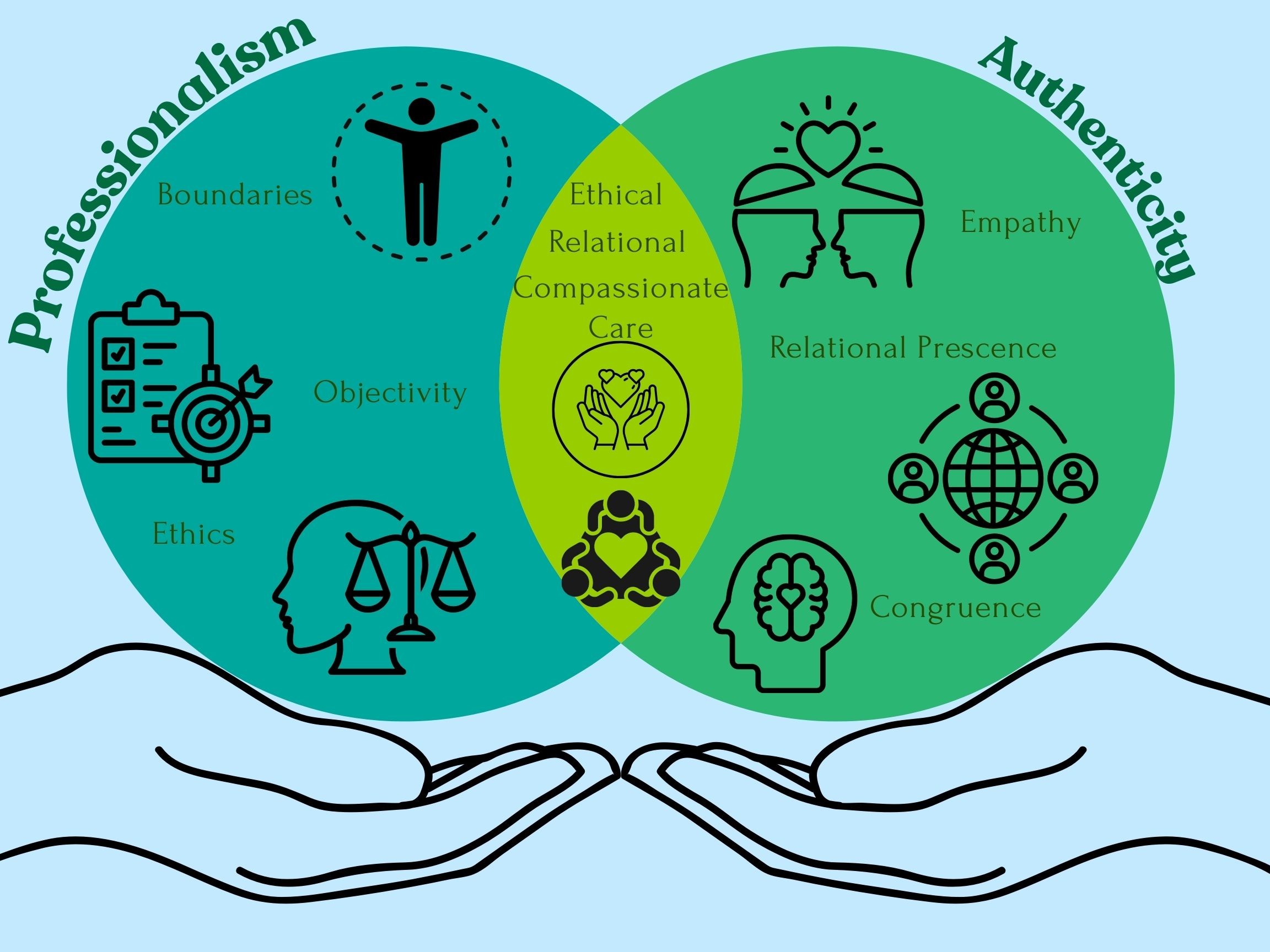
Where authenticity meets professionalism: this diagram shows both the tension and the potential for harmony between ethical boundaries and relational presence.
Background / Context / Literature Review
The field of psychology has long been shaped by a tension between credibility and legitimacy on the one hand, and authentic human connection and emotional expression on the other. During the late 19th and early 20th centuries, psychology sought formal recognition as a science. To achieve this credibility, the field adopted a language and method of objectivity, neutrality, and emotional detachment in order to distance itself from philosophy and the humanities (Wendt & Wolfradt, 2022).
The well-known foundational thinker Sigmund Freud’s psychoanalytic model reinforced the expectation that the therapist maintain neutrality, carefully managing emotional reactions to avoid influencing the client’s thoughts, while focusing on insight and interpretation (Freud et al., 1953). Freud’s emphasis on neutrality, detachment, and analytical distance helped shape an early professional standard that centred on composure and competence, while also introducing and normalizing emotional detachment as a defining feature of perceived professionalism.
In contrast, Carl Rogers, another well-known foundational figure in psychology, focused primarily on humanistic psychology and emphasized authenticity and congruence in the therapeutic relationship. Rogers argued that the therapist’s genuine presence, empathy, and unconditional positive regard are essential for clients’ growth and relational depth (Rogers, 1961). Rogers’ perspective directly challenges the rigid neutrality suggested by Freud, suggesting instead that authentic and professional skills are not mutually exclusive but mutually reinforcing.
These early models contributed to an unspoken expectation, often referred to as the “feelings rule,” that professionalism is associated with composure, restraint, and complete control over one’s emotions (Hochschild, 2012). This expectation is challenging to manage for oneself, let alone any human being, in clinical practice, and can unintentionally diminish the human elements that are central to the therapeutic connection. While these are the types of standards that helped solidify the field’s formal recognition and establish its own professional identity, the field has also morphed into a culture of emotional distance and detachment, with significant impacts on the field’s conduct today.
In the Canadian context, the development of psychology cannot be separated from its deep-seated ties to colonialism. Western psychology has traditionally privileged rationality, individualism, and detachment, often dismissing other ways of knowing, particularly Indigenous approaches that centre community, emotion, and reciprocity. Gone (2013) argues that Indigenous understandings of healing and well-being emphasize relationality, connection, and cultural meaning, which Western frameworks historically regarded as being unscientific. This hierarchy of knowledge has been one of the very reasons for such a narrow understanding and definition of what counts as “professional,” which tends to position emotional expression and relational authenticity as liabilities rather than strengths.
However, the field has slowly but surely been shifting its perspective towards a more strengths-based, relational, and trauma-informed framework that pushes against and challenges earlier assumptions. The recognition of relational-cultural theory, for example, emphasizes that growth occurs through connection rather than separation (Jordan, 2017). Similarly, while trauma-informed, strengths-based practices recognize that empathy, authenticity, and collaboration are not threats to perceived professionalism but essential components of ethical and meaningful work.
Recent research further supports this shift in perspective. Yang et al. (2023) found that “psychologists defined authenticity as a matching of their inner thoughts, beliefs, feelings (including sensory and emotional qualities or gut feelings) with their outer presentation and behaviours”. This definition reinforces that authenticity is not about emotional impulsivity or over-disclosure, but about congruence – an internal alignment between one’s internal experience and external professional conduct. In this sense, authenticity strengthens professionalism by grounding it in honesty, ethical awareness and relational integrity. This further reinforces Rogers’ understanding and standpoint on the topic.
Spinelli’s (2024) perspective reminds us that detachment within clinical practice cannot account for the full spectrum of human experiences; by remembering and empowering the human core of psychological work, relationship, empathy and connection, the field can balance scientific credibility with holistic, human-centred approaches that build mutually beneficial relationships. After all, most therapeutic encounters occur between two humans sharing time, space, and emotional complexity.
These ideas have taken on real meaning in my professional experience as a Behavioural Technician and mental health worker. I have witnessed firsthand how cold, clinical approaches can create barriers to connection and trust. When I approached my work with authenticity, empathy, and self-awareness – while still maintaining ethical boundaries – the relationships I built with the people I served became stronger, and the outcomes for the children and families I supported improved. This firsthand experience affirmed for me that authenticity need not be seen as a threat to professionalism but rather as a way to enhance it.
While this historical and cultural context helps explain how emotional restraint became synonymous with professionalism, the real tension I have witnessed comes from my lived experience —the daily interactions, decisions, and emotional negotiations that practitioners and scholars of psychology face. In practice, the expectation of emotional restraint can stem from good intentions, as it’s an added effort and safety measure to maintain and prevent what’s known in the field as countertransference and to uphold ethical boundaries and standards. However, several scholars have noted that an overemphasis on objectivity can risk turning practitioners into distant observers rather than active participants in the healing process and therapeutic relationship (Shepherd & Brochu, 2024). When emotional expression is suppressed or discouraged, it can come across as indifference to the client’s or colleagues’ feelings, going unseen. What had initially been underlined as a way to preserve professionalism has eroded the sense and feelings of mutual trust that effective care tends to rely on.
Words of experience as a mental health support worker, illustrating the challenge of staying authentic while navigating professional expectations.
Interview
The conversation I had with J, a current mental health support worker and student at Capilano University (personal communication, October 27, 2025), brought forward valuable insights related to the questions surrounding authenticity and professionalism. J’s reflections echoed many of the internal tensions I have experienced, yet also expanded them by grounding the conversation in their own lived and professional experiences.
When I had initially asked J what had led them into the field of psychology and the work they currently do, J emphasized that they appreciate the introspection that psychology encourages, its ability to promote self-awareness, personal growth, and meaningful internal change. As they explained, “ There is a level of introspection… where we are hopefully forced to look inward at our own shortcomings and our own capacities” (J, personal communication, October 27, 2025). Yet this same individualized focus also revealed psychology’s constraint: meaningful growth rarely happens in isolation. J noted that “ growing alone doesn’t really do a whole lot of good unless you take the rest of your community with you” (personal communication, October 27, 2025).
The dissonance–valuing personal insight while recognizing the field’s tendency to undervalue social and communal dimensions of healing–amplifies the broader critiques within relational, cultural, and community-based psychological frameworks (Spinelli, 2024; Yang et al., 2023). J’s perspective reinforced the idea that authentic practice must account for not only the individual but also for the relational environments that shape them.
Later in our conversation, J described a tension that many mental health support workers quietly experience, as also noted by Shepherd & Brochu (2024): the way ethical guidelines are interpreted in the workplace can unintentionally discourage genuine relational connection. J explained that supervisors frequently emphasized strict boundaries and reminded staff to be mindful of their actions and decisions, as even the smallest of choices could later be viewed as liabilities, potentially leading to disciplinary action or, in some cases, termination. This tone shaped the environment in a way that led workers to second-guess moments when brief, appropriate disclosure might have helped a client feel understood.
J recalled a time when they had been supporting a client who had asked J if they had any experience with anxiety surrounding a significant life change. J believes that a brief, honest response to the person’s question would have strengthened trust; however, they felt pushed to hold back out of fear of being written up for crossing a boundary. J stated that although ethical guidelines serve crucial protective functions, the way these standards are communicated often makes workers feel as though authenticity is risky: “We are so worried about getting into legal trouble while helping people” (personal communication, October 27, 2025).
J’s reflections complicate the idea that ethics and authenticity sit on opposite sides. Instead, the issue lies in how guidelines are interpreted and enforced. J believes that a person can be both ethical and authentic; however, the culture within many workplaces in the field of psychology leaves very little room for nuanced relational presence.
J’s individual experiences, along with my own experiences as a client in therapy, reinforced this idea. For example, when I was trying to find a therapist, one provider that I had encountered had arrived 20 minutes late, and when they did arrive, they had explained that they “really had to go to the chiropractor before our session, as they woke up that morning with a pain in their neck. This same therapist then ended our session 10 minutes early and still billed me for the full hour. This experience highlighted for me how a lack of genuine presence and attention can leave clients feeling dismissed and unseen.
When J shared their experiences as a client in therapy, they highlighted that many highly knowledgeable clinicians they have been to have still felt disconnected, not because they lacked skill, but because “there’s no warmth… no human aspect… no authenticity” (personal communication, October 27, 2025). Hearing J describe this perspective echoed exactly what I felt in that moment with the therapist I had encountered. It was not just about the lateness or the logistics; it was about the absence of relational presence.
What bridged the gap and gave more meaning to me was when J described experiencing the same pressure from the other side, as a mental health support worker. J explained that they often feel pressured to distance themselves emotionally to be perceived as professional. And had mentioned that this pressure extends into “ almost every situation” they have faced so far. This expectation to mask or suppress parts of themselves in professional settings has again paralleled their lifelong experience of masking their emotions to meet social expectations as a neurodivergent person (J, personal communication, October 27, 2025). J’s honesty illustrated how traditional models of professionalism can inadvertently exclude or penalize natural forms of expression, especially for individuals who do not “fit” or “follow” the normative expectations of emotional regulation or communication. Their experiences affirmed that the tension I have personally felt as a client, learner, and beginner working within the field is not isolated. It is shared across therapeutic, educational, and community contexts.
My conversation with J underscores that authenticity is not simply a stylistic preference but a relational necessity. Their insight highlighted that authenticity strengthens trust, deepens understanding, and allows for fuller, more grounded therapeutic and academic relationships. Within professional psychology, authenticity and relational care are enhancements rather than compromises of professionalism.
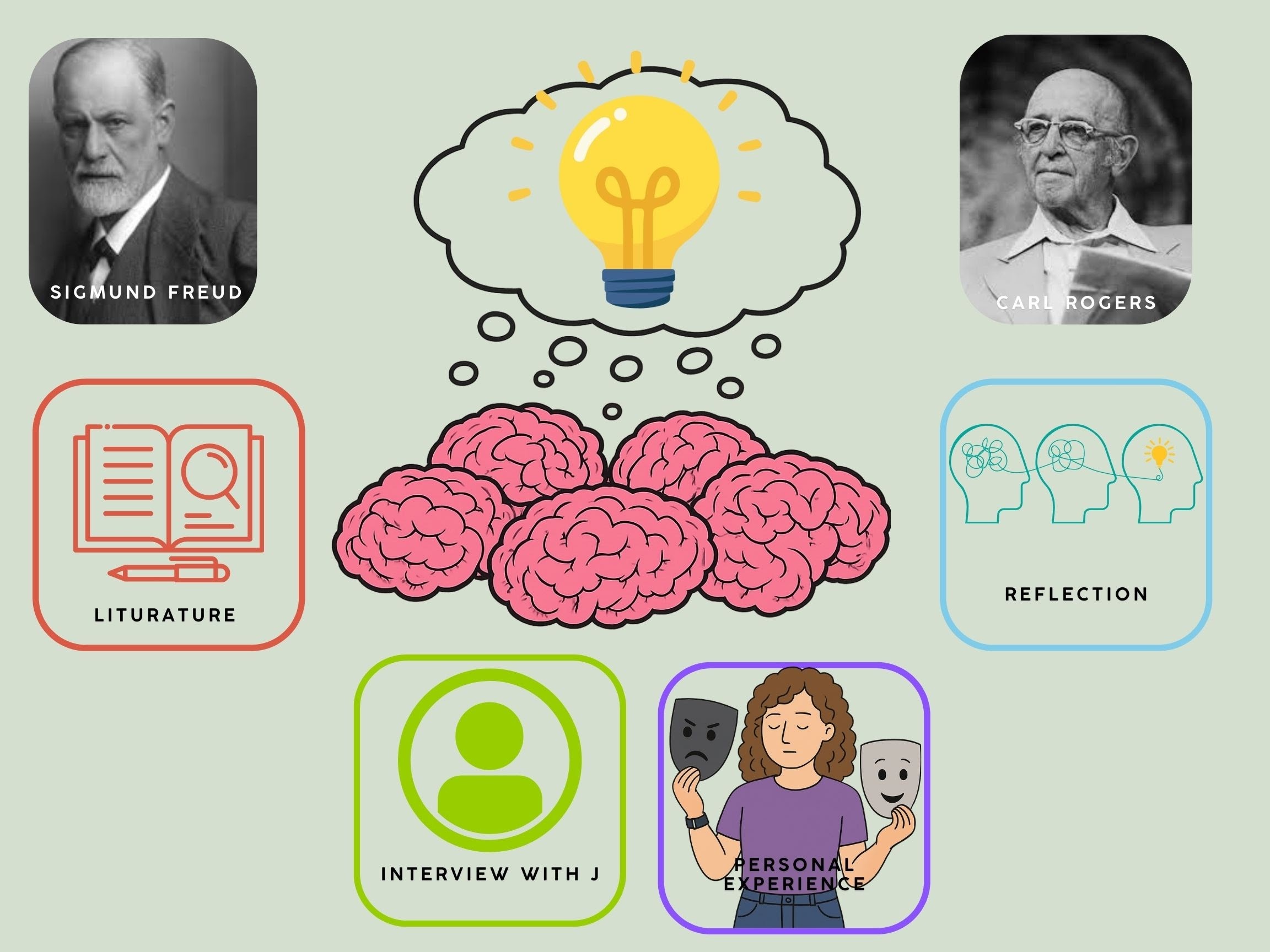
Mapping the thought processes, reflections, and connections that shaped the ideas and conclusions made within this research.
Discussion and Reflection
In practice, emotional distance is framed as a safeguard. However, as Shepherd and Brochu (2024) argue, the excessive need for neutrality can create a disconnection that often leaves clients, students, and colleagues feeling unseen or dismissed. My conversation with J and their reflections on the topic capture this tension clearly. Practitioners in the field often feel the weight of potential legal consequences, such as written warnings, suspension, termination, or even formal complaints to regulatory bodies– far more intensely than the potential relational
consequences of being overly distant. This culture of fear limits how people engage in the field and often limits the flexibility needed for genuine human connection.
At the same time, there is an important counter-argument: boundaries exist for a good reason. Practitioners also need protection from burnout, compassion fatigue, and the emotional toll of carrying other people’s trauma. Without boundaries, workers can become overwhelmed or fall into blurred roles that compromise ethical care. From this standpoint, boundaries are not the opposite of authenticity– they are what help sustain it long term. The issue is not the presence of boundaries themselves, but the way these boundaries are taught and enforced in ways that leave little space for nuance or relational presence.
Not all of my academic, professional or therapeutic experiences have reflected this rigidity. The positive ones I have encountered and continue to encounter have shown me just how transformative it can be when others model relational presence. When people offer genuine care, trust builds, learning deepens, and community strengthens and becomes possible. J’s point that “ growth requires community” reinforced that authenticity is essential not only in clinical work but also in classrooms, placements, and everyday professional relationships within the field.
Across my experiences and J’s, a shared theme emerges: authenticity is not a threat to professionalism but a necessary part of ethical practice. Yang et al. (2023) describe authenticity as the congruence between what we feel internally and how we act outwardly. Developing this congruence requires reflection and ongoing self-awareness, both of which support stronger relational and ethical decision-making.
It is important to note that authenticity is not an individual personality trait; it is something that can be taught and supported. Training approaches that incorporate reflective supervision, community-based learning, and relational dialogue can help emerging practitioners learn how to balance boundaries with genuine presence. In my own coursework, Dr. Wilson consistently modelled this balance: he showed how to be grounded, transparent, and human in the room while still maintaining clear professional limits. Watching him navigate difficult topics and conversations with warmth and steadiness demonstrated that congruence is a practice, not a personality trait. When students and workers like myself are encouraged to explore their internal experiences in this way, authenticity becomes a shared, learnable skill rather than something people must figure out alone.
Ultimately, J’s insight, paired with what I have witnessed in Dr. Wilson’s teaching and my own lived experiences, reinforces that authenticity strengthens rather than complicates professionalism. Relational presence is not an optional add-on; it is a core aspect of ethical, responsive, and human-centred practice.
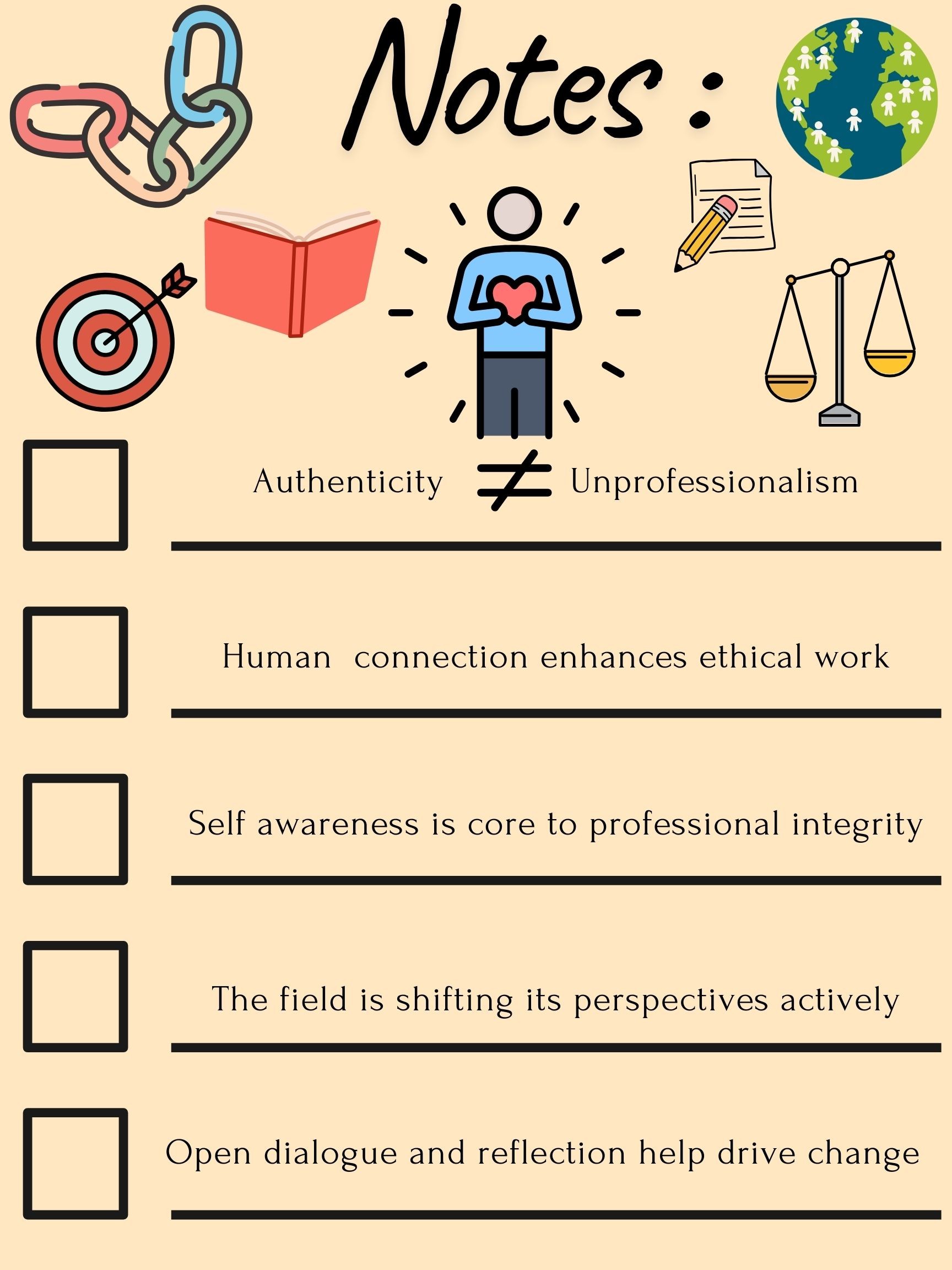
Key reminders and reflective prompts that guided my thinking and kept the focus on relational presence and authenticity throughout this project.
Conclusion
Balancing authenticity with professionalism is essential for meaningful and ethical work within the field of psychology. Critics may argue that too much authenticity risks burnout, compassion fatigue, or blurred boundaries; however, reflective practice, supervision, and self-awareness can help practitioners maintain ethical limits while still engaging relationally (Yang et al., Jordan,2017). When practiced thoughtfully, authenticity strengthens trust, empathy, and connection without compromising professionalism. Shepherd and Brochu (2024) note that overemphasis on neutrality and rigid boundaries can leave clients, students, and colleagues feeling unseen, highlighting the importance of rational precision in ethical practice.
This balance has important implications for training and practice. Psychology programs and workplaces can cultivate authenticity through reflective supervision, relational dialogue, and community-based learning (Spinelli, 2024; Yang et al., 2023). These approaches allow students and emerging professionals to practice congruence, aligning internal experience with outward behaviour– while maintaining protective boundaries. Failing to prioritize relational presence risks producing clinicians who are technically skilled but emotionally disconnected, limiting their effectiveness and leaving clients and colleagues feeling unseen or dismissed.
By integrating authenticity into professional training, it has begun to shift toward being a more human-centred, compassionate practice. For example, professors who model relational presence, as I have experienced, demonstrate that transparency, warmth, and authenticity can coexist with clear professional limits, showing that openness, warmth, and authenticity can be taught rather than assumed. Future research should explore how workplace culture supports or inhibits relational presence, and which populations, clients, students, or staff benefit most from this approach.
By prioritizing relational presence alongside ethical competence, the field can model a form of professionalism that is both skilled and deeply connected. Ultimately, integrating authenticity into training and practice offers a path toward a more human-centred psychology, where competence and connection are equally valued.
References
Freud, S., Strachey, J., Freud, A., Richards, A., & Institute of Psycho-analysis (Great Britain). (1953). The standard edition of the complete psychological works of Sigmund Freud / translated from the German under the general editorship of James Strachey ; in collaboration with Anna Freud ; assisted by Alix Strachey and Alan Tyson. Hogarth Press and the Institute of Psycho-analysis.
Gone, J. P. (2013). Redressing First Nations’ historical trauma: Theorizing mechanisms for Indigenous culture as mental health treatment. Transcultural Psychiatry, 50(5), 683–706. https://doi.org/10.1177/1363461513487669
Hochschild, A. R., & ProQuest (Firm). (2012). The managed heart : commercialization of human feeling / Arlie Russell Hochschild (Updated, with a new preface.). University of California Press.
Jordan, J. V. (2017). Relational-Cultural Theory: The power of connection to transform our lives. Journal of Humanistic Counselling, 56(3), 228–243. https://doi.org/10.1002/johc.12055
Rogers, C. R. 1902-1987. (1961). On becoming a person : a therapist’s view of psychotherapy. Houghton Mifflin.
Shepherd, B. F., & Brochu, P. M. (2024). Let’s get real: Identity concealment, burnout, and therapeutic relationship quality among psychology trainees with concealable stigmatized identities. Psychotherapy, 61(2), 125–136. https://doi.org/10.1037/pst0000522
Spinelli, E. (2024). An existential challenge to some dominant perspectives in the practice of contemporary counselling psychology. Counselling Psychology Review, 39(1), 89–96. https://doi.org/10.53841/bpscpr.2024.39.1.89
Wendt, A. N., & Wolfradt, U. (2022). Theoretical psychology: discursive transformations and continuity in Psychological Research/Psychologische Forschung. Psychological research, 86(8), 2321–2340. https://doi.org/10.1007/s00426-022-01727-2
Yang, N., Jankauskaite, G., Gerstenblith, J. A., Hillman, J. W., Wang, R. J., Le, T. P., & Hill, C. E. (2023). Counselling psychology doctoral students’ experiences of authenticity: A collaborative autoethnography. Counselling Psychology Quarterly, 36(1), 89–111. https://doi.org/10.1080/09515070.2022.2063260