


Amrit Kaur
Amrit Kaur (she/her) is currently pursuing a Bachelor of Arts in Psychology at Capilano University. Amrit now volunteers at Atlas Counseling, hoping to assist foreign students like herself in dealing with academic stress, cultural adaptation, and overall well-being. With the goal of becoming a therapist, she intends to pursue a master’s degree in counseling psychology at the University of British Columbia in order to advance her education.
The day my grandmother passed away was the first time I ever saw my father cry. Seeing this picture of my father weeping, who I had always thought to be stoic and unwavering, was disturbing. The cultural script was evident as I grew up in Punjab in a Punjabi family: Male is the the head of the family, who must be powerful, silent, and unwavering. Emotional expression, particularly vulnerability, was discouraged in my family and neighborhood. A man must be the breadwinner of the household, not weep, and have an obedient wife in order to be respected in his community. This is a simple job, but there are several layers to accomplishing it. Conversely, even though women are granted greater emotional leeway, they are subject to their own set of limitations and judgments. This “strong men, silent women” paradox highlights a complicated network of gender expectations that are based on both custom and the lingering consequences of British colonialism in India. This paper explores how the colonial legacy has impacted contemporary Punjabi masculinity, fostering men’s emotional suppression, which, in turn, causes problems with mental health and dysfunctional family relationships. Moreover, the piece will analyze how colonial militarism and gendered racial norms played an important role in creating emotional self-control as a masculine ideal in Punjab, including social and psychological effects on society and potential strategies for reimagining masculinity in broader contexts.
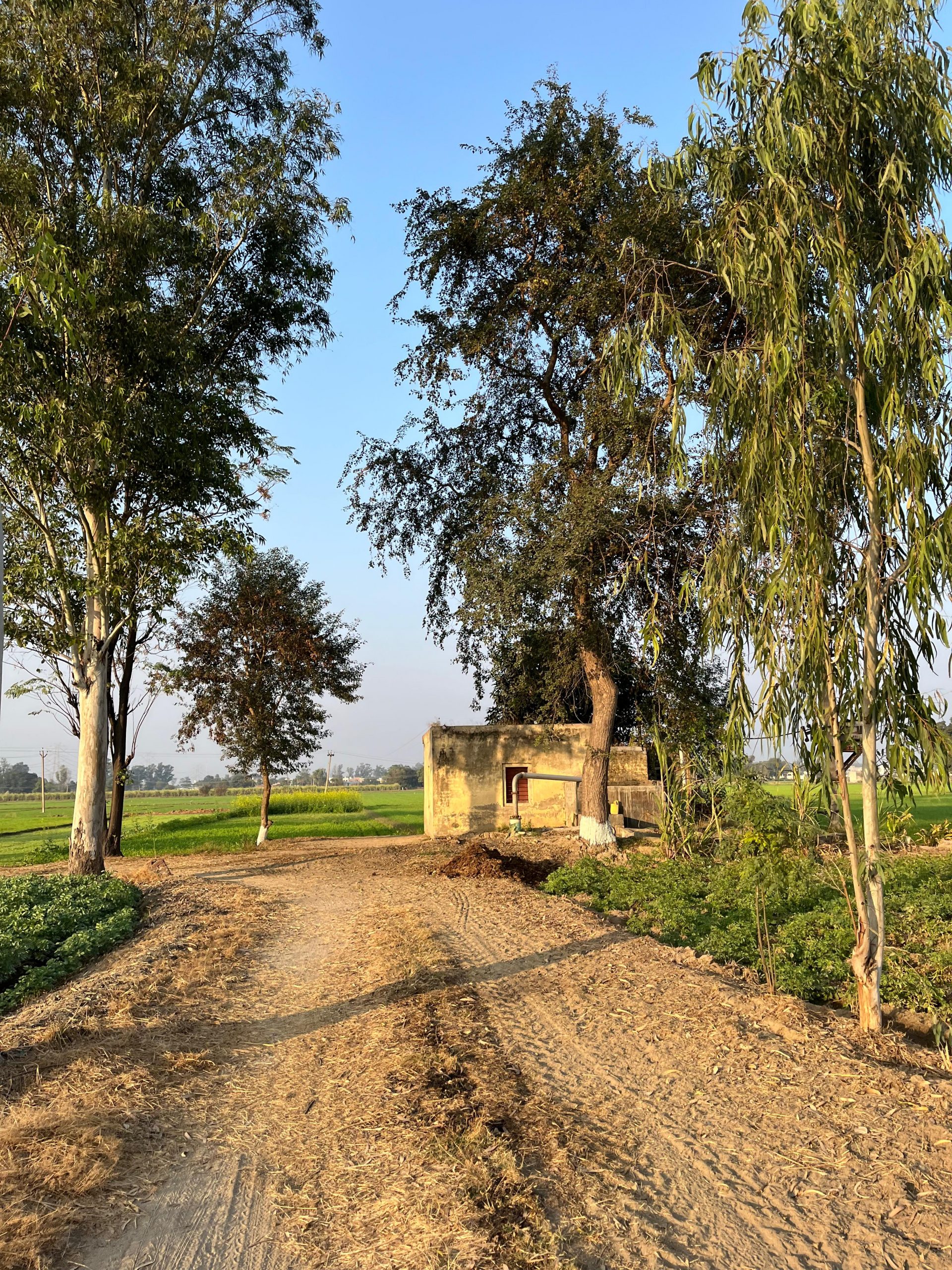
Picture taken when I visited India in our farm.
My father’s authority ruled my upbringing. My father controlled all choices pertaining to money, education, and social contacts while residing in a household with five women, my mother, grandmother, and three sisters, and my father. The message was obvious from a young age: men should always be the providers and protectors, displaying their strength. “Never, I have never seen my dad cry,” my partner said during our conversation (Singh). At the age of fifteen, after my grandfather’s passing, my father was forced into maturity with the responsibility of protecting and providing for a large family, bearing the enormous burden of being the family’s only source of income. The cultural and societal expectations of Punjabi society, where a man’s worth is often judged by his capacity to live up to an ideal of strength and emotional restraint, increased this family duty. As a child, I saw firsthand the emotional distance in my father, and I now observe it in my spouse. My father seldom expressed his emotions, and when he did, it was during times of great loss, such as the passing of his mother; even then, his tears were brief and hidden from the public.
In my interview with my professor Aman Bassi from a Punjabi family, she discussed her grandfather, who had schizophrenia. “…he was very well known in his village and he had a lot of connections and so he didn’t want to bring shame to the family that now he’s dealing with a mental health issue, he had to be careful how he portrayed himself with people..” (Bassi). This illustrates how conforming to societal expectations has often been prioritized over expressing genuine emotions. These patterns have been transmitted across generations, as reflected in the article, from my professor’s grandfather to my father, and now to my partner, and they will likely continue unless intentionally disrupted. Although increased awareness, modernization, and emotional literacy have allowed the current generation to be more attuned to their feelings, new challenges have also emerged. The influence of social media and globalization has, at times, contributed to a perception that traditional masculinity is being diminished or distorted, creating a sense of disconnection from reality. This raises a complex question: to what degree of masculinity does society expect from a man? Excessive adherence to masculine norms can be harmful, yet too little is often deemed socially unacceptable.
A larger historical context, one that is intimately related to Punjab’s colonial history, molded this silence as a survival strategy. The British colonial administration in India enforced a strict idea of masculinity that was based on military principles, stoicism, and emotional control. The roots of the present emotional repression among Punjab men must be sought in this colonial experience and its enduring cultural repercussions. My father often told stories about my grandfather’s military service, reflecting Punjab’s long-standing association with a martial identity. Scholars have shown that during the colonial period, the British classified Sikhs as part of the “martial races,” a framework that shaped how Sikhs were understood both by colonial administrators and within Punjab itself (Fox 41). As Fox explains in his article Lions of the Punjab: Culture in the Making, this colonial construction drew on existing cultural traditions that emphasized discipline, courage, and emotional self-control, which strengthened the image of Sikhs as resilient and duty-bound soldiers (Fox 42). The teachings of the Sikh Gurus, particularly Guru Gobind Singh’s formation of the Khalsa, further reinforced a warrior ethic grounded in justice, equality, and the protection of the vulnerable. As a result, Sikhs came to be regarded not only as brave fighters, but also as emotionally composed individuals trained to embody steadiness and moral responsibility in moments of conflict (McLeod, 1989).

Religious photo of Sikh God’s taken during Diwali.
In his book Natives, Subjects, Consumers: Notes on Continuities and Transformations in Indian Masculine Cultures, Srivastava emphasizes the colonial period as a crucial turning point in the development of modern masculinity in India, stating that “the colonial era was particularly important in the career of modern masculinity” (Srivastava 15). The British colonists enforced a male ideal that emphasized control, discipline, and physical superiority, qualities that were valued in the military and political spheres. This ideal was implemented as part of the colonial agenda, which sought to alter Indian identities and establish British dominance. The colonizer’s notion of masculinity was intentionally contrasted with the racialized stereotype of the “effeminate” colonized man, which was used to justify colonial rule.
This contradiction was clearly demonstrated by Mrinalini Sinha’s investigation into the development of “Colonial Masculinity” in India in the late 19th century. She explains the binary between the “manly Englishman” and the “effeminate Bengali,” which portrayed Indian males as lacking in appropriate masculinity and needing to demonstrate their manhood through toughness and emotional discipline (Sinha 42). This dichotomy had real social consequences in addition to being ideological: To gain respect and position, Indian men, particularly those from groups like the Punjabis who were actively recruited into the British Indian Army, had to identify themselves with militaristic ideals (Srivastava 15).
Nalin Jayasena develops this concept further by looking at the contentious nature of masculinity in colonial India, showing how English and Indian masculinities interacted and conflicted, impacting one another in ways that highlighted emotional restraint and public dominance (Jayasena 67). The British often portrayed Punjabis as “martial races” and recruited them into the army, where militaristic masculinity, courage, stoicism, and self-control, was taught and put into practice (Winter 89). In the Punjabi cultural identity, this militaristic ideal, which equated masculinity with power and emotional self-control, was firmly entrenched.
Furthermore, the essay on performing anti-colonial military identities in Gender & History shows how colonial and nationalist forces promoted emotional self-control, especially in the management of fear and vulnerability, as a crucial aspect of masculine performance (Lahiri et al. 223). This emotional restraint was thought to be necessary for both colonial soldiers and nationalist insurgents, which helped to make emotional repression commonplace in the male experience.
The lasting effects of the colonial imposition of these macho ideals are still felt today. Men in Punjab are still culturally expected to present a front of power and emotional resilience. According to Anand’s ethnographic research, Indian masculinity is still strongly associated with nationalism, dominance, and occasionally violence, while emotional expression is frequently stigmatized as a sign of weakness (Anand 144). This creates a contradiction in that men experience tremendous psychological challenges but are culturally forbidden from displaying.

Stressed man lost in his thoughts at my father’s office.
My grandfather and uncle on my mother’s side were in the military, so I come from a line of military men, and I was taught the principles of fortitude, resilience, and emotional restraint. Perhaps out of concern that showing any sign of weakness would jeopardize his position in society or position of power, my father seldom spoke about his challenges or shortcomings. This emotional reserve-maintained cycles of silence and produced obstacles in familial connections.
Another aspect of this can be seen when my professor talked about his grandfather avoiding several episodes of anxiety during his time in Punjab, India, until he came to Canada, and his episodes started again, and he had to see a counselor (Bassi). Bassi added that he wanted to hide his episodes, and they went to a “baba” in some village as the family thought black magic was being done on her grandfather. This shows not only a profound lack of understanding about mental health but also how cultural beliefs can replace clinical care and push men further into silence.
My partner, who was also brought up in Punjab, mirrored this inherited model of masculinity in the same way. In an interview, he discussed how boys are taught from a young age to conceal their sadness, fear, and vulnerability. Men typically adopt an emotional guard as their default mode because expressing emotions openly is seen as feminine or weak. Intimate relationships are sometimes hampered by this defensiveness, which can also make mental health issues worse. When I asked my partner how he handles his emotions during stressful situations or times like a breakup, his answer came not just as a surprise but made me more empathetic toward him, “I try not to think about it and divert my thoughts, keeping myself busy with work and not letting that thought cross my mind. It usually helps” (Singh). My argument that avoidance is a self-defence tactic that aligns with the cultural norms of masculinity is reinforced by this pattern.

College picture of my partner with his friend circle (no girl in the circle due to societal norms).
The psychological effects of this cultural script are substantial. Choksi et al.’s study highlights the widespread stigma surrounding men’s mental health in India, demonstrating that societal expectations of masculinity prevent men from admitting psychological distress or seeking expert help (Choksi et al. 42). This results in a vicious cycle of silence, which raises the risk of depression, anxiety, and even suicide among men who feel constrained by traditional gender norms. According to Sharma and Kumar’s study (2024), suicidal thoughts in India are most prevalent in situations where people experience “high emotional strain coupled with limited avenues for disclosure.” The authors warn about an increased risk of self-harm as a result of the psychological stress building up silently when disclosure becomes culturally unacceptable.
However, the colonial paradigm of masculinity was not uncontested. In his analysis of Gandhi’s masculinity, Shyam Pakhare discovers a different perspective that prioritized self-restraint, moral character, and emotional control rooted in spiritual discipline above colonial hyper-masculinity (Pakhare 58). Gandhi’s ideal presented a form of masculinity that emphasized inner strength and emotional equilibrium over physical superiority. Despite being overshadowed by the dominant militaristic discourses in Punjab, Gandhi’s model offers a crucial counterpoint and a possible route for redefining masculinity in modern India.
Therefore, the roots of emotional repression in Punjabi men may be traced back to a colonial past that promoted militaristic, emotionally controlled masculinity. Since this history has been ingrained in societal standards, family structures, and personal psychology, it has continued to foster mental health prejudice and relationship difficulties. Understanding this history is essential to addressing the issue. Emotional suppression is a social construct influenced by historical power relations, not a natural or unavoidable behavior.
Intentional measures are necessary at many levels to modify these entrenched norms. Boys and young men should be encouraged by their families and schools to express their feelings without worrying about being judged or made fun of. I believe any time a young man chooses to speak openly about fear, stress, or grief, he quietly resists generations of conditioning that taught Punjabi men to equate emotion with weakness. Bassi added to my thoughts when she told me during the interview that she encourages her students to be emotionally vulnerable, and she mentioned, “I think there’s also gender bias right, in a culture where men just don’t express emotions; like, they have not been taught to do that. They think it’s not masculine enough, and so I think there’s this really important thing for boys to be able to express their emotions and what they’re feelings and that it’s OK to do that it’s doesn’t make you less of a man you know that they’ll be something that you have to learn over time and it takes out of it takes a few generations to get there, right? Media portrayals should broaden to include a variety of masculinities that accept vulnerability and emotional openness. To be effective in Punjabi and Indian contexts, mental health initiatives must address cultural histories and gendered stigma.

Elderly men of the village chatting on a sunny day. You will not see ladies sitting in groups in public.
The potential for change is shown in my own experience. Now that I’m a psychology major, I realize how harmful emotional suppression is and how crucial it is to have emotional literacy. While I understand how cultural and historical forces have shaped my father’s reticence and my partner’s caution, I also have faith in the possibility of progress. Emotional expression is a strength that promotes connection, healing, and resilience, not a weakness. Our relationship would become closer and more trusting if my spouse felt comfortable expressing his emotions. Despite continuing societal contradictions, such as the expectation that men be both physically powerful and emotionally in control, there is optimism that these scripts may be rewritten.
It becomes evident across histories, scholarship, and personal experiences that the emotional lives of Punjabi men did not just “become” silent on their own. Under the pressures of colonialism, militarized notions of masculinity, and generations of survival-based expectations that valued emotional toughness and penalized vulnerability, it took form and was built. The lasting impact of that legacy is seen in modern dads who were raised to believe that crying is a sign of weakness, in sons who were taught that real men must bear their burdens alone, and in couples who are still reluctant to disclose their greatest pain. However, recognizing that this emotional silence was caused by factors beyond the control of any one family opens the door for the possibility that it can be unlearned.
The emotional damage doesn’t justify the fact that it was a reaction of extreme emotional distress, but understanding the historical causes makes it more understandable. My father is silent because his beliefs are too restrictive for him to feel or express powerful emotions, not because he is sinning in circles. My partner experiences the same thing, as he occasionally pauses before assuming that I will criticize him for sharing his feelings with me. I am better able to embrace their vulnerability when I view them through this lens, not as males who are unwilling to experience, but as males who were taught to be afraid of the repercussions of experiencing. Compassion is the first step in changing generational patterns.
Our generation’s capacity for listening, confirming, and staying in the moment with one another is a kind of silent opposition if colonialism produced a model of Punjabi masculinity based on emotional repression. Every time my partner allows himself to lean on me emotionally, or my father allows his voice to tremble or his eyes to well up, he is breaking a piece of the silence that was never his to bear. These little permissions mark the start of healing, which doesn’t necessitate a radical change. Additionally, one of the most significant results of comprehending this history is the capacity to assert, with genuineness and conviction, that it is not just okay for the men in my life to weep, but essential. They don’t consider their feelings to be weaknesses. They provide evidence that they are human beings, which history has attempted to erase from their minds. Now I see that same weeping, I will make sure to hug him and let him know it’s ok to let it all out.
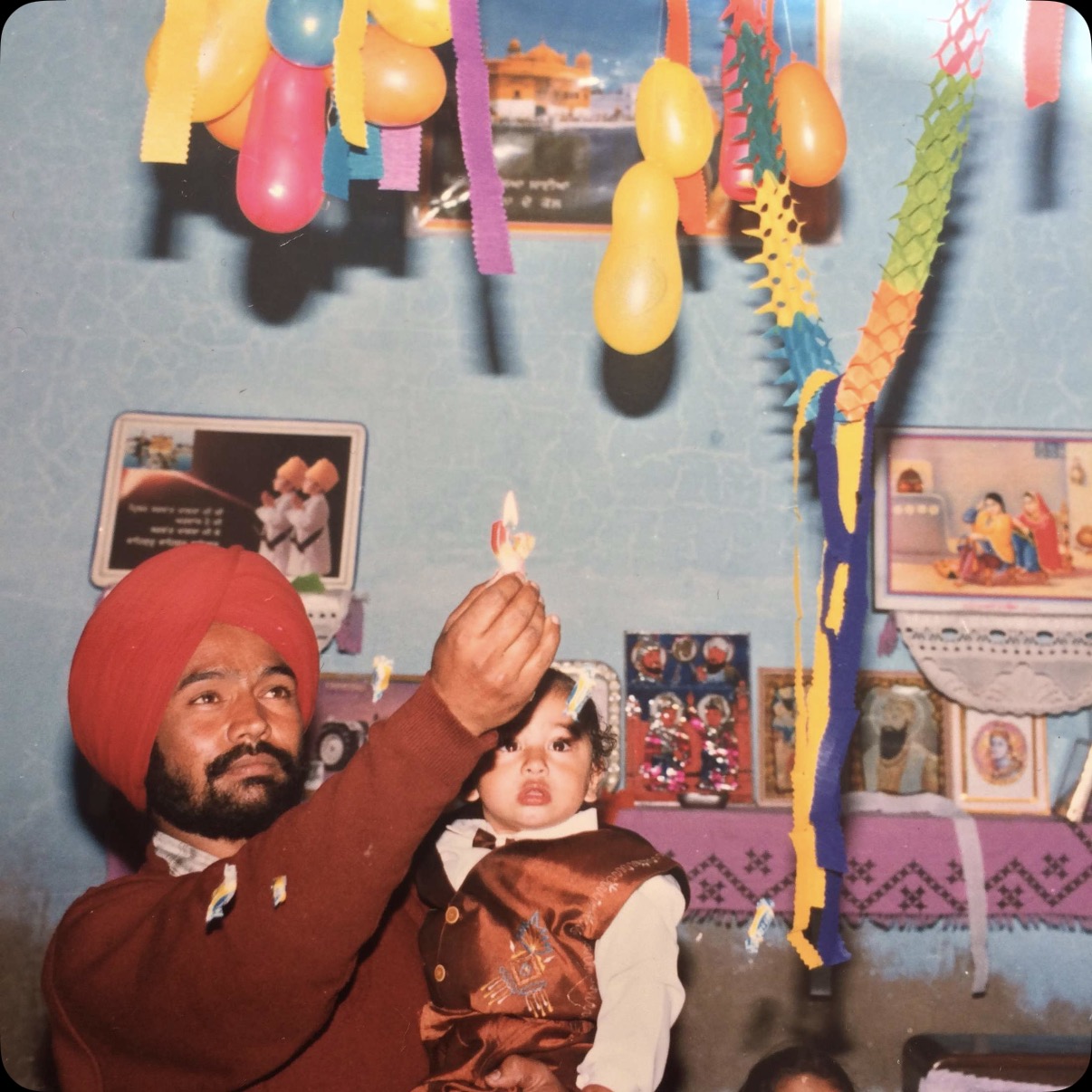
Childhood photo of my partner with his dad celebrating his birthday.
References
Anand, Dibyesh. “Anxious sexualities: Masculinity, nationalism and violence.” The British Journal of Politics and International Relations 9.2 (2007): 257-269.
Choksi, Tanu, Chandana Bhuyan, and Chinu Agrawal. “Navigating Masculinity: Exploring Coping Strategies And Help-Seeking Attitudes Among Young Adult Men In India.” American Journal of Psychiatric Rehabilitation 28.5 (2025): 40-50.
Jayasena, Nalin. Contested masculinities: Crises in colonial male identity from Joseph Conrad to Satyajit Ray. Routledge, 2013.
Aparna, Mendu, and Deepthi Vijayan. “Perceived stigma and help seeking behavior among Indian Men.” World J Adv Res Rev 22.1 (2024): 432-40.
Pakhare, Shyam. “Gandhi’s model of masculinity in the backdrop of colonial India.” 2020
Shailly. “Emotional Expressions Shaping Boyhood Identities Among Elementary School Students in India.” Debating Childhood Masculinities: Rethinking the Interplay of Age, Gender and Social Change. Emerald Publishing Limited, 2024. 27-46.
Sinha, Mrinalini. Colonial Masculinity: The’manly Englishman’and the’effeminate Bengali’in the late nineteenth century. Vol. 1. Manchester University Press, 1995.
Srivastava, Sanjay. “Natives, Subjects, Consumers: Notes on Continuities and Transformations in Indian Masculine Cultures.” Masculinities & Social Change, Hipatia Press.
Winter, Holly (2022) Militaristic masculinity and material culture in the armies in India, 1840-1900. PhD thesis, University of Warwick.
Lahiri, Shompa. “Performing anti‐colonial military identities in the Rani of Jhansi Regiment, 1943–1945: War, diasporic women and decolonisation.” Gender & History 36.2 (2024): 602-619.
Fox, Richard G. Lions of the Punjab: Culture in the Making. University of California Press, 1985.
Sharma, Madan Lal, and Vineeth Kumar. “Multiple Factors Associated with Suicidal Ideation Among Indian Adults: A Review.” Journal of Advanced Zoology 45.2 (2024).
McLeod, William Hewat. The Sikhs: History, religion, and society. No. 14. Columbia University Press, 1989.
Bassi, Aman. Interview. By Amrit Kaur, 10 October 2025.
Singh, Satnam. Interview. By Amrit Kaur, 07 November 2025.