


Jak Doidge-Harrison
Jak Doidge-Harrison (he/him) is a student at Capilano University. He has nearly finished his Bachelor of Science degree in biomedical sciences, and he hopes to enter medical school to become a primary care physician and help his fellow community members live long and healthy lives. He has made the Dean’s List five times during his time at Capilano University, an achievement that speaks to his consistent hard work and dedication to his own education.
He has been volunteering for the Valdes Island Conservancy for three years and counting, performing ecological surveys and documenting species in our coastal ecosystems. It is rewarding work, which has allowed him to meet and work with many community members he otherwise would not have, something he cherishes.
Twins have a unique and often immensely strong relationship with each other, but are they good at building strong relationships or did they just luck into one from birth? Do they have more practice making connections because of their twin? Does their close bond, in fact, impede the willingness or perceived necessity for twins to find peers to relate to or associate with?
As an identical twin navigating the intricacies of the adult world and gradually finding my path diverging from my brother’s, these are all questions I have asked myself many times. The struggle to find new friends at university without him alongside me was very real, and the loneliness that came with that was enormous. At the time, I did not realize how normal this was, for twins.
The problems that twins face as children and as adults are increasingly important to learn about. The number of twin births has increased inordinately since the 1980s (Monden et al, 2021), meaning that there are even more people to whom twin issues apply every year, be they twins themselves, parents of twins, or professionals in childhood development or education. This increase in twinning rate has been attributed largely to the increase in availability of medically assisted techniques, such as in vitro fertilization, in North America and Europe. However, even in regions that have not seen widespread adoption of these techniques, twin births are on the rise. Rates of polyovulation, the release of multiple eggs during the ovulation cycle, increase alongside increased age of birthing parents and, across the world, people are choosing to become parents at later and later ages (Lee & Barclay, 2025). These two factors have caused global twin birth rates, of fraternal twins in particular, to skyrocket. As such, learning how to handle life as a twin and how to parent twins is an important skill for many.

My brother and I, four years old, as close as can be. Picture by John Harvey, a family friend.
September 8, 2009: My twin brother and I walked to school as normal, our mum following closely behind. We had just spent three months straight playing video games together, playing around with various sports equipment together, and reading one book together. He was a few pages ahead of me, but if we sat on the couch properly and held the book between us, we could each read our parts well enough. Hardly a moment was spent without the company of my brother. When we got to school for that first day of class, we learned two important things that would affect us for the rest of the year and have ramifications for years to come. We were in a split-class with the year above us and there were two classes. He was with Ms. Johnson and I was with Mr. Picard. I looked at his face, my face, and knew that our time in school was going to be drastically different this year. Little did we know that this separation would continue for a total of three years, though the emotional and social fallout from this was felt instantly. As I sat in the corner of my classroom on the first day of grade five, alone for the first time in my life, I felt almost agoraphobic. There was too much space, too many strangers, and I was alone.
Separating twins is a contentious topic to many (Garon-Carrier et al, 2022), but American experts such as Dr. Barbara Klein, who is internationally renowned for her research on twin development, believes this contention is undeserved. “Separating twins promotes individuality and allows them to learn how to be apart and connect with their peers,” (B. Klein, personal communication, November 25, 2025), thus being the only correct path for their education and development. This is likely informed by the intense individuality that is so dominant in American culture. More American research corroborates this notion, finding that twins exhibit fewer prosocial behaviours as toddlers compared with their non-twin peers (DiLalla, 2006). Others believe that the situation is not so cut-and-dry. Québécois researcher Garon-Carrier and her colleagues (2022) at Université de Sherbrooke found “no detrimental effects of classroom sharing on twins’ social development” (para. 1). Instead, their research found that twins exhibited higher levels of prosocial behaviour when educated together (Garon-Carrier et al., 2022), a signifier that educating twins together may actually improve their ability to connect with their peers and develop properly alongside them. This is a stark contrast to the American standard of separation. This conversation will likely continue for some time, but the fact that so much thought and research has gone into this topic speaks volumes to the intensity of twin bonds. After decades of research, the only true answer to the question of whether separating twins in schools benefits their social development might be that it depends on the individual twins in question. However, all of the research begins from the same place: how can educators and other childcare professionals ensure that twins can branch out from their own safe, comfortable relationship to form strong bonds with others. What this indicates is that there is a known, documented discrepancy between the social behaviours of twins within and outside of their twinship.
April 10, 2018: In our final year of high school, we managed to swing the impossible; every single class, my brother and I were together. It had taken a significant amount of discussion and preparation to figure out which classes we wanted to take and which ones were popular enough to run but not too popular that there would be multiple sections, but we did it. Sitting now in our AP physics class, which we were only marginally interested in, we were diligently doing our in-class assignment on electromagnetism when the geology teacher walked in and began to kindly chuckle at my brother and I. Unbeknownst to either of us, we had unthinkingly connected our arms and legs, my right limbs to his left, to be as close as possible while still allowing us to write. This comforting closeness was apparently anomalous in her career to be worthy of note, though it was just a Tuesday for us.
In her decades of research on twins, Dr. Klein also delves into the differences between twins in childhood and twins in adulthood. As children, twins often spend much of their time together. This can lead to twins developing an interdependent relationship that is not sustainable in the modern adult world (Klein, 2017). Sometimes this can manifest as one twin using the other as a social crutch, relying on them to break ice or ease social anxiety (Asbury et al., 2017). In more extreme cases, it can instead lead to self-administered social isolation as the twins retreat from others to their own social safety net (Asbury et al., 2017). Once they leave grade school and their life paths diverge, this can cause adult twins to struggle with immense loneliness. One may assume that this is due to an inability to form strong relationships with those outside of their twinship, and, technically, that is true, though only by the strictest of terms.

The modern world almost necessitates divergence from others, and twins are treated no differently by it.
In her book, “New Understandings of Twin Relationships: From harmony to estrangement and loneliness,” Klein refers to this struggle as twin replacement (2020). Twin replacement is the search, typically in a twin’s adult life, for someone who can replicate the intimacy of twinship (Klein, 2020). Whether that comes in the form of nonverbal communication, similarity in personality, or something else, there is an inherent desire for closeness (Klein, 2020) and the comfort that comes along with it. This is hard for anyone to find, but the manner in which twins deal with this struggle is different compared to non-twins because they already had that closeness.
Some of this can be explained through physical similarity, particularly regarding monozygotic twins. Their physical similarities lend themselves to an increased perception of their similarity, even in twins separated from each other as infants (Segal et al., 2003). In other words, mirrored faces give the perception of closeness, which is going to be nigh impossible to replicate with someone who is not an identical twin. However, if a matching appearance is the only quality that affects a twin’s ability to connect with others, no twin would ever find fulfilling or even satisfactory relationships, either platonic or romantic. This, surely, cannot be the case, so what else is getting in the way of bonding outside one’s twinship? Dr. Klein contends that, despite twins feeling the brunt of the loneliness, the problem may lie in non-twins as well (2017).
August 8, 2024: It had been a week now since my brother had moved out. I sometimes still knock on what was his bedroom door in the morning, to share a funny video or give him a hug, only to be met with the hollow sound of the wooden door reverberating against the emptiness beyond. The rest of the mornings are emptier too. There is no more sharing of the couch by the window as the sun peeks through the trees, no more joking mockery about each other’s poor taste when I make my tea and he makes his coffee, and no more simple, companionable silence as we prepare for our days. Instead, there is a cavity where my brother used to be. He’s not even very far away, only a ten minute drive, but any distance is greater than that with which we spent the last two and a half decades.

The couch that my brother and I used to share in the morning, now only ever half-full.
The closeness attained by twins, by virtue of their birth and little else, takes most non-twins decades to achieve, if they achieve it at all. As such, when an adult twin endeavours to find their twin replacement, there is a level of intimacy that they expect to attain with a potential twin replacement in rapid fashion (Klein, 2017). Non-twins, unaccustomed to this expeditious intimacy, can easily become overwhelmed and withdraw (2017).
“Twins want intensely close relationships. Adult twins have to learn that all relationships are not close and nor do they need to be. Twins seek out twin replacements that make their sense of being alone more tolerable. Misunderstandings are hallmarks of twin identity development” (Klein, 2017, p. 248).
These misunderstandings that she refers to can present in a few different ways. For one, as mentioned earlier, twins can have a tendency to try to develop relationships far quicker than non-twins are comfortable with. Secondly, they can expect a level of loyalty from friends that exceeds what non-twins would expect. A twinship begets loyalty, commitment, and openness (Klein, 2017). If a twin extrapolates this experience to other relationships, they are sure to be disappointed. Finally, the intimacy of a twin relationship causes it to fulfill many different aspects of human socialization. There is a wholeness to it, an all encompassing nature. Not all friendships are going to be like this, nor ought they be. A school friend may just want a good study partner; a work friend may just be interested in the progress on a current project rather than the intricacies of one’s life, dreams, and struggles. Thus, twins may misunderstand the depth of relationship that others are looking for.
As a consequence of this, sometimes, twins can overcorrect. Sam Doidge-Harrison, my identical twin brother, states that he doesn’t “do a very good job of maintaining difficult friendships,” (S. Doidge-Harrison, personal communication, October 30, 2025), both because he already has a relationship that fulfills the majority of his social needs and because he views other friendships as supplementary to rather than integral to his life satisfaction. This is not to say that he has not made attempts at finding a twin replacement. Rather, he has tried several times and continues to try to find suitable candidates but is consistently left wanting. None of his relationships, romantic or otherwise, have satisfied the depth and completeness that he grew accustomed to during his childhood. As such, they are abandoned entirely or set to the side.
In contrast with my brother, I found my twin replacement quite readily, though the beginnings of that relationship were not without its hurdles. For one, I was constantly being misunderstood in a way that would not happen with my brother. Words that seemed innocent to me meant another thing entirely to her, leading to arguments and fallouts. I had to learn how to communicate my emotions with words rather than simply with my being, as nonverbal communication was not enough to get the message across. Over time, however, as our relationship developed, nonverbal communication became predominant like it does with my twin. A measure of our intimacy, perhaps, or perhaps this indicates that, rather than me learning how to communicate better, my partner has learned how to interpret the nonverbal signs that my twin can and, perhaps, this lends validity to the notion of her indeed being my twin replacement.

My brother, partner, and I at a choir concert of ours. She is extremely close to each of us, and our relationship likely would not have lasted if she hadn’t been.
Communication barriers are an enormous hurdle when it comes to relationships between twins and non-twins. Twins, from childhood to adulthood, use fewer words than their peers (Ozturk et al., 2021), within their twinship and outside of it. As mentioned above, I found it too difficult to truly match the level of verbal communication that was initially expected of me in an intimate, non-twin relationship. I expected to be understood with minimal speech because that had worked for me in my only other experience with an intimate relationship; this was quickly shown to be naive. For most relationships, that would be the end of it. A twin would expect to be understood nonverbally, a non-twin would misunderstand, and that would be all. I am fortunate that my current partner and I, now together for almost a decade, worked to meet in the middle in this regard. The more common occurrence, however, is for a twin’s attempts at rapidly developing an intimate relationship that does not rely on the spoken word to fail time and time again (Klein, 2017).
Culturally, North America is an incredibly individualistic place. Twins, on the other hand, never really get the opportunity to be an individual. In childhood, twins are constantly being compared and contrasted by their peers and adults in their lives.
“Everybody around us tried to find the differences. [He was] diagnosed with ‘smart twin’ and I was diagnosed with ‘sports twin’ very early, despite the fact that we played the exact same sports at essentially the same skill level and got the exact same grades” (S. Doidge-Harrison, personal communication, October 30, 2025).
This separates their cultural experiences from those around them, changes the way they develop as children, and, consequently, how they behave as adults.
So where does that leave twins growing up in a non-twin world? While some take the stance that twins should be separated to ensure that they do not develop harmful attachment issues (Klein, 2017; Klein, 2020; Asbury et al., 2017), I believe that the root cause lies not in twins but in everyone else. Loneliness is becoming increasingly common amongst all age groups (Infurna et al., 2025), with the United States of America feeling this effect more than many other countries (Infurna et al., 2025). Some attribute this to the aftermath of the Covid-19 pandemic (Borawski & Czaja, 2025) or to the increasing prevalence of the Internet (He et al., 2025), but there is also the individualism inherent to the American identity. In Yuval Levin’s book, “The Fractured Republic: Renewing America’s Social Contract in the Age of Individualism,” he argues that the individualistic culture of America has cost them in terms of solidarity and unity (2017).
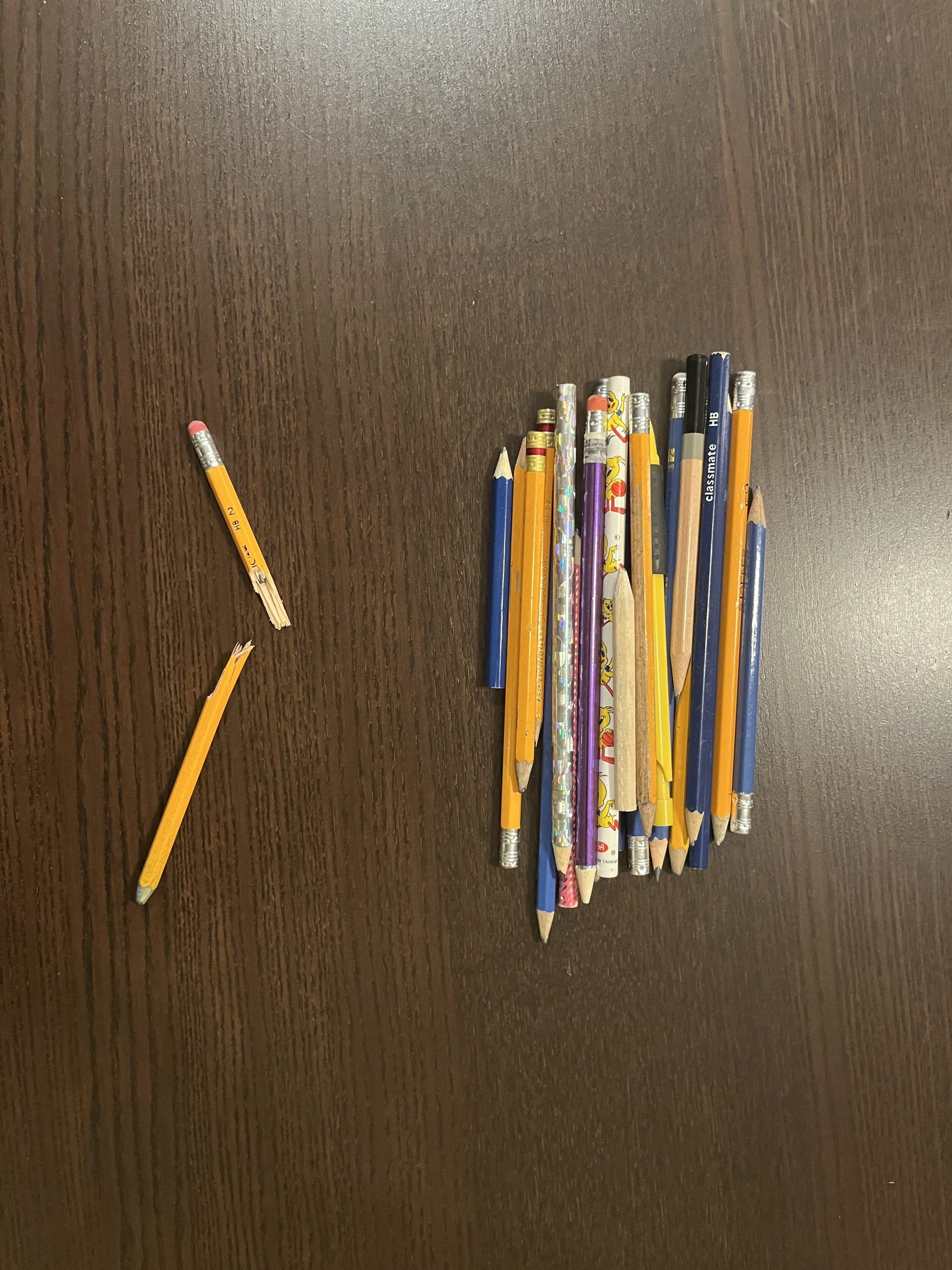
There is a limit to what one can accomplish and withstand alone. Individuality is important, but humans are social creatures and must be able to form strong bonds with others to thrive.
This is the core of the discrepancy in modern relationships between twins and non-twins. Due to the global influence of American culture, individualism is on the rise around the world. This leads non-twins to be less willing to be vulnerable enough to commit to intimacy like twins might want, as mentioned earlier in this article. Something has to be done to correct this, as loneliness is being identified as an enormous public health issue (Infurna et al., 2025). For the sake of both twins and non-twins, finding a way to combat loneliness will be an important battle for politicians, healthcare professionals, and early childhood educators down the line.
References
Asbury, K., Moran, N., & Plomin, R. (2017). Do Mz Twins have discordant experiences of friendship? A qualitative hypothesis-generating MZ twin differences study. PLOS ONE, 12(7). https://doi.org/10.1371/journal.pone.0180521
Borawski, D., & Czaja, M. (2025). Reflection moderates the link between loneliness and eudaimonic well-being in mothers of young children: A COVID-19 pandemic study. Personality and Individual Differences, 238. https://doi-org.ezproxy.capilanou.ca/10.1016/j.paid.2025.113088
DiLalla, L. F. (2006). Social Development of twins. Twin Research and Human Genetics, 9(1), 95–102. https://doi.org/10.1375/183242706776402876
Garon-Carrier, G., Bégin, V., Brendgen, M., Vitaro, F., Ouellet-Morin, I., Dionne, G., & Boivin, M. (2021). Classroom placement and Twins’ social behaviors in elementary school: Providing empirical evidence to inform educational policy. Educational Policy, 36(7), 1850–1875. https://doi.org/10.1177/08959048211015626
He, D., Niu, G., Hu, Y., Song, K., Peng, L., Zhang, Y., & Zhou, Z. (2025). Parental Phubbing and Cyberloafing in Chinese Adolescent: The Mediating Roles of Rejection Sensitivity and Loneliness. Child & Family Social Work, 30(4), 860–870. https://doi-org.ezproxy.capilanou.ca/10.1111/cfs.13222
Infurna, F. J., Dey, N. E. Y., Gonzalez Avilés, T., Grimm, K. J., Lachman, M. E., & Gerstorf, D. (2025). Loneliness in Midlife: Historical Increases and Elevated Levels in the United States Compared With Europe. American Psychologist, 80(5), 744–756. https://doi-org.ezproxy.capilanou.ca/10.1037/amp0001322
Klein, B., Hart, S. A., Martinez, J. M. (2020). New Understandings of Twin Relationships: From Harmony to Estrangement and Loneliness. Routledge.
Klein, B. (2017). Twin dilemmas: Changing relationships throughout the lifespan. Routledge.
Lee, D. S., & Barclay, K. J. (2024). More twins expected in low-income countries with later maternal ages at birth and population growth. Human Reproduction, 40(2), 372–381. https://doi.org/10.1093/humrep/deae276
Levin, Y. (2017). The fractured republic: Renewing America’s Social Contract in the age of individualism. Basic Books.
Monden, C., Pison, G., & Smits, J. (2021). Twin Peaks: more twinning in humans than ever before. Human Reproduction, 36(6), 1666-1673. https://doi.org/10.1093/humrep/deab029
Ozturk, S., Pinar, E., Ketrez, F. N., & Özcaliskan, Ş. (2021). Effect of sex and dyad composition on speech and gesture development of Singleton and twin children. Journal of Child Language, 48(5), 1048–1066. https://doi.org/10.1017/s0305000920000744
Segal, N. L., Connelly, S. L., & Topoloski, T. D. (1996). Twin children with unfamiliar partners: Genotypic and gender influences on Cooperation. Journal of Child Psychology and Psychiatry, 37(6), 731–735. https://doi.org/10.1111/j.1469-7610.1996.tb01465.x
Segal, N. L., Hershberger, S. L., & Arad, S. (2003). Meeting One’s Twin: Perceived Social Closeness and Familiarity. Evolutionary Psychology, 1(1). https://doi.org/10.1177/147470490300100105