
Catherine Kelleher
Catherine Kelleher (she/her) is completing her Bachelor of Arts in Interdisciplinary Studies at Capilano University. She began her undergraduate in STEM studying biology with the goal to work in ecological conservation before switching to interdisciplinary studies to pursue her interest in studying the intersections between the science of environmental sustainability, social science, and humanities. In the future, she hopes to apply her interdisciplinary skillset to develop creative, well-informed, and lasting solutions which support global environments and the diverse needs of communities who inhabit them.
Every year, peaks in human outdoor activity across coastal North America coincide with wild Pacific salmon stocks returns and spawning season. Unfortunately, many of us who enjoy spending time in nature lack a strong understanding of how intrinsically connected human and Salmon populations are in BC. As a settler to Canada, it wasn’t until I reached adulthood and pursued an education in ecology that I began to fully understand the rich complexity of the natural world surrounding me. It is through my own lived experiences and love for environmental science that I found myself compelled to try build a better understanding of the relationship between humans, Salmon, and the deep seeded connections shared by all beings and the environment.
This essay is about the relationship between festival attendees and wild Pacific Salmon in Anderson Creek at the Tuckkwiowhum campground, Tuckkwiowhum village, located in Nlaka’pamux territory in Boston Bar, BC. Anecdotal experience combined with a strong understanding of marine science can help form an understanding of the relationship between wild Salmon populations and impacts from seasonal peaks of human activity in the area. On an annual basis, use of Tuckkwiowhum campground experiences periods of increased impact from human activity in peak summer months including frequent camping and Altitude, a 3-day outdoor music festival. Altitude festival is hosted at the Tuckkwiowhum campground on an annual basis between August 15th-18th with an attendance of approximately 600 people. The festival site includes access to a freshwater swimming area located at Anderson Creek. Anderson Creek is a fish-bearing stream (Wong, 2025) that is a documented host environment for three of the five Pacific Salmon species found across the region (Wilkinson and Jongbloets). The discussed timeframe represents a period of overlap between peak human activity in the region (Hipcamp, 2025) and natural migratory and reproductive cycles of wild Salmon populations which are crucial to the species’ health and survival. This presents a higher risk potential for Salmon habitat disturbance caused by festival attendees and campers who may lack an awareness of what species are present and how they are impacted.
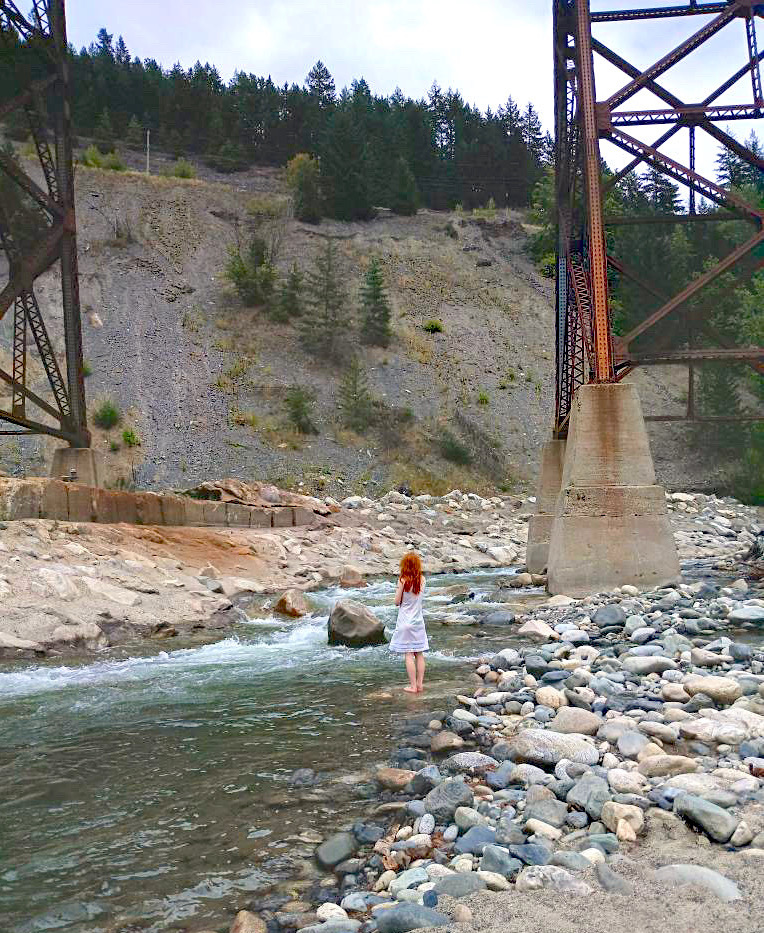
Standing at the water overlooking a section of Anderson Creek which acts as the designated swimming area for attendees of Altitude music festival as well as various other campers throughout summer months.
“I want to stand by the river in my finest dress. I want to sing, strong and hard, and stomp my feet with a hundred others so that the waters hum with our happiness. I want to dance for the renewal of the world.” (251 Braiding Sweetgrass)
Anderson Creek plays an important role as a host habitat for populations of wild Pacific Salmon. A section of Anderson Creek also marks the designated swimming area at Altitude music festival. Bodies of water are connected to the Pacific Ocean via the Fraser River and connects to Anderson Creek. There are five different species of Pacific Salmon found in the North American region, with the Fraser River holding significance because it hosts all five species of Pacific Salmon. (FRAP 1998). Anderson Creek is part of the broader Fraser River watershed. The water from Anderson creek drains into the Fraser River which it connects to, while the Fraser River flows out to the Pacific Ocean (Ross et al, 2024). In recent years, research on water quality levels in Anderson Creek’s watershed have been conducted to monitor contaminants and disruptions affecting the regions Salmon populations. As of a 2024 report by the Raincoast Conservation Foundation, the water quality is considered to be “relatively good”, with a moderate number of contaminants found in both marine and freshwater samples (Ross 2024) considered a direct threat to salmon populations. A 2014 report conducted by LNG confirms that there are three different species of Pacific salmon recorded in Anderson Creek: chum, pink, and coho. Although uncommon, chinook have been recorded in the past at inconsistent rates, though their presence is most likely attributed to individuals migrating from connected waterways (Wilkinson and Jongbloets 2014).
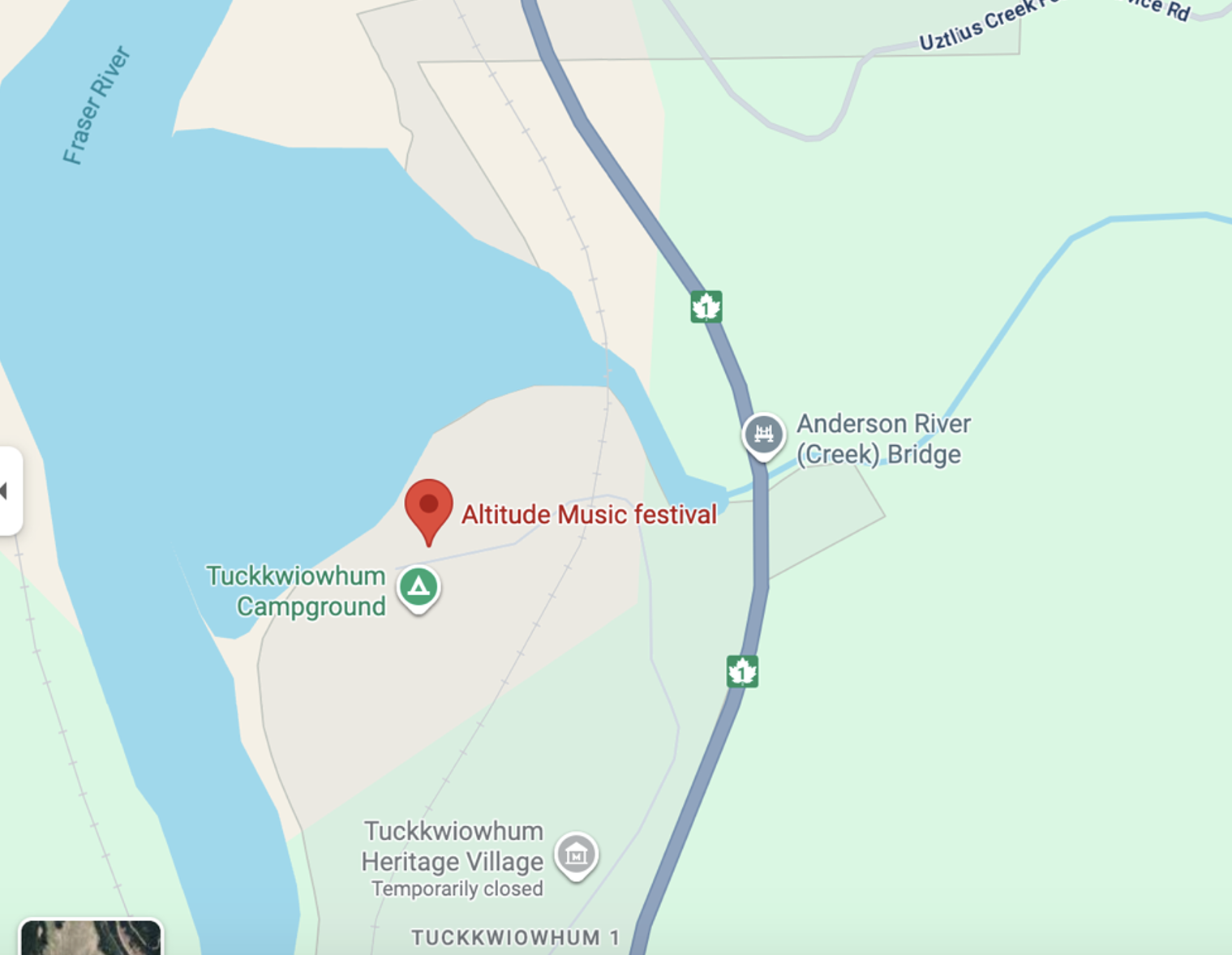
Map showing location of camp and festival site as situated with significant bodies of water. The site’s designated swimming area is situated at the Anderson River which connects to the Pacific Ocean through the Fraser River. Anderson Creek is a host environment for Chum, Pink, and Coho Salmon.
Salmon are extremely sensitive to ecological shifts making them vulnerable to minor changes affecting survival rates of future populations, particularly during spawning season as they face increased disturbances during peak times for human outdoor recreation through summer. Furthermore, Salmon are a fantastically elusive species of fish whose presence and needs are often not easily visible from the human perspective. This highlights the importance of understanding species patterns and educating campers and festival attendees about what to look out for so they can avoid accidental disruption of Salmon habitats and minimizing negative impacts of human outdoor recreation, while still encouraging people to engage with nature and the environment. My hope is that fostering a deeper understanding of the surrounding environments and ecological needs amongst the community of festival attendees and organizers will help protect local Salmon populations during future events by identifying then reducing factors contributing to disturbances. This could be enacted by encouraging efforts to educate attendees on how to enjoy their time in nature whilst avoiding disturbing local ecosystems. In her book Braiding Sweetgrass, Robin Kimmerer shares valuable insight informed by her perspective as a First Nations healer and as a scientist of botany, informing us that “Restoring land without restoring relationship is an empty exercise. It is relationship that will endure and relationship that will sustain the restored land. Therefore, reconnecting people and the landscape is as essential as re-establishing proper hydrology or cleaning up contaminants.” (Kimmerer, 2013).
When comparing data on disturbances and impact levels, it appears that infrequent human activities such as camping and short festivals including Altitude pose a relatively minor threat to local Salmon. Salmon populations in the region have been most severely affected by long term disruptive activities such as mining and pollutant leaching that occurs along the Fraser River and across tributaries, including along Anderson Creek (Blue Path, 2021). Despite this, concentrated spikes of human activity in Anderson Creek over the festival’s 3-day duration still have the potential to cause major disruptions to Salmon populations depending on the specific conditions present. Over the course of the festival, the major concerns I had for the Salmon were impacts stemming from direct contact with humans walking across shallow streams, increased water pollution levels, and prolonged disturbance from the noise and vibrations of loud bass music. During the process of my research, I found that there was minimal data available about how loud music and other festival related factors would affect the area’s Salmon populations. To help develop my understanding I met with Marke Wong, a marine biologist whose professional work specializes in water quality assessments in Salmon habitats across British Columbia, including the Boston Bar area. When asked about the likelihood of these disturbances during the festival’s duration, he suggested that the Salmon were unlikely to be highly sensitive to vibrations from the nearby site’s bass music. He adds that “the major impacts are sedimentation and temperature because that affects the egg’s ability to breathe. The eggs are laid in riffle streams in gravel, so there’s lots of vibration going around there too. And they need that. They need the dynamic oxygen rich waters of a riffle so that they don’t get sedimented out. But if there’s increased erosion or sedimentation or damage to the riparian area that could be an issue.” (Wong, 2025).
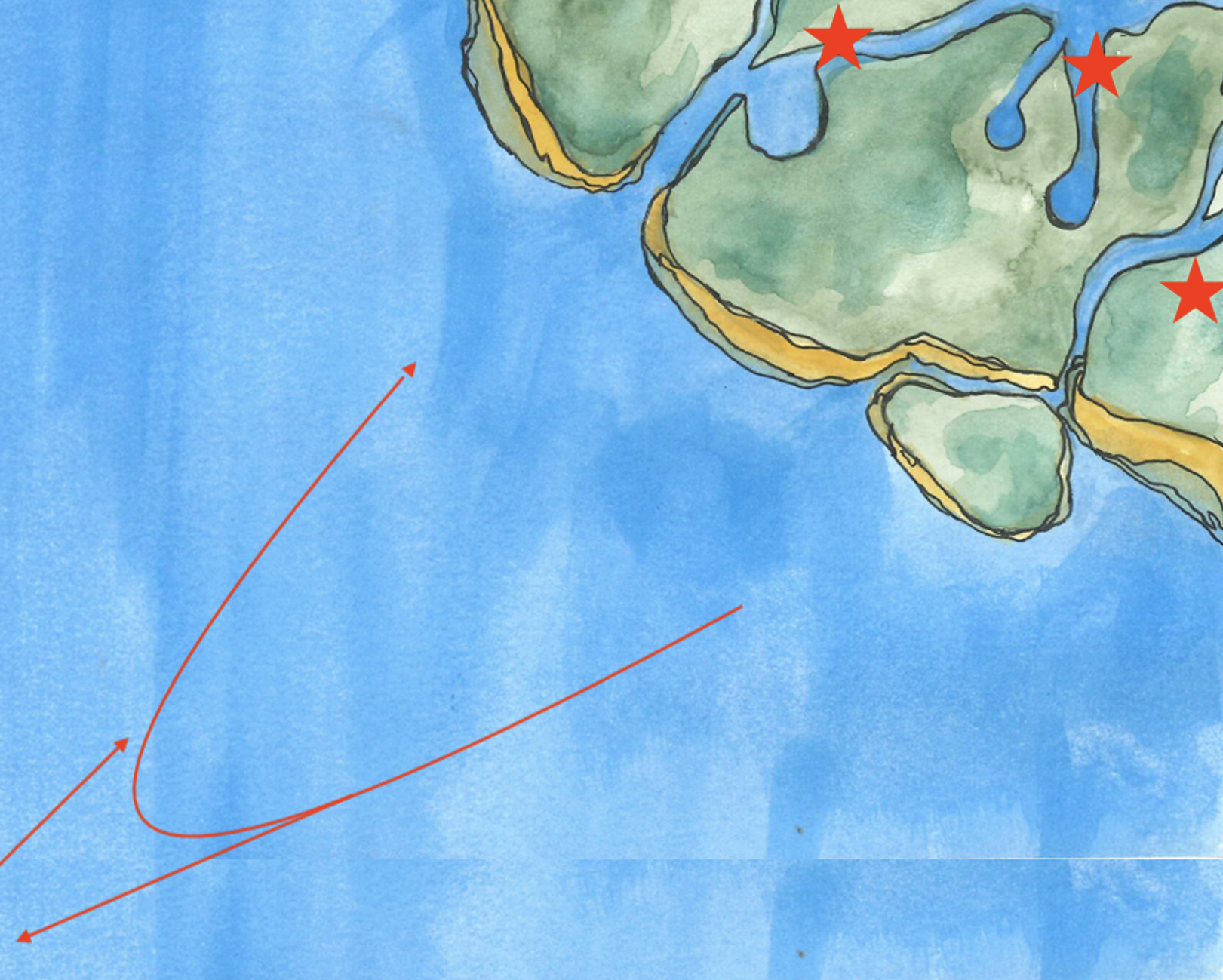
A generalized map showing cycles of migration routes and spawning areas commonly associated with wild Pacific Salmon throughout their life cycle. Red stars represent areas potentially suitable for estuarine habitats. The red arrows show the direction of Pacific Salmon’s migration as they move from their freshwater origins out to the Pacific Ocean before making their final migration back upstream to their freshwater birthplace where they reproduce and die.
In the process of researching this topic, I’ve found myself contemplating how much humans and Salmon have in common other than the spaces we share. Pacific Salmon have specific long-term life routines that follow their family lineage, making every effort to protect their next generation of salmonids amongst an almost unbelievably treacherous environmental conditions and challenges. Pacific Salmon are anadromous, meaning that they spawn in fresh water and later go on to live the majority of their adult lives in a marine ocean environment (Wong, 2025). The Pacific, to be specific. Being both sensitive and highly resilient, wild Salmon spend their lives preparing to return to the same freshwater locations where they were born. Familiar environmental conditions create a space of belonging for each group of salmon, which they retain the ability to find their way home to until the end of their lives. A Salmon who has lived their best life (read: completed their species’ intended life cycle in full) will most often die in the same body of water in which they were born. These factors make it extremely important to maintain ideal ecological conditions in fish bearing streams such as Anderson Creek to ensure the health of future Salmon populations.
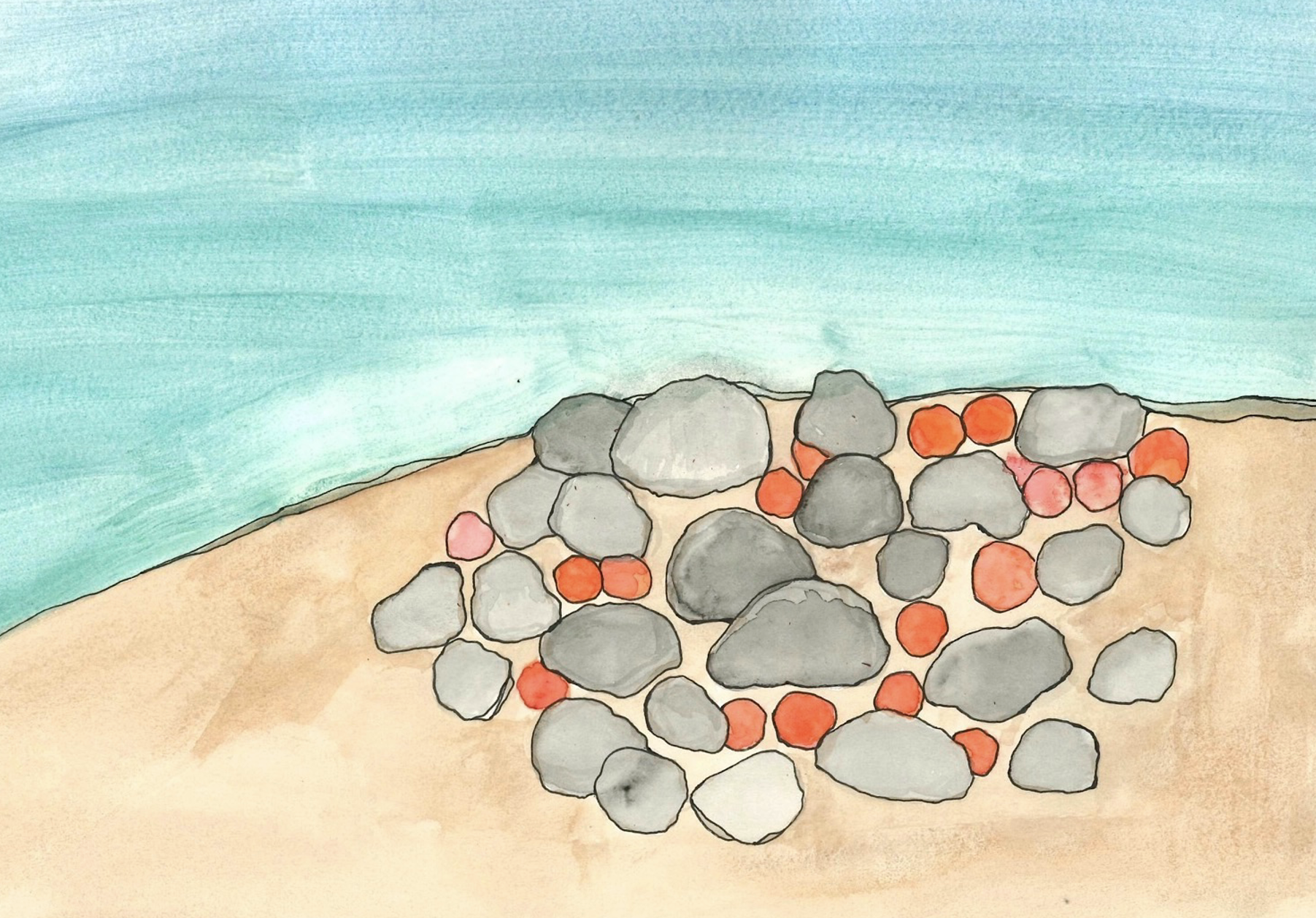
A watercolour depiction of a Salmon REDD nest in a riverbed. A REDD nest contains a group of salmon eggs (small orange spheres each measuring approx. 1/4 -1/2 inch) which are laid in ‘nests’ amongst patches of gravel and small rocks suitable to house and protect eggs as they undergo their incubation period. REDD’s are highly sensitive to ecological changes and disturbances.
I do not think it would be realistic nor reasonable to expect all humans to automatically care about and engage with aspects of the world that they never knew existed or noticed. With small populations and stream sizes the salmon aren’t exactly jumping out of the water or doing anything to make themselves known. It takes some dedication and quiet observation to see beneath the water through the small patches of gravel and debris into the highly sensitive nesting areas tended by wild Salmon, known as REDD nests. REDD nests are highly vulnerable to direct disturbance from humans, for example, if a festival attendee were to step on a REDD while walking across a shallow stream section. Wong (2025) cautions against disturbance caused to REDD locations from walking or swimming. “You’re going to crush eggs and you’re going to generate sediment. It’s a nursery, right? It’s a very sensitive area. So every time you step on the gravel [with REDD] you’re going to be killing things. As long as it isn’t during a period when there are eggs in the water, that’d be fine” (Wong, 2025). Determining the locations of REDD nests would require a simple visual survey to be conducted each year to help mark the REDDs and establish protective measures. Pacific Salmon spend their lives navigating vast and changing ecosystems before coming home to build REDD nests, lay their eggs and protect their offspring. In this sense, their presence in these scattered freshwater streams is so fleeting that our ability to witness their journey back into their home streams life before dying is so finite that it should be protected, studied, and understood. We are uninvited guests in their ancestral home, after all. After years in the ocean, the Salmon make a grand and arduous return to the specific body of water in which they were born, followed by dramatically fulfilling their lives’ cycle as they expend their remaining energy to reproduce, lay their eggs, and die. The cycle completes itself in the same place it began.
By advocating for ecological protection through educating participants, my aim is not to restrict people’s enjoyment of nature, but to the provide information that is needed in order for people to better understand their place within and impact on the natural world that surrounds them. Engaging with nature through activities such as swimming, camping, dancing, and celebrating music is overall beneficial for human well-being. Individuals who spend time outdoors often develop a deeper appreciation and concern for the natural environment, likely because the best way to understand environmental issues is to experience them in context. Humans are tactile animals by nature. As I reflect on this, I recall the words of wisdom offered by Robin Kimmerer in Braiding Sweetgrass:
“A reminder that caring is not abstract. The circle of ecological compassion we feel is enlarged by direct experience of the living world and shrunken by its lack.” (Kimmerer 239).
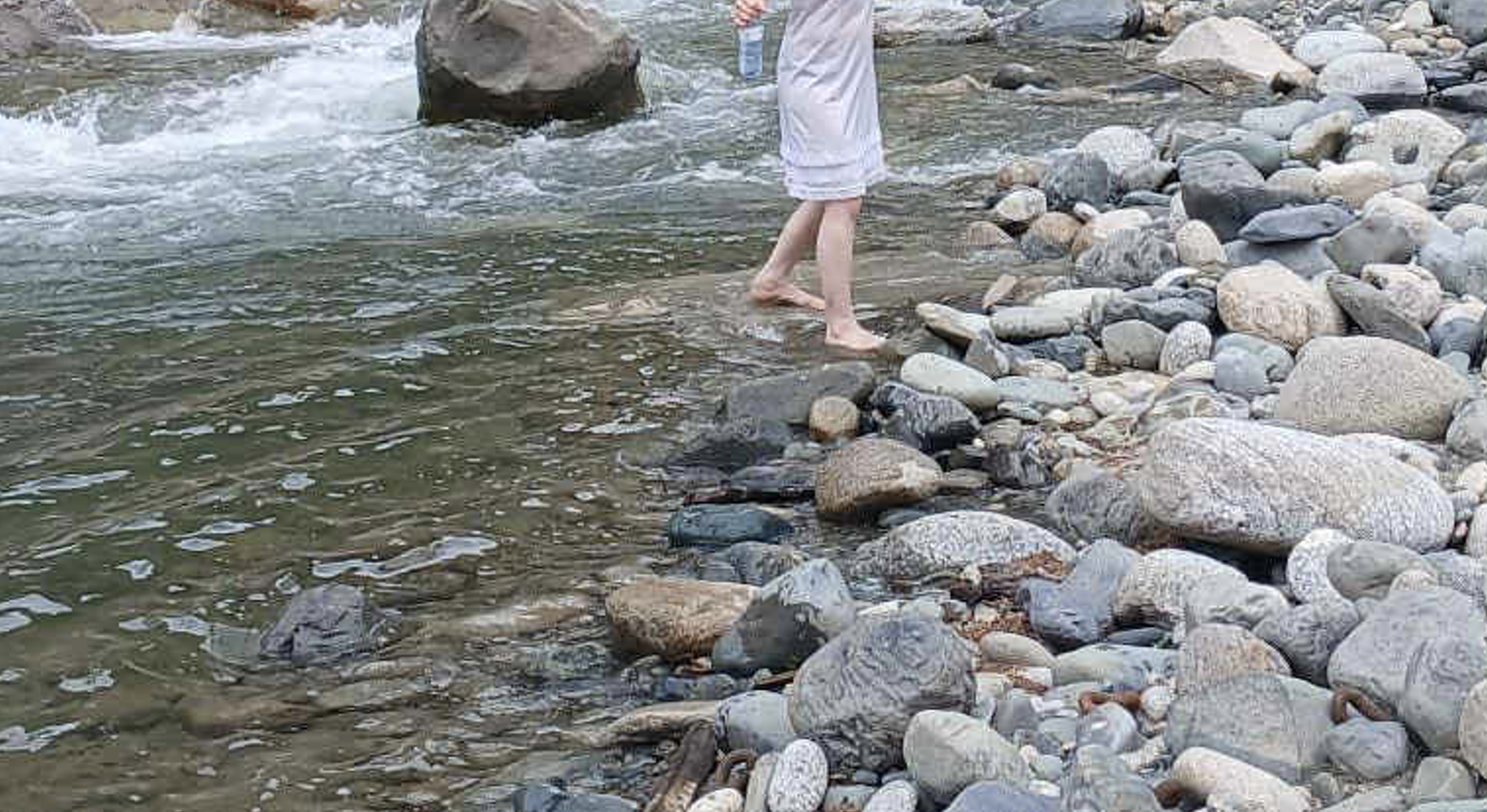
Walking over rocks across a shallow section of Anderson Creek. The conditions include rocks, gravel, natural debris, and a clean source of moving water which provide an ideal habitat for new and returning Salmon.
In my own experience, I have found that most people are generally in a more open-minded headspace in a music festival context, in turn making them more receptive to being presented with new ideas. Further, the designated swimming area at Anderson Creek provides a unique and valuable opportunity for attendees to build connections through positive, first-hand experience and which set in motion lasting positive impacts. Encouraging individuals and event coordinators to develop a deeper understanding of the locality’s environmental patterns and effects associated with high impact human activities throughout summer will help lay the groundwork for future planners to incorporate positive changes if needed, ultimately benefiting all parties (fish and human) involved. During my conversation with Marke, I shared my concern that educating people about the Salmon’s presence might lead to more destruction and depletion of their habitat. Human beings have a long history of being opportunistic and destructive in their use of resources. Despite this, it seems as though the key to fostering better environmental stewardship practices in community lies in sharing awareness and extending care for issues. Marke offers that “If you’re looking for voluntary compliance, then education is the main way you would want to influence good actors, right? And then it becomes self-policing” (Wong, 2025). On an individual and community level, it appears most important that we open to understanding the environments around us and the impacts of our behaviours when interacting with them. All in all, grassroots efforts such as educating festival attendees about the Salmon populations and offering advice on how to reduce disturbance could be the key to generating deeper appreciation for local ecosystems and species, in turn equally benefiting the environment and enjoyment for humans.
References
Altitude Music Festival. “Altitude: About Us.” Altitude. True Sound Media, 2025. https://www.altitudemusicfestival.com/about-us.
Fraser River Action Plan (FRAP), Fishery Management Group. “Fraser River Salmon Summary,” Department of Fisheries and Oceans, April 1998. https://waves-vagues.dfo-mpo.gc.ca/Library/227528.pdf.
Kimmerer, Robin Wall. Braiding Sweetgrass. Milkweed Editions, 2015.
Hipcamp. “What Is the Best Time for Camping Season in Hope, BC? .” Hipcamp, 2025, www.hipcamp.com/en-CA/question/what-is-the-best-time-for-camping-nzvxs72v. Accessed 27 Oct. 2025.
The Blue Path. “Swimming Upstream: Threats to Wild Salmon of British Columbia and Fraser River.” The Blue Path, 1 Jan. 2021, thebluepath.com/wild-salmon-threats/.
Ross PS, Scott S, Blancard J, Noel M. 2024. Anderson Creek watershed: Water quality report for the 2023/24 wet season. Raincoast Conservation Foundation. https://doi.org/10.70766/126.498
RSBC Rivershed Society of British Columbia. “Five Species of Pacific Salmon.” Watershed CPR, 2019. https://watershedcpr.canadiangeographic.ca/salmon-fry/protect/the-five-species-of-pacific-salmon/.
Tuckkwiowhum Village. “Tuckkwiowhum Campground Fraser Canyon.” Tuckkwiowhum.ca, 2019. https://tuckkwiowhum.ca/campground/.
Wong, Marke. Interview. Conducted by Catherine Kelleher, 16 November 2025.