


Sebastian Caballero
Sebastian Caballero is a soon to be graduate from Capilano University with a Bachelor of Arts in Psychology with a Minor in Business. He has been recognized with the Dean’s Academic List of Honours six times across the six years that has taken him to complete his degree. Simultaneously with his studies, he is a Manager at JOEY Shipyards, a life experience that has shaped his way of being and that has taught him how to apply the knowledge he acquired during his degree. Inspired by his work experience and education, he will pursue a career in people and culture management alongside chasing his master’s degree in clinical counselling. Sebastian came to Vancouver at just 17 years old and, inspired by his mom’s life experience, he is excited for what the future has prepared for him.
Would you purposely leave behind your home, family, friends, culture, and sense of belonging? Don’t answer yet. Now ask yourself: would you do it at the age of seventeen? Regardless of your answer, we can all agree that making such a decision requires excessive amounts of courage. On top of this, migration initiates a complex process of personal evolution which is not only influenced by external circumstances, but also by those internal psychological resources individuals must build to survive and thrive in challenging situations. Although leaving everything you’ve ever known may seem like an unreasonable or even reckless choice, it is a decision taken by 171,850 immigrants between September 2024 and September 2025 (Government of Canada, 2025). As these newcomers navigate and explore their new environments, they gradually develop resilience, adaptability, and intrinsic motivation qualities that shape their emotional, academic, and professional growth.
Continuing with the idea of adaptation, Walton (2011) states that a sense of belonging is one of the strongest predictors of motivation, performance, and well-being in any environment. This idea is particularly relevant for migrants who must rebuild their communities and identities from scratch. Therefore, my central argument is that when migratory experience is paired with a supportive workplace environment, it strengthens resilience and intrinsic motivation, ultimately aiding the development of authentic leadership skills.
This paper will explore how my own resilience, motivation, and professional development have been shaped by my migratory experience. I will be drawing from personal narrative, psychological research, “The Attentional & Interpersonal Style Inventory” (TAIS) assessment, and interviews with two experts in their fields. The first interview is with Chris Conte, the Director of People & Culture department at JOEY. This restaurant group is characterized by being the ultimate casual fine dining experience. With a focus on genuine warmth and care, they have 35 locations spreading across the U.S and Canada. The second interview is with Kate Gates, a registered clinical counsellor and former Head of the Counselling & Disability Services at Vancouver Community College. I will examine how belonging, community, and adversity interact to shape one’s leadership trajectory. With this, I will dive into an academic and personal exploration on how individuals grow the most when they are challenged by unknown environments whilst being empowered by workplace culture.
Deciding to move away from Peru at seventeen was shaped long before I was even born. It all started with my mother, Blanca, a woman whose life story is shaped by resilience, sacrifice and an unbelievable desire for more in life. Blanca grew up as the youngest of eight children in a household marked by harsh economic scarcity. Growing up, during Peru’s battle with terrorism and political instability, she learned early on that survival depended on determination and creating your own opportunities, rather than luck. Despite the adversity she faced, she managed to get a job at an entry position for a government agency. From then onwards, she was able to build her career to eventually becoming the director of that same institution, all while raising two children as a single parent. Her journey was not only inspiring, but it illustrated to me that adversity does not limit potential, rather, it boosts it.

A photo taken on November 12th, 1971, of my mother and her family when she was a new-born.
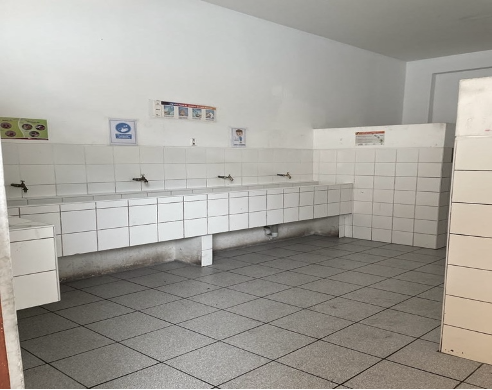
Photo of my mother’s school bathrooms.
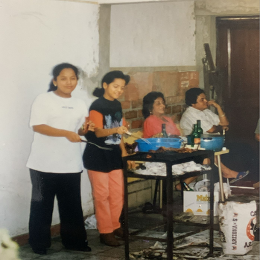
Photo of my cousin’s at my mother’s childhood home.

Photo of current state of my mother’s childhood home.
When only a few months were left until I graduated from high school, my mother started to slowly plant the idea of studying abroad. This was a dream she held from when she was young but was unable to pursue due to economic constrains. Nonetheless, due to her lived experiences, she knew that good personal growth would come from putting myself out there and studying abroad. I understood that migrating to Vancouver was not only something I was doing for myself, but also for my mom, for her sacrifice and for her legacy. So, I went for it, I left behind everything I had ever been familiar with. The first few months were rough, I faced loneliness, and a big sense of uncertainty if I had made the right choice. Nonetheless, looking back, I realize that those moments were crucial. I was able to transform all that doubt and negativity into resilience that acted as fuel for building a well-earned sense of belonging. This earned sense of belonging and knowing that I was accomplishing things that not too long ago I was deeming as unbearable, gave me motivation.
Having experienced the power of motivation, resilience and sense of belonging, I gained a solidified interest in psychology, especially in how humans’ cognitive resilience can transform into motivation. Psychological research explains that resilience isn’t simply “getting through” adversity but rather being able to transform difficulty into energy for future achievement. According to Bonanno (2004), resilience is not only the absence of dysfunction, rather, it is one’s ability to continue engaging with life and working towards achieving goals even after major life stressors. The author expands on this idea and mentions how resilience is characterized by extreme flexibility to adjust to new demands while also staying motivated in everyday functioning.
During my interview with Kate Gates, she talked more about this phenomenon. “When we overcome something hard, the nervous system encodes that success… It becomes evidence for the future that you can do hard things again.” (K. Gates, personal communication, October 22, 2025) Moreover, she emphasized that sometimes this process often occurs without conscious awareness: “Every time you adapt, you’re building self-efficacy. And self-efficacy is one of the biggest predictors of motivation. It makes you want to try again” (K. Gates, 2025)
This interview was not only helpful for my article but also in a deep personal level. I realized that what I had felt during my early experiences in Canada was a reference point for future challenges, and that rather than simply a personal experience, it had empirical research that supported that experience. After I saw that I was able to thrive in a new environment, that initial fear and sense of not belonging slowly shifted into confidence and motivation. As Kate put it during our conversation, this is because “resilience strengthens your internal voice” (K. Gates, 2025), enhancing the idea that one is able to overcome adversity. These early experiences showed me how through resilience one can ‘bounce back’ and become more motivated, as I prove myself that I’m capable of thriving through tough circumstances and achieving interpersonal growth.
Great! Now I’ve learned that through resilience I can get a sense of accomplishment that translates into motivation. Now how can I apply that motivation into more contexts other than interpersonal growth? As I was trying to figure out the answer to that question, I stepped into the Canadian workforce. I applied for a Host position at a local restaurant nearby, JOEY Shipyards. With no previous work experience and no idea what I was getting into, the hiring manager saw my potential to be great and decided to hire me. That was two years ago now, and since then I’ve been working and learning in many different roles, eventually landing the Assistant Day Manager position at just 19 years old. Due to my resilience, I was a motivated individual and from the start, I wanted more. I would talk to my managers about what they needed from me to continue to advance to the next role, I asked for feedback and wanted to trace a timeline of when I could get my next promotion. None of this would’ve been accomplished if I wasn’t in a nurturing and supportive workplace environment. As much as my migratory experience built the foundation of resilience and motivation, it was the workplace culture at JOEY that amplified both concepts and tailored them into leadership potential. JOEY offered me mentorship, stability, good social connections and recognition. Through these elements and seeing how much they invested in their employee’s development; the concept of belonging shifted from a psychological term I had learned in class to a lived experience. I went from feeling lost in a new country and environment, to being part of a team that valued growth and saw potential in my ability to contribute to the workplace.
During my interview with Chris Conte, former Director of People & Culture at JOEY, I was able to truly understand how deeply embedded the company’s culture truly is. I asked him what set JOEY apart from other organizations, and he said, “What really sets us apart is the balance between high standards and genuine warmth and care… the culture is built around excellence but it’s also incredibly people-focused” (C. Conte, personal communication, October 15, 2025). Chris was able to give a textbook explanation of what I had experienced firsthand. This resonated with me as the workplace was one of the first places in Canada where I felt rooted and connected to a community. His response and my experience both reflect how JOEY intentionally fosters a sense of community. Continuing with our interview, I asked Chris how leadership is attained or perceived at JOEY, he said, “We have a talent pipeline… we’re trying to grow our own people. There’s clearly a pathway for development … leadership training, feedback, coaching, recognition.” (C. Conte, 2025). I followed up by asking “What kind of leaders does JOEY aim to shape?” and he answered, “humility is a big part of being a leader… leaders set a tone, the conditions, the environment other people work in. The best leaders are approachable, accountable, invested in their people” (C. Conte, 2025). With this explanation, it reassured the idea that my development wasn’t simply accidental, rather, it was the result of being in a supportive workplace environment that encourages and supports growth.
Being able to do this interview with someone like Chris was rewarding on its own, but when he started connecting leadership to resilience, I knew that I had stumble across something important. He mentioned how great leaders are to remain grounded under pressure and willing to learn from adversity, mentioning that “mistakes become like scars, they build resilience” (C. Conte, 2025). Although I agreed with Chris’s metaphor, it was important to reflect on what those “scars” looked like in my journey. The challenges I had to overcome were difficult, yet they didn’t cause severe psychological damage because I had a secure parental attachment that acted as a protective factor. Research by Dr. Jayaraju, delves into Attachment Theory and Bowlby’s Stages & Attachment Styles and shows that strong early caregiver attachment enhances a person’s capacity to cope with stress and develop resilience later in life (Jayaraju, 2024). Having reflected on how this metaphor applied to my personal experience and combined it with Chris’s insight, it became clear how migratory experience had given me the drive, but workplace belonging allowed me to narrow down that drive and directing it towards building leadership skills. In this sense, the internal psychological resources I developed through my immigration experience were expanded on and transformed through mentorship and belonging. This interaction between personal resilience and organizational culture is what ultimately shaped my early leadership identity.
Another way of how I noticed JOEY followed a structured process of assessing leadership prospects was when they required me to complete the Attentional & Interpersonal Style Inventory (TAIS) before I stepped into management. The TAIS assessment is a performance-focused psychological assessment that evaluates leadership readiness, communication styles, and attention patterns under pressure.
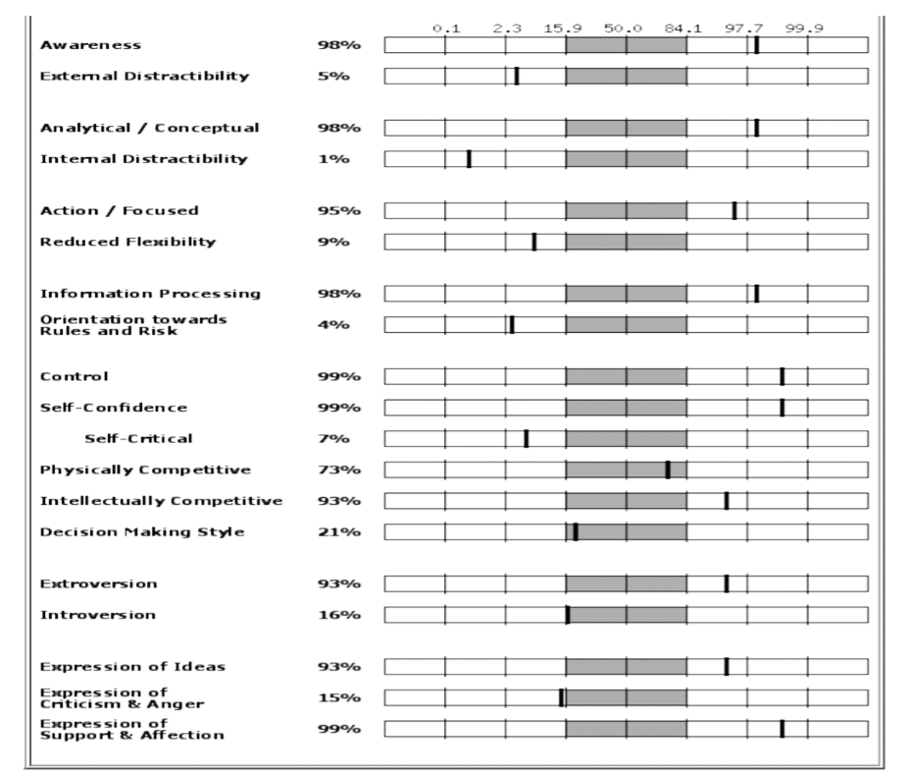
Image of my TAIS score’s summaries.
Contrary to pseudoscientific personality quizzes or informal questionnaires, the TAIS is a scientifically validated assessments with decades of empirical research to support it. According to Nideffer (2006), the TAIS has been subject to loads of research since 1974, and it is globally used for elite performance settings. Nideffer explains that this assessment is used by the Australian Institute of Sport, military units like the U.S Navy Seals and corporate leadership teams. Furthermore, Nideffer reports reliability coefficients ranging from 0.57 to 0.72. These scores are comparable with major accepted clinical instruments such as the Wechsler Adult Intelligence Scale (WAIS) or the Minnesota Multiphasic Personality Inventory (MMPI), confirming its scientifically reliability.
After taking my TAIS, I was so anxious and excited to see my results, as I had never taken any sort of personality assessment. My results highlighted indicators that closely relate with resilience and motivation. For example, I got high scores in awareness and in analytical/conceptual processing, with both scores at 98%. These two categories demonstrate high attentional control and cognitive flexibility, which in other words means that it helps individuals adapt when facing unknown or stressful situations. Additionally, my 99% score in both Control and in Self-Confidence, alongside with a 1% score in Internal Distractibility and 5% External Distractibility, demonstrated perseverance, self-regulation, and the ability to cope with adversity while staying on track. Even though there isn’t a specific “self-driven motivation” score, the combination of high control, low distractibility, and high action orientation, are qualities of a naturally driven person. These attributes highlighted by the TAIS were not random. They are qualities I’ve slowly built since moving to Canada at seventeen. Moreover, my results showed how my leadership style is shaped by interpersonal awareness. This once again ties back to the sense of belonging. JOEY’s focus on relationship-based leadership resonated with my way of being. As Chris Conte best described, “The best leaders are approachable, accountable, invested in their people.” (C. Conte, 2025)
Even though seeing how I was a good fit for leadership was rewarding, what struck me the most was how my TAIS results reflected on psychological patterns that are commonly associated with resilience such as high levels of adaptability and pressure tolerance. In my conversation with Kate Gates, she explained that those scores made sense for me because “Coming into a completely new culture… you need to adapt. You struggle with challenges like language and cultural ways. From that, you gain strength and resilience.” (K. Gates, 2025). Ever since coming to Canada, I applied adaptability skills by understanding that I had to adapt to a new environment, rather than a new environment adapting to me. I had to be humble enough to be willing to learn new ways of being and new social norms. In addition, during our interview she described how if one can successfully adapt, it ends up creating a motivational cycle. She stated, “Your brain learns that you can get through things. Once you’ve succeeded in the unknown, you want to take on new things because it was transforming.”
My interview with Kate was not only interesting because she is a great professional and even better person, but also because her insights tie together the core themes of this article. My TAIS scores confirmed that my leadership potential in rooted in psychological strengths that I have shaped through migration, resilience, motivation and adaptability, all which were later refined through the workplace culture at JOEY. Ultimately the TAIS was a great way to assess how my lived experience was not only personally meaningful but also professionally measurable.
However, is coming to a new country the absolute and guaranteed key to success? No, absolutely not. Although my argument throughout the paper highlights how migration strengthens resilience and motivation, it is important to mention that migration isn’t a universal pathway to success. A major counter argument is that many immigrants struggle do adapt to the new culture, facing cultural disconnection or are faced with systemic barriers. These critiques are valid and have been supported by research throughout the years.
However, there is a strong pattern found in psychological research that, on average, immigrants and children of immigrants often outperform native-born peers among different categories. According to Hofferth & Moon, “children of immigrants consistently outperform children of native-born U.S. parents, in spite of lower familial resources” (2016). In their U.S based longitudinal study, they analyzed 374 young adults and found that 68% of children of immigrants were enrolled in college, compared to 53% of children of native-born parents. Additionally, they found that children of immigrants were more prone to have a job or be enrolled in college than their native-born counterpart (85% vs. 77%). Lastly, they also found that native-born children tend be more likely to have a criminal record when compared to children of immigrants (25% vs 8%). These patterns rather than representing socioeconomic advantages, they reflect underlying psychological processes. Even if they didn’t immigrate themselves, kids of immigrants often grow up with greater parental expectation, strong academic engagement and a constant example of resilience and adaptive coping (Hofferth & Moon, 2016). This ends up influencing their way of being, and translates into higher performance in academic, motivational and behavioural domains.
Once again, even though immigration is not a guaranteed pathway to success, both my personal experience and empirical research support the idea that those who successfully adapt to unknown stressors/situations, then are more likely to develop resilience, discipline and motivation. Psychological tools that can help surpass those native-born individuals.
Additionally, even though I faced certain systemic barriers such as only being able to work 20-24 hours a week as an international student, JOEY’s leadership worked with me to make sure I can succeed while following these restrictions. Despite my limited availability, they worked around my schedule and still invested in my development. I’m not trying to say that every workplace will do the same thing and that therefore the systemic barriers don’t exist. What I’m trying to explain with my personal narrative is that supportive workplace environments can help one get past those barriers and allow professional growth. Thus, it is evident that migration alone is not a “golden rule” for success. Nonetheless, as explored by Hofferth & Moon (2016), the immigrant-paradox shows that adversity becomes fuel for success. And that the combination of resilience and sense of belonging created by a supportive workplace environment, provide a unique formula that fosters growth.
At last, exploring the intersectionality between migration, resilience, motivation, and workplace belonging is essential because it challenges the common narrative that immigrants begin their journey at a disadvantage. My story, like many others, demonstrate that once an individual successfully adapts to the emotional, cultural, and structural challenges of immigration, they often gain psychological resources that are transferable across multiple aspects of life. My own experience showed me that the adversity of immigration can foster growth, rather than limit it. My mother’s life taught me that where you start is never where you are destined to end.
Ultimately, this article reflects on the idea that immigration is much more than simply moving to a different place, it is an act of becoming a better and improved version of yourself. When self-improvement is supported by a workplace culture that values people as deeply as it values performance, the result is a leader shaped not by circumstance, but by resilience, motivation, and purpose. But why does this matter? Well, thousands of young immigrants arrive in Canada every year, and with them, they bring along the same mixture of fear, uncertainty but also ambition. When these individuals find supportive environments, their resilience transforms into a source of motivation and drive. This matters because those young immigrants bring psychological strengths such as adaptability, resilience or strong sense of motivation that can contribute to the betterment of society, only when organizations nurture them. When they invest in their people, like JOEY did with me, they are able to transform those hardships faced in their immigration process and foster them into leadership skills for the next generation of leaders who embody diversity and hope to improve this country. My experience is simple one of the thousands of stories that I hope will continue to be told of what happens when workplaces ensure that immigrant workers are supported and empowered.
References
Broadbent Institute. (2025, April 16). Shifting Borders: Canadian Attitudes towards Immigration – Broadbent Institute. https://broadbentinstitute.ca/research/shifting-borders/#key-findings
Bonanno, G. A. (2004). Loss, trauma, and human resilience: Have we underestimated the human capacity to thrive after extremely aversive events? American Psychologist, 59(1), 20–28. https://doi.org/10.1037/0003-066x.59.1.20
Conte, C. (2025, October 15). [Interview by S. Caballero].
Grandlark Investments, Inc. (2024). TAIS–Business Report (Classic) for Sebastian Caballero. TAIS Performance Systems, Inc. https://tpsitais.com/rpts.cgi?k=Pzu5DjLjo4mjRaSN
Galea, S., Ettman, C. K., & Zaman, M. H. (2022). Migration and Health. The University of Chicago Press.
Gates, K. (2025, October 22). [Interview by S. Caballero].
Hofferth, S. L. & Ui Jeong Moon. (2016). How do they do it? The immigrant paradox in the transition to adulthood. In Soc Sci Res (Vol. 57, pp. 177–194). https://doi.org/10.1016/j.ssresearch.2015.12.013
Immigration, R. a. C. C. (2025, November 18). Understanding student and temporary worker numbers in Canada. Canada.ca. https://www.canada.ca/en/immigration-refugees-citizenship/corporate/reports-statistics/statistics-open-data/immigration-stats/students-workers.html
Jayaraju, R. (2024). THE EFFECTS OF EARLY ATTACHMENT ON SOCIAL AND EMOTIONAL DEVELOPMENT. ShodhKosh Journal of Visual and Performing Arts, 5(4). https://doi.org/10.29121/shodhkosh.v5.i4.2024.4589
Maddi, S. R. (2005). On hardiness and other pathways to resilience. In American Psychologist (Vol. 60, Issue 3, pp. 261–272) [Journal-article]. American Psychological Association. https://doi.org/10.1037/0003-066X.60.3.261
Magnano, P., Craparo, G., & Paolillo, A. (n.d.). Resilience and Emotional Intelligence: which role in achievement motivation. http://www.scielo.org.co/scielo.php?pid=s2011-20842016000100002&script=sci_arttext
Nideffer, R. M., Ph. D. (1976). Reliability and Validity of the Attentional and Interpersonal Style (TAIS) Inventory Concentration Scales. APA PsycNet. https://psycnet.apa.org/doi/10.1037/0022-3514.34.3.394
TAIS Test » An understanding of focus using TAIS. (n.d.). https://www.taistest.com/an-understanding-of-focus-using-tais/
Walton, G. M., & Carr, P. B. (2011). Social Belonging and the Motivation and Intellectual Achievement of Negatively Stereotyped Students. In Oxford University Press eBooks (pp. 90–106). https://doi.org/10.1093/acprof:oso/9780199732449.003.0006