


Quinn Helgason
Quinn Helgason is completing his Bachelor of Psychology at Capilano University, where he has demonstrated academic excellence, earning a spot on the Dean’s List each term since his first year. His undergraduate experience has been centred on an interdisciplinary interest in the intersection between psychology and law. During his undergraduate years, he worked at Slater Vecchio LLP, a personal injury and class action law firm based in Vancouver and Montreal, where his passion for legal advocacy began to grow. Once his undergraduate degree is complete, he plans to attend law school, hoping to further his path toward advocacy.
The year is 2025. You would be hard-pressed to find a human without a smartphone. Most of us consume information throughout the day on these devices, scrolling through the night, driven by our biological dopaminergic system, which forms reward pathways each time we engage. Although social media is prevalent, so is pornography and access to stimulants like nicotine or depressants like alcohol. Consumables such as this feel unavoidable and appear ubiquitous. These are the habits of our modern society. However, what if these modern habits are not just psychological addictions but also cause inflammation of our physical brains and bodies? Compulsive use of social media, pornography, and substances overstimulates our dopaminergic systems, leading to an imbalance of the neurotransmitter. This chronic stress and imbalance contribute to an increase in neuroinflammation and maladaptation to stress, which—according to the psychoneuroimmunology model—can manifest as burnout, mood dysregulation, and physiological ailments. By bridging the gap between common addictive behaviour and the science of inflammation, this article explores how these compulsions may be reshaping our brains—and, in turn, our bodies.
Overstressing Dopaminergic Systems in Daily Life
There I was, in my soft bed, when my 7:00 AM alarm went off; I silenced it. My first thought was to grab my phone from my cold hardwood floor. Enticing notifications of all shapes and colours piqued my interest and set off the natural chain reaction of me browsing through who sent me what, who wants what from me, et cetera. After feeling dissatisfied that I started my day off on my screen, I leapt up, still sore from the day before at the gym, and hobbled over to take a hot shower. Once dressed, I trudged up my creaky wooden staircase toward the kitchen, grabbed my favourite pan, and cracked a few eggs into it. On my breakfast table lies a ceramic plate with over-easy eggs, a cup of fragrant and steaming green tea, and a bowl of muesli with yoghurt. The fork, spoon, and knife are laid out for me. Yet, instead of grabbing my utensils to eat, I automatically reach for my device, set it down, and begin another bout of trying to find the perfect YouTube video to capture my attention while I consume this meal that is slowly becoming cold.
By 9:00 AM, I had clocked over an hour of screen time, none of which was used for productivity. Throughout the day, I’d find myself scrolling TikTok between study sessions, compelled to give myself another dopamine jolt from a 15-second video. I was not blind; I could feel the fracturing of my focus and flattening of my motivation. Yet, the cycle felt easier to continue than to resist. Garbage in, garbage out. The average time we all spend on social media daily is 2 hours and 24 minutes, which equates to 36.5 days per year, or, in the big picture, 8 years of your life (Nyst, 2023). This cycle set the direction of my research and got me started on examining just how common this phenomenon could be.
Through my research, I learned that common societal beliefs about the neurotransmitter dopamine and its association with our addictive tendencies were not entirely accurate, such as dopamine acting as a chemical that causes us to feel pleasure. This is simply untrue; dopamine is a chemical that motivates us to seek sources of pleasure from an evolutionary standpoint, and the pleasure we feel is activated by our opioid receptors. Therefore, it can be viewed as a currency of motivation we have, and like real currency, it is finite. When our system is constantly flooded by instant, high-intensity stimuli—comments, likes, notifications, porn, or substances—the currency loses its value. Even though compulsion toward social media, gambling, or pornography may seem different when compared to chemical substance use, such as compulsion to alcohol or nicotine (which we ingest), the connectivity in the prefrontal cortex is the same in our brain (Shu et al., 2025). These stimuli can be considered “supernormal” meaning they are artificial in nature and therefore can override a normal evolutionary response (Love et al., 2015). This is important because I have the same reward system setup as my early ancestors, as it has not had time to change from what it may have been like hundreds to thousands of years ago.
The difference between myself and my ancestors is that they never had social media or other supernormal stimuli, but I do, and when I scroll mindlessly through Instagram Reels, it stresses that system that is not used to such an intense level of activation; it simply was not designed for that. These reward systems we possess were not meant for such an extreme and sustained level of activation. What happens next? Well, I burn out. I may feel brain fog, lethargy, and anhedonia. These are the consequences of bringing a system of equilibrium (your dopamine level) out of balance. A very temporary high, for a prolonged low.
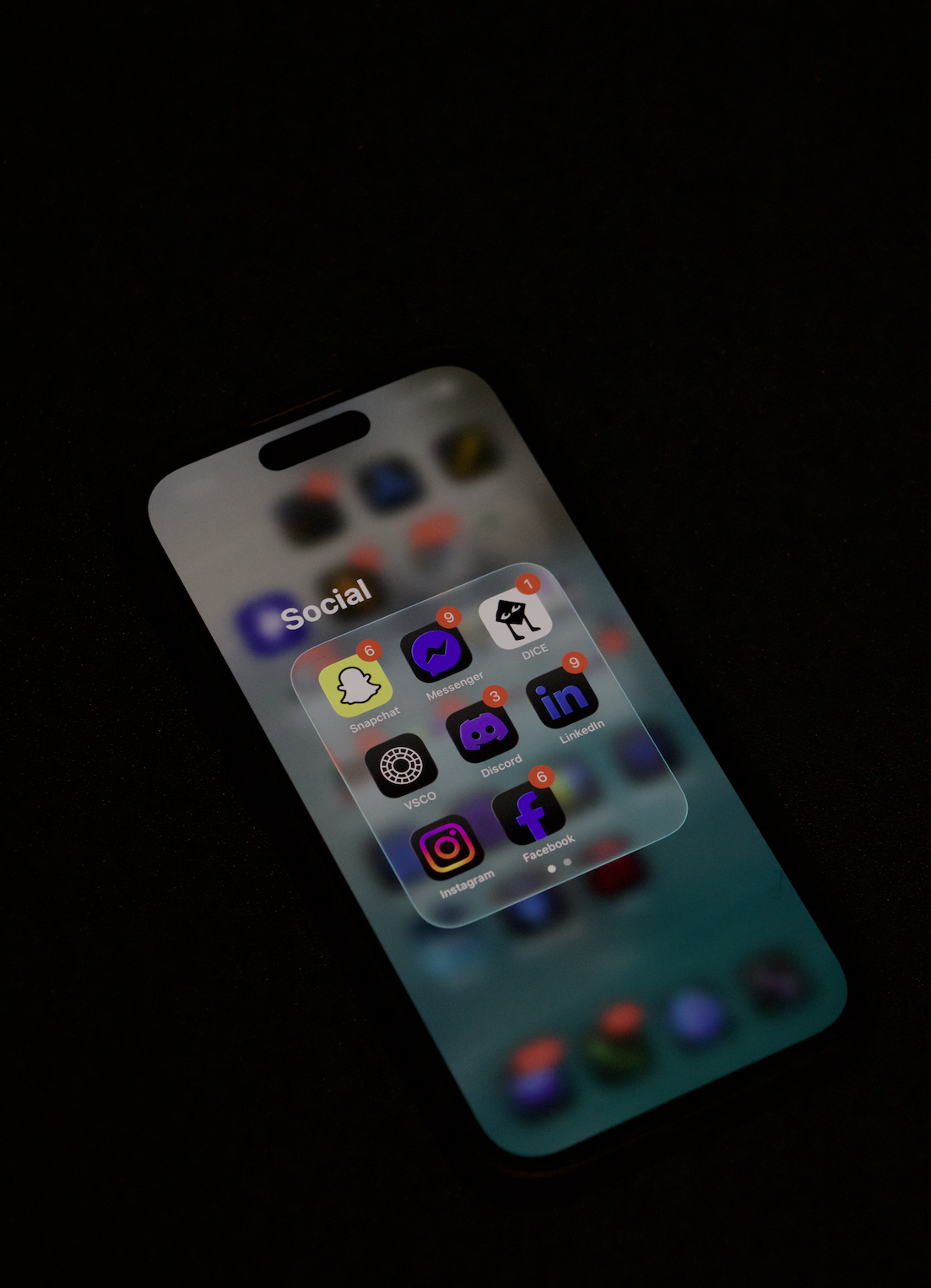
A scene most of us are familiar with, social media apps with enticing red icons.
How Compulsion Manifests as Inflammation in The Brain and Body
There is an emerging model in psychology pertinent to understanding our addictive pathways, called psychoneuroimmunology. The term was first coined by psychologist Robert Ader, and this model aims to bring together the influences of our immune function, behaviour, and cognitions on our mental and physical health (Bower & Kuhlman, 2023). At the cellular level, when our brain detects an imbalance of chemicals in certain areas, our immune cells launch an inflammatory response using specialised proteins called cytokines, which signal changes in our brain and body that can trigger sickness behaviour (Bower & Kuhlman, 2023). Addiction, in its various forms, can cause several neurotransmitters, namely, dopamine, to fluctuate and deviate from their normal levels. When this happens, the above processes involving inflammation are likely to occur. Therefore, what we think is only happening in our brains is also affecting our bodies. Elevated inflammation markers directly relate to depressive symptoms (sickness behaviour), which is the physiological embodiment of burnout. This can be best observed in psychiatrist Dr Anna Lembke’s book Dopamine Nation, where she states, “the paradox is that hedonism, the pursuit of pleasure for its own sake, leads to anhedonia, which is the inability to enjoy pleasure of any kind” (Lembke, 2021). When our biological circuitry is overstressed through addictive behaviour, it can produce a neurological and physiological burnout that involves a lack of motivation and drive. Thus, we have created a debilitating negative feedback loop that is hard to fully break out of.
Focusing more on the biological models of addiction, when we have a continual flooding of dopamine in our nucleus accumbens and ventral tegmental area (brain’s reward center), an opioid peptide called dynorphin acts against our dopaminergic potency, which results in an increase of the threshold for a certain stimulus to give us the same dopamine ‘hit’ that we are used to receiving (Love et al., 2015). In the case of addiction to social media or pornography, this means a need for heightened stimulation through means of longer exposure to, or more intense material, to match the increased threshold. With addictive behaviour toward alcohol, nicotine, or other substances, there must be additional strength or potency so that there can still be a sufficient activation within the reward pathway, like progressing from drinking beer to drinking whisky. It is logical, then, that eventually, as stimulus intensity is progressively increased to match reward thresholds, stress and inflammation begin to develop as the body recognises heightened activation as a threat.

Alcohol continues to be an incredibly common and socially normalised stimulus.
Inflammation Symptomatology
As the term “inflammation” is very general, I will outline the symptoms associated with heightened inflammation in our brains and bodies resulting from dopaminergic stress. Neuroinflammation has a range of surprising and unfortunate symptoms “Neuroinflammation affects dopamine metabolism and produces a set of symptoms known as sickness behaviour, including fever, anhedonia, anorexia, weight loss, decreased sociability and mobility, and cognitive impairment” (Alves et al., 2021). Understanding the symptoms of inflammation in our brains alone is a cause for concern. What occurs in the brain can affect the body, and research by Lee et al. (2023) shows that social media use is associated with elevated C-reactive protein (an inflammation biomarker). Chronic inflammation in our bodies can manifest as heart disease, metabolic disorders, cancers, and mortality (Lee et al., 2023). There are many extraneous variables that can contribute to increased inflammation in the body and brain due to poor lifestyle habits in sleep, exercise, and nutrition. However, the implications for this are paramount when we interpret how we may choose to interact with stimuli, especially supernormal stimuli, that have the potential to become compulsive. As we begin to understand the outcomes of prolonged inflammation in the body, the connection between it and our mental processes will become clearer.
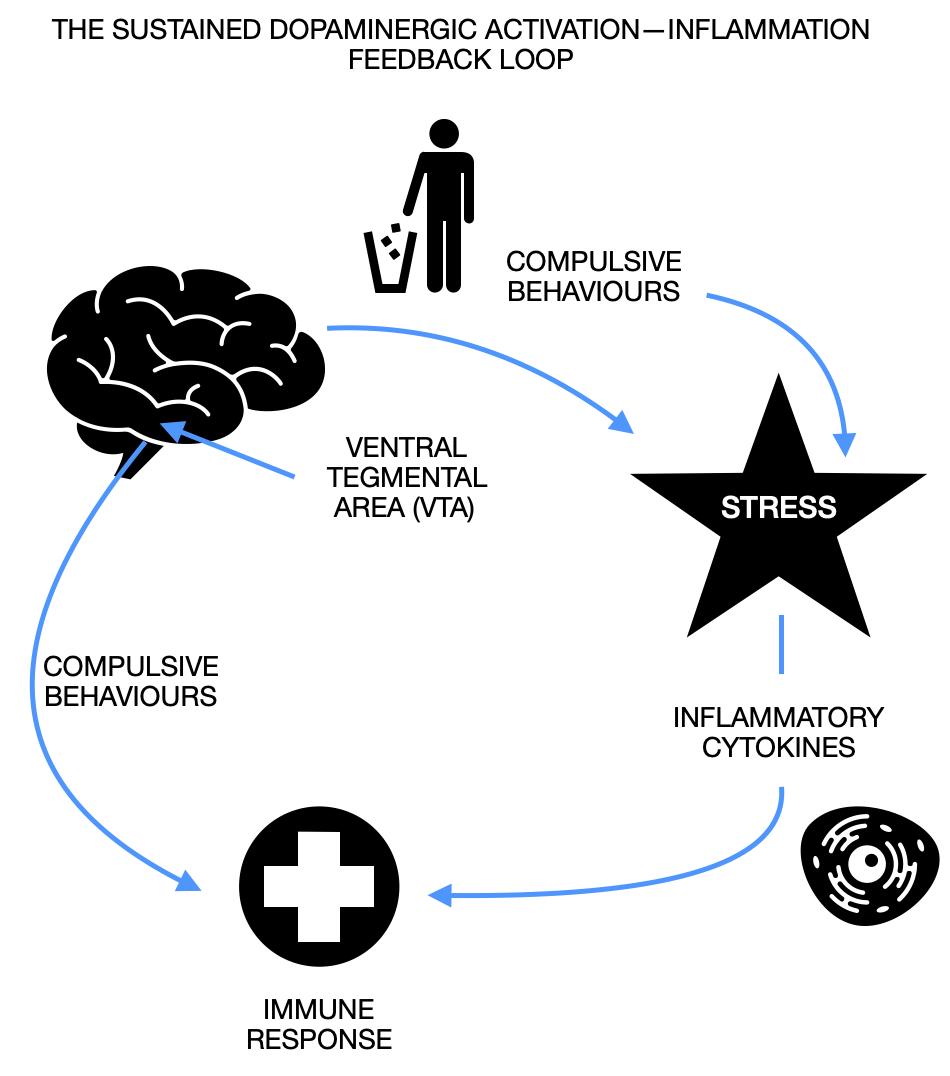
A proposed model I designed titled “the sustained dopaminergic activation—inflammation feedback loop.” It showcases a feedback loop describing the process I outline in my thesis. Garbage in (through compulsive behaviours) and from compulsive networks in our reward pathways (the ventral tegmental area) can trigger a stress response, release inflammatory cytokines, and activate an immune response.
Expert Insights on Psychoneuroimmunology and Causes of Inflammation
To assist in understanding the complex relationship between neurotransmitter imbalance and heightened physiological inflammation, I sought out an expert psychiatrist and proponent of the field of psychoneuroimmunology, Dr Kevin Kjernisted. He is based in Vancouver and has observed many patterns of burnout and addiction through his 33 years of psychiatry practice. Dr Kjernisted began our interview by describing dopamine not as a chemical of pleasure but as a “neurotransmitter that fosters reward and motivation when active in the brain” (K. Kjernisted, personal communication, October 16, 2025). This is an important distinction that Dr Kjernisted rectified. The chemical I have been discussing so much is the answer to why we move toward things that feel good. Next, when asked about the connection between increased neurotransmitters such as dopamine through compulsion and their contribution to inflammation, Dr Kjernisted states that:
“Excessive dopamine is proinflammatory, as is excessive norepinephrine. So, if you can’t put the brakes on dopamine and norepinephrine, which are all part of addiction, and that excessive focus on something that’s going to lead ultimately to, well, things like OCD, where you can’t escape. This involves excessive glutamate as well. So, it’s part of the stress response, which involves too much dopamine and norepinephrine. Whereas optimal amounts of norepinephrine and dopamine are anti-inflammatory. In fact, those 2 neurotransmitters are probably the 2 most anti-inflammatory neurotransmitters in our body and our brain.” (K. Kjernisted, personal communication, October 16, 2025)
It was fascinating to hear that norepinephrine and, especially, dopamine are highly anti-inflammatory in the body and brain when they are in balance. This tenet alone further illustrates the fact that the reversal of compulsive behaviours, returning us to baseline, can lower inflammation, or at least, return it to a level that is normal within our physiological makeup. This aligns with recent research by Yousef et al. (2025), which outlines “brain rot,” a phenomenon greatly associated with the generations who have grown up using social media, outlining an atrophy in the capacity to think critically and conduct oneself in the world meaningfully. The overstimulation of our reward circuitry is leading us down a path where 15-second hyperstimulating TikTok videos are the norm, and thus, our attention spans suffer greatly in the real world. In addition to heightened inflammation throughout the body due to stressed neural circuitry, the above information outlines how harmful these patterns can be, even in seemingly menial areas of our daily lives.
The Perpetuation of Addictive Supernormal Stimuli in Society
The following section explores the sociocultural factors that perpetuate these modern societal addictions. Although these issues surrounding addiction cover the entire planet, my view will be Western-centric. Since the beginning of the 21st century, the creation of increasingly intense supernormal stimuli has skyrocketed. The primary stimulus that the world has become enamoured with is, of course, social media. While social media has been a way to connect with those we love and share similar interests with, there is an underlying, calculated component that keeps us coming back. Social media companies like Instagram and TikTok monetise this overstimulation of our dopaminergic reward systems. We can recognise patterns throughout our lives, from the classroom to the workplace. Unfortunately, addictive tendencies toward social media have affected us in ways that go beyond heightened inflammation; they may heighten our risk for psychiatric disorders and risk-taking behaviours (Nasser et al., 2020). Socially and culturally, our tendencies to engage with social media often begin in the teenage years, driven by a desire for social validation or peer pressure (Khalaf et al., 2023).
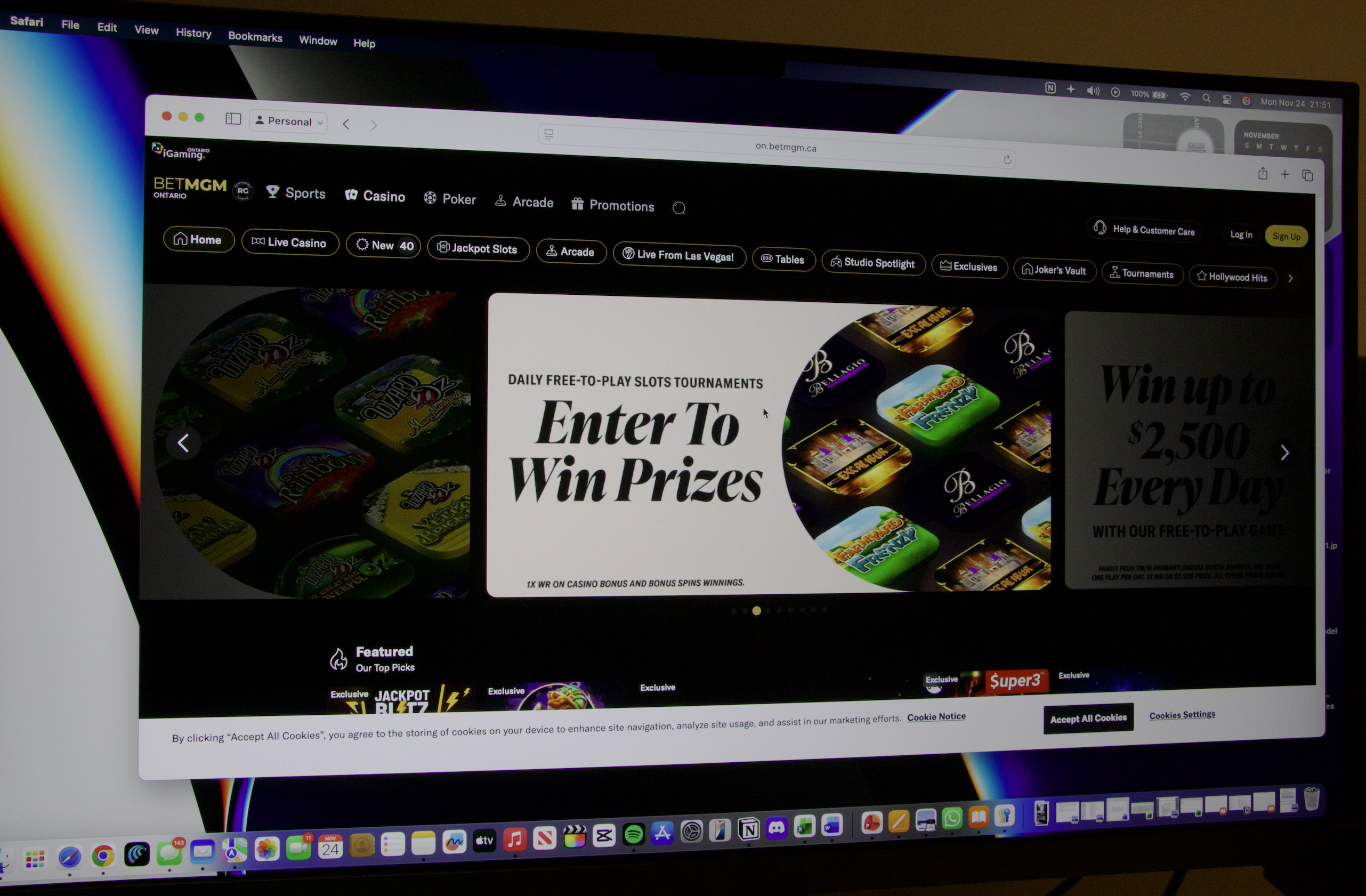
Online stimuli, like porn, gambling sites, or social media, are accessible at the press of a button.
However, as seen in this paper, social media is just one of the many modern supernormal stimuli available for an addictive pathway to form. Another potentially compulsive behaviour that has spiralled since the 21st century is internet pornography. Every second around the world, 28,258 people are watching pornography on the internet (Webroot, n.d.). While there are too many factors to discuss individually, there is no doubt that the global COVID-19 pandemic and its ensuing loneliness prompted individuals to seek sexual stimulation online (Pawlikowska-Gorzelanczyk et al., 2023). It is important to note that often, sexual stimuli are incredibly strong natural triggers of dopamine release because reproduction is evolutionarily essential to promote the proliferation of the human species. Pornography hijacks our ancient circuitry, offering an endless stream of novelty—something we have not evolved quickly enough to keep up with. As a stimulus, it provides a (seemingly) unlimited stream of new scenarios and experiences, each producing a fresh spike of dopamine. This phenomenon has been recognised across mammalian species and has a name: the “Coolidge effect,” which describes mammals exhibiting undiminished sexual performance if new partners are continually introduced (Jha & Banerjee, 2022). Thus, pornography acts as another contributor to the physiological burnout in the psychoneuroimmunology model, a systemic stressor.
Growing Choices of Supernormal Stimuli
Aside from online compulsions, alcohol and nicotine use have stood out as ingrained cultural commodities. In Canada alone, e-cigarette and alcohol use are on the rise, including their combined use (Czoli et al., 2023). However, alcohol and nicotine use emerged historically, and without behavioural design strategies to maximise engagement like social media. Yet, each company that produces these sources of stimuli are capitalising on a system that every human is equipped with, our reward system. Optimised enough, and to the right buyer, these commodities no longer need advertisement; our dopaminergic systems take advertising into their own hands through the development of a compulsion.

A reminder of the common addictive and deadly form of ingesting nicotine, smoking.
Proposed Action: Resetting Our Circuitry
As dire as the consequences may seem, there are great bodies of research that showcase the plasticity and resilience of our reward circuitry, allowing us to ‘reset’ and recalibrate our reward systems. Yet, how can one ‘reset’ their dopaminergic system when it seems so daunting due to our complex circuitry? Sometimes the simplest of explanations are the best, and in Dopamine Nation, Dr Lembke notes abstinence is “… necessary to restore homeostasis, and with it our ability to get pleasure from less potent rewards, as well as see the true cause and effect between our substance use and the way we’re feeling” (Lembke, 2021). When we overstress our dopaminergic sensitivity through means of compulsion, we are essentially dulling ourselves through cyclical pathways that raise our inflammation, which in turn can cause anhedonia and depressive symptoms, robbing us of external motivation and pleasure from areas of life that would regularly produce these feelings. Research from Dr Jennifer Felger, a specialist in dopamine, shows that the same inflammatory cytokines that arise after heightened neurotransmitter activity, triggering a stress response, target dopamine itself, further sapping us of motivation (Felger et al., 2013). Practices such as mindfulness, which involve stepping away from past or future worries and focusing on the present, can be useful tools for helping us step back, put the phone or vape down, and allow our friend dopamine much-needed rest from being constantly engaged. There is rich literature on ‘dopamine fasting’, and Desai et al. (2024) point out that activities such as mindfulness and meditation can provide positive effects on the regulation of dopamine and overall well-being.
Still, ‘stepping away’ from supernormal stimuli through meditative or mindfulness-based practices can seem lofty; instead, experts recommend an activity that offers protective benefits against dopamine impairment and neuroinflammation. Physical activity is known to confer a range of benefits for the brain, body, and overall longevity. I appreciate it greatly as an intervention for my tendency toward compulsive social media use. When I am weightlifting, sailing, or doing a HIIT workout on the stationary bike, I cannot use social media and am forced to be mindful (one of our other proposed interventions). A study by Alves et al. (2021) states that “normal levels of inflammatory cytokines are essential for brain neurocircuitry maintenance. However, exacerbated and chronic inflammation and excess of inflammatory cytokines affect neuronal integrity and the monoamine neurotransmitter system in the brain”. Regular exercise then reduces our inflammatory response and, once again, increases not only our dopaminergic function but also neurogenesis (the creation of new cells) (Alves et al., 2021). So, if you want to reset and step away from any of the compulsions discussed in this paper so far, exercise is one of the best, most studied activities you can do to begin repairing your dopaminergic reward pathways and lowering physiological inflammation.

Exercise, when combined with the outdoors, is a great outlet.
Conclusion
The beauty of us humans is that we are incredibly plastic, especially in our brains. Just as when we take garbage in (supernormal stimuli), we get garbage out (compulsion, heightened inflammation), we can also choose to put quality and regulation in (healthy practices in domains such as exercise, mindfulness, sleep, and nutrition) and receive quality and restoration in turn (a focused, healthy mind and body). That compulsive engagement with internal (substance-based) and external (digital) rewards overstimulates dopaminergic pathways, disrupts homeostasis, and triggers heightened neural/physical inflammation. Psychoneuroimmunology aligns with a broader framework that links chronic stress to the decline of our cognition and physiology. Understanding the interaction of these variables allows us to look at how compulsions of our modern world can drive neurobiological maladaptation.
The same neuroplasticity that makes dysregulation seem so easy also makes the possibility of repair and recovery attainable. The same circuitry lights up whether our compulsion of choice is online gambling, a porn site, or a bottle of scotch. From the brain’s perspective, the pattern, not the product, matters most. We have seen that often what we label as ‘burnout’ is a bodily representation of chronic neuroinflammation. My interview with Dr Kjernisted sharpened the idea that dopamine and norepinephrine are powerfully anti-inflammatory when in balance, but pro-inflammatory when chronically elevated through compulsive means. On top of the biological background, our modern world harbours a sociocultural machine that is engineered to keep us engaged: social media platforms, porn sites, alcohol and big tobacco companies. Yet the very science that reveals how deeply this problem runs offers optimistic perspectives. Abstaining from stimuli that trigger our reward systems, even momentarily, allows homeostasis to once again return and let us enjoy subtler pleasures of life. Practices like mindfulness, meditation, and exercise give our systems the rest they desperately need. While not magic fixes for addiction, they are useful to leverage the shift in the trajectory of our bodies and minds. Reclaiming our brain is not simply about abstaining from pleasure; it is important that we learn to restore balance so that we may be in agreement with our biology rather than have it work against us.

Surrounding ourselves in a natural environment is immensely calming to our nervous systems.
References
Alves, A. C., Staats Pires, A. C., Speck, A. E., Lopes, S. C., da Luz Scheffer, D., Melo, H. M., Prediger, R. D., de Paula Martins, R., Latini, A., & Aguiar, A. S. (2021). Exercise Attenuates Sickness Behavior And Protects Against Dopaminergic Impairment Induced By Neuroinflammation. BioRxiv (Cold Spring Harbor Laboratory). https://doi.org/10.1101/2021.02.05.429925
Bower, J. E., & Kuhlman, K. R. (2023). Psychoneuroimmunology: an Introduction to Immune-to-Brain Communication and Its Implications for Clinical Psychology. Annual Review of Clinical Psychology, 19(1), 331–359. https://doi.org/10.1146/annurev-clinpsy-080621-045153
Czoli, C., Luongo, G., & Mischki, T. (2023). Characterizing polysubstance use: What do we know about use of cigarettes, vaping products, cannabis, and alcohol among Canadians? 34(4), 16–22. https://doi.org/10.25318/82-003-x202300400002-eng
Desai, D., Patel, J., Saiyed, F., Upadhyay, H., Kariya, P., & Patel, J. (2024). A Literature Review on Holistic Well-Being and Dopamine Fasting: An Integrated Approach. Cureus, 16(6). https://doi.org/10.7759/cureus.61643
Felger, J. C., Mun, J., Kimmel, H. L., Nye, J. A., Drake, D. F., Hernandez, C. R., Freeman, A. A., Rye, D. B., Goodman, M. M., Howell, L. L., & Miller, A. H. (2013). Chronic Interferon-α Decreases Dopamine 2 Receptor Binding and Striatal Dopamine Release in Association with Anhedonia-Like Behavior in Nonhuman Primates. Neuropsychopharmacology, 38(11), 2179–2187. https://doi.org/10.1038/npp.2013.115
Jha, A., & Banerjee, D. (2022). Neurobiology of sex and pornography addictions: A Primer. Journal of Psychosexual Health, 4(4), 227–236. https://doi.org/10.1177/26318318221116042
Khalaf, A. M., Alubied, A. A., Khalaf, A. M., & Rifaey, A. A. (2023). The impact of social media on the mental health of adolescents and young adults: A systematic review. Cureus, 15(8), 1–10. https://doi.org/10.7759/cureus.42990
Kjernisted, K. (2025, October 16). [Interview by Q. Helgason].
Lee, D., Jiang, T., Crocker, J., & Way, B. (2023). Social Media Use and Its Concurrent and Subsequent Relation to a Biological Marker of Inflammation: Short-Term Longitudinal Study. Journal of Medical Internet Research, 25(1), e46309. https://doi.org/10.2196/46309
Lembke, A. (2021). Dopamine Nation: Finding Balance in the Age of Indulgence. Dutton.
Love, T., Laier, C., Brand, M., Hatch, L., & Hajela, R. (2015). Neuroscience of Internet Pornography Addiction: A Review and Update. Behavioral Sciences, 5(3), 388–433. https://doi.org/10.3390/bs5030388
Nasser, N. S., Sharifat, H., Rashid, A. A., Hamid, S. A., Rahim, E. A., Loh, J. L., Ching, S. M., Hoo, F. K., Ismail, S. I. F., Tyagi, R., Mohammad, M., & Suppiah, S. (2020). Cue-Reactivity Among Young Adults With Problematic Instagram Use in Response to Instagram-Themed Risky Behavior Cues: A Pilot fMRI Study. Frontiers in Psychology, 11. https://doi.org/10.3389/fpsyg.2020.556060
Nyst, A. (2023, July 14). 134 Social Media Statistics You Need To Know For 2023. Search Engine Journal. https://www.searchenginejournal.com/social-media-statistics/480507/
Pawlikowska-Gorzelanczyk, A., Fichte, D., Rozmus, J., Roder, P., Flakus, R., Szuster, E., Brawanska, K., Biernikiewicz, M., Sobieszczanska, M., Rusiecka, A., & Kalka, D. (2023). Impact of Internet Addiction, Social Media Use and Online Pornography on the Male Sexual Function in Times of the COVID-19 Pandemic. Journal of Clinical Medicine, 12(19), 6407. https://doi.org/10.3390/jcm12196407
Shu, Q., Tang, S., Wu, Z., Feng, J., Lv, W., Huang, M., & Xu, F. (2025). The impact of internet pornography addiction on brain function: a functional near-infrared spectroscopy study. Frontiers in Human Neuroscience, 19. https://doi.org/10.3389/fnhum.2025.1477914
Webroot. (n.d.). Internet Pornography by the Numbers: A Significant Threat to Society. Webroot.com. Retrieved November 12, 2025, from https://www.webroot.com/us/en/resources/tips-articles/internet-pornography-by-the-numbers
Yousef, A. M. F., Alshamy, A., Tlili, A., & Metwally, A. H. S. (2025). Demystifying the New Dilemma of Brain Rot in the Digital Era: A Review. Brain Sciences, 15(3). https://doi.org/10.3390/brainsci15030283