


Annika Kuznik
Annika Kuznik is a student at Capilano University, studying on traditional, unceded territories of the Squamish, Tsleil-Waututh, and Musqueam First Nations. She is completing a Bachelor of Science with a concentration in Environmental Science. During her time at Capilano University, she has earned recognition as a PACWEST Second Team All-Star and received the Azar & Bijan Shadmehr Scholarship for her contributions to the Capilano Women’s Varsity Volleyball team. Annika plans to pursue a Master’s in Environmental Science and hopes to build a career as an environmental consultant, contributing to a more sustainable future one project at a time.
In 2025, it is unequivocal that evidence of the heat-trapping nature of carbon dioxide and other gases have caused detrimental effects to our environment, such as rising surface temperatures, along with rising sea levels. Studies have shown that the trajectory of high emissions will cause an increase of natural disasters and unbearable temperatures affecting countries and over 3 billion people by 2070 (Mulhern, 2022). A major contributor to these emissions are fossil fuels like coal, oil, and gas. Canada has made several commitments to aid in the fight against climate change. They have agreed to reduce GHG emissions by 40% below emissions in 2005, eliminate coal and oil emissions by 2030, and reach net zero emissions by 2050 (Sabti, 2014). Despite this, they have also promoted and funded the expansion of infrastructure to support the refining and transportation of liquid natural gas (LNG). LNG advocates have been claiming the industry is a “clean” source of fuel. While LNG does not produce as many greenhouse gases as alternatives like coal or oil, it is still a fossil fuel, and many argue that there is no feasible way that we can be a leader in environmental welfare while exponentially growing our natural gas industry. The process of extracting and refining LNG is highly energy intensive. It releases emissions and greenhouse gases into the atmosphere in multiple stages of the process. Many argue that the only solution is to eliminate fossil fuel production altogether, but with billions of dollars spent on LNG projects and a third of the world still using coal as energy, is this really the most realistic option currently? This forces us to ask ourselves what truly matters to us as Canadians, economic development, or the sustainability of our environment? Is it possible that we can have both? With creative solutions like limiting emission through renewable energy, carbon capture storage systems and ensuring communication with the community and Indigenous members, Canada would be able to have the best of both worlds.
Although there have been concerns about the feasibility and reliability of environmental protection surrounding the growth of liquid natural gas production and exportation in Canada, there are solutions to export LNG to boost our economy while considering environmental, Indigenous, and community concerns. In order for Canada to be a leader in liquid natural gas exportation while simultaneously aiming to become a leader in clean energy, they will need to incorporate changes such as, projects must be renewably powered, carbon capture and storage facilities should be implemented in every LNG project, and projects must commit to the continuous consultation of community members and Indigenous groups. By optimizing the processes of LNG extracting, refining, and transporting, Canada can reduce environmental impacts such as CO2 and methane emissions, to remain a global leader in sustainable energy.
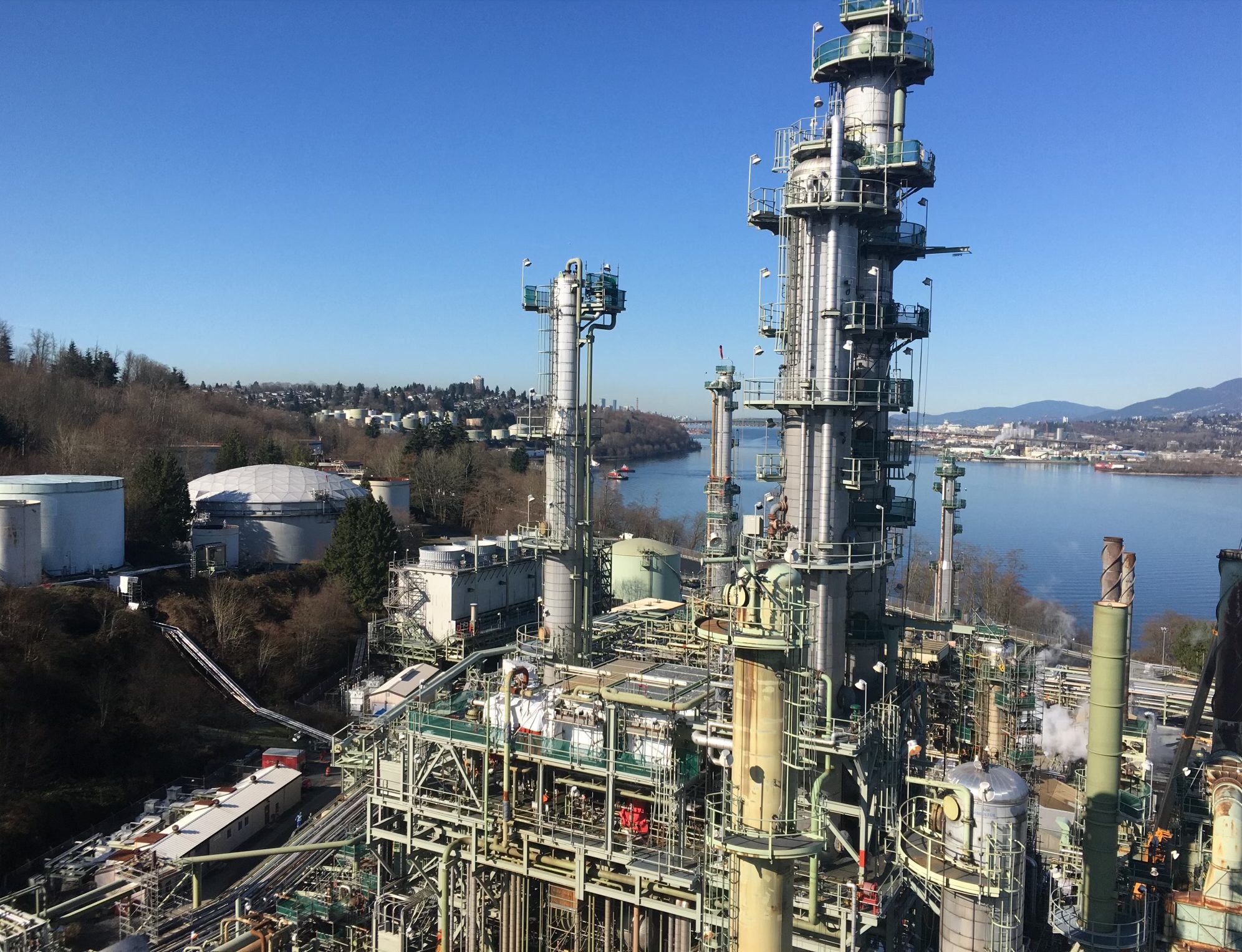
West side of Parkland Refining, an oil and gas refinery in Burnaby, BC.
Canada’s History with Liquid Natural Gas
Liquid Natural Gas, also known as LNG, is natural gas but chilled and pressurized to a liquid state. This state makes it easier to transport physically and economically as it reduces it to 1/600th of its original volume (Natural Resources Canada, 2025). The first time LNG was exported was from the United States to the United Kingdom in the late 1950s. Over the past 75 years, countries like Qatar, Australia, and the United States have emerged as major industry leaders. The LNG industry is now in its infancy in Canada. Small, domestic use facilities opened in 1971 in two areas, Mt Hayes, British Columbia and St. John’s, Newfoundland. LNG Canada was formed in 2011 and promised a prosperous future for Canada with hopes of LNG becoming an integral part of Canada’s entrance to the international natural gas market. A large-scale export facility started construction in Kitimat, British Columbia, the first of its kind in Canada. According to the B.C. government, the project just completed construction in 2025 and is expected to export 14 million tonnes of LNG each year, which will contribute an estimated $575 million annually over a 40-year period (Natural Resources Canada, 2025). Now there are three other large scale export facilities in the works, Woodfibre LNG, Ksi Lisims LNG, and Cedar LNG which is partnered with the Haisla Nation. This expansion of LNG exportation facilities comes from a political push for economic autonomy. Under the Conservative government, Stephan Harper, was the first prime minister to approve of LNG projects in recent years. Every prime minister since has also encouraged the developments with millions of dollars of federal support (Findley, 2019). Mark Carney, Canada’s current prime minister, has used the federal legislature to expedite LNG projects, such as using Bill C-5 to speed up infrastructure projects such as LNG facilities (Pearce, 2025) With the U.S. President Donald Trump’s tariffs, there is even more drive for Canada to become more economically independent from our southern neighbours.
The process of LNG starts with the extraction of natural gas through hydraulic fracking. The natural gas for the Kitimat project is supplied by the Monterey Basin, one of the biggest natural gas reserves in Canada (Natural Resources Canada, 2025). From there, it is transported through gathering pipelines for the gas to be cleaned and purified from impurities. It then goes through the Coastal GasLink pipeline to reach the Kitimat facility to turn it into a liquid state where it will then be considered shippable to international markets (Sabti, 2014) However, as Canada joins global leaders in LNG exports, it must also confront the environmental challenges tied to LNG extraction, liquefaction, and transportation to ensure these projects align with the country’s commitment to sustainability. There needs to be a stronger push from industries and the government to encourage creative solutions and technologies to balance the scale between economic advancements and environmental stability. As climate effects advance, the public perception of global warming expands too, putting more pressure on LNG projects to consider environmental effects. This has caused some extreme polarization, making decisions more complex and the public attitude towards LNG more divided. The debate on LNG has been pushed into a broader divide on Canada’s splitting views of justice, land stewardship, and long-term sustainability. The public is now asking questions like who gets to decide what “responsible development” looks like? LNG exportation in Canada is no longer just an economic opportunity. It is a symbol of one of the long-standing issues of the country, the balance between economic gain and long-term environmental responsibility.
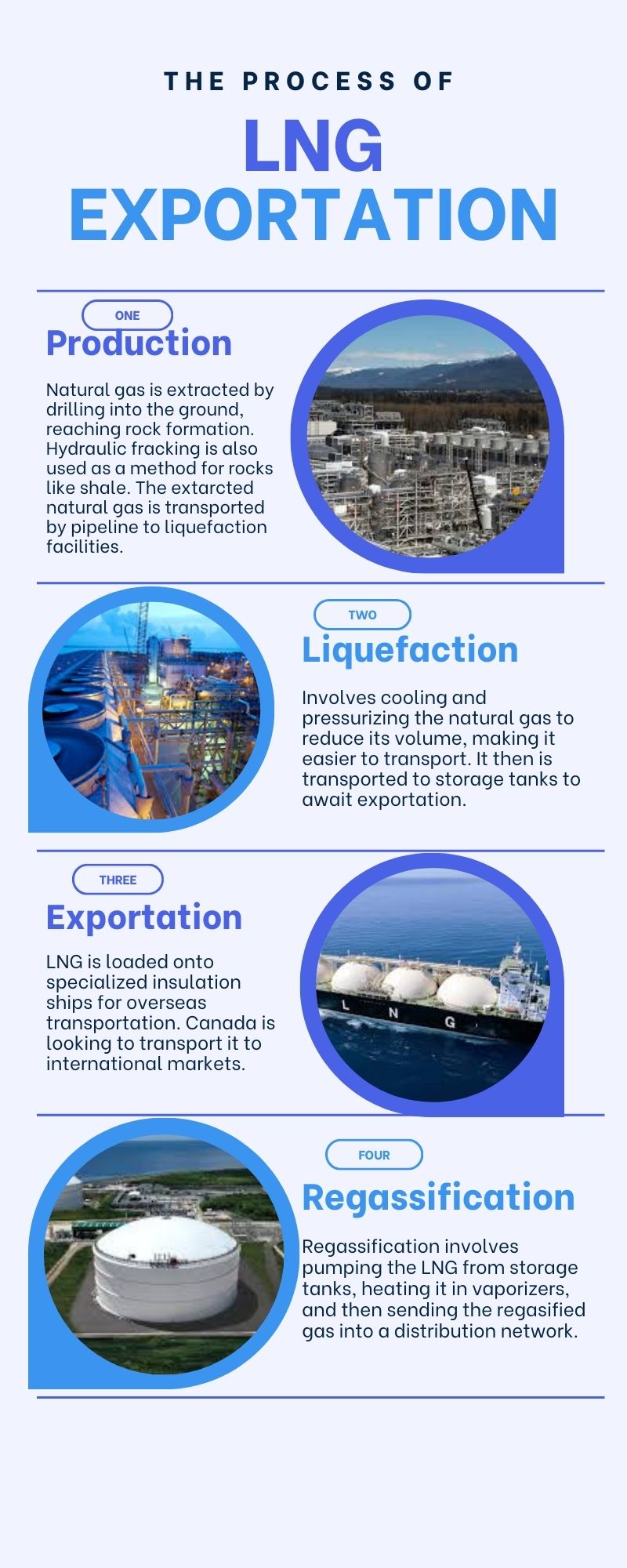
Infographic explaining the process of LNG in Canada from extraction to exportation.
Personal Narrative
The intersection between environment and economics is something I have experienced first-hand. My father has worked for an oil company my whole life and his career has provided my family with stability, opportunity, and the means for me to attend university to pursue environmental science. There is an irony to it as the energy industry that has sustained my livelihood has impacted the environmental industry that I am passionate about pursuing. When I have asked my father about LNG, he approaches from the perspective of someone who has seen the energy industry create jobs, support families, and contribute to the economy of local communities. Based on my environmental background, I find it more difficult to ignore the standpoint of emissions, ecosystem disruption, and Indigenous rights. I have learned that it is a privilege to find a common ground with my father. While we might not agree on everything, I can still have gratitude for the life he has provided my family, while staying true to my environmental beliefs. I strongly believe that with a little more open mindedness, our world can cultivate more meaningful conversations that lead to creative and sustainable solutions. Finding a middle ground does not weaken my stance, instead it strengthens it. Real progress comes from bridging divides, rather than widening them. The success of LNG and Canada’s energy landscape will not be determined by one overpowering the other, but the willingness to listen, compromise, and innovate.
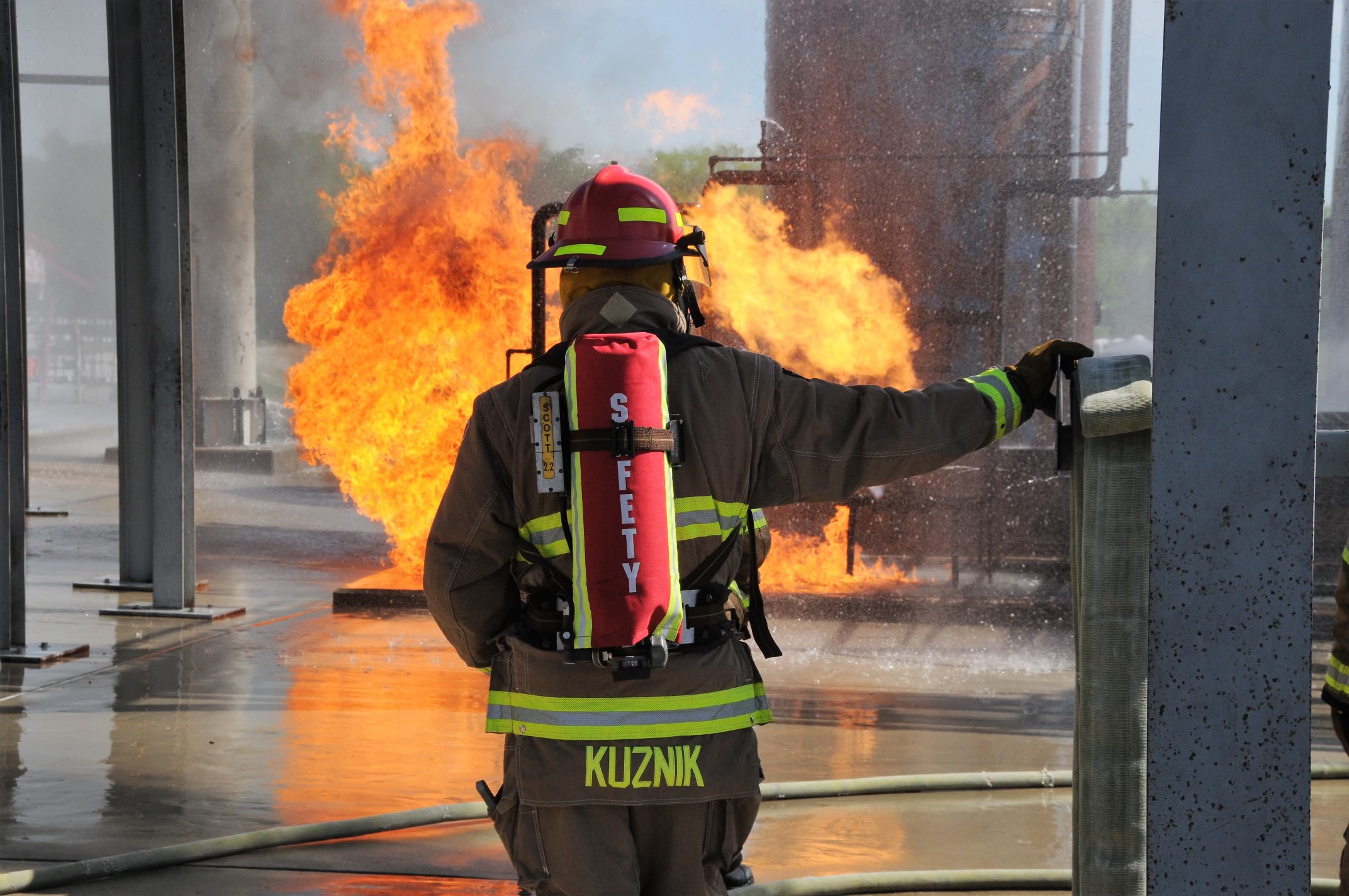
My father, Bradley Kuznik, who works at Suncor Energy as an Emergency Management and Fire Training Specialist with a focus in petrochemicals.
Challenges and Limitations to Sustainable LNG
Critics of liquid natural gas argue that there is always some carbon dioxide that is released into the atmosphere as it is burned. In conjunction with this, there is the debate on whether LNG is that much better than coal or oil because of methane gas that escapes during extraction and transportation. As well as the community opposition where local communities in the northern provinces where these facilities are being built argue against facilities being built in their beautiful backyard. This has also created some conflict with Indigenous groups that remain a force in being advocates for their land and the environment. An example of this would be the Wet’suwet’en Nation pipeline protests that occurred in 2020. This dispute was over who rightfully owns the land which the Coastal GasLink pipeline, a pipeline that would connect to LNG facilities, was being built on (Unist’ot’en Camp, 2025). However, this goes case by case, as some Indigenous groups encourage the construction of LNG facilities with proper environmental consulting, like the Haisla Nation, who is a shared owner of Cedar LNG, a new LNG facility being built on the Haisla territory. As for the methane and carbon dioxide argument, coal and oil may be marginally worse than LNG, but the system is imperfect and that at the end of the day, there will always be emission from any kind of fossil fuels. Natural gas emits about half the CO₂ per unit of energy compared with coal with around 50 g/MJ compared to coal’s 91 g/MJ and oil sitting around 70 g/MJ (Environment and Climate Change Canada, 2023). The goal now that these facilities have been built is to improve and bulletproof these systems to the best of our ability to reduce emission leakage. While this is not to say that Canada should move towards fossil fuels and away from renewables but use the economic benefits and opportunity from LNG to help lead the globe in ethically strong environmental practices and community consultation.
Renewable Energy Integration
Canada has found itself in a bind, attempting to reach zero emission goals while building LNG projects that would not fully align with those ambitions. Creative and unique solutions are the only option Canada has to redirect fuel efforts to a more sustainable future. Renewable energy sources like wind or hydro produce next to zero gas emissions (Glave 2013). Powering liquefaction steps through electric drive compressors that run on renewable sources can reduce CO2 emissions by 0.32 tonnes of carbon dioxide per tonne of LNG produced (Glave, 2013). LNG projects can be altered to better suit Canada’s climate goals by powering projects through renewable energy sources like electricity to process and liquefy natural gas. The ultimate goal for Canada should be to be powered off of renewable energy. However, a third of the world still uses coal, and in Canada, 7.6 million homes are powered by natural gas (Natural Resources Canada, 2025). This highlights the reliance the world still has on fossil fuels and how the transition to renewable energy will not be smooth. Renewable energy also shows higher rates of job creation compared to fossil fuels, as most LNG job increase numbers are due to construction. It is clear that the importance of shifting towards renewable energy, not only for the environment but for the economy, and using it to power LNG sites can be a way for Canada to enter the clean energy world. Incorporating renewable energy into the process of LNG will not only help eliminate excessive emissions, but also push the countries towards investing in cleaner sources of energy.
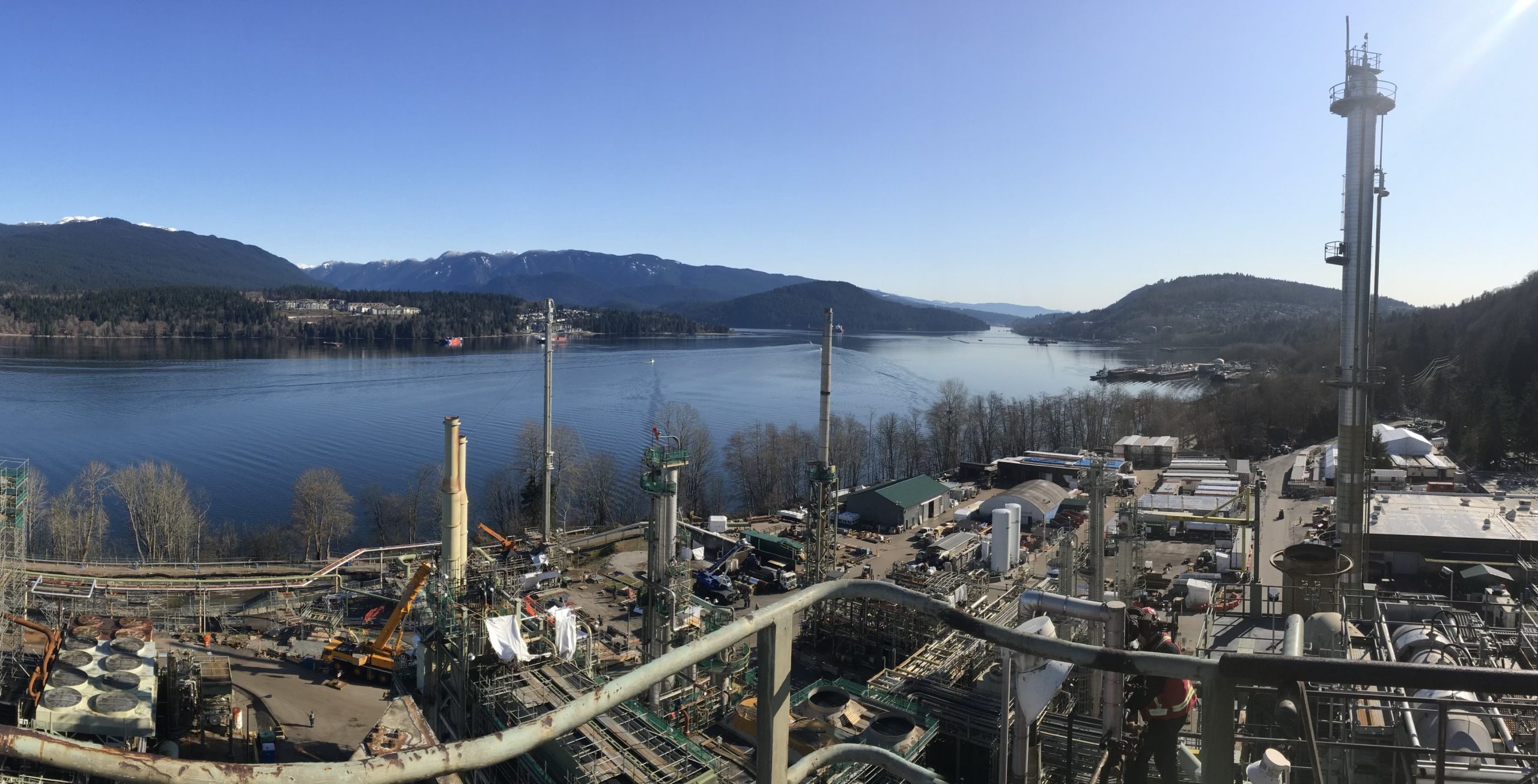
East side of Parkland Refining, showcasing the stretch the refinery has along the Burrard Inlet in Vancouver.
Models of Carbon Capture Storage Systems
To become a global leader in emission reductive energy, finding ways to reduce the effects of our energy systems will be key. Modelling after the world’s lowest emissions-producing LNG facilities in the world, such as Norway and Australia, Canada can implement carbon capture and utilization storage (CCUS) in more of its facilities to remain on target for emission reductions. The Northern Light Project in Norway and Australia’s CCUS attached to their Gorgon LNG facility are examples of what Canada can use to adapt to their LNG facilities as they grow as a leader in exportation. Carbon capture facilities capture carbon dioxide produced from industrial facilities and inject it deep down in a geological formation for long term storage. The International Energy Agency (IEA) has identified CCUS as a “critical technology” to reach carbon neutrality by 2050 (Orenstein, 2023). It is estimated that a British Columbian LNG facility will produce almost three times as much carbon pollution than Norway or Australia facilities (Glave, 2013). These technologies can help Canada meet their ambitious emission-reduction goals while maintaining a strong energy sector. Australia is considered one of the biggest leaders in LNG and lowest in GHG emissions from LNG due to its effective and mitigating facilities that incorporate CCUS systems. Creative solutions and technologies like this is what will help Canada and the world develop into a more sustainable lifestyle. With climate change effects already being exacerbated, new advancements and technologies might be our only solution.
Community and Indigenous Involvement
While ensuring proper communication between all interested parties in the development of LNG exportation in Canada may not directly appear to improve the reduction of emissions from LNG, it inherently promotes more conversation, understanding, and innovative ways to mitigate environmental effects in LNG project development. I had the chance to interview Shellie English, who is an Advisor and Restoration Supervisor at PETRONAS Canada. She advises during the planning and constructing of oil and gas pipelines in Fort St John, BC. She also works as a communicator between First Nation groups and as a post-secondary educator. Shellie English explains the importance of having conversations about engagement and development and making sure that we have representation from all pillars. In order to remain successful in integrating our climate goals as a country, it is imperative that we ensure consistent communication with community and Indigenous groups to address project concerns and the Traditional Ecological Knowledge they might have. When asked how TEK and Indigenous affect project planning and project success, Shellie explains that there has been a heightened awareness of how people and the land are connected, including Indigenous and local communities.
In terms of project success, avoiding hard conversations where opinions might differ can hurt projects like LNG in the long run. Shellie highlights the importance of engaging conversations from all sides, and how ignoring hard conversations also can prevent important innovation and progressive development. Indigenous groups hold long-term, deep ecological knowledge of the land, and have cultural meaning behind areas and ecosystems. TEK can offer a broader view, and generations of patterns recorded can provide a more comprehensive look into climate change. Including Indigenous and community opinions does not mean a notification. Shellie demonstrates that it requires the government to strengthen legal requirements for consultation, and clarify what a meaningful consultation means, instead of just a heads up to community members. Indigenous insight can lead to more sustainable and ethical projects, and therefore, more successful projects. These collaborations can build long term trust between project developers, local communities, and cultural groups. Such trust can often lead to stronger, more widely supported, and ultimately more successful projects overall.
There is clear evidence that without the proper Indigenous consultation, projects receive more backlash and further community disputes and conflicts. Ksi Lisims LNG, located in Pearse Island BC, is expected to be the second largest facility next to Kitimat. The project is backed by the Nisg̱a’a Nation but received some backlash from other neighbouring First Nation groups. Woodfibre LNG is a facility currently being built in Squamish, BC, and has been sharply divided throughout construction. Specifically, over the ethics surrounding floating work-camp housing for predominantly male construction workers. This sparked controversy amongst community and Indigenous members concerning women safety and environmental complications. The project went forward, emphasizing the pattern of Canadian government disregarding community partnership. It is examples of projects like this that showcase the importance of not just tokenizing Indigenous voices, but adding other viewpoints into the discussion, and incorporating more robust discussions while planning development sites surrounding LNG.

The controversial Woodfibre LNG project, located in Squamish BC.
A project that is an example of positive community involvement and consideration is Cedar LNG, which is also in Kitimat but smaller in size. This site is proudly owned by the Haisla Nation, who mark it as a historic opportunity for economic advancement, job creation, and Indigenous prosperity. Following a dark history in which the Canadian government-imposed projects on their land and excluded them from the economic benefits, the Cedar LNG project represents an opportunity for the Haisla to achieve economic self-sufficiency on their own territory. Powered by hydroelectricity, it is considered one of the most environmentally conscious LNG plants globally. When Indigenous guidance is meaningfully incorporated, and not merely acknowledged, LNG projects prove to be more successful. Canada has the unique opportunity to have ethical, sustainable, and socially supported LNG projects by incorporating voices from environmental consultants, Indigenous groups, and community members.
Conclusion
With the disastrous effects of climate change expected to intensify if our current practices remain, it is essential that we find alternative solutions to reduce our emissions footprint. Economic growth and environmental protection don’t have to be opposing forces, if innovation, climate regulation, community and Indigenous collaboration are prioritized. Canada needs to move beyond the debate of whether LNG is inherently good or bad. There has been research on that, and projects have been built regardless. The focus now needs to shift to how can we ensure there is proper mitigation of our LNG processes, how can we model these to other countries, and how can we move towards renewable energy? Canada’s environment is crucial for people’s social and spiritual understandings, and shapes countless cultural traditions. It is people’s backyard, their way of escape from industrialization, and is embedded within us in our daily practices. If we truly value our beautiful ecosystems as much as we claim, then our practices surrounding fossil fuels need to reflect that. With environmentally conscious approaches to liquid natural gas production and transportation, Canada has the ability to lead by example and demonstrate to the world that when we take our of the Earth, it will continue to take care of us.
References
Environment and Climate Change Canada. (2023). Canada’s greenhouse gas and air pollutant emissions projections 2023. https://publications.gc.ca/collections/collection_2023/eccc/En1-78-2023-eng.pdf
Findlay, P. (2019). Canadian LNG competitiveness. Oxford Institute for Energy Studies, https://www.oxfordenergy.org/publications/canadian-lng-competitiveness/
Glave, J., & Moorhouse, J. (2013, September). The cleanest LNG in the world? How to slash carbon pollution from well-head to waterline in British Columbia’s proposed liquefied natural gas industry. Clean Energy Canada at Tides Canada. https://cleanenergycanada.org/wp-content/uploads/2013/05/CEC_Cleanest_LNG_World.pdf
Hatfield, S. C. (2017, January 18). The importance of traditional ecological knowledge (TEK) when examining climate change. The Equation – Union of Concerned Scientists. https://blog.ucs.org/science-blogger/the-importance-of-traditional-ecological-knowledge-tek-when-examining-climate-change/
Kotagodahetti, R. (2022). Liquefied natural gas exports from Canada to China: A life-cycle environmental outcome analysis. Journal of Cleaner Production. https://doi.org/10.1016/S0959-6526(22)00921-0
Labbé, S. (2025, August 15). Fossil fuel jobs fail to keep pace with production and profits, report finds. Business in Vancouver. https://www.biv.com/news/resources-agriculture/fossil-fuel-jobs-fail-to-keep-pace-with-production-and-profits-report-finds-11077060
Luke, L., & Noble, B. F. (2019). Consideration of climate change in environmental assessment (EA): An analysis of the liquefied natural gas sector, British Columbia. Impact Assessment and Project Appraisal, 37(5), 371–381. https://doi.org/10.1080/14615517.2018.1533515
Mulhern, O. (2022, May 29). 11 interesting climate change facts. Earth.Org. https://earth.org/data_visualization/11-interesting-facts-about-climate-change/
Natural Resources Canada. (2025, January 7). Liquefied natural gas in Canada. Government of Canada. https://natural-resources.canada.ca/energy-sources/fossil-fuels/liquefied-natural-gas
Orenstein, M. (2023, July). CCUS as a tool for LNG innovation: A report prepared for the Global Gas Innovation Roundtable. Canada West Foundation & Global Gas Innovation Roundtable. https://cwf.ca/wp-content/uploads/2023/07/2023-07-GGIR-CWF-CCUS-Tool-Innovation-Report-WEB.pdf
Pearce, N. (2025, September 17). International Institute for Sustainable Development. Canada set to provide CAD 3.93 billion in LNG support by the end of 2030 [Press release]. https://www.iisd.org/articles/press-release/canada-set-provide-cad-393-billion-lng-support-end-2030
Rivero, N. (2025, July 21). To combat climate change, Norway wants to be Europe’s carbon dump. The Washington Post.https://www.washingtonpost.com/climate-solutions/2025/07/21/carbon-capture-northern-lights-terminal/
Sabti, R. (2014). Liquefied natural gas (LNG), is it part of Canada’s energy resilience? How realistic? [B.A.Sc. thesis, University of British Columbia].
Shaw, R. (2023, March 20). Decades in the making, Haisla in LNG ‘driver seat’. Northern Beat. https://northernbeat.ca/opinion/decades-in-the-making-haisla-in-lng-driver-seat/
Smillie, S., Muller, N., Griffin, W. M., & Apt, J. (2022). Greenhouse gas estimates of LNG exports must include global market effects. Environmental Science & Technology, 56(2), 1194–1201. https://doi.org/10.1021/acs.est.1c04753
Unist’ot’en Camp. (2025) Background of the campaign— No Pipelines. https://unistoten.camp/no-pipelines/background-of-the-campaign/