
Bhavjit Sandhu
Bhavjit Sandhu is a Punjabi-Canadian writer and psychology student whose work focuses on cultural identity, mental health, and the complexities of silence within immigrant communities. Growing up between traditional Punjabi values and the openness of Canadian society, he developed a deep interest in understanding how generational expectations shape emotional expression, especially among Punjabi men. His writing blends personal narrative with academic research to challenge stigma, amplify underrepresented voices, and encourage conversations that many in his community were never taught to have.
Introduction
When you grow up in a Punjabi household, you learn early that some emotions belong inside the body, never spoken aloud. Strength is praised, silence is respected, and vulnerability, even mild sadness, is something to be wrestled with privately, behind closed doors. You hear it in passing comments at family gatherings, in the way uncles laugh off exhaustion, in the way aunties dismiss worry with “Sab theek hoju” (“it’ll be fine”). You feel it in the unspoken rule that real men don’t crack, and real families don’t talk about what hurts.
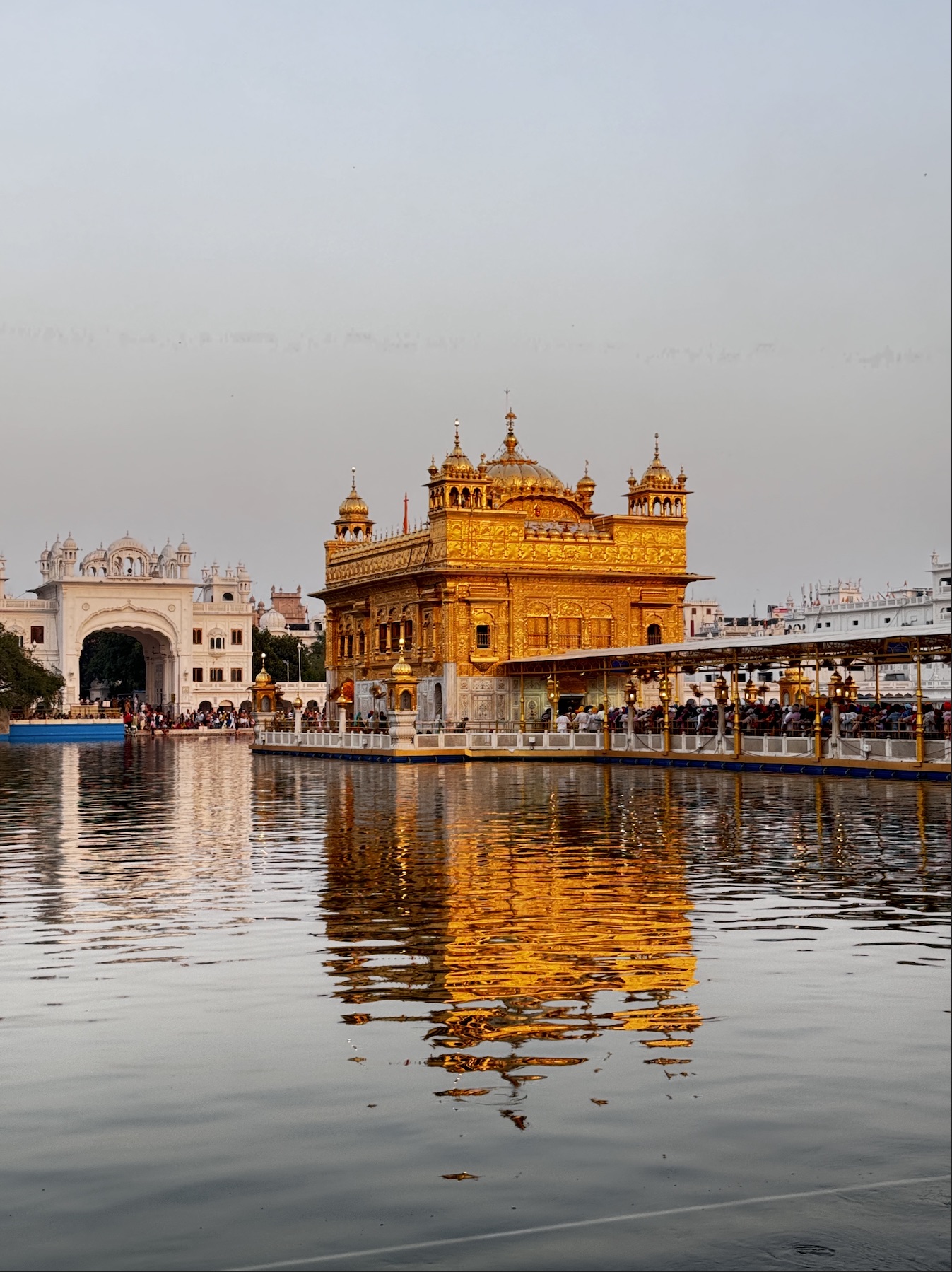
The Golden Temple represents the cultural grounding that shaped my earliest understandings of strength, responsibility, and emotional restraint. Growing up in a Punjabi household, spirituality and community were constant sources of guidance, yet they also carried unspoken expectations about how one should deal with hardship. This image symbolizes the values of resilience and endurance passed down through generations—values that often taught us to keep emotions contained rather than expressed. For many Punjabi families, faith becomes both a comfort and a quiet pressure, shaping how we make sense of suffering. This space reflects the cultural backdrop against which silence about mental health is learned.
Subtitle
For many Indo-Canadian Punjabis, these beliefs travel with them across oceans and generations. Despite living in a country where mental-health resources are increasingly accessible, many still find themselves caught between inherited values of endurance and the modern understanding that suffering in silence is not resilience, it is harm. The result is a quiet crisis, one that hides beneath the surface of everyday life: fathers who bury stress behind jokes, mothers who mask anxiety as duty, young men who drink to drown emotions they were never taught to name, and families who fear judgment more than pain.
This silence has consequences. A 2015 study on South Asian immigrants by Roberts and colleagues found that communities such as Punjabi newcomers experience high levels of untreated psychological distress and consistently underuse mental-health services because stigma and cultural expectations discourage seeking help. Within Punjabi communities, expectations of traditional masculinity often make emotional openness feel forbidden, especially for men who are taught that vulnerability undermines strength.. Many grow up believing that expressing fear or sadness makes them weak, feminine, or ungrateful.
This paper explores what happens when these cultural expectations collide with real human suffering, and what it means for those who carry emotional burdens in isolation. Through personal narrative, academic research, media reporting, and an interview with a Punjabi therapist, this piece examines why mental health remains taboo in Punjabi homes, how masculinity deepens silence, and why a community that prides itself on resilience must begin learning a different kind of strength: the strength to speak.
Personal Narrative: The Cost of Silence
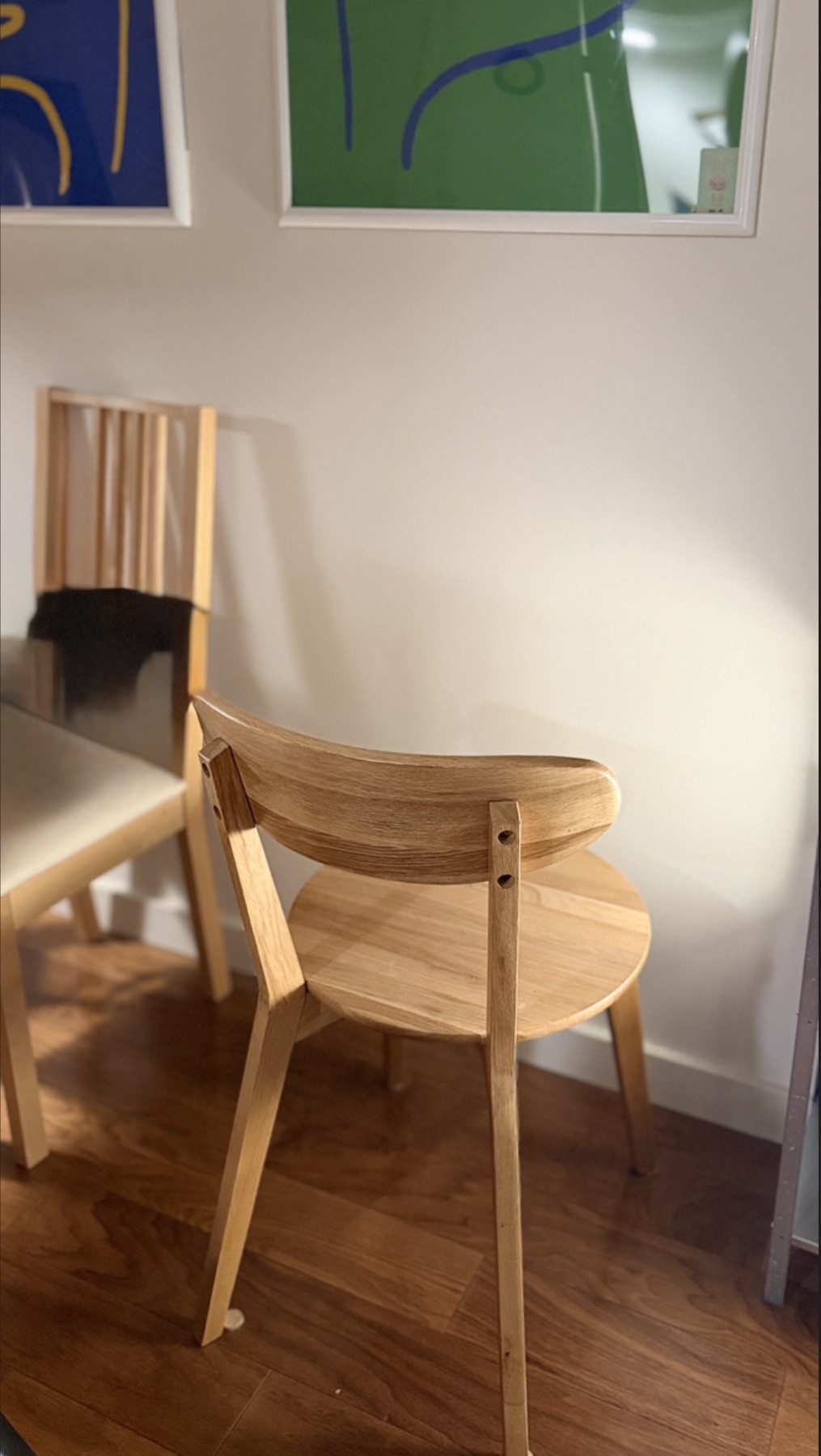
The empty chair symbolizes the emotional absence created by stigma—the quiet spaces where conversations about mental health should exist but often don’t. In many Punjabi families, vulnerability feels unsafe, leaving individuals to carry their struggles alone, even while surrounded by others. The chair represents the people who remain present physically but distant emotionally because cultural norms discourage acknowledging pain. It also mirrors my memory of those evenings when someone I knew sat alone, burdened by expectations no one asked about. This image reflects the silence that shapes our community: the weight of what is felt deeply yet spoken rarely, if ever.
When I was sixteen, I learned how heavy silence can be. One of my close friends in high school had a father who was a well-known businessman back in Punjab. I had known their family for nearly a decade, and every time I visited, his father would greet me with the same practiced cheerfulness: A booming laugh, a playful comment, a gentle pat on the back. Whenever I asked how he was doing, he always gave me the same answer: “Stressed, kid. The price of being a big man.” He said it as a joke, with a grin wide enough to convince anyone he was fine. For years, I believed him. Everyone did.
Sometimes, when I was leaving late in the evening, I would see him sitting alone in their garden, no smile, no jokes, just him, a drink in one hand, a cigar glowing faintly in the other. There was a sadness to him in those moments, a heaviness that didn’t match the man everyone claimed he was. I was old enough to notice something was off, but too young to understand what it meant.
Looking back now, I realize that this is how so many Punjabi men cope: by folding their pain inward, hiding it under responsibility, duty, and the expectation to be unshakeable. In our culture, men are encouraged to be providers, protectors, and pillars of strength, but never vulnerable. Vulnerability signals weakness, and weakness invites judgment. Therefore they stay quiet, even when the weight becomes unbearable.
Then, one day, everything changed. My friend texted me saying his father hadn’t come home for two days. Then three. Everyone speculated maybe he left the city, maybe he needed a break, maybe he just wanted time alone. A small part of me hoped he had finally run away from all the pressure, taken money, and escaped somewhere far, where he could live for himself rather than the expectations placed on him. The truth was far harsher.
A few days later, the headline appeared in the local Punjabi newspaper: “Prominent businessman and his luxury car washed up in the river.” He had driven himself into the water and drowned. Even now, years later, I think about him more often than I admit. I remember the night-time silhouette of him sitting alone. I remember the smile he performed like a duty. I remember the line he always repeated — “the price of being a big man” — as if success came with a cost he was too ashamed to name.
I still find myself wondering what might have happened if someone had asked him — really asked him — how he was doing. If he had felt safe enough to talk openly about what he carried. If therapy hadn’t been seen as taboo, or embarrassing, or something reserved only for people at their worst. And I still wonder if he would be alive today. His death wasn’t just a tragedy, it was a reflection of a much deeper cultural problem. In Punjabi families, suffering is often seen as a private burden, something to be endured silently. Men, especially, are expected to “man up,” suppress emotions, and absorb stress without complaint. Anything else is seen as failure, a lack of willpower, or even a sign of poor character. The truth is this: just because someone carries their burden well does not mean it isn’t heavy.
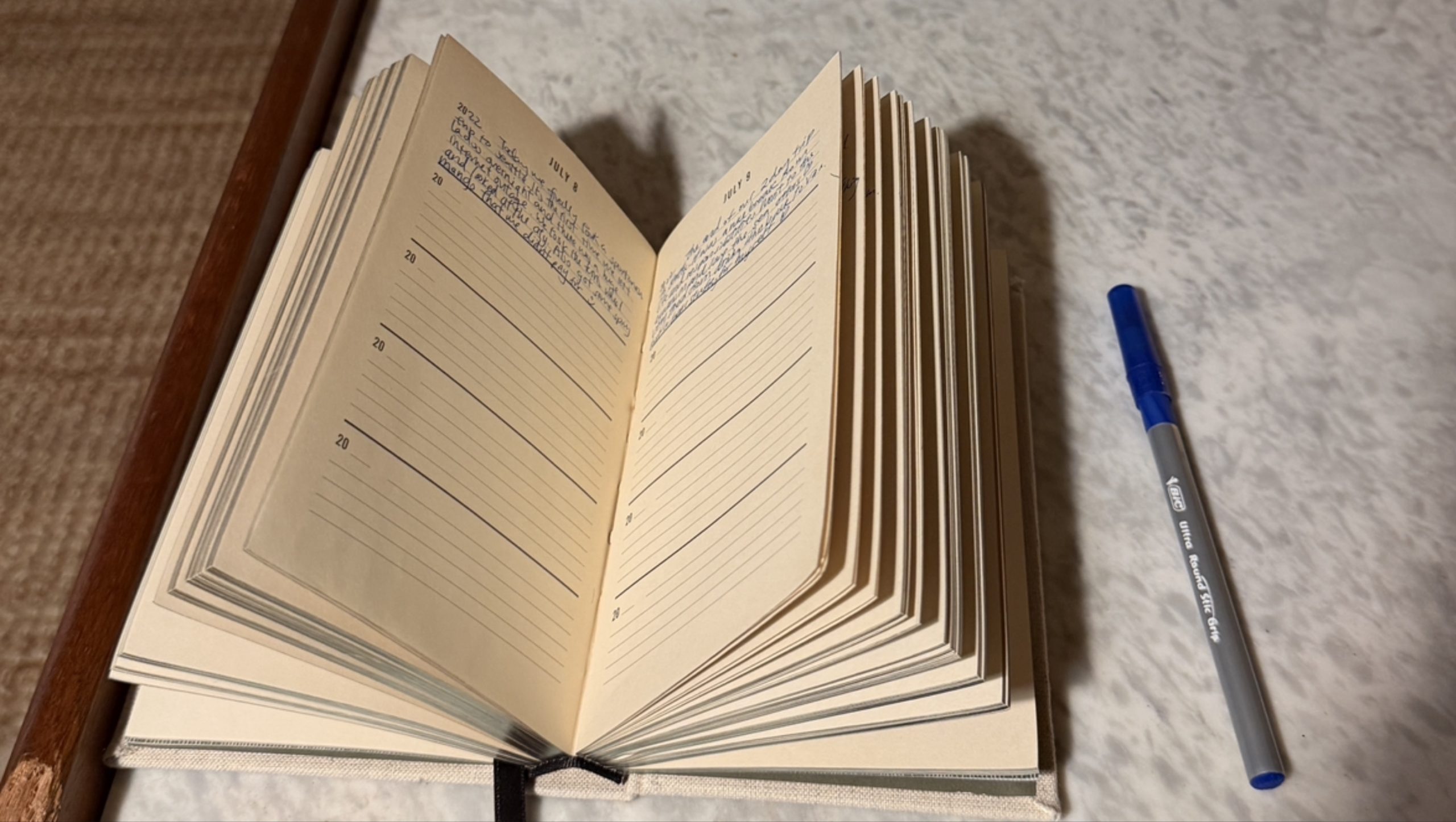
This journal represents a private space where emotions become language, something rarely encouraged within Punjabi households. While many in my community learn to endure their struggles quietly, writing becomes a tool that allows those suppressed feelings to surface safely. In contrast to cultural expectations to remain composed and self-sufficient, the journal offers permission to acknowledge confusion, sadness, or anxiety without fear of judgment.
This story has stayed with me for years, shaping the way I think about mental health in Punjabi communities. It is one of the reasons I chose to write about this topic, because I’ve seen firsthand how silence can destroy someone from the inside. Nobody talked about his struggles when he was alive, but after his death, everyone whispered about how “he must have been going through something.” As if that realization came too late to matter. That is the cruelest part. We notice the signs only after they’ve become impossible to ignore.
Mental-health conversations in Punjabi communities do not exist in a vacuum; they evolve from histories of migration, spiritual beliefs, gender expectations, and the ever-present weight of “what will people say?” For many Indo-Canadian families, especially those with roots in Punjab, mental health is not simply a psychological issue but a cultural one rooted in decades of inherited attitudes.
One of the clearest illustrations of these foundational beliefs comes from Punjab itself. In a mental-health literacy survey, Kumar found that many residents associated mental illness with “shame, divine punishment, or bad karma,” concluding that such problems should not be discussed publicly. This demonstrates how stigma is intertwined with spiritual and moral interpretations of suffering, leading families to view emotional distress as something that must be hidden rather than acknowledged. These attitudes form the cultural blueprint that many Punjabi immigrants bring with them to Canada.
Once in Canada, these beliefs do not simply disappear. In her 2024 study From East to West: Exploring the Mental Health of Punjabi Immigrants Residing in British Columbia, Kaur found that stigma continues to shape how Punjabi immigrants view counselling. Participants described feeling unable to seek help because of expectations to remain strong and avoid worrying family members. Kaur identified four major themes in her interviews—stigma, relationships, international student status, and cultural awareness—each underscoring how cultural norms emphasizing family honour and emotional restraint persist even after migration. Many young adults, caught between Western openness and South Asian expectations, internalize guilt about burdening their families and therefore suppress their struggles.
Research across South Asian communities affirms the depth of this stigma. Roberts, Mann, and Montgomery, in their study on Asian Indian immigrants, found that “psychological symptoms are stigmatized as conveying weakness and personal deficiencies that are shameful and bring dishonor to the family”. Their work highlights that stigma is not confined to Punjab or to India but travels with the diaspora, shaping how Indo-Canadians interpret their emotional suffering. The expectation to endure difficulties silently is reinforced through everyday language, cultural norms, and community interactions.
Gender further complicates this silence. Although Punjabi women often carry a disproportionate emotional burden, Punjabi men face rigid expectations around strength and emotional stoicism. In her UBC thesis on Indo-Canadian women’s help-seeking patterns, McLellan observed that “there is evidence that women in the Indo-Canadian community do not seek counselling help even though they want and need it,” primarily due to fear of gossip and judgment. While her study focused on women, the root causes—family reputation, shame, fear of community scrutiny—apply equally to men. Similarly, research on South Asian masculinity shows that Punjabi men learn early that vulnerability is unacceptable, leading many to hide their struggles behind alcohol, avoidance, or silence. My interview with Punjabi therapist Jasmine Gill further confirms that many Punjabi men enter therapy for the first time in adulthood having never been encouraged to express emotions at all.
These combined pressures contribute to what psychologists call internalized stigma, where individuals begin interpreting their distress as personal failure. The Depression, a Hidden Mental Health Disparity in an Asian Indian Immigrant Community study by Roberts reinforces this pattern, noting that many South Asian immigrants delay seeking help until symptoms become severe and view therapy only as a last resort rather than a preventive resource.
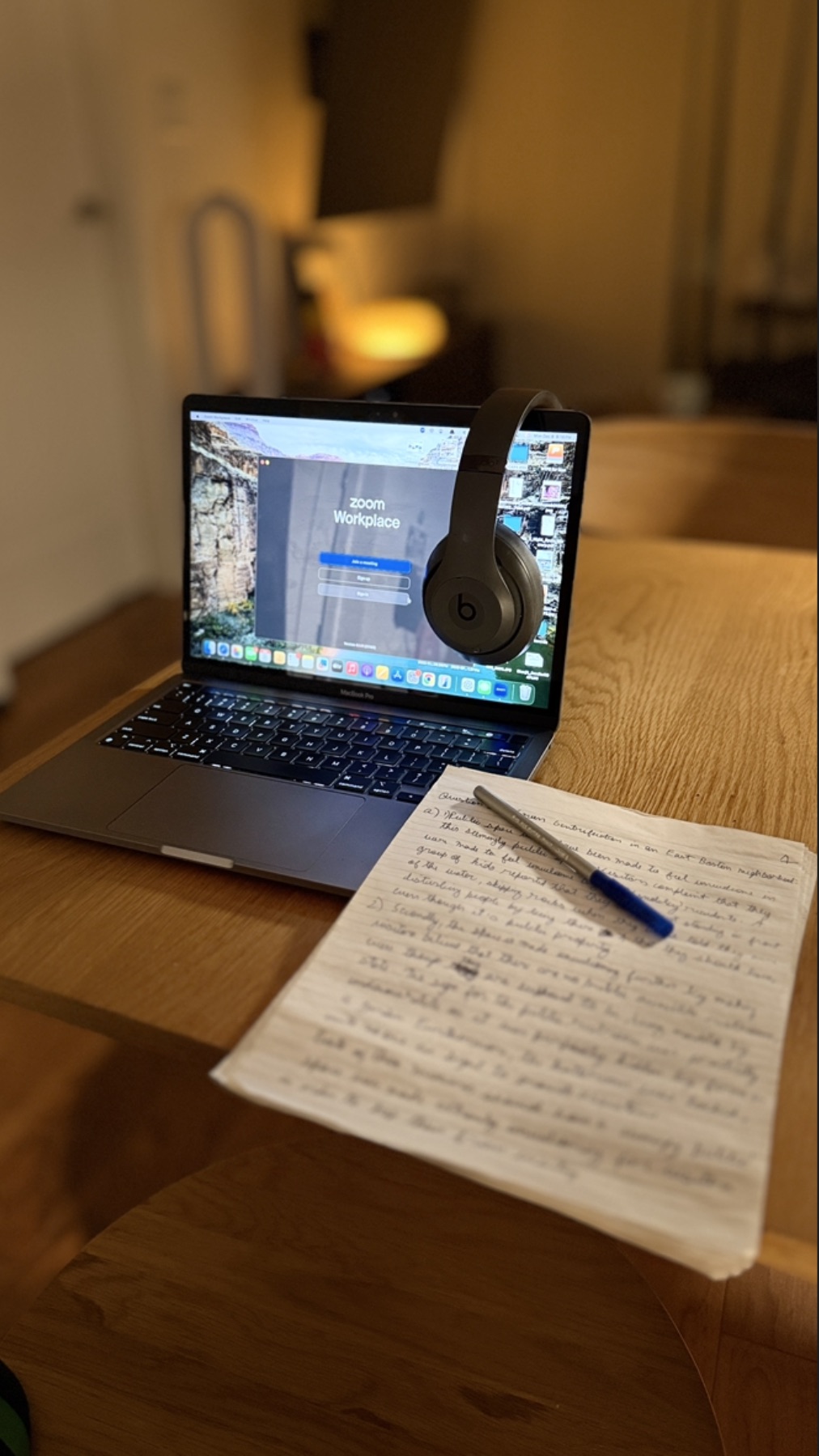
This workspace represents the interview that fundamentally reshaped my understanding of mental-health stigma within Punjabi communities. Speaking with Punjabi therapist Jasmine Gill offered insight that academic research alone could not provide. She described how many Punjabi clients enter therapy carrying generations of silence, viewing emotional struggle as weakness and counselling as a last resort. Her stories illuminated the cultural pressures—masculinity, family honour, and fear of judgment—that prevent people from seeking help until they reach a breaking point. This image symbolizes the learning, reflection, and cultural unpacking that took place during our conversation, revealing just how deeply stigma shapes Punjabi emotional life.
Despite these barriers, the conversation is slowly shifting. Younger Punjabi Canadians, exposed to schools, media, and online spaces that normalize therapy, have begun challenging generational silence. Yet change is gradual; immigration alone does not undo decades of cultural conditioning. For many families, speaking openly about mental health still feels like violating an unspoken code shaped by migration, gender norms, and the fear of being seen as “less than.”
When I spoke with Jasmine Gill, a Punjabi clinical counsellor who has spent years working with South Asian clients, she told me something that stuck with me long after our conversation ended: “We don’t do therapy formally in our community. We do it informally, if we feel safe.” That one sentence captures the paradox at the center of Punjabi mental health. People are desperate to talk, to be understood, to feel seen, yet the moment therapy is labeled as therapy, walls go up. As Jasmine explained, many of her Punjabi clients come in with the expectation that counselling will be rigid, clinical, or overly medicalized. “There’s a misconception that therapy is only for people who are ‘going crazy,’” she said. “That you only go when you’re at your worst.”
That belief echoes what countless studies and cultural narratives already show: therapy is often viewed not as a tool for growth or maintenance, but as a sign of crisis, or even failure. And for Punjabi immigrants, who were raised in homes where suffering quietly was considered strength, the idea of seeking help feels foreign, almost shameful. Jasmine sees this every day. Many of her clients enter therapy believing they must justify their presence, as if they need to be “bad enough” to deserve support. “People think you need to be at a breaking point,” she said. “But therapy can be preventative. It doesn’t have to be an emergency room.”
Her perspective is especially revealing when it comes to generational differences. Jasmine notices that many first-generation young adults, the children of immigrants are more open to counselling because they’ve grown up in Canada, around peers who normalize therapy. The older generation often struggles with the concept entirely. “There’s this fear of what the community will think,” she explained. “That phrase ‘lok ki kehenge’ meaning “what would people say” still shapes so much.”
Even basic conversations about emotions are shaped by cultural expectations. Jasmine explained how the Punjabi language doesn’t have words that can describe conditions for mental-health conditions. Words for depression and anxiety exist, but they aren’t part of our conversational vocabulary. Instead, emotions are minimized as stress, or “overthinking.” Without the language, people are left without a framework to even identify what’s happening inside them. Nowhere is the silence heavier than with Punjabi men.
Jasmine told me that for many male clients, therapy is the first time in their lives that someone has asked them how they feel, and actually waited for the answer. “Punjabi men come from such patriarchal communities,” she said. “There’s an expectation to provide, to be the strong one. Emotions aren’t accessible in those roles.” She described how women often enter counseling through referrals. A sister, a friend, a cousin, or even a mother urging them to go. Yet men rarely receive that encouragement. “Nobody tells Punjabi men to go to therapy,” she said. “They’re encouraged to drink, to cope, to push through. But not to talk.”
This connects directly to a pattern she often sees: men who have only ever expressed emotions while drunk. The interview with the Punjabi therapist Jasmine Gill shed light on this issue. She mentioned how alcohol becomes the socially acceptable outlet for vulnerability, a temporary window where men can cry, confess, or collapse, only to sober up and seal everything shut again. It reinforces the idea that emotional expression can exist only in the shadows.
For Jasmine, helping clients open up requires patience and cultural sensitivity. She knows she cannot simply ask direct questions about trauma or family dynamics; those topics don’t unfold that way in Punjabi culture. “Time,” she said. “Time and reassurance.” She lets clients know they don’t need to reveal everything at once, that trust is built slowly, not demanded.
She also uses her own cultural identity strategically. “A bit of self-disclosure goes a long way,” she told me. Sharing small elements of her own Punjabi background helps clients feel more understood. Even slipping into Punjabi for a sentence or two creates a sense of shared experience, a feeling that the person in front of them understands the unspoken rules of their world.
Toward the end of our interview, I asked how therapy could be normalized in Punjabi communities. How do we break the silence? Jasmine paused before answering. “We have to talk about it,” she said simply. “Shame grows in darkness. The more you name it ‘I’m going to a session,’ ‘I’m seeing my counselor today’ the more normal it becomes.” In other words, change doesn’t begin with institutions or policy. It begins in the home, in living rooms, at dinner tables, in WhatsApp groups, in everyday conversations where vulnerability becomes something people are allowed to show rather than hide.
This journal symbolizes the beginning of unlearning silence—an act of reclaiming emotional honesty that previous generations were rarely allowed. Through writing, I create a bridge between cultural tradition and personal healing, shaping a voice capable of naming what once stayed hidden.
The challenges around mental health in Punjabi communities aren’t just documented in academic papers or therapy offices, they are unfolding right now in gurdwaras, community centers, and family homes across the world. Media coverage in recent years shows that Punjabi families in Canada and abroad are grappling with the same silence, stigma, and generational pressures found in research and in Jasmine Gill’s practice.
In British Columbia, a CBC article reported on a new mental-health initiative launched at the Okanagan Gurdwara in Kelowna, created in response to the reality that many Sikhs “do not want to talk about their feelings or seek help… due to stigma” within South Asian culture. Volunteers, Sikh granthis (scripture readers), educators, and social workers meet monthly to guide community members through topics like addiction, emotional trauma, and family conflict, blending Sikh teachings with mental-health strategies. The goal is not only to offer support, but to make seeking help culturally acceptable. As one organizer noted, many Punjabi families have learned to prioritize self-sacrifice over self-care, enduring hardship rather than addressing it.
The article also highlights a well-documented trend: South Asians are more likely to experience emotional disorders but less likely to access treatment. According to the CBC news article, in Fraser Health’s jurisdiction, drug-toxicity deaths among South Asians increased 255% between 2015 and 2018, far higher than the increase among other residents, yet South Asians remain underrepresented in substance-use treatment programs. This disconnect reflects what Jasmine sees in her own clinical work: silence kills, especially when cultural expectations teach men and women alike to endure pain privately.
A BBC feature from London echoes nearly the same story, this time from the perspective of a young Punjabi-British man named Atma. He describes growing up hearing mental illness dismissed as weakness, overreaction, or stubbornness. “Anyone having ‘problems of the mind’ is considered a burden upon the family,” the article notes. Even today, he says he sees stigma “everywhere” in phone calls, in YouTube self-help videos, and especially in the WhatsApp messages that circulate through elder relatives. While younger Punjabis may be more open to discussing mental health, Atma emphasizes that shame still flows through many of the interactions in Punjabi families, especially when older generations are involved.
One of the most striking parts of his story is the hypocrisy he observes: communities publicly lament rising suicide rates in Punjab, but privately mock or dismiss their own relatives when they express anxiety or emotional distress. This contradiction mirrors the cultural double standard Jasmine identified, the idea that struggle is legitimate only when it happens far away, to strangers, but unacceptable when it appears inside our own homes.
Together, these media accounts paint a vivid, contemporary portrait of a community wrestling with silence but slowly, cautiously, learning to speak. From Canadian gurdwaras hosting counselling sessions to young people in London using social media to challenge stigma, the movement toward openness is growing. Still, the weight of tradition, masculinity, and generational expectations remains heavy, reminding us that cultural change requires more than awareness. It requires a collective willingness to let go of shame and begin having the conversations our elders never felt allowed to start.
Conclusion
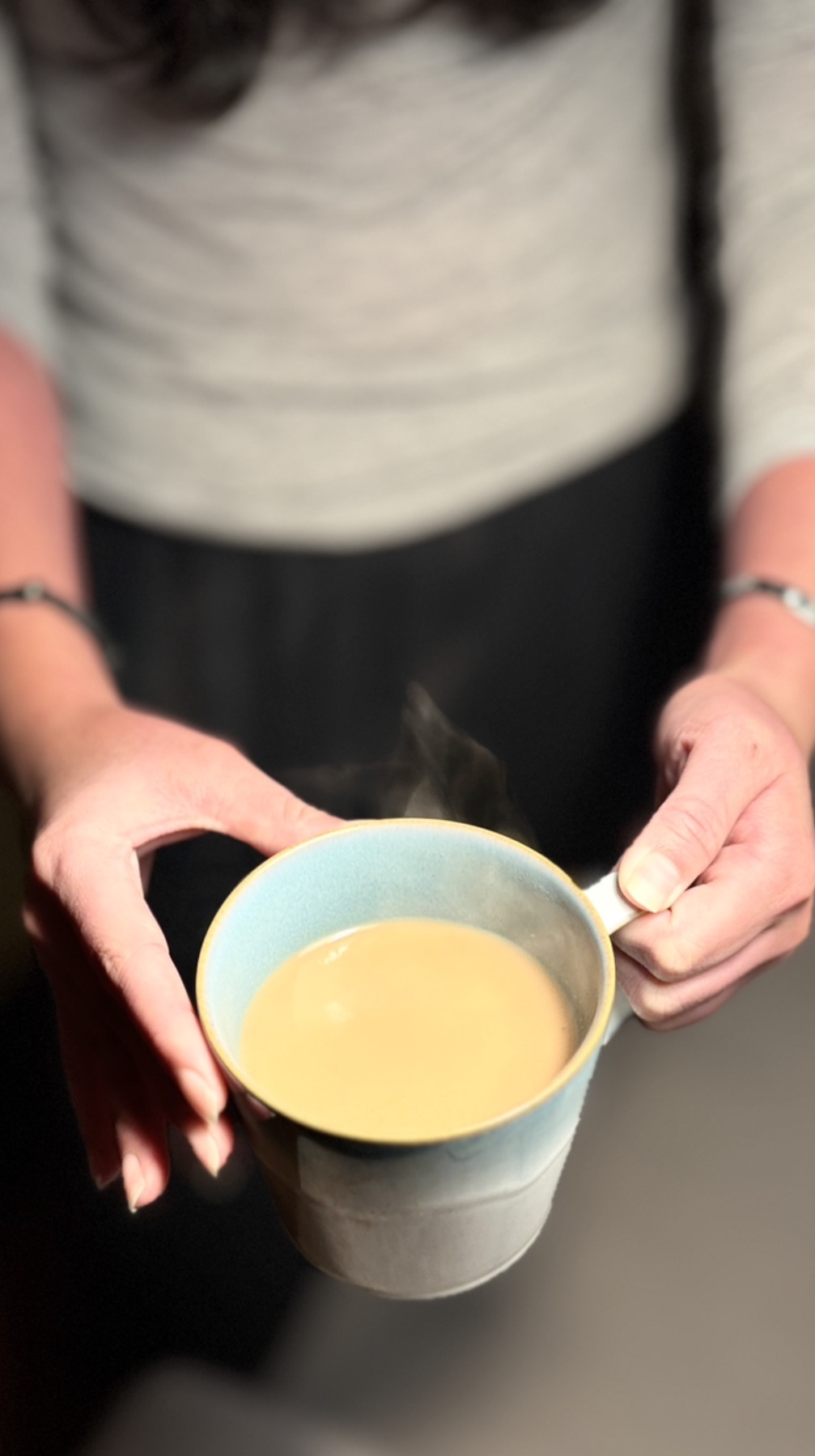
Chai is at the center of how many Punjabi and Brown families connect. It is the drink we gather around to discuss politics, neighbours, work, family updates—everything except how we truly feel. Conversations flow easily, yet the topics that matter most remain quietly avoided. This image reflects that contradiction: the warmth of chai brings people together, but it also becomes a comfortable distraction from the emotional truths our community struggles to voice. It symbolizes how silence is preserved through everyday rituals, and how much remains unspoken even in moments meant to bring relief, closeness, and understanding.
Conclusion
In the end, what stays with me most is not the research, or the statistics, or even the stories I uncovered, it’s the memory of a man sitting alone in the dark, carrying a weight no one ever asked him to name. His silence was not unusual. It was familiar, almost ordinary in our community. That’s what makes it so devastating.
His story is not an outlier. It is a reflection of a larger truth that exists in Punjabi homes from Surrey to Brampton, from London to Melbourne, from Chandigarh to anywhere our people live. We have inherited a culture that celebrates endurance but rarely allows vulnerability, one that teaches us how to survive but not how to feel, one that praises strength but misunderstands what strength truly is. The tragedy is not that earlier generations failed us, it’s that nobody taught them differently. They inherited the same silence and fear of judgment, carrying their burdens the only way they knew. Now, we have the chance to do things differently.
We’re already seeing change: gurdwaras hosting mental-health sessions, young Punjabis challenging stigma online, therapists like Jasmine building culturally safe spaces, and students starting conversations their parents never could. These are the beginnings of something generational. Breaking the taboo doesn’t mean abandoning our culture, it means expanding it. Speaking honestly about mental health isn’t betrayal; it’s care, growth, and exactly what our families wanted for us. We cannot undo the past, but we can refuse to repeat it, and become the generation that finally learns to carry the weight together.
References
BBC News. “Mental Health in the Punjabi Community: ‘I See Stigma Everywhere’.” BBC News, 17 Sept. 2020, https://www.bbc.com/news/uk-england-london-54170902.
CBC News. “Free Counselling Sessions at Okanagan Gurdwara Aim to Improve Mental Health for South Asian Communities.” CBC News, 13 Apr. 2023, https://www.cbc.ca/news/canada/british-columbia/amargit-singh-lalli-kelowna-sikh-temple-mental-health-1.6824978.
Gill, Jasmine. Personal interview. 15 Nov. 2025.
Kaur, J. (2024). From East to West: Exploring the mental health of Punjabi immigrants residing in British Columbia[Master’s thesis, Antioch University Seattle]. Antioch University Repository.
Kumar, R. (2013). Attitude to people with mental illness: A mental health literacy survey from Punjab State. International Journal of Health Sciences and Research, 3(12), 29–34.
McLellan, M. (1998). What are the personal and cultural criteria of Indo-Canadian women in deciding to seek counselling help? [Master’s thesis, University of British Columbia]. UBC Library Open Collections.
Roberts, L. R., Mann, S. K., & Montgomery, S. B. (2016). Depression, a hidden mental health disparity in an Asian Indian immigrant community. International Journal of Environmental Research and Public Health, 13(1), 27. https://doi.org/10.3390/ijerph13010027