


Zhun Guo
Zhun Guo is an international student based in Vancouver and a graduate of Interdisciplinary Studies program at Capilano University. He is interested in his studies in the fields of public health, substance policy, and lived urban experience. Having worked in China and having moved to Canada, Zhun got interested in the intersection of government regulation and the normal community life. His study is a personal account and a statistical review along with primary interviews conducted to explore the social effects of legalizing cannabis. His work in writing and multimedia storytelling attempts to reconcile the academic research and the common conversation to provide easy to understand information on how national policies influence individual behavior, youth vulnerability and community well being.
Introduction
When I first came to Vancouver as an international student in 2015, Nothing made me expect that cannabis would infiltrate the sense of the city as deep. The first time I went downtown I recall a sweet, skunky smell floating through an otherwise normal street corner. I did not realize it right away. Back home, cannabis was something that was mostly seen in the movies, stereotypes, and cautionary tales, something that was far away, something that was not seen. In this case, it was freely floating in the air, in the alleys, hanging along the transit shelters, and resting on the sidewalks, where people could pass joints as they did their phones. It was a cultural shock to me in Canada, and it would remain with me much longer than I thought.
In 2018, Canada legalized recreational cannabis as a public-health measure aimed at minimizing access among young people, eradicating hazardous products at criminal markets, and decreasing the court workload. It was put in context as a progress and protection. To a large extent, such framing is still true: legalization has produced lawful products, more prominent labels, and more rigid ID checking measures than most liquor stores. However, the reality on the ground, day in day out, particularly in thick and urban societies such as that of the city of Vancouver has turned out to be much more complex.
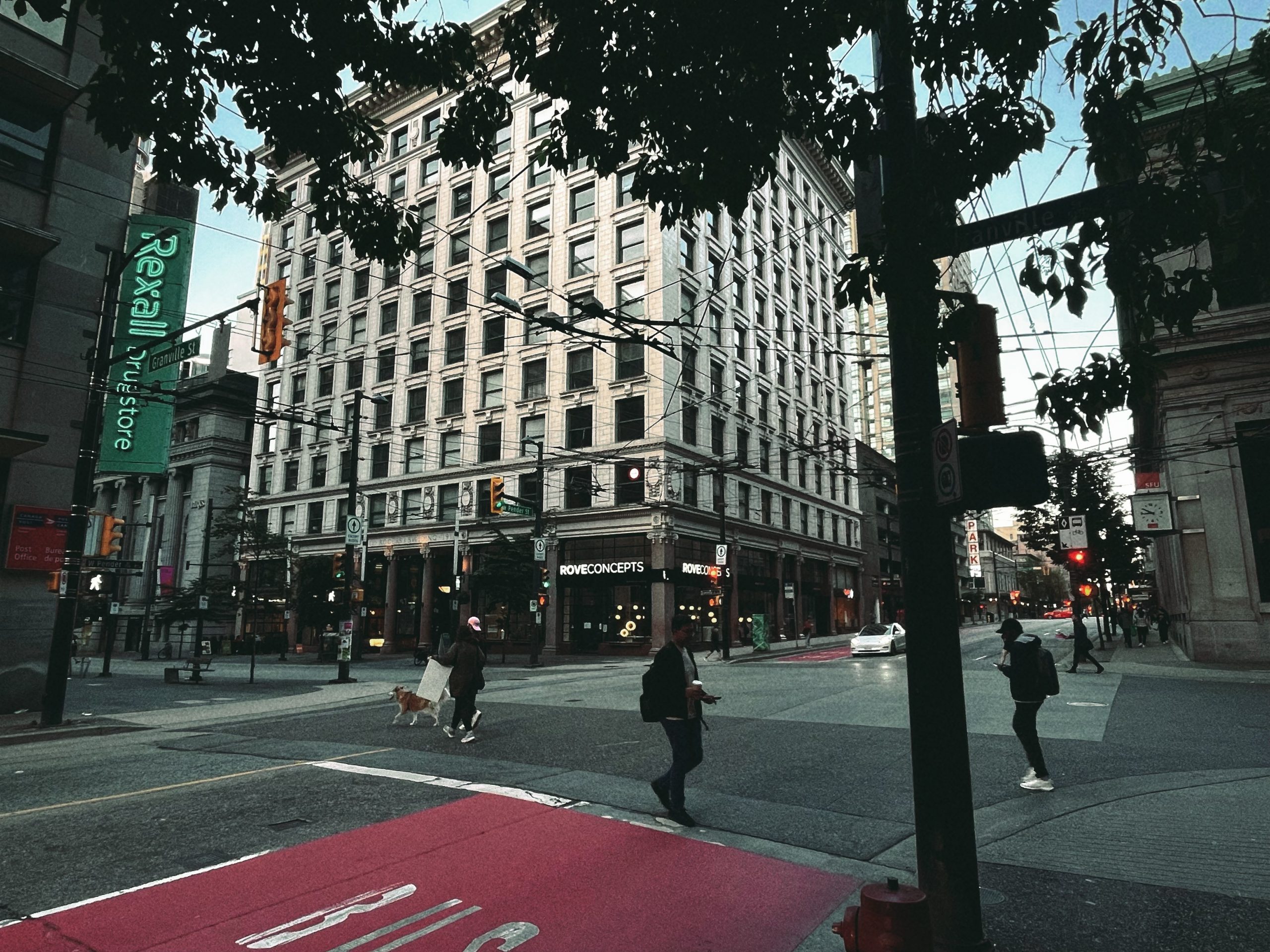
A downtown Vancouver street scene illustrating the everyday visibility and normalization of cannabis use following legalization.
The legalization has become a constituent part of my daily experience over the last several years: the visual, olfactory, and social consequences of this act have been apparent. I have also interviewed employees who are enjoying the advantages of a controlled industry, youths who find it hard to resist addiction, and employees whose feeling of safety and comfort has shifted since 2018. What I learned is that the legalization process in Canada is not a failure and an undoubted achievement. Rather, it is a two-sided policy of public-health; one that provides transparency and regulatory control due to the simultaneous exposure of youth, socialization of high-frequency consumption, and restructuring of the lived-in environment of high-density communities that we are yet to fully comprehend.
It is a research, a narrative, and a personal reflection on the complicated, at times opposite-to-each other, reality of cannabis legalization in the eyes of a person who experienced it, researched it, and had to work through its social repercussions personally.
The First Encounters: A Narrative of Adjustment
The first year in Vancouver seemed to be a lengthy process of introduction into the new world of senses. The very city is a colorful blend of cultures, languages, and habits, which I liked at first sight. But the cannabis was unique due to the ubiquity that it appeared. I smelled it when I was getting to school outside the SkyTrain stations. I sniffed it at the orifices of the windows into my apartment. I even smelled it on the clothes of my classmates at lunch time. It finally came to a stage where I was no longer surprised at it; the smell has been added to the city ambiance, just like rain or the sea.
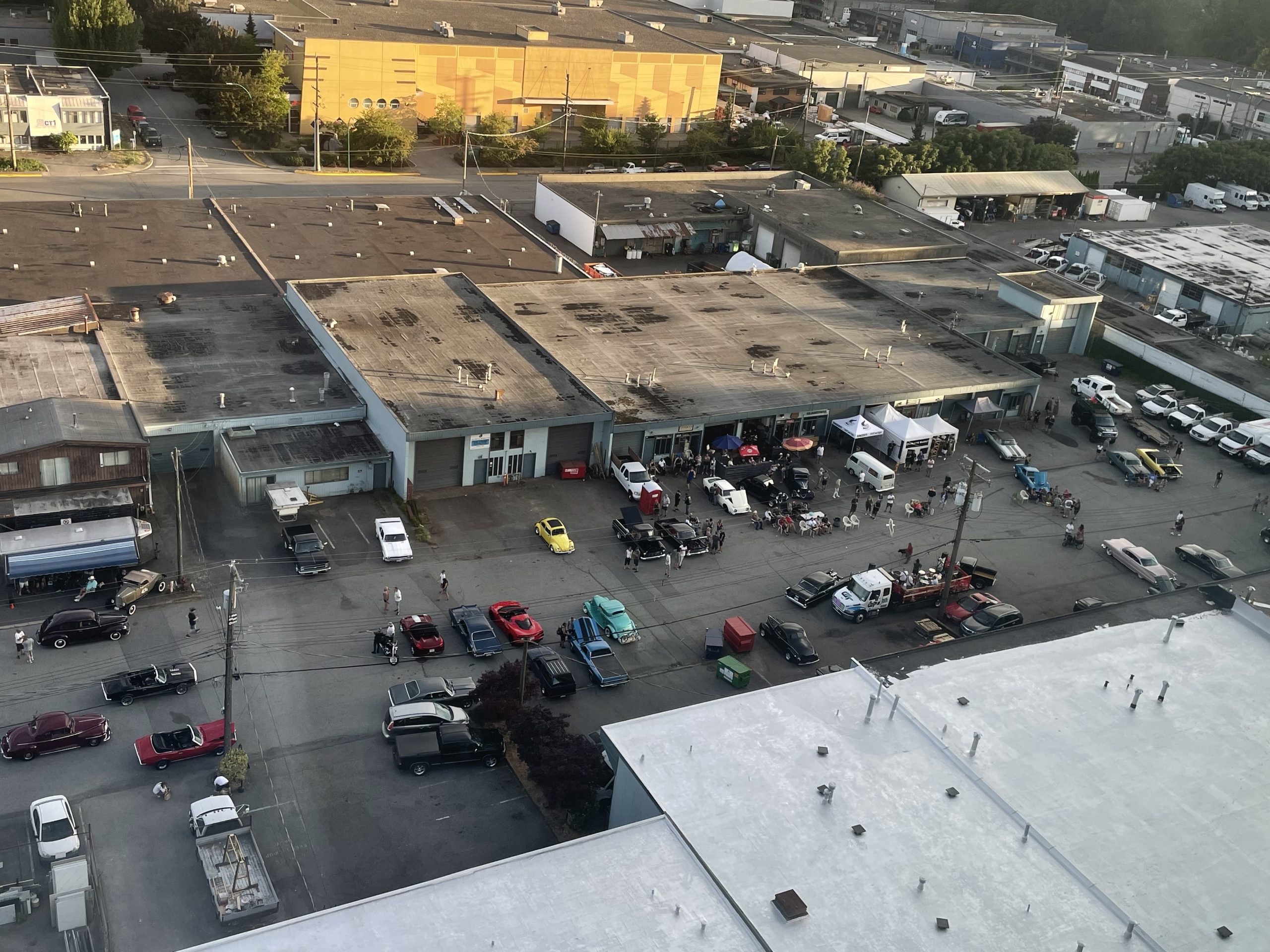
A high-rise residential skyline representing concerns around second-hand cannabis smoke exposure in dense urban housing environments.
However, normalization brought up new questions on my part. I questioned the kids about how they smelled of this smell. I questioned how many teenagers passed the same clouds of smoke and received totally different information. I wondered how many young adults had changed their habit not because of their belief in the harmlessness of cannabis, but because the ubiquity of the substance made it seem that harmlessness was now the improbable norm.
These bits and pieces made me investigate further – how the legalization influenced behavior, how the public-health outcome changed since 2018 and how various individuals around me perceived the same policy entirely differently, based on the radically different experiences in their lives. The deeper I was looking, the more I understood that the history of cannabis legalization is not merely about a substance, but about how a country redefines the ideas of safety, risk, and ordinary life.
What the Data Actually Shows: Usage, Youth, and Public Health
- Exposure and Daily-Use Preferential Rise in Youth.
Less access to the youth was one of the main objectives of legalization. However, the national statistics represents a more complicated picture. Statistics Canada indicate that the number of youth using cannabis monthly has not declined significantly since 2018 despite the presence of legal-age restrictions that are highly enforced (Statistics Canada). More notably, the number of people who use cannabis on a daily or almost daily basis rose by 6% in 2018 and increased to nearly 8% by 2021, with the most significant growth occurring among those aged 18–24 (Statistics Canada).
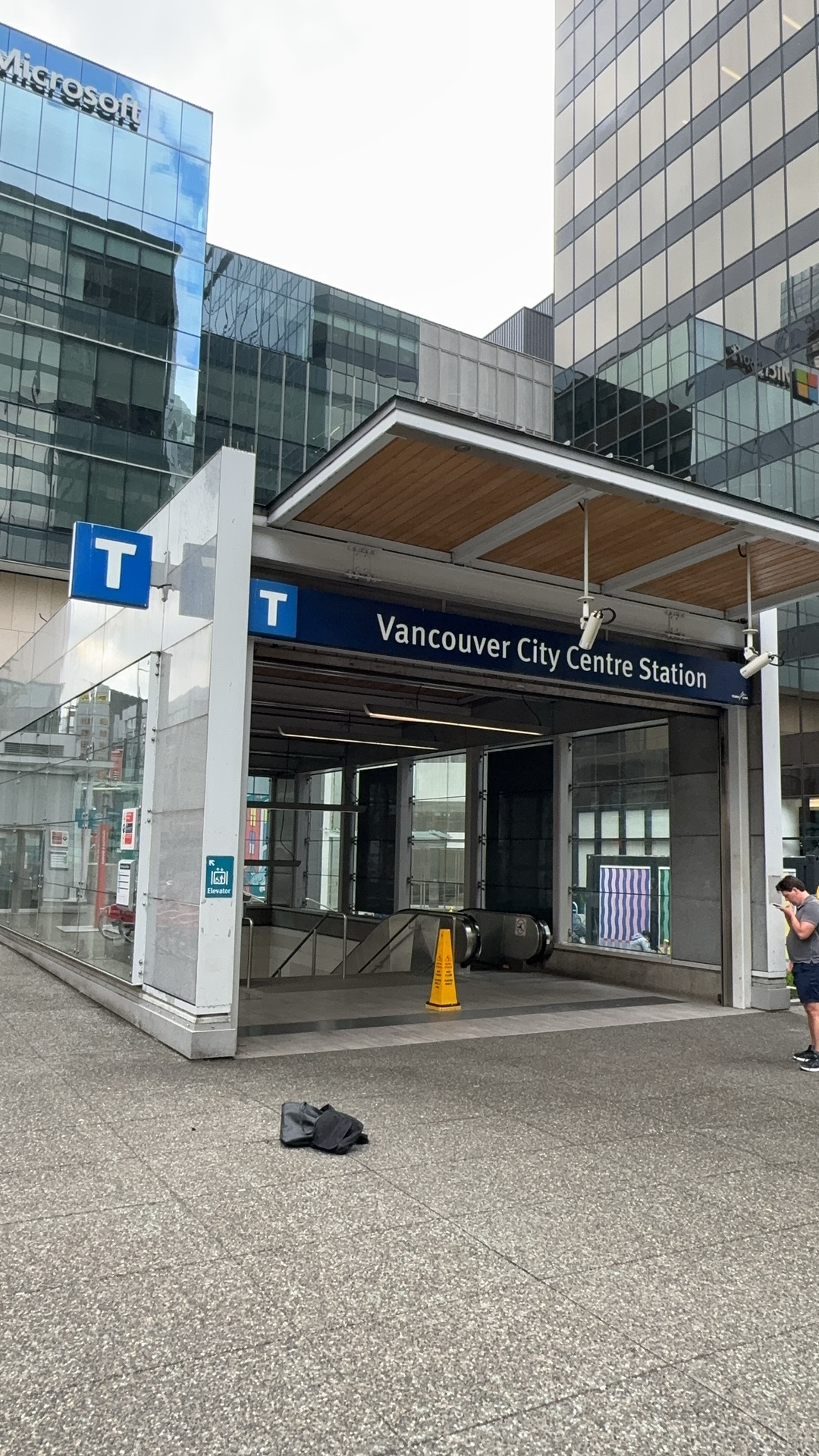
A SkyTrain commuter area showing the proximity of cannabis use to youth-heavy public transit spaces in Vancouver.
Being a resident of the high traffic transportation routes, I frequently came across young adults vaping quietly on the sidewalk or going out of the apartment buildings with dab pens hardly showing in their grasp. Legalization did not create these behaviors but it certainly made them normalized. Once a behavior is normalized in the common space, it is bound to get normalized in personal decision-making-particularly among the youthful generation who have to go through social legitimacy.
- Psychological Health Dangers and High-THC Products.
The second significant post legalization change was potency. Prior to 2018, illegal cannabis flower contained an average of 10%-15%THC. In the modern world, legal dispensaries often sell both extracts and vape cartridges containing over 70 percent to 80 percent of THC. Manthey et al. state that increased THC potency is associated with rising psychiatric diagnoses, including anxiety and psychotic disorders (Manthey et al.).
The first time that I entered a dispensary (this was solely as an observer, as a part of the research), I observed how cautiously the products were arranged: indica, sativa, hybrid, concentration, effect. The setting was an atmosphere of a boutique. However, the shelves said otherwise with potency reading of 70, 80 and even 90. Regulation had rendered cannabis much safer in the aspect of contamination but has also increased access to products with much more psychological harm particularly to heavy users or young adults whose brains are still developing.
- Hospitalizabilities and Unintended Results.
A national study found that modifications to minimum purchase age regulations correlated with changes in cannabis-related hospitalization among young adults (Myran et al.). Although the paper does not assert causality, the correlation shows a very important aspect; the outcomes of the health of the population are sensitive to any slight alteration of the regulation of cannabis. With the development in terms of legalization, so do risks.
These conclusions form the conflict between the official discourse, such as legalization safeguards the health of the population, and evidence, which tends to indicate that after 2018, the situation with the health of the population became more complex, rather than simpler.
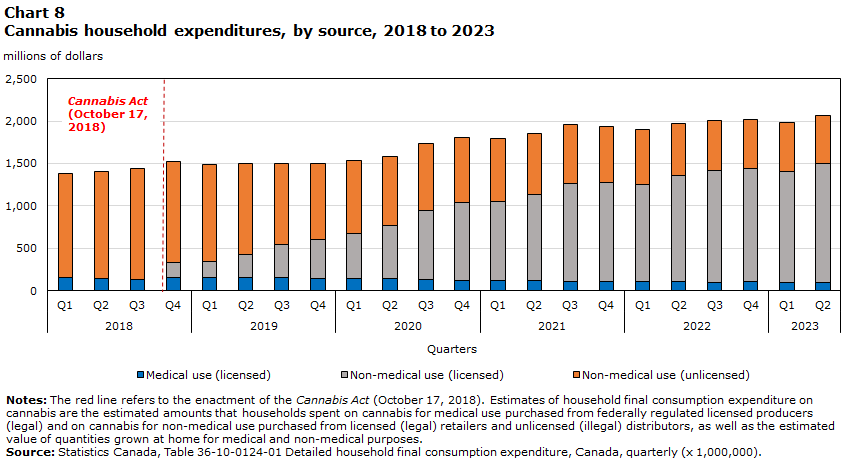
A data visualization highlighting the rise in daily cannabis use among young adults in Canada after legalization, based on Statistics Canada data.
Inside the Stores: A Worker’s Perspective on Regulation and Safety
To gain a more profound vision of the industry side, I have conducted an interview with Mr. J, a 27-year old employee of a cannabis dispensary in Vancouver. This viewpoint made me understand the real customer experience that was changed by legalization.
IDs are checked stricter than in any liquor store I have ever entered, he replied to me. “It’s non-negotiable. No ID, no product. Minors don’t even try” (J, personal communication, 2025).
I was impressed by his description of regulatory processes. All products should be tested in the laboratory. Each package displays the percentage of THC, batch number and ingredients list. To him, the legalization brought some form of transparency that just was not there in the past.
However, Mr. J also confirmed something that was in line with nationwide statistics:
“The levels of THC are significantly greater than in the pre-legalization period. Customers now seek stronger effects” (J, personal communication, 2024).
His intuition indicated a paradox: by legalizing, the risk of contamination was minimal, and access to high-potency products with more mental-health consequences was more available. Safety was on the one hand enhanced and on the other hand suffered.
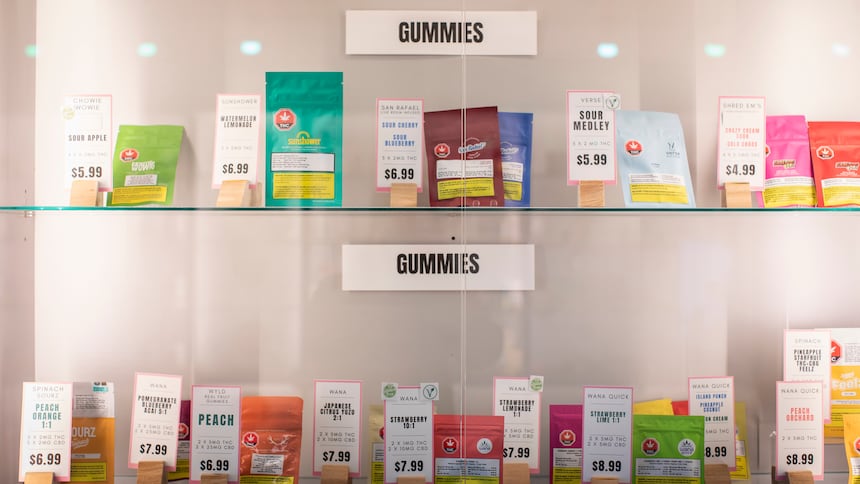
The interior of a legal cannabis dispensary demonstrating regulated retail environments, product labeling, and controlled access.
A Young User’s Story: Dependency in the Age of Accessibility
To get a glimpse of the other side of the story, I interviewed Stephanie who was a 20-year-old UBC student and had difficulty in using cannabis on a daily basis during her first year of university. Her experience, unlike that of Mr. J, was an indication of the dangers that are of interest to researchers in the field of public health.
She said that she entered into cannabis as a part of her routine:
“Initially, it was a couple of days out with friends. However, when school became stressful I relaxed with it. Then to sleep. Then to feel normal” (Stephanie, personal communication, 2025).
Towards the end of the year, she was not in a position to stop without developing anxiety spikes, irritability, insomnia which are all signs of cannabis withdrawal. It became easy with the high-THC vape pens discreet, odorless, low cost, and acceptable in society.
I did not imagine it was dangerous, said she. “Everyone was doing it. and since it was legal, it was safe” (Stephanie, personal communication, 2025).
Her narrative resonated with the warnings of researchers that more accessibility through legalization, less stigma leads to the decrease in perceived risk, despite the possible increase of the actual risk, particularly with strong products.
Her story confirmed one of my previous observations, which occurred in most of the open areas: the informal nature of the cannabis consumption can gradually turn into dependency without the usual warning signals that are characteristic of using illegal drugs. The distinction between habit and harm is exceedingly fine to discern.
Community Impact: Public Space, Smoke, and Second-Hand Risks
Its effect on the daily living conditions has been one of the most intimate elements of legalization, to me. In the high density housing, smoke tends to move across units easily. Smells oozing through door cracks. Families that have young children are concerned with exposure. City statistics report an increase in cannabis-related odor complaints since legalization, particularly in apartment communities (City of Vancouver).
It is not just a matter of annoyance but of air quality, health and normalization.
There is scientific evidence which proves that second-hand cannabis smoke has dangerous fine particulates and quantifiable levels of THC. Scientific evidence demonstrates that second-hand cannabis smoke contains fine particulate matter and measurable THC exposure risks (American Lung Association). Although the exposure effects are yet to be determined, there is a reason to be concerned with the vulnerable ones, such as infants, the ones with asthma, or the unborn.
I remember times when the smell that came into my apartment was so high I could question whether passive exposure could have an impact on my sleep. I was not alone. Once my neighbor explained to me: “My toddler believes that it is normal that there are people smoking out our door at night. What do I say about the fact that it is not true that just because something is legal, it is not harmful?
That comment stayed with me. When a child starts to form his concept about cannabis with such an idea as everybody is doing it in the open, there is a high chance that the youth-protection objective of the policy will become highly challenging.
The Black Market Paradox
Legalization was assured to bring out the illegal market. As a matter of fact, it diminished but did not kill it. Health Canada reports that 30%–40% of cannabis sales in Canada remain outside the legal market due to price disparities and taxation (Health Canada). The black market sellers have cheaper products and no limit on their potency. This causes a weird paradox; the transparency caused by legalization was achieved but some of the consumers are keen to shun this transparency by going back to illegal sources.
This observation reinforces the notion that the move to legalization is not a smooth process between illegal and legal markets but one that exists in a co-existence but with each having different impacts on the patterns of consumption.
Discussion: Why Policy and Reality Don’t Fully Align
The legalization of cannabis in Canada is based on sound intentions of health to society. However, intentions do not have the power to triumph over the lived reality, which is created in the influence of the spatial environment and the culture, as well as the socialization process of young adults. The disparity between national aspirations and the local results is not an indicator of policy failure but a solution to the memory that the public-health policies cannot possibly be measured using only economic or judicial indicators.
The regulation produced safer products and stronger products. The access was limited to the youth but exposure was enhanced. The black market did not disappear but rather reduced in size. There are smoking prohibitions in the society which are scarcely followed. Openness increased and dependency dangers slipped under the carpet.
Being a survivor of these contradictions, I found out that cannabis legalization is not a single occurrence but a continuous social experimentation a process that never stops but rather develops, changes, and introduces new behavior patterns.
Conclusion
Walking around Vancouver today, and I still sometimes smell that familiar smell going around the corner. The feeling is sometimes normal; sometimes I am still surprised. However, now, having gone through the years of living with an impact of legalization, studying its effects on health and hearing the people who were impacted by it, I realize that the smell is not just a smell but it is a symbol of how Canada has changed its attitude to risk, culture and normal day life.
The advantages of legalization have become significant; specifically, safer products, markets that are regulated, and criminalization is minimized. However, it also caused unexpected expenses in youth exposure, mental problems, and community welfare. These contradictions do not imply that Canada did not make the right choice. They imply the incompleteness of the story.
There are several steps that should be taken by policy-makers to improve the state of affairs, such as tightening regulations regarding potency, increasing the enforcement in the open areas, investing in the education of youth, and prioritizing the needs of families that live in high-density urban areas. It is only at this point that Canada can come into harmony with its realities.
In my case, I learned about the subject of public policy more than any book ever could because of my experience in cannabis legalization. It has shown me that social change is messy, that the decisions made in public health have a ripple effect on day-to-day life, and that through the air that we breathe, either literally or metaphorically, we perceive the world around us. Nowadays, I realize that cannabis is not a symbol of freedom or danger as it was back in the years after legalization but is instead a prism through which one can view Canada and its values, contradictions, and ambitions.
The smoke is yet to dissipate. Yet it is not the air that is so clear, but how to find your way in the world it changes.
Works Cited (MLA)
American Lung Association. “Marijuana Smoke and Lung Health.” 2022.
City of Vancouver. “Cannabis Odour Complaints and Public Health Reports.” 2022.
Government of Canada. “Background and Objectives of the Cannabis Act.” Cannabis Legalization and Regulation, 2018.
Health Canada. “Canadian Cannabis Market and Enforcement Statistics.” 2023.
Manthey, Jakob, et al. “Can the THC Concentration Predict the Number of Patients with Cannabis-Related Diagnoses?” Drug and Alcohol Review, vol. 43, no. 7, 2024, pp. 1764–1772.
Myran, Daniel T., et al. “Minimum Legal Age of Nonmedical Cannabis Purchase Laws and Cannabis-Related Hospitalizations in Canada, 2015 to 2022.” American Journal of Public Health, vol. 115, no. 7, 2025, pp. 1166–1174.
Owusu-Bempah, Akwasi, and Alex Luscombe. “Race, Cannabis and the Canadian War on Drugs: An Examination of Cannabis Arrest Data by Race in Five Cities.” International Journal of Drug Policy, vol. 91, 2021.
Reddon, Hudson, et al. “Frequent Cannabis Use and Cessation of Injection of Opioids, Vancouver, Canada, 2005–2018.” American Journal of Public Health, vol. 110, no. 10, 2020, pp. 1553–1560.
Statistics Canada. “Cannabis Use Among Canadians, 2018–2021.” Government of Canada, 2022.
Statistics Canada. “Cannabis Use Among Canadians, 2018–2023.” Government of Canada, 2023.